Get new posts by email:

Archives

Currently Reading

Here are the tastingspoons players. I’m in the middle (Carolyn). Daughter Sara on the right, and daughter-in-law Karen on the left. I started the blog in 2007, as a way to share recipes with my family. I’m still doing 99% of the blogging and holding out hope that these two lovely and excellent cooks will participate. They both lead very busy lives, so we’ll see.

– – – – – – – – – – – – – – – – – – – – – –

BOOK READING (from Carolyn):

Music of Bees, Eileen Garvin. Absolutely charming book about a woman in midlife, lonely, who raises bees, also makes unlikely friends. Heart-warming and very interesting about beekeeping.

A Postcard from Paris, Alex Brown. Really cute story. Dual time line, 1940s and present day about renovating an old apartment in Paris, things discovered.

Time of the Child, Niall Williams. Oh such a good book. Very small village in Ireland, 1960s. A baby is left on the doorstep. The town all whispers and helps. I listened to an interview of the author, which made me like him and his books even more.

Sipsworth, Simon Van Booy. If you like animals you’ll swoon. An old woman who really wants to die finds a tiny mouse in her house and befriends it and finds a reason to live. Utterly charming book.

The Forger’s Spell, Edward Dolnick. True story. For seven years a no-account painter named Han van Meegeren managed to pass off his paintings as those of Johannes Vermeer.

If You Lived Here, You’d be Home by Now, Christopher Ingraham. Could hardly put it down – about a journalist who takes on a challenge to move to small town in Minnesota and write about it. He expects to hate it and the people and place, but he doesn’t. Absolutely wonderful true story.

The River We Remember, William Kent Kreuger. 1950s, Minnesota. A murder and the aftermath. Could hardly put it down. Kreuger has such a vivid imagination and writing style.

How the Lights Gets In, Joyce Maynard. An older woman returns to New Hampshire to help care for her brain-injured son. Siblings and family, lots of angst and resentments.

The Filling Station, Vanessa Miller. Every American should read this book. A novelized retelling of the Tulsa massacre in 1921. Absolutely riveting.

The Story She Left Behind, Patti Callahan Henry. Love this author. Based on a true story. A famous author simply vanishes, leaving her husband and daughter behind. She had invented a mystical language no one could translate. Present day, someone thinks he’s solved the riddle, contacts the family. Really interesting read.

The Girl from Berlin, Ronald Balson. Love anything about Tuscany. An elderly woman is being evicted from a villa there, with odd deed provenance. Two young folks go there to help unravel the mystery. Loved it.

The Island of the Colorblind, Oliver Sacks, M.D. Nonfiction. The dr is intrigued by a remote Pacific island where most of the inhabitants are colorblind. He also unravels a mystery on Guam of people born with a strange neurological problem. Medical mysteries unveiled. Very interesting.

The Bookbinder, Pip Williams. Post 1914 London. Two sisters work at a bookbindery. They’re told to not read the books. One does and one doesn’t. One has visions beyond her narrow world; the other does not. Eventually the one gets into Oxford. Lovely story.

The Paris Express, Emma Donoghue. 1895 on a train to Paris, a disaster happens. You’ll delve into the lives of many people who survived and died in the crash.

A Race to the Bottom of Crazy, Richard Grant. This is about Arizona. Author, wife and child move back to Arizona where they once lived. Part memoir, research, and reporting in a quest to understand what makes Arizona such a confounding and irresistible place.

The Scarlet Thread, Francine Rivers. A woman’s life turned upside down when she discovers the handcrafted quilt and journal of her ancestor Mary Kathryn McMurray, a young woman who was uprooted from her home only to endure harsh frontier conditions on the Oregon Trail.

A Place to Hide, Ronald Balson. 1939 Amsterdam, an ambassador has the ability to save the lives of many Jewish children. Heartwarming.

Homeseeking, Karissa Chen. Two young Chinese teens are deeply in love, but in China. Then their families are separated. Jump to current day and the two meet again in Los Angeles.

North River, Pete Hammill. He always writes such a good story. A doctor works diligently healing people from all walks of life. His wife and daughter left him years before. One day his 3-yr old grandson arrives on his doorstep.

A Very Typical Family, Sierra Godfrey. A very messed-up family. Three adult children are given a home in Santa Cruz, Calif, but only if the siblings meet up and live in the house together. A very untypical scenario but makes for lots of messes.

Three Days in June, Anne Tyler. The usual Anne Tyler grit. Family angst. This wasn’t one of my favorites, but it was entertaining and very short.

Saved, Benjamin Hall. Author is a veteran war reporter. Ukraine, 2022, he nearly loses his life to a Russian strike. Riveting story – he survives, barely.

Grey Wolf, Louise Penny. Another Inspector Gamache mystery in Quebec. She is such an incredible mystery writer.

All the Colors of the Dark, Chris Whitaker. A missing person mystery, a serial killer thriller, a love story, a unique twist on each. Could hardly put it down.

Orbital, Samantha Harvey. Winner of 2024 Booker Prize. I don’t usually like those, but I heard the author interviewed and she hooked me. This is not a normal book with a beginning, a story and an end. It’s several chapters of the day in the life of various astronauts at the ISS (Int’l Space Station). All fictional. She’s been praised by several real astronauts for “getting it” about space station everyday life.

The Blue Hour, Paula Hawkins. An island off Scotland. Inaccessible except when the tide is out. Weird goings on. An artist. A present day mystery too.

Iron Lake, William Kent Krueger. A judge is murdered and a boy is missing. Riveting mystery.

Tell the Wolves I’m Home, Carol Ricks Brunt. 1980s. A 14-yr old girl loses her beloved uncle. Yet a new friendship arises, someone she never knew about.

Four Treasures of the Sky, Jenny Zhang. 1880s, a young girl is kidnapped in China and brought to the United States. She survives with many hurdles in the path.

The Boy Who Fell out of the Sky, Ken Dornstein. Memoir, 1988. The author’s brother died in the PanAm flight that went down in Lockerbie, Scotland. A decade later he tries to solve “the riddle of his older brother’s life.”

Worse Care Scenario, T.J. Newman. Oh my. Interesting analysis of what could/might happen if a jet crashed into a nuclear plant. Un-put-downable.

Song of the Lark, Willa Cather. Complicated weave of a story about a young woman in about 1900, who has a gifted voice (singing) and about her journey to success, not without its ups and downs.

Crow Talk, Eileen Garvin. Charming story which takes place at a remote lake in Washington State, about a few people who inhabit it, the friendships made, but also revolving around the rescue of a baby crow.

The Story Collector, Evie Woods. Sweet story about some dark secrets from an area in Ireland, a bit magical, faerie life, but solving a mystery too.

A Sea of Unspoken Things, Adrienne Young. A woman investigates her twin brother’s mysterious death. She goes to a small town in California to figure it out, to figure HIM out.

The King’s Messenger, Susanna Kearsley. 1600s England, King James. About one of his trusted “messengers,” and his relationship with a young woman also of “the court.” Lots of intrigue.

In the Shadow of the Greenbrier, Emily Matchar. Interesting mystery in/around the area of the famous resort in White Sulphur Springs, West Virginia.

Isola, Allegra Goodman. Hard to describe, survival story on an island in the 1600s.

Save the Date, Allison Raskin. Rom-com, witty, LOL funny. Clever.

The Sirens, Emilia Hart. Numerous time-lines, Australia. Mysteries abound, nightmares, abandoned baby, weird allergies.

Red Clay, Charles Fancher. LOVED this book. Mostly post-Civil War story about the lives of slaves in Alabama during Reconstruction.

Stars in an Italian Sky, Jill Santopolo. Dual time line, 1946 and recent time. Love stories and a mystery.

Battle Mountain, C.J. Box. Another one of Box’s riveting mysteries. Love his descriptions of the land.

Something Beautiful Happened, Yvette Corporon. A memoir of sorts in Greece, tiny island of Erikousa, where the locals hid Jews during WWII. All elusive stories told by the author’s grandmother.

The Jackal’s Mistress, Chris Bohjalian. 1860s Virginia, about a woman who saves the life of a Union soldier. Really good story.

Song of the Magpie, Louise Mayberry. Really interesting story about Australia back in the days when it was mostly a penal colony. Gritty strength of a woman trying to thrive with her farm.

The Boomerang, Robert Bailey. A thriller that will have you gripping the book. About a lot of secrets surrounding the president (fictional novel, remember) and his chief of staff and about cancer. A cure. Such a good story.

Care and Feeding, Laurie Woolever. Really interesting memoir of a woman driven to succeed in the restaurant business. She worked for Mario Batali and then Anthony Bourdain. Gritty stories.

Everything is Tuberculosis, John Green. Maybe not a book for everyone. A real deep dive into the deadly tuberculosis infection, its history. I heard the author interviewed and found the book very interesting.

The Book Lovers Library, Madeline Martin. Fascinating read about Boots’ drug stores’ lending library. And the people who worked in them.

The Arrivals, Meg Mitchell Moore. LOL funny, about a middle-aged couple whose children (and their various family members) return to the family home and the chaos that ensues.

My Life as a Silent Movie, Jesse Lee Kercheval. About grief. A big move to Paris, finding herself a new life with a new set of real blood family.

Escape, Carolyn Jessop. Another memoir about a woman really in bondage in Utah, Mormon plural marriage.

 

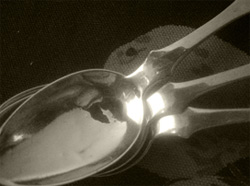
Tasting Spoons

My blog's namesake - small, old and some very dented engraved silver plated tea spoons that belonged to my mother-in-law, and I use them to taste my food as I'm cooking.

Scroll down to the bottom to view my Blogroll

Posted in Uncategorized, on July 8th, 2007.


Is he not adorable, I ask you? And look at that wooden spoon he’s holding! In recent years, Hollywood has found a direct route to movie success with animating and personalizing animals – penguins, dogs, and now a impecunious rat. I haven’t even seen the movie yet and I already love it, since it’s about Remy (the above clever, cute rat) who aims to become a famous French chef. But, as a rat, how could he? As a rat, he’s abhorred in the kitchen. So, he hitches up with an unlikely young man who works in the kitchen (as a janitor of all things) of a top-notch, but about-to-lose-its-stars Parisian restaurant. Remy whispers instructions to this young man, and saves the day by making ratatouille.

Have you ever made ratatouille? Most people haven’t. It’s a labor of love, I assure you. I made it once, years ago, and must have decided it was w-a-a-a-y too much work and have never made it since. Not that I didn’t love the taste. I did. And I’ve had it in France too. If you’ve seen the movie, you know that ratatouille is a layered vegetable dish. Unctuous is what comes to mind. In the directions of any French cookbook, each vegetable is cooked separately – blanched in new salted water – because you don’t want any vegetable to contaminate or take over the flavor of another. Then the vegetables are combined and baked into silkiness, usually served in a wedge with a simple salad.

Fortunately for us, a fellow blogger and writing pro in the Bay Area at World on a Plate decided to take on Remy’s ratatouille and make it her own. She adapted it from Thomas Keller’s kitchen (world famous The French Laundry in Yountville). I won’t say making this is exactly easy, but her version doesn’t require the labor of love of my one attempt years ago. I might even be tempted to try it again with this recipe. But first, I need to go see the movie! As soon as my ankle heals, I’ll be gettin’ there.

Click HERE to go on over to Jeanne Brophy’s blog and her recipe. And, in case you’re not sure of the pronunciation, it’s rat-ta-too-ee, or rat-ta-twee.

Posted in Uncategorized, on July 7th, 2007.

No recipe today! Yesterday I misstepped off our boat and turned my ankle completely sideways. Crunch. I’m very laid up yesterday and today; can barely, barely walk. Dave rolled me in one of the yacht club’s grungy rolling carts (used to haul gear from boat to parking lot and vice-versa) from our boat to our car. No way could I walk the block-long dock distance. Once home, Dave fetched my father’s cane which has been collecting dust in the front closet. My ankle is very swollen and hurts like heck if I put any weight on it.

SO, thought I’d wax poetic about cooking classes, since I may not be cooking for a few days.

Recently, several people said to me one of the following: Why the heck do you go to cooking classes? You certainly don’t need to go to cooking classes. Don’t you have enough recipes already? You’re already a good cook, why do you go? You could be teaching the classes yourself, so why would you go? So, to those questions, my answers are:

I go to cooking classes because:

  • I really, really enjoy them, so it’s like recreation to me; maybe you go to a scrapbooking class, or watch television, go to a game, lie on the beach, whatever it might be that floats your boat;
  • Learning to cook different things is a challenge; or watching somebody else prepare something I’ve made for years, in a new and unusual way, which makes me think;
  • My friend, Cherrie and I enjoy doing this together – it’s like girlfriend bonding time;
  • Yes, I have enough recipes to last several lifetimes. I’ve been a recipe collector for my entire adult life (that’s 4 1/2 decades, last count), and I’m still a recipe clipper;
  • Particularly I enjoy attending a class demonstration by a well-known cookbook author. Joanne Weir is about my favorite, but Phillis Carey is a close second. And I’ve attended countless others as well, a few I’ve written up in previous blog posts. More often than not I end up buying the cookbook, unless I’m disappointed in the food prepared. And in those instances, I can always look at the cooking class as entertainment. The bonus is that we get to eat, too!
  • I count myself lucky – this is after years and years of attending cooking classes – if I come home with just one – yes ONE – recipe that I’ll make myself. I once heard someone say about buying record albums – if he bought one album and there was just one – just one song that was a keeper, he felt he’d made a good investment. On occasion I’ll come home with no recipes I’ll have the desire to prepare, but not usually.
  • I have become a bit more circumspect about the menus – I really read them well before deciding to attend a class. I don’t need to learn knife skills. Or basics, like sauces. The class needs to have some kind of hook – maybe like “summer entertaining,” or “spring vegetable extravaganza.” That kind of thing.
  • It’s not always about the recipes alone, either. Even though a class may not be about a cooking technique, I almost always learn something I didn’t know. You may find that hard to believe, but it’s true. It may be nothing more than watching the chef cut up something differently – like a very unusual method of cutting zucchini that I’ve used time and again since. Or seeing a chef use a Meisermeister peeler, which has become my all-time favorite. Or learning about the unusual spices used in Indian cooking.
  • And probably last, but not least, watching somebody else prepare a full menu of food gives me ideas. More often than not, the chef will talk about why she/he put certain foods together, why they’re good on the palate, why they look good on the plate (the aesthetics are important too). Or maybe it’s just the idea that using cardamom pods in making homemade iced tea will give plain-old iced tea an added boost of flavor. So, that’s why I love going to cooking classes.

Could I teach cooking classes myself? Well yes, probably I could. I’m sure I could. Do I want to? No. Too much work. WAY too much work and not enough monetary benefit. That’s why I don’t quibble when I have to pay $50-$75 for a class. I’m quite happy to let somebody show me.

And, as I’ve mentioned before, I used to be a huge fan of Sur la Table. I still love the store, but I’m very down on the cooking school. About a year ago the company at large let go nearly all the cooking school staffs and hired (unknown) professional chefs. The cooking schools are now separate profit centers, and each day there is a class at a Sur la Table anywhere in the country, most of the time anyway, it’s the identical class and menu in all of their stores, prepared by the staff chef or one of his/her minions. They have very, very few well-known chefs – guest chefs – anymore. Cherrie, Darlene and I, who were regulars at their classes, have all individually complained.

I even wrote a blistering letter to their corporate office complaining about the chef who is in charge at their Newport Beach store. I’ve watched him in action, and truly question the wisdom of his hire. He’s arrogant and self-serving. I simply won’t go to classes there anymore. They are very basic and elementary too, which I don’t need. But, probably I’m an aberration for them – I’m an experienced cook and want more difficult subjects. Therefore, Cherrie and I have begun looking elsewhere to attend classes. I’ve mentioned the private classes we attend at homes in Coto de Caza. And we also go to A Store for Cooks. And our favorite is Our House, South County, but it may be closing down soon. Phillis Carey teaches at Great News in San Diego, so we’re thinking about trying that out one of these days. It will mean an all-day expedition, that’s all.

Since I’m on the subject of cooking classes, perhaps, for those who are uninitiated in this venue, I’ll mention that there are two kinds of classes: demonstration and hand-on. I suppose if I really needed to learn a specific technique, I’d want a hands-on. But with most classes of 20-30 people, you may not get a choice as to what you prepare. Meanwhile, everybody else does the prep on the other menu items and you don’t benefit or hear about their learning curve. Recently, when Cherrie and I went to Wine Country and attended classes at Ramekins in Sonoma, at one of my classes all I was given to do was slice, thinly slice, a red onion. Yawn. Therefore, Cherrie and I balk at going to hands-on classes anymore. We’ll mostly attend demonstration classes. That way we get to watch everything being prepared, we hear about all the steps and missteps along the way. If you do enjoy cooking, you really should try going to some classes. Your family might be thrilled to see some new things on the dinner table. So, you want to go to a cooking class with me? For now I’m going to get a bag of ice for my ankle.

Posted in Desserts, on July 5th, 2007.

Lest you think that I bake a pie, cake or cookies nearly every day, I don’t. I made this about 2 weeks ago when our daughter, her husband and grandchildren were here – we had 9 for dinner, and I made two pies. The leftovers from this are long gone. But, here’s the story . . .

What a funny name, Millionaire Pie, huh? This recipe goes w-a-a-y back in my life. For a couple of difficult years (during my first marriage) I lived in Oklahoma City. A born and bred California girl sometimes doesn’t adapt well to such a different place. Lots of things contributed to my unhappiness there: the obsession – absolutely maniacal obsession I’m talking about – with football for one. Hunting and fishing for another. Beer for one more. I don’t do football, hunting, fishing OR beer. I didn’t drink much during that time in my life – I hadn’t discovered wine yet, but beer was not on my list at all. The weather was another formidable obstacle (wind, more wind, heat and tornadoes). And shopping was not what I was used to. Yes, there was one department store, but mostly it was out of my price range. Yes, there were drug stores. And yes, there were grocery stores, but they didn’t carry lots of the things I was used to – fresh tortillas for one thing. Fresh fish for another thing.

At the time I lived there (this was the early 70’s) there was not a single place in Oklahoma City where you could buy fresh fish. Zip-zero-nada. Frozen was all that was available, and very a meager selection at that – mostly fillet of sole, cod or shrimp. Or frozen fish sticks – those were available in most markets. But that was IT. Cilantro? They’d never heard of it. There were very few good restaurants – at least that I thought were good. Oklahoma is a BEEF state, so you can find steaks and burgers and not much else. In the ensuing 30 years, I’m certain the restaurant and grocery situations have improved. I don’t mean to give OKC a bad rap, but I found it really tough to be a very imaginative cook. Fortunately I didn’t stay there long.

But during those two years my family frequented a modestly upscale cafeteria called Furr’s. It’s still going strong in about 6 states. Unlike the buffet dining establishments now popular here in Southern California for the big-on-appetite and short-on-funds, in the 1970’s this was a fairly nice restaurant, and all their food was home made. I don’t remember much about the place now but this was a favorite dessert. The origin of the pie – and hence its name – was that during WW II there were lots of food items cooks couldn’t get, and if you were able to find pineapple and walnuts, you must be rich (a millionaire). And while I lived there the local paper printed the recipe for this pie. There is a website out there called copykat recipes (famous and not-so-famous restaurant recipes), and it has a similar one for this pie as well in case you want to research this or other restaurant favorites. Its version suggested using Eggbeaters or similar product in lieu of the raw egg, which is probably a very good idea.

It’s a baked pie shell, filled first with a butter/sugar layer that firms up when refrigerated, then it’s topped with pineapple and walnuts, folded into whipped cream. Not difficult. And if you used Trader Joe’s pie crust shells it’d be a cinch. I didn’t, so made a short tart shell and put it into a regular pie plate. Once baked and cooled, I filled the shell and covered the completed pie with plastic wrap and refrigerated it until ready to serve. I used fresh pineapple, and added more than the recipe indicated and also sprinkled additional pineapple and nuts on top of the pie. It will hold for a couple of days, but I think it’s probably better to serve the same or the next day. So, here’s to the old Furr’s.
Printer-friendly PDF

Furr’s Millionaire Pie

Recipe from Furr’s Cafeteria restaurants in the Mid West
Servings: 8
NOTES: Use fresh pineapple if you happen to have it and want to use it.

1 whole pie shell — 8-inch, baked
1 cup powdered sugar
4 tablespoons unsalted butter — softened
1 small egg or egg substitute
1/2 teaspoon salt
1/2 cup heavy whipping cream — whipped
(2 T. powdered sugar – optional added to whipped cream)
1/2 cup crushed pineapple — well drained
1/4 teaspoon vanilla
1/4 cup chopped walnuts

1. Cream together sugar and butter. Add egg, salt and vanilla and beat until fluffy. Spoon into prepared pie shell and chill.
2. Combine whipped cream, pineapple and chopped nuts and spoon onto top of the filling. (Add some powdered sugar if you prefer a sweeter topping.) Chill thoroughly before serving. Sprinkle top with additional nuts and pineapple if desired.
Per Serving: 303 Calories; 20g Fat (58.7% calories from fat); 4g Protein; 28g Carbohydrate; 1g Dietary Fiber; 62mg Cholesterol; 294mg Sodium.

Posted in Pasta, Salads, on July 4th, 2007.


I’d forgotten about this salad and how much I love it until last weekend when I went to Joan’s daughter’s home to greet their newly adopted infant, and Joan had made it as part of a lovely luncheon. Joan is rather “famous” for this salad – it’s one other people request too, not just me. We used to have season tickets to our local summer symphony series, and we’ve had many a picnic dinner on the lawn at the amphitheater, and every time Joan and Tom would attend I requested she make this. And she graciously gave the recipe to several people. So, thanks very much, Joan. I needed a salad for an outdoor dinner, and this just fit the bill.

Nothing about it is hard. It probably takes about 40 minutes to make it, including boiling the pasta. Be sure to not overcook the pasta. You don’t have to use penne, but that’s the way Joan makes it, and that’s the type I prefer too. You can add more sun-dried tomatoes if you wish – her recipe calls for 1/4 cup to 1/2 cup. I used 1/4. And our basil plant is proliferating, so I pruned it back for this salad. The basil is crucial in my opinion. It also will keep a few days, although it’s best the day it’s made.
Printer-friendly PDF

Joan’s Pasta Salad

Serving Size : 10
Serving Ideas: If this is served as a main course, it would probably serve about 6 people.

SALAD:
1 pound penne rigate — cooked al dente
1 cup cherry tomatoes — halved
1/4 to 1/2 cup sun-dried tomatoes — chopped
4 ounces Feta cheese — crumbled
1 cup Parmesan cheese — Fresh, grated
1/2 cup Italian parsley — chopped
1/2 cup fresh basil — chopped
1/2 cup green onion — chopped
1/2 cup pine nuts — toasted
DRESSING:
1/2 cup olive oil
1/4 cup fresh lemon juice
1 teaspoon Dijon mustard
1 teaspoon salt — or more to taste
1 teaspoon ground black pepper
2 cloves garlic — minced
1/4 teaspoon sugar

Make dressing and set aside. Gather salad ingredients in a large bowl and pour dressing over. May be served immediately or chilled, but bring it back to room temp.
Per Serving: 382 Calories; 20g Fat (46.5% calories from fat); 13g Protein; 39g Carbohydrate; 2g Dietary Fiber; 16mg Cholesterol; 529mg Sodium.

Posted in Desserts, on July 3rd, 2007.


My photo is missing something – the topping of whipped cream and chocolate curls. Sorry about that. We had two different pies that night and this one went in a flash, so I had to grab the last piece for a picture.

Silk pie was popular during the 1960’s and maybe it’s even older than that. I had it at a bridal shower way back then, and was amazed at the texture and subsequently was served it several times by others. It’s kind of a mousse type whipped filling. And that’s my guess as to why it’s called a French Silk Pie. It is whipped up – a lot – to a mousse type consistency.

The recipe calls for raw eggs. The chocolate silk is not cooked at all – the pie shell is, but the filling is merely beaten up and chilled. Remember when we used to use raw eggs all the time? I still do when I make Caesar dressing. I used raw eggs in this recipe because I bought the eggs from a supermarket, where I know the eggs have been stored (chilled) well and there is, supposedly, very minimal risk of salmonella. If you had any concern, though, about the raw eggs, I’d just use double the amount of egg whites rather than yolks and whites or use Eggbeaters instead.

If you’re not much for homemade pie crusts, this could easily be made in a ready-made graham or chocolate graham shell. Or even crushed Oreos would work too. Since it’s so fluffy and light (although I will admit this is FAR from low calorie!) it needs some kind of texture.
Printer-friendly PDF

French (Chocolate) Silk Pie

Recipe from “Recipes on Parade: Desserts”
Servings: 8
NOTES: It’s clear in the directions, but it’s vital that the filling be beaten the amount of time specified – it’s the whipping of it that makes it light and fluffy.

1 cup unsalted butter
1 cup sugar
3 ounces unsweetened chocolate
1 teaspoon vanilla
1/4 teaspoon salt
3 whole eggs
1 whole pie crust (9 inch) — baked blind
1/2 cup heavy cream
2 tablespoons chocolate curls
1. In the bowl of an electric mixer combine the butter and sugar; add chocolate and vanilla. Add the eggs – ONE AT A TIME – and mix at high speed for 5 MINUTES per egg.
2. Pour filling into baked and cooled pie shell and refrigerate at least 6 hours before serving.
3. Garnish with whipped cream and chocolate curls. Serving Ideas : Can also be served with fresh strawberries or raspberries.
Per Serving: 644 Calories; 50g Fat (65.9% calories from fat); 6g Protein; 51g Carbohydrate; 3g Dietary Fiber; 162mg Cholesterol; 253mg Sodium.

Posted in Chicken, Fish, Pork, on July 2nd, 2007.


I’d never even heard about paella until about 1967. Wow, that’s 40 years ago. At the time I was living in Denver, Colorado, and friends had returned from serving 3 years U.S. Navy duty in Rota, Spain. We got acquainted with them and began having dinner at one another’s homes on a regular basis. Joan was a good cook, and was happy to share her knowledge about Spanish food she’d learned about and prepared. They had lived “on the economy,” meaning they’d lived off the base, in a regular house, not on the U.S. Navy base, so had made friends with a few locals. One particular neighbor shared food with them and showed her how to make some of the Spanish dishes.

So one night Joan and Roger prepared their version of Spanish paella. They also served us her version of Sangria, which I’ll share another day. Joan explained that after trying many different kinds of paella in Spain, the only one they really liked was this one which combines chicken, Italian-style sausage and shellfish all together in the one dish. She explained that the flavoring of the sausage added a big boost to the flavor. She also said she varied the kind and amount of fish/shellfish included in it, but it always had to have the chicken drumsticks and sausage added as well.

Happily I began making it and have done so about 15 times over the years. It needs to be made for a crowd as it will feed about 12 people. And I would be remiss if I didn’t tell you that this is an expensive dish to make – the more shellfish, the more those dollars add up. Eventually I acquired a paella pan, an inexpensive model from Williams-Sonoma (not available per their website). It was less than $15. And I’d be remiss again if I didn’t tell you that this dish does take a moderate amount of prep time. There’s a bunch of mincing, chopping and sauteing in several pans, to be done. So leave ample time to complete all those tasks.

Here’s a photo of the drumsticks with the onions, yellow bell pepper and garlic. I will admit that over these 40 years I’ve had some difficulty with the paella – sometimes the rice didn’t get cooked. Sometimes the chicken didn’t quite get done, and sometimes the shellfish was undercooked. Maybe if this was made out in the open, in the huge paella pans used by the original sheepherders, you’d know it’s done because it was stirred more often. Here in the U.S. anyway, the presentation is half the pleasure of serving it – with all of the shrimp tails standing up, the drumsticks arranged artfully in a spoke pattern and the rice buried underneath. I’ve used scallops and langostinos, squid, fresh clams and fresh mussels too. Just don’t use all of those as there’s no way you can get them all on top of the rice.

Here’s my advice when making paella:

  • cook the rice until it’s just a hair’s breadth from being done (I do this in a separate pan now);
  • brown and cook the drumsticks until they, too, are just barely done;
  • if using frozen shellfish, defrost it fully first;
  • if covering with foil, leave it tented with a space for steam, as that helps to cook all e fish nestled into the top layer; in other words, form it into a kind of dome;
  • and lastly, cook the Italian sausage until it’s lost all of it’s pink color, and mince it up into small bite-sized pieces.


Here’s a photo of the rice – you must brown the rice before finally finishing the preparation of the paella. It has a really rich color and the steamy flavor from it is SO good. Until I visited Hungary some years ago I didn’t know there were so many types of paprika, so I now have the traditional, half sharp and smoked. I used some of the half sharp and the smoked paprika in the paella this time and liked it. I order most of my spices now from Penzey’s, and you do know, don’t you, that paprika must be kept refrigerated. Little critters love to get into that herb and it loses its flavor left at room temperature. The addition of saffron is essential – it’s so very Spanish, and leaves a nice underlying character to the rice.

Finally, you begin pulling it all together. You add the canned clams and sausage to the rice, then all that is poured into the bottom of the paella pan, then the drumsticks are placed in a spoke. Shellfish is strategically placed in and around the drumsticks, tails pointing up. If you add mussels or langostinos, those need to be nestled into the mixture as well. By this time the pan is FULL, let me tell you. Lastly, you throw in a bit of fresh tomato, cover with foil and put into the oven. If the fish is cold, just remember that it takes a bit of time for the entire mixture to heat up enough to cook the fish, so make sure it’s done before serving. It always seems to take longer than I think. Take a peek and be certain the shrimp is cooked through. Whisk off the foil and garnish with the reserved minced red bell pepper and peas and serve.
Printer-friendly PDF

Seafood Paella

Recipe: From my friend Joan Wilson, who lived in Spain during the 1960’s
Servings: 12
Serving Ideas : This meal needs nothing more than a green salad and some bread.
COOK’S NOTES: This is a really impressive dish – and it feeds a crowd – especially if you add the mussels and scallops. To cut down on the fat, substitute turkey sausage, and use skinless chicken thigh meat. It won’t be as pretty (the spoked drumsticks are very eye-catching), but it will taste just as good. You might not think that 1 1/2 cups of rice is sufficient to serve 12, but it is. This isn’t going to feed 12 lumberjacks, but it will certainly feed 12 hungry adults. Note that recipe calls for 8 drumsticks – if everybody needs a drumstick, fry up more of them and serve separately, just reheat at the last minute. I usually use the half-sharp paprika – meaning it’s half regular and half spicy, which gives this a bit of a bite.

8 whole chicken drumsticks
1 whole garlic clove — minced
2 tablespoons olive oil
6 whole saffron threads
1 1/2 cups long-grain white rice
1 pound Italian sausage
1 large onion — chopped
1 whole green pepper — chopped
1 3/4 cups low sodium chicken broth
1 cup canned clams — drained, saved
1 teaspoon salt
1 teaspoon paprika (I use half-sharp)
1 pound fresh shrimp, whole — tails on
4 whole tomatoes — sliced
1/2 pound frozen peas. defrosted
1 whole red bell pepper

1. In a very large skillet, brown drumsticks in olive oil, cooking on all sides until chicken is nearly cooked through, then set aside to drain. Dissolve the saffron in about 2 T. of warm water. Set aside. Add sausage to the skillet, cut into bite-sized chunks, and sauté for about 5 minutes. Then add the onion, green bell pepper and garlic and sauté for 5-10 minutes, then remove to a bowl and set aside. In a small bowl set aside about 2 T. of diced red bell pepper, and about 1/4 cup of frozen peas. These will be added at the end.
2. To the frying pan add the rice and sauté it until rice is golden brown. Stir in the chicken broth, clam juice, clams, salt, saffron mixture and paprika and cook for about 10 minutes. Add the onions and green bell pepper to the pan, then frozen peas. Cover pan (or make a tent from aluminum foil) and cook until rice is nearly done. If any of the rice is clinging to the side of the pan, stir them into the liquid. Add the sausage and red bell pepper. Pour the rice mixture into the paella pan and smooth out.
3 Preheat the oven to 375°. Place the chicken drumsticks around the pan (on top of the rice) in a spoke fashion, and nestle them down into the rice a little bit. Shell the shrimp, leave tails intact and butterfly them. Nestle them into the rice with their tails curled up. Place tomato slices wherever there is room, cutting in half if necessary. If needed, add a little more chicken broth to the pan. If you’re using mussels and scallops, add those, nestling into the rice as you can. Bake for 20 minutes – just long enough to cook the fish and chicken. Sprinkle the paella with the reserved bell pepper and peas and serve.
Per Serving: 405 Calories; 19g Fat (43.0% calories from fat); 29g Protein; 27g Carbohydrate; 2g Dietary Fiber; 129mg Cholesterol; 663mg Sodium.

Posted in Cookies, on July 1st, 2007.


All those little flecks you can see in the cookies? Those are tiny pieces of ground dry-roasted peanuts added to the batter to make them more peanut-ty. America’s Test Kitchen really works on their recipes to develop techniques and recipe additions to make foods taste even better, sometimes, than tried and true recipes. They weren’t happy with the standard peanut butter cookie recipes they tested, so finally came up with the addition of the dry-roasted peanuts. They liked the use of both white and light brown sugar too.

Two of our grandchildren have been visiting for the last 10 days, and I thought maybe some cooking lessons were in order. What child isn’t happy with making cookies, I ask you? They were more excited about eating the batter in the bowl and those few little clumps that just happened to get stuck to the sides of spoons or fingers than they were about the cookies themselves, but that’s okay. That’s part of the fun of it. I’ve made these cookies before and knew they were good. You need to like very crispy cookies, though. These aren’t soft at all. And the addition of the ground peanuts is a very nice one. Another successful America’s Test Kitchen recipe.

Logan (13), Grandpa Dave and Taylor (9) sampling the finished product.

Printer-friendly PDF


Peanut Butter Cookies

Recipe: “The American Test Kitchen Family Cookbook”
Servings: 36
NOTES: What’s unique about this recipe is the use of ground dry-roasted peanuts which are ground up in a food processor to a very fine grind. America’s Test Kitchen recommended Skippy Peanut Butter as the best for baking. And we found that the cookies took more baking time than the recipe indicated.

2 1/2 cups all-purpose flour
1 teaspoon salt
1/2 teaspoon baking powder
1/2 teaspoon baking soda
1/2 pound unsalted butter — or 2 cubes
1 cup packed brown sugar — light, not dark
1 cup sugar
1 cup peanut butter — extra crunchy
2 teaspoons vanilla
2 large eggs
1 cup dry-roasted peanuts — ground very fine

1. Adjust oven racks to the upper and lower-middle positions and heat the oven to 350.
2. Whisk the flour, salt, baking powder and soda together in a bowl. Mix gently and set aside.
3. Beat the butter and sugars together in a large bowl using an electric mixer on medium speed until light and fluffy, 3 to 6 minutes. Beat in the peanut butter until fully incorporated, about 30 seconds. Beat in the vanilla, then the eggs, one at a time, until combined, about 30 seconds, scraping down the sides of the bowl and beaters as needed.
4. Reduce mixer speed to low and slowly mix in the flour mixture until combined, about 30 seconds. Add in the ground peanuts until mixed thoroughly.
5. Working with 2 tablespoons of dough at a time, roll dough into balls (or use a cookie scoop) and lay on two parchment lined baking sheets, spaced about 2 inches apart. Make a cross-hatch mark with a fork, pressing down moderately to slightly flatten the cookies.
6. Bake until edges are browned slightly (golden) and the centers have puffed and are beginning to deflate, 10-15 minutes. Rotate pans halfway through baking time.
7. Let the cookies cool on the baking sheet for 10 minutes, then remove to a wire rack and cool completely.
Per Serving: 192 Calories; 11g Fat (50.5% calories from fat); 4g Protein; 20g Carbohydrate; 1g Dietary Fiber; 26mg Cholesterol; 157mg Sodium.

Posted in Salads, Veggies/sides, on June 30th, 2007.

I’m always looking for different ways to serve vegetables or sides for warm, summer barbecue dinners. I must have been watching Bobby Flay last summer when he prepared this. I made it right away and liked it a LOT. It’s not difficult to prepare, although you do have to bake (or cook somehow) the sweet potatoes, then you pare them, slice and grill them, along with the green onions, then make the dressing and toss it together. It can be served hot, room temp or chilled, and it keeps for about a week.
Printer-friendly PDF

Grilled Sweet Potato and Scallion Salad

Recipe: Bobby Flay of the Food Network
Servings: 8

4 large sweet potatoes
8 whole scallions
3/4 cup olive oil — divided use (1/4 cup for grilling, balance for dressing)
2 tablespoons Dijon mustard
1/2 cup cider vinegar
1/4 cup balsamic vinegar
2 teaspoons honey
Salt and freshly ground pepper
1/4 cup Italian parsley — coarsely chopped

1. Bake potatoes in a 350 oven for about 40-50 minutes until JUST barely done. Remove and allow to cool, then peel and cut into 1/2 inch lengthwise slices.
2. Preheat grill to high. Brush potatoes and scallions with 1/4 cup oil and arrange on grill. Grill potatoes for 3 to 4 minutes on each side, or until just tender. Grill scallions until softened and marked. Remove scallions from the grill and cut into thin slices.
3. In a large bowl, whisk together 1/2 cup olive oil, the mustard, vinegars, and honey. Season with salt and pepper, to taste. Add potatoes, scallions, and parsley and toss until potatoes are well coated. Transfer to a platter and serve.
Per Serving: 264 Calories; 21g Fat (68.2% calories from fat); 2g Protein; 20g Carbohydrate; 3g Dietary Fiber; 0mg Cholesterol; 59mg Sodium. Exchanges

Posted in Desserts, on June 26th, 2007.


If you haven’t ever had Panna Cotta, you’re missing a big treat. And, if you’ve never had it, it’s hard to describe: it’s not custard; it’s not like mousse either; it’s not clotted cream; nor is it like a pie filling. But it is creamy, yummy. I guess you’ll just have to try it to find out. I’ve had it out and I’ve made it before, although this time I made it in muffin cups. I wanted to use ramekins, but I didn’t have enough for the family crowd we had over. A shopping expedition to Target didn’t yield any ramekins, either. I wasn’t about to drive to Williams-Sonoma just for ramekins. So I bought this new-fangled kind of silicone muffin tin. Each of the silicone cups are removable and they slide easily into their custom muffin tray. Since they’re small, however, I filled them right up to the top, which yields one half cup. So because of that, the recipe made 12 pannas using this recipe.

Strawberries are at their peak and waning, so I wanted to use berries with it. In the past I’ve made a Joanne Weir recipe for panna cotta, but I thought I’d try Ina Garten’s recipe instead, which uses more yogurt. Dave and I are stuck on Fage yogurt (Trader Joe’s, $3.60 low fat). It’s a strained (thicker) yogurt. It comes in non-fat, low fat and full fat. Interestingly, I had a hard time getting the pannas out of the muffin cups – you might not know the difference if you’ve never had this – the blobs of panna aren’t as perfect as you’d have at a restaurant. But, it made no difference whatsoever in the taste.

It’s very easy to make (must be made ahead, though) and spends some time resting in the refrigerator. An hour before serving the berries were sliced and balsamic added and the black pepper. Actually, since I wasn’t sure people would really like the pepper, we added it as a garnish on the berries rather than adding it to the berries in the bowl.

A note about the balsamic – I’m embarrassed to tell you that I have at least 4 bottles of balsamic vinegar on my pantry shelf. One bottle is cheap. Not very good either, but I use it in salad dressings or marinades only. Another is a middle grade, a bit thicker in texture and much more tasty. I use it in cooking when I know I’ll be able to tell the difference. A third bottle is a very expensive one, an aged balsamic I bought in Italy from a unique little shop that only carried wine and balsamic – it’s the cream of the crop, is almost the consistency of a light syrup. You could sip it from a spoon it’s so good. That one is reserved for the occasions when a drizzle is truly a garnish on a dish that prides itself on the balsamic quality. And, I had a bottle of pear balsamic on my shelf too. I don’t even remember where I got it, but I took a tiny taste before using it to see if it was appropriate for this dish. Since this was a fruit dessert, I thought it would be ideal. Loved it. Will I make this recipe again? You betcha.
Printer-friendly PDF

Panna Cotta with Balsamic Strawberries

Recipe: Barefoot Contessa at Home
Servings: 8
NOTES: Splenda or other sugar substitute may be used in lieu of the sugar in this dish. I used a fruit balsamic (pear in my case) rather than regular. Just don’t use a cheap grocery store balsamic as it’s too harsh. Buy one bottle of “good” balsamic to use for special occasions, and this is one of them. You can also do a different proportion of heavy cream to yogurt if you use the thicker Greek yogurt, Fage. Greek yogurt is very creamy already, so you can use 3 cups of that with lesser of the heavy cream. It may be a bit harder to get out of the ramekins, however, as yogurt doesn’t “gel”-up as easily as heavy cream. In that case, you may choose to serve this in the ramekin.

1 package unflavored gelatin
3 cups heavy cream
2 cups yogurt — plain, whole milk
1 1/2 teaspoons vanilla extract
1 whole vanilla bean
3/4 cup sugar
8 cups strawberries — sliced
5 tablespoons balsamic vinegar — good quality
2 tablespoons sugar
1/2 teaspoon freshly ground black pepper — yes, really
fresh grated lemon zest

1. In a small bowl, sprinkle the gelatin on 3 T. of cold water. Stir and set aside for 10 minutes to allow gelatin to dissolve.
2. Meanwhile, in a medium bowl, whisk together 1 1/2 cups of the cream, the yogurt and vanilla extract. Split the vanilla bean and use the tip of a knife to scrape the seeds into the cream. Heat the remaining 1 1/2 cups cream and the sugar in a small saucepan and bring to a simmer over medium heat. Off the heat, add the softened gelatin to the hot cream and stir to dissolve. Pour the hot cream-gelatin mixture into the cold cream-yogurt mixture and stir to combine. Pour into 8 (6-8 ounces) ramekins or custard cups and refrigerate uncovered until cold. When the panna cottas are thoroughly chilled, cover with plastic wrap and refrigerate overnight.
3. Thirty minutes to an hour before serving, combine the strawberries, balsamic vinegar, sugar and pepper. Set aside at room temperature.
4. To serve, run a small knife around each dessert and dip the bottom of each ramekin quickly in a bowl of hot tap water. Invert each ramekin onto a dessert plate and surround the panna cotta with strawberries. Dust lightly with freshly grated lemon zest and serve.
Per Serving: 519 Calories; 36g Fat (59.8% calories from fat); 6g Protein; 48g Carbohydrate; 3g Dietary Fiber; 130mg Cholesterol; 91mg Sodium.

Posted in Chicken, Grilling, on June 24th, 2007.

The Los Angeles Times’ Food Section happens to be one of the better ones in the country. Maybe I should qualify that. It used to be one of the best. So few major newspapers are devoting money and staff to the sections anymore, but you can access the food sections of many newspapers on the net now (click on this link for a list of newspaper food sections available online). But this recipe was in the “good old days,” when the food section was quite large. The recipe comes from a restaurant in Los Angeles called Cha Cha Cha and was printed about 7-8 years ago. I’ve never been to the restaurant, but I guess they do a lot of highly seasoned Caribbean foods, this being one of them. Jerk seasoning was new to U. S. cooking circles back then, and having never had it, I was intrigued to try it. It’s been a summertime regular ever since. And I want you to read the nutritional analysis this time (a very good-for-you dish).

Recipe Tip:

Just remember: once you mix up the spices, they only keep for about a month.

You need to have a sizable repertoire of herbs and spices in order to concoct the herb/spice mixture. I make it up in quantity. I think I’ve read that once you combine herbs or spices their lifetime diminishes considerably. My stash of this mixture is from last summer, so I hope it lasts a few more months.

The chicken breasts are marinated in a combination of the herb/spice mixture, canned pineapple juice, orange juice and Worcestershire sauce. Ideally for 24 hours, but I’ve done it in far less when I haven’t planned ahead to make this. It’s very simple once you have the dry mix ready; I always marinate meat/chicken/fish in a plastic bag – one of the freezer types so there’s no chance of puncturing it. Or at least very little chance of a chicken bone or something poking a hole in the bag. When I am unsure about how safe the bag is, I’ll put it into the bag, then in a large plastic bowl. Just in case.

The only other info about this chicken that is different is how it’s cooked. It is done on direct heat, but after grilling for a fairly short time on the grill, you remove the breasts and slice them into strips, dip in the marinade again, then finish cooking. The batch pictured above didn’t get that last step because the head griller had already turned the meat over and it was deemed “too late” to do the slice. So we just slathered more of the marinade on it and allowed it to cook that way. It’s very moist as long as you don’t overcook it. Remove the chicken when it reaches about 150-155 degrees, allow to sit a few minutes then slice and serve. Discard the marinade as it’s contaminated.

You could boil the marinade down if you wanted to and make it a sauce, but it might take longer than you have to devote to it since the chicken cooks in nothing flat. I’m going to try that sometime. The chicken is extremely low in fat because the marinade has no oil in it at all. None. So it’s just the fruit juices that help it retain moisture. Our family from Placerville was here, and they deemed it good. My daughter Dana has made this a few times and recommends buying the pineapple orange combination juice (Dole makes it) instead of using separate canned juices. Makes good sense to me. I may stock up on that, because I never have pineapple juice on hand.

The original recipe called for double the ingredients for the marinade, but I’ve been perfectly happy with a smaller quantity and if it’s marinated in a plastic bag, you can turn it over and back, and all the chicken is in contact with the liquid.
Printer-friendly PDF

Cha Cha Cha Jerk Chicken

Recipe: From the Cha Cha Cha restaurant in L.A.
Servings: 8
NOTES: Be sure to read this recipe all the way through before you begin. It is best if allowed to marinate for 24 hours, although I’ve done it in 6 hours (not as good!). When I make up the herb/spice mixture, I prepare a 4x batch, and store in small plastic bags with a label inside. It’s a bit of a nuisance to make the mixture as there are so many different ones. But, this is a very tasty dish and worth the effort. If you add more marinade to the chicken during the grilling time, be sure it COOKS, since the raw chicken was marinated in it and it will contain raw-chicken bacteria.

DRY MIXTURE:
1/4 teaspoon ground allspice
2 teaspoons salt
4 teaspoons chili powder
1 tablespoon black pepper
1 1/2 tablespoons dried thyme
2 tablespoons minced garlic
4 teaspoons red pepper flakes
1 teaspoon garlic powder
1/2 teaspoon cayenne
1 teaspoon turmeric
1 teaspoon curry powder
1 teaspoon ground ginger
1 teaspoon ground coriander
1 tablespoon dried oregano
MARINADE:
2 cloves garlic — minced
1/2 cup Worcestershire sauce
1 cup orange juice
1 cup pineapple juice
8 boned and skinned chicken breast halves, tender removed

1. Prepare the dry mixture first.
2. In a large heavy-duty plastic bag, combine the dry mixture, adding the fresh garlic, Worcestershire sauce, orange juice and pineapple juice. Mix it up a bit, then add the chicken breasts. Seal the bag and marinate overnight if time permits, turning the bag a few times in that time.
2. Remove chicken from marinade and drain briefly, then place on grill heated to medium heat, and cook about 4 minutes. Remove from the heat (jerk chicken is always cooked twice). Cut each breast half in half lengthwise and use a brush to apply more marinade to each piece. Return to grill and cook until chicken is cooked through – about 4-5 minutes, brushing frequently with more marinade to keep it moist.
Per Serving: 193 Calories; 2g Fat (9.7% calories from fat); 29g Protein; 14g Carbohydrate; 2g Dietary Fiber; 68mg Cholesterol; 772mg Sodium.

Related Posts Plugin for WordPress, Blogger...