Get new posts by email:

Archives

Currently Reading

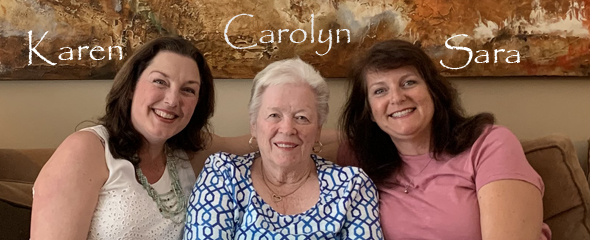
Here are the tastingspoons players. I’m in the middle (Carolyn). Daughter Sara on the right, and daughter-in-law Karen on the left. I started the blog in 2007, as a way to share recipes with my family. I’m still doing 99% of the blogging and holding out hope that these two lovely and excellent cooks will participate. They both lead very busy lives, so we’ll see.

– – – – – – – – – – – – – – – – – – – – – –

BOOK READING (from Carolyn):

Music of Bees, Eileen Garvin. Absolutely charming book about a woman in midlife, lonely, who raises bees, also makes unlikely friends. Heart-warming and very interesting about beekeeping.

A Postcard from Paris, Alex Brown. Really cute story. Dual time line, 1940s and present day about renovating an old apartment in Paris, things discovered.

Time of the Child, Niall Williams. Oh such a good book. Very small village in Ireland, 1960s. A baby is left on the doorstep. The town all whispers and helps. I listened to an interview of the author, which made me like him and his books even more.

Sipsworth, Simon Van Booy. If you like animals you’ll swoon. An old woman who really wants to die finds a tiny mouse in her house and befriends it and finds a reason to live. Utterly charming book.

The Forger’s Spell, Edward Dolnick. True story. For seven years a no-account painter named Han van Meegeren managed to pass off his paintings as those of Johannes Vermeer.

If You Lived Here, You’d be Home by Now, Christopher Ingraham. Could hardly put it down – about a journalist who takes on a challenge to move to small town in Minnesota and write about it. He expects to hate it and the people and place, but he doesn’t. Absolutely wonderful true story.

The River We Remember, William Kent Kreuger. 1950s, Minnesota. A murder and the aftermath. Could hardly put it down. Kreuger has such a vivid imagination and writing style.

How the Lights Gets In, Joyce Maynard. An older woman returns to New Hampshire to help care for her brain-injured son. Siblings and family, lots of angst and resentments.

The Filling Station, Vanessa Miller. Every American should read this book. A novelized retelling of the Tulsa massacre in 1921. Absolutely riveting.

The Story She Left Behind, Patti Callahan Henry. Love this author. Based on a true story. A famous author simply vanishes, leaving her husband and daughter behind. She had invented a mystical language no one could translate. Present day, someone thinks he’s solved the riddle, contacts the family. Really interesting read.

The Girl from Berlin, Ronald Balson. Love anything about Tuscany. An elderly woman is being evicted from a villa there, with odd deed provenance. Two young folks go there to help unravel the mystery. Loved it.

The Island of the Colorblind, Oliver Sacks, M.D. Nonfiction. The dr is intrigued by a remote Pacific island where most of the inhabitants are colorblind. He also unravels a mystery on Guam of people born with a strange neurological problem. Medical mysteries unveiled. Very interesting.

The Bookbinder, Pip Williams. Post 1914 London. Two sisters work at a bookbindery. They’re told to not read the books. One does and one doesn’t. One has visions beyond her narrow world; the other does not. Eventually the one gets into Oxford. Lovely story.

The Paris Express, Emma Donoghue. 1895 on a train to Paris, a disaster happens. You’ll delve into the lives of many people who survived and died in the crash.

A Race to the Bottom of Crazy, Richard Grant. This is about Arizona. Author, wife and child move back to Arizona where they once lived. Part memoir, research, and reporting in a quest to understand what makes Arizona such a confounding and irresistible place.

The Scarlet Thread, Francine Rivers. A woman’s life turned upside down when she discovers the handcrafted quilt and journal of her ancestor Mary Kathryn McMurray, a young woman who was uprooted from her home only to endure harsh frontier conditions on the Oregon Trail.

A Place to Hide, Ronald Balson. 1939 Amsterdam, an ambassador has the ability to save the lives of many Jewish children. Heartwarming.

Homeseeking, Karissa Chen. Two young Chinese teens are deeply in love, but in China. Then their families are separated. Jump to current day and the two meet again in Los Angeles.

North River, Pete Hammill. He always writes such a good story. A doctor works diligently healing people from all walks of life. His wife and daughter left him years before. One day his 3-yr old grandson arrives on his doorstep.

A Very Typical Family, Sierra Godfrey. A very messed-up family. Three adult children are given a home in Santa Cruz, Calif, but only if the siblings meet up and live in the house together. A very untypical scenario but makes for lots of messes.

Three Days in June, Anne Tyler. The usual Anne Tyler grit. Family angst. This wasn’t one of my favorites, but it was entertaining and very short.

Saved, Benjamin Hall. Author is a veteran war reporter. Ukraine, 2022, he nearly loses his life to a Russian strike. Riveting story – he survives, barely.

Grey Wolf, Louise Penny. Another Inspector Gamache mystery in Quebec. She is such an incredible mystery writer.

All the Colors of the Dark, Chris Whitaker. A missing person mystery, a serial killer thriller, a love story, a unique twist on each. Could hardly put it down.

Orbital, Samantha Harvey. Winner of 2024 Booker Prize. I don’t usually like those, but I heard the author interviewed and she hooked me. This is not a normal book with a beginning, a story and an end. It’s several chapters of the day in the life of various astronauts at the ISS (Int’l Space Station). All fictional. She’s been praised by several real astronauts for “getting it” about space station everyday life.

The Blue Hour, Paula Hawkins. An island off Scotland. Inaccessible except when the tide is out. Weird goings on. An artist. A present day mystery too.

Iron Lake, William Kent Krueger. A judge is murdered and a boy is missing. Riveting mystery.

Tell the Wolves I’m Home, Carol Ricks Brunt. 1980s. A 14-yr old girl loses her beloved uncle. Yet a new friendship arises, someone she never knew about.

Four Treasures of the Sky, Jenny Zhang. 1880s, a young girl is kidnapped in China and brought to the United States. She survives with many hurdles in the path.

The Boy Who Fell out of the Sky, Ken Dornstein. Memoir, 1988. The author’s brother died in the PanAm flight that went down in Lockerbie, Scotland. A decade later he tries to solve “the riddle of his older brother’s life.”

Worse Care Scenario, T.J. Newman. Oh my. Interesting analysis of what could/might happen if a jet crashed into a nuclear plant. Un-put-downable.

Song of the Lark, Willa Cather. Complicated weave of a story about a young woman in about 1900, who has a gifted voice (singing) and about her journey to success, not without its ups and downs.

Crow Talk, Eileen Garvin. Charming story which takes place at a remote lake in Washington State, about a few people who inhabit it, the friendships made, but also revolving around the rescue of a baby crow.

The Story Collector, Evie Woods. Sweet story about some dark secrets from an area in Ireland, a bit magical, faerie life, but solving a mystery too.

A Sea of Unspoken Things, Adrienne Young. A woman investigates her twin brother’s mysterious death. She goes to a small town in California to figure it out, to figure HIM out.

The King’s Messenger, Susanna Kearsley. 1600s England, King James. About one of his trusted “messengers,” and his relationship with a young woman also of “the court.” Lots of intrigue.

In the Shadow of the Greenbrier, Emily Matchar. Interesting mystery in/around the area of the famous resort in White Sulphur Springs, West Virginia.

Isola, Allegra Goodman. Hard to describe, survival story on an island in the 1600s.

Save the Date, Allison Raskin. Rom-com, witty, LOL funny. Clever.

The Sirens, Emilia Hart. Numerous time-lines, Australia. Mysteries abound, nightmares, abandoned baby, weird allergies.

Red Clay, Charles Fancher. LOVED this book. Mostly post-Civil War story about the lives of slaves in Alabama during Reconstruction.

Stars in an Italian Sky, Jill Santopolo. Dual time line, 1946 and recent time. Love stories and a mystery.

Battle Mountain, C.J. Box. Another one of Box’s riveting mysteries. Love his descriptions of the land.

Something Beautiful Happened, Yvette Corporon. A memoir of sorts in Greece, tiny island of Erikousa, where the locals hid Jews during WWII. All elusive stories told by the author’s grandmother.

The Jackal’s Mistress, Chris Bohjalian. 1860s Virginia, about a woman who saves the life of a Union soldier. Really good story.

Song of the Magpie, Louise Mayberry. Really interesting story about Australia back in the days when it was mostly a penal colony. Gritty strength of a woman trying to thrive with her farm.

The Boomerang, Robert Bailey. A thriller that will have you gripping the book. About a lot of secrets surrounding the president (fictional novel, remember) and his chief of staff and about cancer. A cure. Such a good story.

Care and Feeding, Laurie Woolever. Really interesting memoir of a woman driven to succeed in the restaurant business. She worked for Mario Batali and then Anthony Bourdain. Gritty stories.

Everything is Tuberculosis, John Green. Maybe not a book for everyone. A real deep dive into the deadly tuberculosis infection, its history. I heard the author interviewed and found the book very interesting.

The Book Lovers Library, Madeline Martin. Fascinating read about Boots’ drug stores’ lending library. And the people who worked in them.

The Arrivals, Meg Mitchell Moore. LOL funny, about a middle-aged couple whose children (and their various family members) return to the family home and the chaos that ensues.

My Life as a Silent Movie, Jesse Lee Kercheval. About grief. A big move to Paris, finding herself a new life with a new set of real blood family.

Escape, Carolyn Jessop. Another memoir about a woman really in bondage in Utah, Mormon plural marriage.

 

Tasting Spoons

My blog's namesake - small, old and some very dented engraved silver plated tea spoons that belonged to my mother-in-law, and I use them to taste my food as I'm cooking.

Scroll down to the bottom to view my Blogroll

Posted in Appetizers, on March 3rd, 2009.

jicama-sticks-w-chile-powder

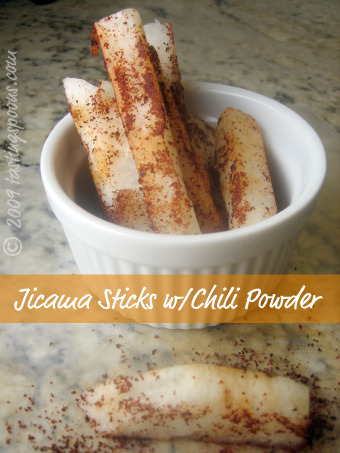
Have you ever had jicama? (Pronounced HEE-kah-ma.) It’s such an odd thing (actually it’s a root, the only edible thing on the jicama plant, as the leaves and seeds are toxic, so I read). To some people it’s simply so unusual, they won’t try it. Or eat it. It has an odd texture – crispy sort of – like a water chestnut. It crunches like them, anyway. It contains a lot of water, so it stays moist for a long time. Some foodies liken the taste to a cross between a water chestnut and a pear. I don’t find the pear in it, since to me the taste of a jicama is non-descript. But it adds a lot to a veggie platter. And the best part about jicama is that it doesn’t turn color or get limp – even after hours. Like avocado, or carrots and celery, or some other veggies. And it’s extremely low in calorie too.

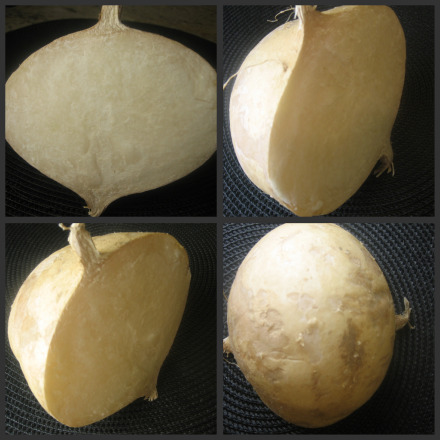
jicama-collageYou can cut it into different shapes. It can be used in sushi rolls, a cole slaw, or as in crunchy little wisps in a sandwich wrap (these ideas I got from a Cooking Light article). I have one recipe for a jicama slaw that is wonderfully flavorful with citrus and citrus juice. I haven’t posted that recipe, but maybe I’ll need to do that. Perhaps I’ll make it with the leftover jicama I have on hand.
Here in California we see (and use) jicama in salads sometimes. I buy it now and then. Usually I can’t manage to finish a whole jicama before it goes bad, so I try to buy small ones – if they’re available. Jicama comes from Mexico (where they call it a yam bean or a Mexican turnip).

My favorite way to eat jicama, though, is this one – what you see in the photo above. You simply roll the jicama sticks in some lime juice (or lemon if that’s all you  have) and then in some chili powder. Don’t use hot chili powder, just regular flavorful type – grocery store type is fine. That’s it. Stand them up in a bowl and serve. You don’t want to serve this with a dip – it doesn’t need anything at all to serve with it.
printer-friendly PDF

Jicama Sticks with Latin Flavor

Recipe: Don’t know where this came from

1 whole jicama
1-2 limes, squeezed
1 T. chili powder

1. Peel jicama. You can try to use a vegetable peeler, but usually I revert to a knife. Cut off any stringy stuff on the outside edges once it’s peeled. Cut into fairly uniform sticks, about 1/3 inch per side, and about 2-3 inches long.
2. Squeeze the lime juice into a flat plate or pan. Sprinkle chili powder into a similar vessel. Roll the individual jicama sticks in lime juice, then roll in the chili powder. You don’t want the sticks to be completely coated in chili powder (that would be too much). Stand up in a small ramekin and serve.

A year ago: Orange Jalapeno Vinaigrette

Posted in Desserts, on March 2nd, 2009.

madelleine-plus-peach

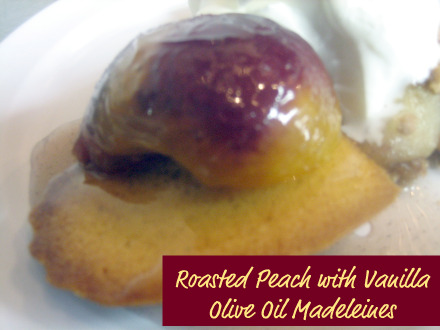
That photo sure looks odd, doesn’t it? You think that’s a roasted avocado pit, perhaps? But, fear not, it’s a luscious sweet treat instead – a peach half perched atop a Madeleine, glistening with a vanilla-and chamomile-scented syrup.

roasted-peaches-1The recipe here was from the vanilla class I attended last week. The chef thought it came from a Nancy Silverton cookbook. I couldn’t find it online, nor anything close to it, so I couldn’t verify its origin. Nevertheless, it’s a very nice use of either peaches or plums (or apricots, for that matter, but they’re such a tender fruit I’m not sure they’d hold up). The fruit is roasted in a sugar-vanilla-chamomile syrup until tender and golden. This time of year we used imported peaches from the Southern Hemisphere. Meanwhile, you make a cookie dough using olive oil, and bake them in tartlet molds (big enough to hold the fruit), or in Madeleine pans, coated lightly with additional olive oil. Unfortunately, at the class, the instructor had forgotten to get the chamomile for the syrup, so we ate it without. I’d try it with, however, since it sounds like such a gentle combination.
Once everything is baked, you put one or two Madeleines on a dessert plate, scoop some of the syrup over them, then place a couple of fruit halves alongside (I put it on top just for the sake of the photograph) and serve with sweetened whipped cream. Now, I don’t happen to have a Madeleine pan. Nor do I have tartlet pans that will hold 1/4 cup. So if I’m going to make these here at home, I’ll need to make an investment. Or borrow the Madeleine pan from my friend, Cherrie. The latter sounds like the best bet!
printer-friendly PDF

Roasted Stone Fruit with Olive Oil Madeleine Cakes

Recipe: from a class given by Rachel Klemek, The Blackmarket Bakery, Irvine, CA, maybe from a cookbook by Nancy Silverton.
Servings: 8 (desserts, with 24 total cookies)

STONE FRUITS:
1 1/2 cups sugar
1 cup water
1/4 cup chamomile flowers — or 1 chamomile tea bag
8 whole peaches — or plums
1 teaspoon vanilla
OLIVE OIL MADELEINES:
1 cup all-purpose flour — plus 1 tablespoon
1/4 cup sugar
1/4 teaspoon baking soda
1/4 teaspoon baking powder
1 whole egg
1 whole egg yolk
3/4 cup whole milk
3/4 cup extra-virgin olive oil
1 1/2 teaspoons vanilla

1. FRUIT: Preheat oven to 375. In a medium saucepan combine the sugar and water. Bring to a boil over high heat, stirring to dissolve sugar. Add the chamomile and vanilla. Reduce heat to medium and simmer for 5 minutes. Strain through a sieve into an 8-inch baking dish.
2. Arrange the stone fruit, cut side down, in the syrup. Roast for 10 minutes, then turn so the cut sides are up. Baste the fruit with the baking liquid. Roast for an additional 5-8 minutes, until the fruit is tender, but still retains its shape.
1. CAKES: Preheat oven to 350. Prepare a Madeleine mold by coating lightly with extra olive oil.
2. Over a large mixing bowl, sift to combine the flour, sugar, baking soda and baking powder. Make a large well in the center and pour in the eggs, milk and olive oil. Whisk to combine the liquids and slowly draw in the dry ingredients, whisking until incorporated. The mixture should be fairly smooth before you draw in more dry ingredients. If necessary, strain to dissolve any lumps of flour. stir in vanilla.
3. Pour the batter into the prepared mold to 3/4 full and place on a baking sheet. Bake for 15 – 24 minutes, depending on the size of the Madeleine pans used. The cakes should be nicely browned and firm to the touch. (Makes about 36, I think.)
1. SERVING: Place one or two cakes on each dessert plate and pour the syrup over the cakes. Place two fruit halves on each plate and finish with lightly sweetened whipped cream.
Per Serving (assumes you eat all the Madeleines – you won’t – since the recipe above makes 24 cookies): 482 Calories; 23g Fat (41.2% calories from fat); 4g Protein; 68g Carbohydrate; 2g Dietary Fiber; 56mg Cholesterol; 77mg Sodium.

A year ago: A book review (Alice Waters bio)

Posted in Desserts, on February 28th, 2009.

pear-cran-crumble

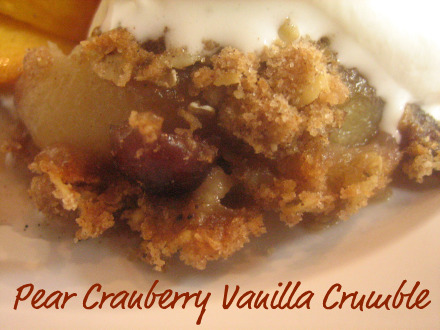
At the cooking class the other night at The Blackmarket Bakery, we were given a recipe for a simple fruit crumble. Made with pears. The recipe calls for fresh pears, and I think the dish would have been infinitely better made with fresh pears. Alas, we were given canned pears instead. Nevertheless, it was VERY good. The combo of dried cranberries (soaked in apple juice) and the oats, made for a nice chewy topping. And do look at the calories and fat in this recipe (they’re low). Another good reason to try it. This recipe is very easy – honest. Ideally serve it warm, with some vanilla ice cream or slightly sweetened whipped cream. The recipe came from Taste of Home. I’d make this again.
printer-friendly PDF

Pear Cranberry Crumble (Easy)

Recipe: Taste of Home test kitchen
Servings: 6
NOTES: If you don’t have fresh pears, use canned pears and reduce the sugar a little, since the canned pears are usually sweetened already. The crumble will also cook in a shorter time (about 30 minutes), although the canned pears won’t brown like fresh ones will.

1/2 cup apple juice — unsweetened
1/3 cup dried cranberries
1/2 teaspoon vanilla extract
4 whole pears — firm, ripe, peeled, cored and cut into 12 slices
3 tablespoons sugar
1/3 cup quick-cooking oats
1/4 cup packed brown sugar
3 tablespoons all-purpose flour
3 tablespoons whole wheat flour
1 teaspoon ground cinnamon
1/8 teaspoon ground nutmeg
2 tablespoons cold butter

1. In a small bowl, combine the apple juice, cranberries and vanilla; let stand for 15 minutes. Arrange pear slices in an 11-in. x 7-in. baking dish coated with cooking spray. Sprinkle with sugar. Pour apple juice mixture over pears.
2. In a bowl, combine the oats, brown sugar, all-purpose flour, whole wheat flour, cinnamon and nutmeg. Cut in butter until crumbly. Sprinkle over pears. Bake, uncovered at 350° for 40-45 minutes or until pears are tender and turning golden brown. Serve warm.
Per Serving: 214 Calories; 5g Fat (18.9% calories from fat); 2g Protein; 44g Carbohydrate; 4g Dietary Fiber; 10mg Cholesterol; 44mg Sodium.

A year ago: Coq au Vin (Quick & Easy)

Posted in Desserts, on February 27th, 2009.

My friend Cathey asked me if I’d like to attend a cooking class with her about vanilla. Hmm. Sounded interesting. Having just read an article in my fav magazine, Cooks Illustrated, about it, I thought I’d learn a lot about the different kinds of vanilla, and why a baker would use one vs. another. If you look in my baking cupboard I must have four different kinds of vanilla. Including the beans themselves too. So, surely I needed some help determining the best choice(s) and reducing my vanilla kitchen footprint.

The class, offered at The Blackmarket Bakery in Irvine, was a group of eight. The bakery, owned by Rachel Klemek, offers occasional classes, mostly in all-things related to baking (candy, cookies, cakes, fondant, puff pastry). Mostly aimed at more novice cooks, or ones who are into fancy cakes, decorating, etc. The classes are all hands-on, meaning the students prepare all the food. At this class we paired up in twos and used the bakery’s professional kitchen to prepare all the vanilla-related recipes Rachel had selected.

Having never cooked in a professional kitchen, I found that part interesting and fun. Some of the cooking things were out and ready for us, but not all things, so Rachel scurried to locate different pans, whisks, bowls, etc. She teaches classes at one of our local community colleges too, so she’s used to keeping an eagle eye on students as they work at the high BTU range, or remove trays of things from the commercial ovens.

Even as a food blogger, I wouldn’t ever post a recipe I hadn’t either made myself or eaten personally. But Rachel was fearless as she gave us a few recipes she’d never made or tasted before. One was a dismal failure (a vanilla souffle), so after starting it, we had to toss it out. Cathey and I started over with Rachel’s familiar Cointreau souffle (substituting vanilla) recipe, which worked perfectly.

Actually, the only thing I learned about vanilla was from a booklet Rachel passed around from Nielsen-Massey (vanilla producers) which says that vanilla bean paste is a vanilla essence (extract) enhanced with “spent” beans. Beans that have already given their essence to something else, and added only for appearance. What a surprise. Guess I won’t be buying any of that stuff again.

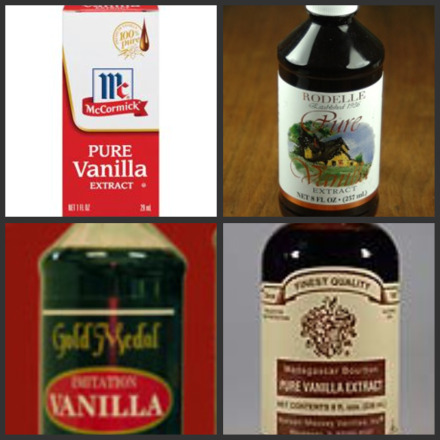
In the Cook’s Illustrated article (the article was not anything to do with the class, I’m just sharing it because I learned more about vanilla from the article than from the class) they did a taste test of vanillas mixed with milk. For most cooking, the magazine’s panel thought imitation extract (made with a variety of iffy products related to coal tar – does that sound yukky, or what?) was just fine. The magazine doesn’t recommend the paste or powder (the latter a “don’t bother” product), but did recommend the following (clockwise from top left):

vanilla-collage

Photos from the individual company’s websites

1. McCormick Pure Vanilla Extract (grocery stores everywhere)
2. Rodelle Pure Vanilla Extract (some specialty markets)
3. Nielsen-Massey Madagascar Bourbon Pure Vanilla Extract (at high end markets)
4. And (the “Best Buy”) Gold Medal Imitation Vanilla Extract (only available at www.cfsauer.com that I could find)

In the vanilla class, Rachel only had vanilla bean paste to use (two types, though), so we didn’t get to do any taste differences. In fact, we didn’t even know which brand we students used, and it wasn’t discussed at the end, unfortunately. I’ll share a few of the recipes in coming days. Cathey and I made three of the recipes: a pear and cranberry vanilla crumble, a roasted peach with vanilla olive oil madeleine, and the vanilla souffle. The other students made a vanilla and white chocolate bread pudding with creme anglaise, vanilla pillows (a cornmeal type of cookie), a rum-enhanced chocolate sauce, and a vanilla creme brulee.

A year ago: Almond Crusted Orange Roughy

Posted in Cookies, Desserts, on February 26th, 2009.

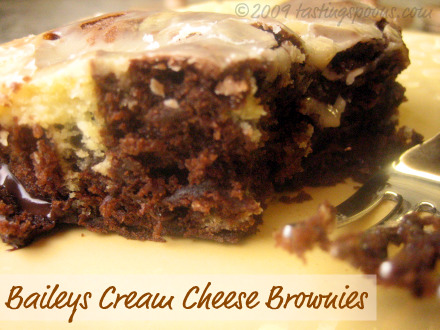
baileys-brownies

After I baked these brownies, I went to my recipe files to make a comparison of this recipe (from Culinary Concoctions by Peabody blog) to my old standby, Heavenly Cream Cheese Brownies, a recipe that dates back to the 1960’s. Sure enough, they’re really similar except for the Baileys. Peabody’s recipe has more bar chocolate and chocolate chips, the Bailey’s, of course, and she added a Bailey’s glaze on top too.

We had invited friends over for dinner because Bob is renovating their kitchen, and Peggy just struggles to create things to cook when the kitchen is in such a mess. They were SO happy to go out. So, even though we had a 5-hour power outage at our house yesterday (some kind of maintenance thing), as soon as the power was turned back on I quick-like-a-bunny started dinner. Made a slow-cooker tamale pie, which had just enough time to do its thing. I had some leftover veggies from the other night which were sufficient for nibbling before dinner, made a big green salad with everything but the kitchen sink in it, and I had just read Peabody’s post about these brownies. I had the cream cheese, had the Bailey’s, so quick-like I made them too.

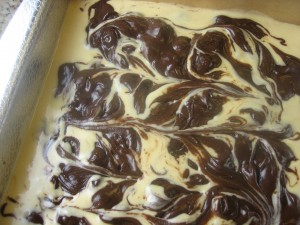
baileys-brownies-2

The swirled brownie batter in the pan

You make two batters – the vanilla and Bailey’s one, and a larger amount of chocolate/brownie one. They’re layered in a pan, then lightly swirled with a knife to mix them up a little. Oh-so very pretty, I think. Then once they’re baked and cooled a little, you add a Bailey’s glaze on top, cool completely, cut and serve!

These are RICH. And SWEET. As I said, they have more chocolate than in the older recipe, so I’ve reduced the amount of sugar in both batters below. But overall they’re delicious. If you’re a Bailey’s fan, you’ll adore them. I served them with just a little slurp of Bailey’s on the side. Yum. If I’d had vanilla ice cream I’d have served that with it too.
printer-friendly PDF

Bailey’s Cream Cheese Swirl Brownies

Recipe: Based on a recipe by Culinary Concoctions by Peabody (blog)
Servings: 16
Serving Ideas: Would be especially good with a scoop of vanilla ice cream.
NOTES: I’ve altered this recipe by reducing the amount of sugar in both the Bailey’s swirl batter and the brownie batter. If you like things sweet, add another tablespoon or two to each.

BAILEYS SWIRL:
3 ounces cream cheese — room temperature
2 tablespoons unsalted butter — room temperature
3 tablespoons sugar
1 large egg
1 tablespoon all-purpose flour
2 tablespoons Bailey’s Irish Cream
BROWNIES:
6 ounces bittersweet chocolate
3 tablespoons unsalted butter — room temperature
1/3 cup sugar
2 large eggs
1/2 cup all-purpose flour
1/2 teaspoon baking powder
1/4 teaspoon salt
2 teaspoons vanilla extract
1 cup semisweet chocolate chips — (I think 1/2 cup would be plenty)
GLAZE:
4 ounces sifted powdered sugar
1 tablespoon Bailey’s Irish Cream
milk to thin out (amount will vary)

1. Preheat oven to 350°F. Lightly butter 8-inch square nonstick baking pan. Using electric mixer, beat cream cheese and butter in medium bowl until light and fluffy. Gradually add sugar and beat until well blended. Beat in egg. Mix in flour, Bailey’s, and vanilla. Set mixture aside.
2. Stir baking chocolate and butter in heavy small saucepan over low heat until smooth. Cool slightly. Using electric mixer, beat sugar and eggs in large bowl until slightly thickened, about 2 minutes. Mix in flour, baking powder and salt. Mix in chocolate mixture and extracts. Stir in chocolate chips.
3. Spread half of chocolate batter (about 1 1/4 cups) in prepared pan. Just do the best you can to spread it out. Using rubber spatula, spread cream cheese mixture over chocolate batter. Using a spoon, drop globs of remaining chocolate batter over top of cream cheese mixture. Using tip of knife, gently swirl through batter, forming marble design. 4. Bake brownies until tester inserted into center comes out with a few moist crumbs attached, about 30 minutes.
5. Make glaze. Combine powdered sugar and Irish cream. If too thick thin out with milk. Pour over warm brownies and spread out as well as you can to the edges. Allow to cool completely and cut into about 16 pieces.
Per Serving: 250 Calories; 16g Fat (53.4% calories from fat); 4g Protein; 28g Carbohydrate; 2g Dietary Fiber; 55mg Cholesterol; 83mg Sodium.

A year ago: Potato & Onion Cakes (a side dish)

Posted in Beef, on February 25th, 2009.

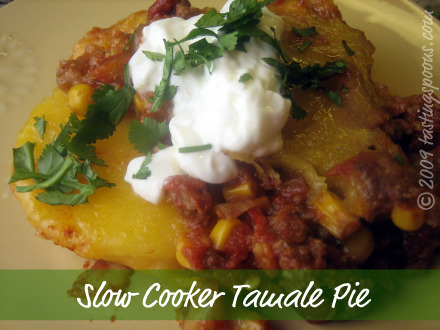
tamale-pie-slow-cooker

When I grew up, as I’ve mentioned here before, casseroles were the “rule of the day.” Nearly everyone made them. Even for entertaining. And because my parents were products of the Great Depression (unlike the nearly-great-depression we’re on the brink of right now), frugality was the name of the game in my mother’s cooking. And she frequently made tamale pie. I hunted through my mother’s recipes trying to find her version, and did find a couple, but can’t tell if they are hers. Both are very similar to this one, just baked in a casserole for an hour at 350, instead of made in a slow cooker.

But, since I’d just read a recipe over at Al Dente (a blog), made in a slow cooker, and with a tube of that ready-made polenta, I thought aha. I’ll make that version. Ever since I read the recipe a week ago, my mouth has been watering.  The recipe is from a new cookbook: Slow & Easy: Fast-Fix Recipes for Your Electric Slow Cooker by Natalie Haughton. I don’t own the book, but may need to because this was really good.

This recipe is really quite simple – the only cooking you have to do is to brown the ground beef and onion. The rest is merely layering the ingredients in the slow cooker and setting it to simmer on low for 4 to 4 1/2 hours. Done.

Since there isn’t any chemistry involved in making a casserole (like there is with baking a cake) I, of course, had to change things just a bit. The necessary ingredients are all there – ground beef, corn, olives and cornmeal (polenta). Oh, and tomatoes too. I added some celery flakes (a Penzey’s product I had to try) and some dried red bell pepper (I didn’t have a green pepper on hand). I opened a can of what I thought were yellow tomatoes, only to find they were yellow peppers, so I added some of those to the mix as well. And I had to add a bit of garlic too.

What makes this so easy is that you layer the polenta slices in the bottom of the slow cooker, pour in the meat mixture and add more polenta slices on top (my slow cooker is wide, so there were only a couple of them to go on the top. At the end of the slow-cook time, you add a whole mound of grated cheddar cheese, mostly cover the slow cooker to melt the cheese, then serve it with sour cream and chopped cilantro on top as you spoon it onto a plate. A VERY easy dinner, and it was delicious, that’s all I can say. Reminded me of my childhood. My mother’s version had cornbread on the top, as I recall, but I think I liked this polenta-on-the-bottom-style better. More moist, for sure. This would make a GREAT family meal. It’s got kid-friendly food in it, I think.
printer-friendly PDF

Slow-Cooker Tamale Pie

Recipe: Slow & Easy: Fast-Fix Recipes for Your Electric Slow Cooker by Natalie Haughton, via the Al Dente blog
Servings: 6 (maybe 7-8 )

1 pound lean ground beef
1 medium onion — chopped
1 large garlic clove — minced
1 whole green bell pepper — chopped (or red bell instead)
1 1/2 tablespoons chili powder
1 tablespoon ground cumin
1/2 teaspoon salt
1/2 teaspoon freshly ground black pepper
28 ounces crushed tomatoes — undrained
1 cup ripe olives — coarsely chopped
1 3/4 cups corn kernels — frozen, or canned
24 ounces pre-cooked polenta (tube)
1 cup shredded sharp cheddar cheese
sour cream and chopped fresh cilantro — for garnish

1. In a large skillet, sauté the ground beef with the onion over medium-high heat, breaking up any large lumps of meat, until lightly browned, 7 to 8 minutes. Drain off any excess fat.
2. Stir in the bell pepper, chili powder, cumin, salt, and black pepper. Cook for another 2 minutes to toast the spices. Stir in the tomatoes, olives, and corn. Mix well.
3. Cut the polenta roll crosswise into 10 to 12 rounds about 3/4-inch thick. Use half of the slices to line the bottom of a 4-quart electric slow cooker, trimming the rounds as necessary to fit. Spoon the meat mixture over the polenta, spreading it evenly. Top with the remaining polenta slices.
4. Cover and cook on the low-heat setting for 4 to 4-1/2 hours. Remove the lid and sprinkle the cheese over the top of the tamale pie. Raise the heat setting to high and cook with the cover ajar for 10 minutes, or until the cheese is melted. Serve the tamale pie hot, garnished with sour cream and chopped cilantro.
Per Serving: 485 Calories; 25g Fat (46.0% calories from fat); 25g Protein; 42g Carbohydrate; 7g Dietary Fiber; 77mg Cholesterol; 1094mg Sodium.

A year ago: Warm Bean Brie Dip

Posted in Appetizers, on February 24th, 2009.

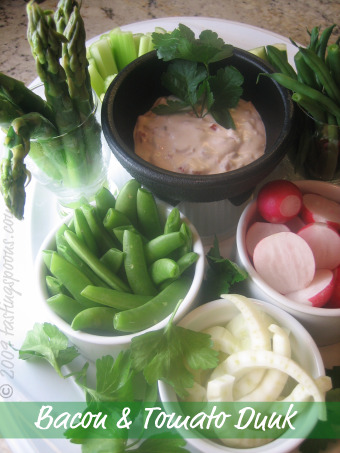
blt-dunk-take-2

The other night I took a veggie platter to the home of some friends, Lucy & Wayne, who live in Pasadena (an hour’s drive from where we live). Lucy is the penultimate hostess – with the most exquisite table settings, and glorious food. Maybe when I grow up I’ll entertain as seamlessly as she does. She’s never flustered. I admire that.

The dinner the other night was a belated Valentine’s celebration. All couples who know one another well. Each person was asked to bring a poem, short story, (joke, perhaps), or some personal story to tell about love. We also shared the stories about how each couple met, which was very fun. Lucy’s dinner was based around food in poetry. There were 3 courses served at the table (my veggies were served in the living room with glasses of champagne prior to sitting down at their beautiful table). With each course, Wayne read a bit of poetry.

The first one was a children’s poem which included something about mincemeat. So Lucy served a delicious, warmed pate with her homemade mincemeat and a phyllo dough “purse” sitting on top (along with a really special apple cider ice wine from Quebec). And it was all topped with watercress and a tasty vinaigrette too. The second course was a poem about pigs, so it was a fabulous stuffed pork roast with baked cabbage and golden raisins, nestled on a mound of fluffy mashed potatoes and a clear gravy drizzled over it all (along with an Oregon Pinot Noir). The third course (dessert) was a poem about blackberries, so we had an incredible 5-layer blackberry cake with blackberry curd (Lucy made that too) and fresh blackberries (that served with 28-year old Port from Portugal). All through the evening, then, the different couples shared stories, jokes, wedding photos. It was a very fun evening. We all had some good belly laughs.

For us, I’d found a little poem in our local paper, which I gave to Dave to read. It’s ever-so-cute. Our newspaper had requested submissions of romantic text messages from readers. Be sure to read it all the way through, and forget about the fact that it’s corny . . .

When you and I are far apart,
Can sorrow break our tender hearts,
I really love you, yes I do,
Sleep is sweet when I dream of you,
All you are is a blooming rose,
Night is here so I must close.
With care read the first word in each line
You will there a question find . . .

Get it, huh, huh, huh? Above published in the Orange County Register, February 14, 2009, and submitted by Donna Johnson, from Long Beach.

When it was MY turn to share, I read a poem from a favorite book of mine: Other People’s Love Letters: 150 Letters You Were Never Meant To See. It’s a precious book, although most of the letters in it could not be repeated here as they’re a bit too risque. The letters, notes and email messages covered a wide range of years (as early as World War II), and are reproduced in the book on whatever they were written on. Lined paper, pink paper, brown paper bags, all myriad of writing surfaces. What I read was a long, LONG list of things a woman loved about her husband. Very sweet, poignant, heartfelt, adorable. Little everyday things, but a very special list. In the addendum to the book, the editor, Bill Shapiro, shared that a few days after the Valentine list was given to her husband, she was killed in an automobile accident. If you’re intrigued by the book idea, go to the Other People’s Love Letters website.

So, let’s get back to food, shall we? Usually when I make this dunk/dip, it’s made with mayo plus the tomatoes, green onions and bacon, but I decided to make a modification – since this was going to be served with veggies instead of crackers or pita chips, I thought the ratio of mayo to tomatoes was too high. So I made it with some light sour cream added. I used some mayo, but added a bit more sour cream to the mixture. And now that I use my alligator chopper so much, I decided to make this without using the food processor. The finely minced tomatoes out of the chopper were the perfect size. So everything was just hand minced, combined and chilled for a few hours before serving.

I served everything in ramekins, standing up as best I could make them. The asparagus and haricot verts were in short, clear glasses. And I put the dunk/dip in a ramekin on TOP of another ramekin turned upside down so the dunk/dip was elevated (looked nicer and made it easier for people to dip the veggies into it). On my huge platter I served fresh asparagus (those spears were eaten first, I think), cucumber slices, haricot verts, radishes (the dip was hard to scoop with them, I must admit), fennel slices, celery, sugar snap peas and carrots. I also served jicama, but I’ll write a separate post about that.
printer-friendly PDF

Bacon & Tomato Dunk Take Two

Recipe: Adapted from Michele Braden,
Fast & Fabulous Hors d’oeurves, 1992
Servings: 6-10

3 slices thick-sliced bacon — minced
2 medium ripe tomatoes
1/4 cup mayonnaise — Best Foods
1/3 cup light sour cream
1 1/2 teaspoons Dijon mustard
3 tablespoons green onions — finely minced
2 tablespoons parsley

1. Cook bacon (very finely minced) until crisp, drain on paper towels and cool.
2. Very finely mince the tomatoes after scraping out the seeds. Finely mince the green onions. Add both to a small bowl, then add the mayo, sour cream, mustard.
3. Add bacon and parsley (saving a little to sprinkle on top if desired), cover, and refrigerate for a few hours and up to 3 days.
Per Serving: 186 Calories; 19g Fat (87.7% calories from fat); 3g Protein; 3g Carbohydrate; 1g Dietary Fiber; 13mg Cholesterol; 231mg Sodium.

If you like this, check out the original Bacon & Tomato Dunk.

If a BLT combination is a favorite for you, check out this recipe for BLT Salad that’s one of my favorites.
A year ago: Armenian Parsley Walnut Salad

Posted in Beef, Soups, on February 23rd, 2009.

steak-mush-soup

When we were out at our desert house last week we were invited to some friends and I offered to bring soup (they did all the rest). I have a cookbook collection at our desert house, but they’re mostly my not-so-favorite ones. With hundreds of cookbooks in my collection I surely should stock the other house with a bit more variety. But anyway, I have a couple of soup books there, and I turned to Lee Bailey’s Soup Meals. Sure enough, found a recipe that would work – fairly low carb and healthy to boot.

steak-mush-soup-pot

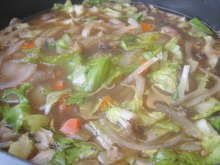
Here's the escarole, barely cooked at this point

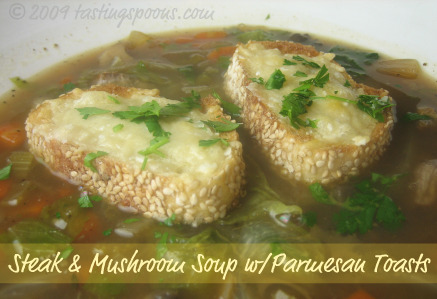
This soup is a beef brothy kind of one – redolent with oodles of onions (too many, actually, so I’ve altered the recipe), mushrooms, escarole, and boosted with beef concentrate. We liked the soup. Very flavorful. We bought a pack of New York steaks at Costco – for that’s the only way I’d consider using such beauties in a SOUP, for goodness’ sake! I doubled the recipe and used three. You could easily use stew beef in this (and cook it much longer, of course), but don’t add the escarole until the last couple of minutes. If you did use a tougher cut of meat, I’d also add some more carrots, celery and onions in the last 10 minutes so you’d have some veggies that are still toothsome.

The first night we ate this we just sprinkled the top with grated Parmesan (not in the recipe). The soup was good, but not sensational. Our friends served some fresh bread right out of the bread machine. I had divided the soup in half, so with the leftovers I broiled some Parmesan on baguette slices and floated them on top of the soup. Also added some more Penzey’s beef soup base. What a difference! The Parmesan is absolutely that umami taste – it made this soup really, really good. If you don’t remember about umami, click HERE for my post about it. The toasts also gave the soup added texture.

The steaks, cut into cubes, are just browned in a separate pan and only added to the soup during the last 2-3 minutes. Having learned with the first serving of it, the second time around I cut up the browned (only) steak cubes even smaller (each 1-inch cube in about 4 pieces) and dropped them into the soup a mere minute or two before serving. If you add it earlier the steak definitely goes from tender to tough. And you certainly don’t want to do that with New York steak! Don’t be put off by the number of ingredients – it really comes together fairly easily. The most tedious part was slicing and chopping the mushrooms and onions.
printer-friendly PDF

Steak & Mushroom Soup with Parmesan Toasts

Recipe: Based on a recipe in Lee Bailey’s Soup Meals
Servings: 8

1 1/2 pounds steaks — New York strip, cut in 1-inch cubes
MARINADE:
2/3 cup canola oil
2 tablespoons lemon juice
1 tablespoon dark brown sugar
2 tablespoons soy sauce — dark, if available
1 teaspoon Dijon mustard
1 large clove garlic — minced
SOUP:
3 tablespoons olive oil
3 tablespoons unsalted butter
1 medium onion — coarsely chopped
1 medium onion — quartered, thinly sliced
2 small carrots — diced
2 stalks celery — diced
1 pound button mushrooms — thickly sliced
1/4 cup flour — for dredging meat (may need more)
1 large bay leaf
6 cups beef stock (or beef concentrate and water)
1 1/2 teaspoons salt
1/2 teaspoon black pepper
1 1/2 pounds escarole — washed, torn into pieces, stems broken
2 cups water — if needed
PARMESAN TOASTS:
1/2 medium baguette — sliced (about 16 slices)
1/2 cup grated Parmesan cheese

1. Whisk marinade ingredients together in a bowl (or combine in a plastic zip-seal bag) and add cubed steak pieces, being sure all are submerged. Set aside for at least an hour, turning once or twice during that time. If doing this a few hours ahead, refrigerate the meat.
2. Meanwhile, heat half the oil and butter in a large stockpot. Add the chopped onion (reserve the sliced onions for later), carrots and celery. Cook over medium to high heat until nicely golden, but not burned, about 5 minutes. Add mushrooms and continue cooking until they are just wilted, just a few more minutes. Add the beef stock and bring to a simmer.
3. Heat a large skillet and add the remaining oil and butter, Toss steak cubes in flour. When pan is hot, add steak cubes in batches (probably 2) to the skillet to brown only (do not cook them through), turning onto at least two sides, about 2-3 minutes total. Do not burn. Remove from pan and set aside.
4. Add the escarole and the sliced onions to the soup broth and continue to simmer for just about 3 minutes until the greens are cooked (about 5-7 minutes). If you’re making this ahead, cool at this point and refrigerate overnight. Add water to soup if it seems too thick.
5. Taste for seasoning (add salt or pepper as needed). The onions will still have just a tiny bit of crunch. Turn off heat and add the steak to the simmering soup.
6. Meanwhile, turn oven on to broil. Sprinkle parmesan cheese on top of each baguette slice and broil toasts just until bubbly and browned around the edges.
7. Scoop soup into wide flat bowls and place Parmesan Toasts (2 per serving) on top. Serve immediately.
Per Serving (assumes you consume all the marinade, so this is way off): 623 Calories; 45g Fat (65.7% calories from fat); 21g Protein; 32g Carbohydrate; 5g Dietary Fiber; 63mg Cholesterol; 2597mg Sodium.

A year ago: White Lady (a fancy drink)

Posted in Essays, on February 21st, 2009.

I know, I know, I know. This blog is mostly about food. But I read an interesting piece in the PC Magazine Digital (the first subscription mag that I’ve started receiving in digital format only – no longer mailed to me in hard copy).

The article, written by John Dvorak, was just riveting. What caught my eye first was the title – about Error 404. Now to you who read this blog for its food content, you might never know what a 404 is! It’s when a link on a website doesn’t work. When it doesn’t work, most websites have a built-in page that announces to you that it’s a error 404. It’s a page template that pops up if anybody accesses something where the chain is broken. So, okay, what’s that got to do with anything, you ask?

John Dvorak was citing some examples of how 404 is going to plague our lives in coming decades (or whatever further error code, that’s currently called a 404). He told the story about reading a very interesting editorial on the London Times’ website within days of 9/11, and had sent the link to lots and lots of people. Was still sending the link to people recently. Then, boom, suddenly the link is an error 404. The Times (one would assume) finally thought it was time to take off lots of stuff from their server. It’s 7+ years later, so why not? John lamented that he’d never printed a hard copy of that editorial. Then, he also mentioned trying to contact a book publisher (I presume, about the use of some quote) from a particular book printed in 1964. The company, the publisher, is no longer in business. Who owns the rights to the book? He doesn’t know. Nobody seems to know. (Quoting from that book could be an iffy situaion if he’s an ethical writer, and I think he is.)

So, taking this one step further, he projects that in 10 years school children (at least here in the U.S.) will be reading all their course material, textbooks, etc. on a Kindle. Books, as a hard copy, won’t even exist. Will those books, or other digital books even be accessible 10 years later? How would people in 2050 quote from a digital book written in 2009, or 2019? Will people be ABLE to access any of the digital media currently in use? My question, how will the Library of Congress keep digital books, I wonder? If you’re interested in the general subject, I think you can get to Dvorak’s editorial – at least I was provided with the link to it.

That got me to thinking about the archiving of so MUCH material that exists only on the internet. Who is keeping all this stuff? (In actuality, it exists on servers and computers ’round the world, computers that will age, deteriorate and die at some point, or are stored with companies that will fold, or go out of business.) In the year 2109, will there even be a record of what was on the internet today (probably not – only things deemed “important” by some people). Printing out hard-copy pages from the internet today – – – in 100 years those pages will be disintegrating. Saving files to a CD – well, will computers in 100 years be able to read a CD? Probably not since people can’t even use 5-inch floppies anymore. Remember those? When I’m gone, my blog will be nothing but internet dust. Even for my great grandchildren who will likely be the only people interested in reading it.

Posted in Desserts, Travel, on February 20th, 2009.

germ_choc_chip_cake_walnuts

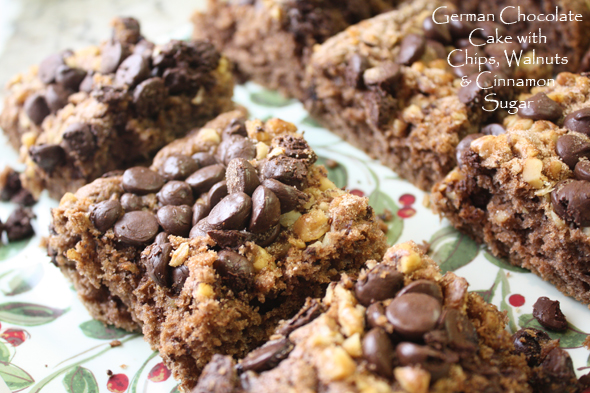
This is not a new recipe to this blog. But I finally got around to taking a photo of it. I’d posted this back in 2007 when I had a fractured foot and was posting recipes, with internet photos or no photos at all.

So, my hubby and I are out at our house in the California desert (it was about 65 yesterday, gorgeous sunshine), and last night after a very light dinner of leftovers, I was craving something sweet. Since we’ve been renting our house here some this season, I knew there wasn’t much in the cupboards, but aha, there WAS a German chocolate cake mix. Sure enough, a few chocolate chips, and pecans in the freezer (the recipe calls for walnuts, but pecans work too). And yes, I had cinnamon, eggs, oil. Took all of about 10 minutes to mix it up (well, maybe 15 since I spilled nearly the whole bag of pecans all over the kitchen floor) and I popped it in the oven.

You can go to the post I did back in ’07 for the full recipe. This is EASY! REALLY EASY! Cake mix, oil, eggs, chocolate chips, nuts, cinnamon and sugar. Done. Makes a 9×13 pan full, great for taking to a potluck. Or camping. Or a picnic. A family favorite I’ve been making since the 1960’s. Nothing like the typical German Chocolate Cake with coconut, etc.

Here are some photos of our desert yesterday when my DH and I toodled around in our golf cart within our complex (1 mile square, 2 18-hole golf courses).

pd-mtns

A view toward the west, of snow-covered San Gorgonio peeking through the clouds.

pd-lake

Another view – lantana in the foreground, an ocotillo just beginning to bloom on the right edge, ponds in the background just begging to swallow your golf balls

pd-petunias

Would you believe petunias are in full bloom here? The risk of frost is past, so they’re safe.


Related Posts Plugin for WordPress, Blogger...