

Get new posts by email:

Archives

Currently Reading

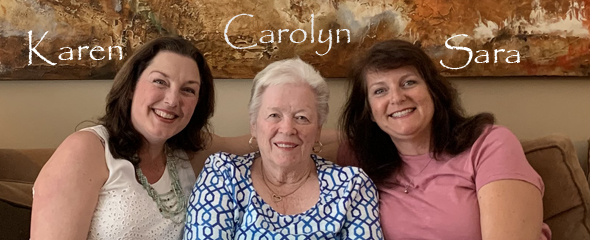
Here are the tastingspoons players. I’m in the middle (Carolyn). Daughter Sara on the right, and daughter-in-law Karen on the left. I started the blog in 2007, as a way to share recipes with my family. I’m still doing 99% of the blogging and holding out hope that these two lovely and excellent cooks will participate. They both lead very busy lives, so we’ll see.

– – – – – – – – – – – – – – – – – – – – – –

BOOK READING (from Carolyn):

Music of Bees, Eileen Garvin. Absolutely charming book about a woman in midlife, lonely, who raises bees, also makes unlikely friends. Heart-warming and very interesting about beekeeping.

A Postcard from Paris, Alex Brown. Really cute story. Dual time line, 1940s and present day about renovating an old apartment in Paris, things discovered.

Time of the Child, Niall Williams. Oh such a good book. Very small village in Ireland, 1960s. A baby is left on the doorstep. The town all whispers and helps. I listened to an interview of the author, which made me like him and his books even more.

Sipsworth, Simon Van Booy. If you like animals you’ll swoon. An old woman who really wants to die finds a tiny mouse in her house and befriends it and finds a reason to live. Utterly charming book.

The Forger’s Spell, Edward Dolnick. True story. For seven years a no-account painter named Han van Meegeren managed to pass off his paintings as those of Johannes Vermeer.

If You Lived Here, You’d be Home by Now, Christopher Ingraham. Could hardly put it down – about a journalist who takes on a challenge to move to small town in Minnesota and write about it. He expects to hate it and the people and place, but he doesn’t. Absolutely wonderful true story.

The River We Remember, William Kent Kreuger. 1950s, Minnesota. A murder and the aftermath. Could hardly put it down. Kreuger has such a vivid imagination and writing style.

How the Lights Gets In, Joyce Maynard. An older woman returns to New Hampshire to help care for her brain-injured son. Siblings and family, lots of angst and resentments.

The Filling Station, Vanessa Miller. Every American should read this book. A novelized retelling of the Tulsa massacre in 1921. Absolutely riveting.

The Story She Left Behind, Patti Callahan Henry. Love this author. Based on a true story. A famous author simply vanishes, leaving her husband and daughter behind. She had invented a mystical language no one could translate. Present day, someone thinks he’s solved the riddle, contacts the family. Really interesting read.

The Girl from Berlin, Ronald Balson. Love anything about Tuscany. An elderly woman is being evicted from a villa there, with odd deed provenance. Two young folks go there to help unravel the mystery. Loved it.

The Island of the Colorblind, Oliver Sacks, M.D. Nonfiction. The dr is intrigued by a remote Pacific island where most of the inhabitants are colorblind. He also unravels a mystery on Guam of people born with a strange neurological problem. Medical mysteries unveiled. Very interesting.

The Bookbinder, Pip Williams. Post 1914 London. Two sisters work at a bookbindery. They’re told to not read the books. One does and one doesn’t. One has visions beyond her narrow world; the other does not. Eventually the one gets into Oxford. Lovely story.

The Paris Express, Emma Donoghue. 1895 on a train to Paris, a disaster happens. You’ll delve into the lives of many people who survived and died in the crash.

A Race to the Bottom of Crazy, Richard Grant. This is about Arizona. Author, wife and child move back to Arizona where they once lived. Part memoir, research, and reporting in a quest to understand what makes Arizona such a confounding and irresistible place.

The Scarlet Thread, Francine Rivers. A woman’s life turned upside down when she discovers the handcrafted quilt and journal of her ancestor Mary Kathryn McMurray, a young woman who was uprooted from her home only to endure harsh frontier conditions on the Oregon Trail.

A Place to Hide, Ronald Balson. 1939 Amsterdam, an ambassador has the ability to save the lives of many Jewish children. Heartwarming.

Homeseeking, Karissa Chen. Two young Chinese teens are deeply in love, but in China. Then their families are separated. Jump to current day and the two meet again in Los Angeles.

North River, Pete Hammill. He always writes such a good story. A doctor works diligently healing people from all walks of life. His wife and daughter left him years before. One day his 3-yr old grandson arrives on his doorstep.

A Very Typical Family, Sierra Godfrey. A very messed-up family. Three adult children are given a home in Santa Cruz, Calif, but only if the siblings meet up and live in the house together. A very untypical scenario but makes for lots of messes.

Three Days in June, Anne Tyler. The usual Anne Tyler grit. Family angst. This wasn’t one of my favorites, but it was entertaining and very short.

Saved, Benjamin Hall. Author is a veteran war reporter. Ukraine, 2022, he nearly loses his life to a Russian strike. Riveting story – he survives, barely.

Grey Wolf, Louise Penny. Another Inspector Gamache mystery in Quebec. She is such an incredible mystery writer.

All the Colors of the Dark, Chris Whitaker. A missing person mystery, a serial killer thriller, a love story, a unique twist on each. Could hardly put it down.

Orbital, Samantha Harvey. Winner of 2024 Booker Prize. I don’t usually like those, but I heard the author interviewed and she hooked me. This is not a normal book with a beginning, a story and an end. It’s several chapters of the day in the life of various astronauts at the ISS (Int’l Space Station). All fictional. She’s been praised by several real astronauts for “getting it” about space station everyday life.

The Blue Hour, Paula Hawkins. An island off Scotland. Inaccessible except when the tide is out. Weird goings on. An artist. A present day mystery too.

Iron Lake, William Kent Krueger. A judge is murdered and a boy is missing. Riveting mystery.

Tell the Wolves I’m Home, Carol Ricks Brunt. 1980s. A 14-yr old girl loses her beloved uncle. Yet a new friendship arises, someone she never knew about.

Four Treasures of the Sky, Jenny Zhang. 1880s, a young girl is kidnapped in China and brought to the United States. She survives with many hurdles in the path.

The Boy Who Fell out of the Sky, Ken Dornstein. Memoir, 1988. The author’s brother died in the PanAm flight that went down in Lockerbie, Scotland. A decade later he tries to solve “the riddle of his older brother’s life.”

Worse Care Scenario, T.J. Newman. Oh my. Interesting analysis of what could/might happen if a jet crashed into a nuclear plant. Un-put-downable.

Song of the Lark, Willa Cather. Complicated weave of a story about a young woman in about 1900, who has a gifted voice (singing) and about her journey to success, not without its ups and downs.

Crow Talk, Eileen Garvin. Charming story which takes place at a remote lake in Washington State, about a few people who inhabit it, the friendships made, but also revolving around the rescue of a baby crow.

The Story Collector, Evie Woods. Sweet story about some dark secrets from an area in Ireland, a bit magical, faerie life, but solving a mystery too.

A Sea of Unspoken Things, Adrienne Young. A woman investigates her twin brother’s mysterious death. She goes to a small town in California to figure it out, to figure HIM out.

The King’s Messenger, Susanna Kearsley. 1600s England, King James. About one of his trusted “messengers,” and his relationship with a young woman also of “the court.” Lots of intrigue.

In the Shadow of the Greenbrier, Emily Matchar. Interesting mystery in/around the area of the famous resort in White Sulphur Springs, West Virginia.

Isola, Allegra Goodman. Hard to describe, survival story on an island in the 1600s.

Save the Date, Allison Raskin. Rom-com, witty, LOL funny. Clever.

The Sirens, Emilia Hart. Numerous time-lines, Australia. Mysteries abound, nightmares, abandoned baby, weird allergies.

Red Clay, Charles Fancher. LOVED this book. Mostly post-Civil War story about the lives of slaves in Alabama during Reconstruction.

Stars in an Italian Sky, Jill Santopolo. Dual time line, 1946 and recent time. Love stories and a mystery.

Battle Mountain, C.J. Box. Another one of Box’s riveting mysteries. Love his descriptions of the land.

Something Beautiful Happened, Yvette Corporon. A memoir of sorts in Greece, tiny island of Erikousa, where the locals hid Jews during WWII. All elusive stories told by the author’s grandmother.

The Jackal’s Mistress, Chris Bohjalian. 1860s Virginia, about a woman who saves the life of a Union soldier. Really good story.

Song of the Magpie, Louise Mayberry. Really interesting story about Australia back in the days when it was mostly a penal colony. Gritty strength of a woman trying to thrive with her farm.

The Boomerang, Robert Bailey. A thriller that will have you gripping the book. About a lot of secrets surrounding the president (fictional novel, remember) and his chief of staff and about cancer. A cure. Such a good story.

Care and Feeding, Laurie Woolever. Really interesting memoir of a woman driven to succeed in the restaurant business. She worked for Mario Batali and then Anthony Bourdain. Gritty stories.

Everything is Tuberculosis, John Green. Maybe not a book for everyone. A real deep dive into the deadly tuberculosis infection, its history. I heard the author interviewed and found the book very interesting.

The Book Lovers Library, Madeline Martin. Fascinating read about Boots’ drug stores’ lending library. And the people who worked in them.

The Arrivals, Meg Mitchell Moore. LOL funny, about a middle-aged couple whose children (and their various family members) return to the family home and the chaos that ensues.

My Life as a Silent Movie, Jesse Lee Kercheval. About grief. A big move to Paris, finding herself a new life with a new set of real blood family.

Escape, Carolyn Jessop. Another memoir about a woman really in bondage in Utah, Mormon plural marriage.


Tasting Spoons

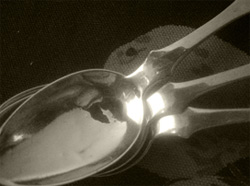
My blog's namesake - small, old and some very dented engraved silver plated tea spoons that belonged to my mother-in-law, and I use them to taste my food as I'm cooking.

Scroll down to the bottom to view my Blogroll

Posted in Cookies, on September 16th, 2013.

baked_apricot_rosemary_bars

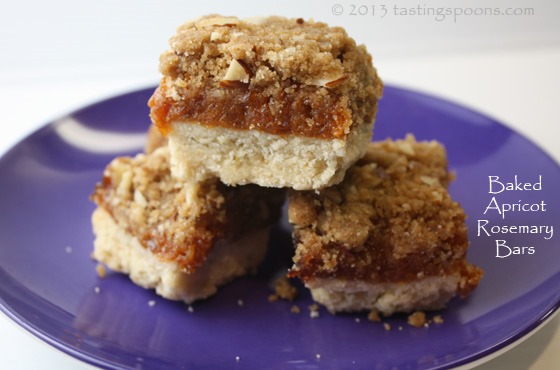
Of the 3 recipes I prepared for a recent event, this one was far and away the most popular. The plate of these were gobbled up in no time, with nothing but crumbs remaining. Perfect with a cup of coffee or tea.

The recipe comes from a cookbook I don’t own, Nuts in the Kitchen: More Than 100 Recipes for Every Taste and Occasion by Susan Herrmann Loomis. Susan is a Francophile, although she is/was an American first, finally settling in northern France and some years ago she opened a cooking school in her home. A decade or so ago I attended a cooking class with her (about her cookbook On Rue Tatin: Living and Cooking in a French Town). She’s actually written many books, the one at top the most recent one.

Reading about this recipe (on David Lebovitz’s blog, as he and Susan are friends, since they live not too far away from one another and both have careers in the food biz) I knew I’d have to try it. The only decision being when and which nut. The when was soon and the which nut was almonds (recipe calls for pecans first, almonds second). The fresh rosemary – such a lovely addition to a sweet bar – is in the base crust. All of it is easy enough to make, although it does require stages. The base must be chilled for at least 30 minutes before baking and the apricot filling must be cooked, pureed, then allowed to cool before proceeding with the recipe. And the base needs to cool to room temp before the bars are put together and finally baked together. So although none of it is difficult, it took several hours to make these and have them ready for cutting and serving – just so you know . . .

One of the requirements for this bar is the use of California apricots. There is a difference between those and the Turkish apricots you more often see. The California ones have a more tart, and bright taste. Turkish apricots for whatever reason, are sweeter. So if you substitute Turkish, reduce the sugar in the filling (probably 1/2 cup down to 1/3 cup). One of the best parts of these is the somewhat piquant taste. At first I thought they were too sweet, but I was baking on/off all day and tasted several cookies, so my palate was jaded when I got to these bars. Two days later they tasted just marvelous with a cup of tea or coffee, and definitely not too sweet.

What’s GOOD: gosh, just loved these. The subtle rosemary is part of what “makes” them, although the apricot puree is thick and tart – good. Would be great for Christmas cookies. I’m sure they’d freeze well, too.
What’s NOT: nothing at all.

printer-friendly CutePDF
MasterCook 5+ file and MasterCook 14 file

* Exported from MasterCook *

Baked Apricot Rosemary Bars

Recipe By: Adapted from Nuts in the Kitchen by Susan Loomis (via David Lebovitz’ blog)
Serving Size: 16

ROSEMARY DOUGH:
12 tablespoons unsalted butter — cubed, at room temperature
1/2 cup powdered sugar
1/2 teaspoon salt
3/4 teaspoon vanilla extract
grated zest of half a lemon
1 1/2 teaspoons fresh rosemary — finely chopped [up to 2 tsp if you like rosemary]
1 3/4 cups flour
APRICOT FILLING:
2 cups dried apricots — use California apricots
1 1/2 cups white wine — or use water
1/2 cup granulated sugar
3 tablespoons honey
2 tablespoons brandy
1 pinch salt
CRUMB TOPPING:
1/2 cup flour
1/2 cup packed dark brown sugar
1/3 cup pecans — coarsely chopped, or almonds
1 pinch salt
4 tablespoons unsalted butter — cubed, chilled

1. Line a 9-inch square pan with aluminum foil then butter the insides or spray with cooking spray.
(In the original recipe, the authors said to grease the pan then line it with parchment paper, leaving an overhang on two sides of the pan.)
2. Make the rosemary dough by creaming the butter with the powdered sugar and salt in the bowl of a stand mixer, or by hand, until it’s light and fluffy. Add the vanilla, lemon zest, and rosemary, then gradually add in the 1 3/4 cup flour, mixing until the dough is smooth.
3. Transfer the dough to the prepared baking pan and pat it flat into the bottom of the pan using lightly floured hands Press it all the way out to all the edges. Refrigerate the dough-lined pan for at least 30 minutes.
(No need to wash the mixer bowl; you can use it as is for the crumb topping in step #7.)
4. Make the apricot filling by combining the apricots, water (or wine), granulated sugar, honey, brandy, and a pinch of salt in a medium saucepan. Simmer over low heat for about 45 minutes, or until all the liquid has just about been absorbed. Let cool for a few minutes, stirring, then puree all of it (including any juices) in a food processor until smooth.
5. Preheat the oven to 350ºF.
6. Baked the rosemary shortbread for 25 to 30 minutes, until golden brown. Once baked, let the shortbread cool to room temperature.
7. Make the crumb topping by mixing together the 1/2 cup flour, brown sugar, nuts, salt, and butter in the bowl of the stand mixer, with the paddle attachment, until the mixture just barely starts clumping together.
8. Spread the apricot filling over the shortbread in the pan evenly, then top with the crumb topping. Press the crumbly topping down just a bit to help it adhere to the apricot filling. Bake for 20 to 25 minutes, until the topping is browned.
9. Remove from oven and let bars cool completely in pan. To slice, lift the bars out of the pan by grasping the edges of the foil. Slice into squares.
Storage: The bars can be stored at room temperature or in the refrigerator for up to three days.
Variation: For those of you wishing to use a different dried fruit, the yield on the apricot paste was 2 cups (about 500g), in case you wish to make a substitution.
Per Serving: 316 Calories; 13g Fat (39.0% calories from fat); 3g Protein; 44g Carbohydrate; 2g Dietary Fiber; 31mg Cholesterol; 91mg Sodium.


Posted in Travel, on September 15th, 2013.

view_sooke_harbour_house

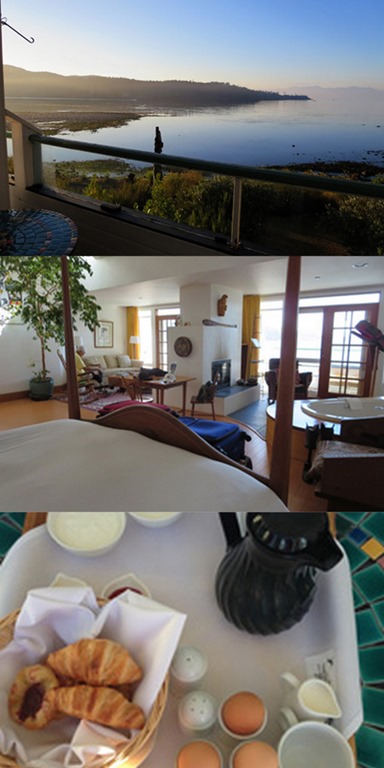
There isn’t much else that could make that view any more beautiful. I stepped out onto our deck, used my new 12 megapixel point and shoot camera and bingo. The far mountain range is Washington State, the Olympic mountains, the very mountains we’d visited the day before.

Some years ago (probably about 10), before I started writing a blog, we flew to British Columbia (one of many similar driving or flying trips we’ve done over the years with BC in the plans) and stayed at Sooke Harbour House. An absolutely stunning inn, along the southern coast of Vancouver Island (not Vancouver the city, but the island that is the home to Victoria and Nanaimo). We were enchanted with the place. So, some months ago when Dave said to me, “I’d like to go back to Sooke Harbour House again” I was on it, and had begun planning a trip. The stay here was the anchor of our trip plans, and all the other places we visited were just part of the grand circle we did, starting and ending in Seattle.

We came across the ferry from Port Angeles (just below the dip in the far mountain range) and drove about 30 miles or so north and then west of Victoria. We’ve stayed in Victoria before, and didn’t think we needed to stay there again, so we headed directly to the inn. The roads are a bit windy and narrow, so it takes awhile to get there – an hour at the most. Sooke is the town itself, Sooke Harbour is, of course, the marina, and the Inn is situated on a promontory overlooking the Straits of Juan de Fuca, and also one of the major shipping lanes in and out of Seattle. Sometimes you’ll see ships, sometimes not. We didn’t this time. But small fishing vessels were going in/out of Sooke morning, noon and night. Sooke

There’s another view from our deck, at early morning.

Secondly, a photo of our spacious room with a living room on the left, a soaking tub on the right and the bedroom part where I stood to take the picture. A double-sided fireplace separated the two. We didn’t use it as it was such pleasant weather both days.

We had dinner at the Inn both nights. They do a set menu, excellent food, lots of fish and shellfish on the menu. They only serve wines from British Columbia. I didn’t have any – Dave ordered the wine pairing to go with the meal. He’s not particularly fond of BC wines – they’re too soft for his liking, but it was all they had.

The Inn provides a nice breakfast tray (bottom picture) to each room – pastries, hard or soft boiled eggs, yogurt, fruit, coffee or tea. The croissants were fabulous. Loved it all. We sat outside on our deck both mornings to enjoy the meal.

We enjoyed reading as we watched the view from our deck. Even the evenings were warm and comfortable. During the in between day, we drove over to Butchart Gardens. We’d been there before too, but it’s always beautiful. I’ll give a synopsis of that in a couple of days.

Posted in Breads, Desserts, on September 14th, 2013.

choc_zucchini_bread

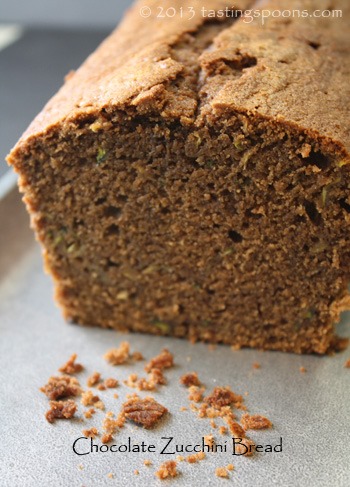
Going on a cooking or baking frenzy is fun, sometimes challenging and tiring. I love trying new recipes (and if you didn’t feel the same, you probably would not be reading my blog), so when I needed to bring goodies for a women’s meeting, I went through the hundreds of to-try recipes I have in my “internet” cookbook arsenal. This is one, and coming up in the next week will be 2 others.

What I wanted were some varied baked things – not just cookies, or bars. Three other women were on my committee and they brought fruit, cold drinks and peanut butter & jelly treats (on bagels). Sometimes the hostess serves coffeecake, since the meeting is in the morning, but I’ve noticed that rarely do people take any of it. I thought finger food would be the best. First up is this easy zucchini bread, a sweet bread that used about 2 zucchini.

The recipe is simple enough, one devised by Peabody, over at Culinary Concoctions by Peabody. Way back in 2008. But who’s counting any of the recipes we set aside to make . . . some day?

You may recall that a few years ago I went through my ancient files – recipes dating from about 1962 to 1995. Within each of those folders were ones I’d made and ones to try (mixing them in the same folder was a bad idea), just divided into categories like salad, beef, veggies, etc. Once I retired in 1995 I started entering all of my favorite recipes into MasterCook and then throwing away the clippings. That took nearly a year, pulling some from those clippings, and many others from cookbooks with flags on the pages. But there were still hundreds – gee, maybe a thousand or more – clippings in the pocket folders. A few years ago I started systematically going through those folders again, tossing some and re-sorting them into sub-categories and returning them to the Pentaflex hangars. As time has gone on, I rarely even refer to those recipes anymore – maybe only every 3 months or so. That tells me I should get rid of them, Period. But gosh, is that ever hard! Don’t know if I can do it. To do so, I’ll have to go through them yet again. Sigh . . . so many recipes, never enough time. I seem to veer toward new recipes, either ones I find on the internet or in the hundreds of cookbooks I own. I could cook for 10 years with nothing but 4-5 of my newer cookbooks. Well, I will think about all that another day . . .

Back to this chocolate zucchini bread. Divine. Oh, I think that’s a no-no word in foodie culture. Bloggers use way too many superlative adverbs – yummy, luscious, delicious, fantastic, greatest, and we’re supposed to nearly forget about using an exclamation point. Oh dear. I’m guilty. Garrett McCord (from Vanilla Garlic) wrote up a post recently about not using the following words: nice, good, bad, great, unctuous (which he says has a totally different meaning than food writers [me included] may use it for) and better than sex. I don’t think I’ve ever used that last phrase, but undoubtedly I’ve used all of the others. But McCord cautions bloggers to clarify – if it’s nice, explain exactly what makes it nice. Or if it’s good, exactly how or why it’s good. I think I do that ever since I added the little blurbs at the bottom of my posts – the what’s good and what’s not. I’ve had a few of my friends tell me that they bypass all the paragraphs I write and simply go to the what’s good and what’s not to decide if they’re going read the recipe and/or print/save it. Or not.

What’s different about this bread is the addition of mascarpone cheese in the mixture. It also is a buttermilk based batter – I always like using buttermilk since it makes cakes and breads so very tender. This one included. My only difficulty was getting the very center cooked through. I used a different sized pan, so I expected the timing to be different than the stated recipe, but after researching all over the ‘net I’ve concluded that moist short (non-yeast) breads like banana bread and I’ll include this bread in the same category since it’s moist from the zucchini, should be baked to an internal temp of about 200°. Some recipes say 190° or even as high as 210° – and I baked mine to 190°, but only after the bread cooled and I cut into the very center, did I discovered that it wasn’t quite cooked, right down the center, inside that crack in the ridge and down about 1/2 inch or so.

The age-old test of whether a cake/bread is done, using the toothpick test, still seems to be a good one, though, if you don’t have an instant read thermometer.

What’s GOOD: loved this stuff. It has the heft of a bread, but it’s very tender (thin slices are not possible with this). It’s not a cake, though – maybe it’s something in between. The chocolate flavor is just right. And if you shred the zucchini finely (mine were a bit on the more-medium sized) you’ll not even see it. It freezes well. A real winner of a recipe, thanks to Peabody.
What’s NOT: nothing, whatsoever. Very worth making.

printer-friendly CutePDF
MasterCook 5+ file and MasterCook 14 file

* Exported from MasterCook *

Chocolate Zucchini Bread

Recipe By: Culinary Concoctions by Peabody (blog)
Serving Size: 16

3/4 cup unsalted butter — at room temperature
4 ounces bittersweet chocolate — chopped
1 cup granulated sugar
1/2 cup light brown sugar
1 1/2 cups zucchini — shredded unpeeled
3 large eggs
1/3 cup mascarpone cheese
1/3 cup buttermilk
1 tsp vanilla extract
1/2 tsp ground cinnamon
1 tsp baking powder
1/2 tsp baking soda
1/8 tsp salt
2 cups all-purpose flour

1. Heat oven to 350°.
2. Melt together butter and chocolate over medium heat in a double boiler.When melted remove from heat. Mix in mascarpone cheese until it melts in with the chocolate mixture. (I placed my metal Kitchen Aid bowl on top of a simmering pot of water and just melted the mixture right in the bowl; then the bowl went directly into my stand mixer without dirtying another pot.)
3. Place mixture into a bowl of an electric mixer fitted with paddle attachment. Mix in sugars, zucchini, eggs and vanilla on low speed until well combined.
4. In a large bowl sift together the flour, baking soda, baking powder, cinnamon and salt.Add half of the dry ingredients to the mixer bowl. Then add the buttermilk. Then add the remaining dry ingredients.
5. Spoon batter into 2 greased and floured 8×4-inch loaf pans. Bake for 35 to 45 minutes(about 20-25 minutes for mini loaves) or until toothpick inserted in center comes out clean. If you use an instant read thermometer, bake until the very center (toward the top) is 200°. The last part of this bread to finish baking is that center portion, inside the ridge crack. Cool 10 minutes on a wire rack. Remove from pans and continue to cool on wire rack.
Per Serving: 265 Calories; 15g Fat (48.1% calories from fat); 4g Protein; 32g Carbohydrate; 2g Dietary Fiber; 66mg Cholesterol; 111mg Sodium.

Posted in Travel, on September 13th, 2013.

dungeness_barn

A few photos from the Dungeness Barn B&B near Sequim, Washington.

Whenever we plan a trip, I frequent Trip Advisor. It’s my favorite trip planning site, no matter where I’m going. I scour their site for ideas about places to go, things to do, and mostly for places to stay. Then once the plan is in place I research restaurants. After Dave and I more-or-less decided our destinations (British Columbia and specifically Vancouver Island – near Victoria) I started plotting the trip on a physical map, finally deciding we’d go to the Olympic Peninsula area first, since Dave had never been to the Park there. We thought about driving the whole way from So. California to British Columbia (I do 99% of the driving), but with us still in full summer temps, it would have been several days of fairly uncomfortable heat. So, we flew into Seattle, rented a car and drove about 3 hours or so out onto the Olympic Peninsula. My parents actually lived in Port Townsend, WA for a few years before they returned to Southern California their last 10 years (mid-80s to mid-90s).

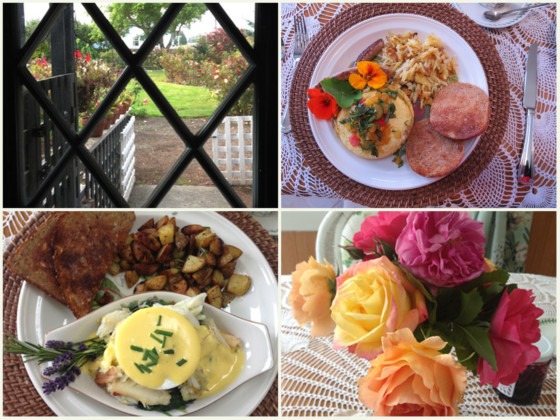
We stayed at a B&B in Sequim (pronounced skwim), a little town in between Port Townsend and Port Angeles. An adorable place called the Dungeness Barn Bed & Breakfast, a few miles outside of the Sequim village, right on the ocean. We loved our room (on the ground floor), loved the inn itself (used to be a dairy barn back in the day, now converted to a B&B), loved the owner(s), and thought the breakfasts were off the charts.

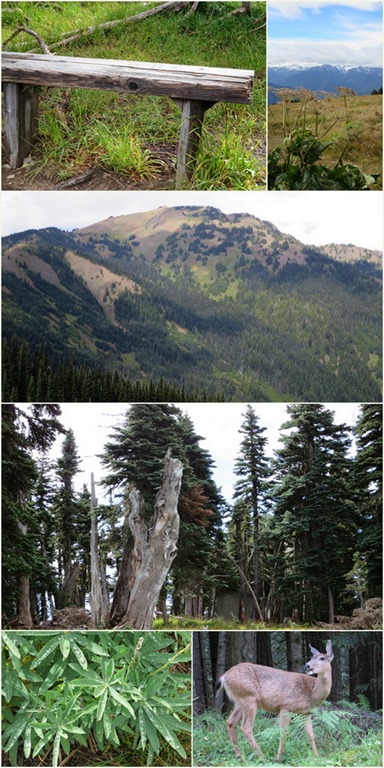
We spent 2 days and nights there, and on the in between day we drove up to the top of Hurricane Ridge in Olympic National Park. It was a clear day – the sun shone brightly most of the day – and it was well worth the drive. Pictures below are ones I took in the park. The deer (protected, obviously), were quite tame, although once you got within about 10 feet of them, they’d skitter away. Prior to our trip, I visited the webcams up on the mountaintop several times, to get an idea about the weather. In case you’re interested, here’s a website that provides lots of info about the Park – called 10Adventures.

hurricane_ridge

A very small aside piece of trivia – the green plant you see just above – the leaves are shaped the way they are because often the summers are dry, so the leaves provide a trough for any dew or raindrops to nourish the bush so it can stay alive during the short, but hot summer.

We had dinner one night at the Alder Wood Bistro. A great choice. We went early, as it’s one of the most popular restaurants in the region. Had a super dinner including some fried calamari that was as good as any I’ve ever eaten.

After we spent part of the day at the top of Hurricane Ridge, we drove back down to nearly sea level and drove 20-30 miles further west to Lake Crescent. It’s also part of the park, and has one of those old, clapboard wood lodges and cabins that are such nice summertime retreats for families. We didn’t stay there (it’s somewhat pricey, but all the rooms are for a small group, starting at about $200+ per night), but we sat out on the lake edge, in comfy (but hard) Adirondack chairs looking out on the shimmering lake and watching people dive into the lake from the small pier. We had our Kindles with us, so we just sat and enjoyed the tranquility for an hour or so. The place is the Lake Crescent Lodge, if you’re interested. Our dinner in the Lodge was not memorable. In fact I returned my pork loin dinner because it had been brined and it was too salty for me to eat. Ordered salmon instead. It was okay; not great. But the scenery was beautiful.lake crescent

The next morning we drove to Port Angeles and lined up at the ferry dock to board the car ferry to Victoria. After an uneventful and pleasant ferry ride, we disembarked in downtown Victoria and headed out. I’ll tell you about the next segment of the trip in a couple of days.

Posted in Desserts, easy, on September 12th, 2013.

choc_pistachio_bundt_cake

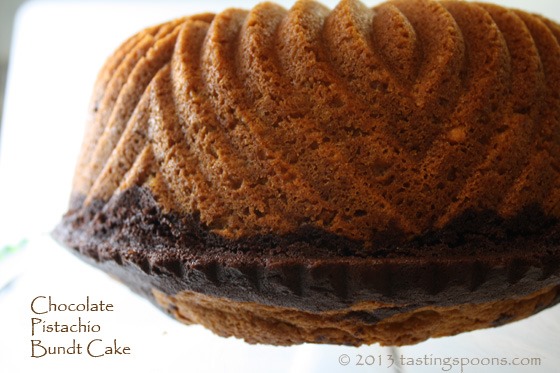
Does this cake look like it’s sitting on a mirror? It isn’t really – it just mounded high in my bundt pan and sits awkwardly on it’s top/bottom and it happens that the chocolate swirl just looks quite reflective. Anyway, this is one of those easy cake-mix concoctions, and a winner it is. Read on . . .

If I’d ever heard of this cake before, I don’t recall it. But I was intrigued after reading Bonny Wolf’s book, Talking with My Mouth Full: Crab Cakes, Bundt Cakes, and Other Kitchen Stories. I wrote up a post about it – I loved the book. Loved Bonny Wolf’s creative writing and the fun, witty and interesting stories she writes. Included in the book were a smattering of recipes. As I searched the internet for info about this cake I discovered than the genesis of it was a Pillsbury bake-off for that tunnel of fudge cake. Remember that? This is reminiscent of that cake, but it does not have the lava cake oozing in the middle as the bake-off recipe did. That cake called for a buttercream frosting packaged mix that Pillsbury no longer produces. So bakers have devised other recipes. This definitely isn’t one of those, so don’t be confused here. This cake is just a chocolate pistachio swirl cake.

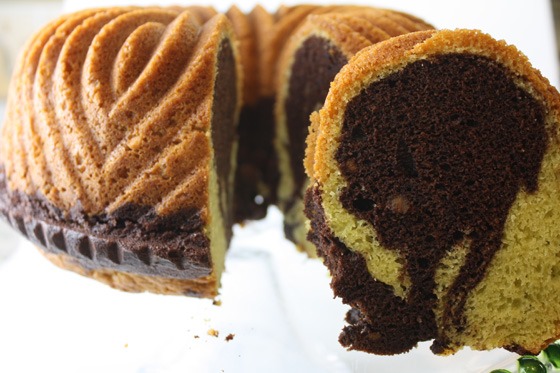
A couple of days ago I gave you the recipe for the chocolate syrup. Oh, what a revelation that was! Home made chocolate syrup. I used 2/3 cup of it in this cake. The yellow (or white) cake mix batter is mixed with a pkg of instant pistachio pudding (the dry stuff, makes the batter quite green), then you add in orange juice (that was a bit different), oil, eggs, water, etc. Part is poured into the pan, then the remaining is mixed with the chocolate syrup, poured on top, swirled with a knife and baked. The finished cake has virtually no green tint to it – maybe the heat baked out the color, but I’ll tell you, when I started, the batter was definitely green!

choc_pistachio_cake_cutNot wanting to over bake it, I researched the internal temp of baked cake – 190°. (Across the internet, recommendations varied between 190° and 214°, but the one suggesting the high temp was for a pound cake – I decided to go for the low temp.) So, with my oven at 350°, the cake took 55 minutes for me. I let it rest for 15 minutes, then inverted it. The recipe indicated to dust with powdered sugar. I didn’t do that part, as I was serving the cake at an outdoor music event (our local symphony performing music from Pixar movies) and we eat dessert at intermission, sitting in our seats along with cups of coffee and Bailey’s. Trying to dust with sugar at that point just would be too difficult. All 6 of us who had the cake raved about it though, with or without the sugar!

What’s GOOD: the cake is incredibly moist. The kind of moist that is hard to get outside of using a cake mix. It was quite easy to make. I did make the chocolate syrup (but you don’t have to) as well. The cake kept very well for several days. The chocolate flavor will depend entirely on the brand and type of cocoa you use. Mine was a higher fat Natural Dutch Process cocoa (24%) from Penzey’s. Or use Hershey’s Special Dark. Everyone liked the chocolaty flavor.
What’s NOT: nothing other than I don’t keep instant pistachio pudding on hand, so a trip to the market was required!

printer-friendly CutePDF

https://tastingspoons.com/pdf/Desserts/choc_pistach_bundt_cake.mx2

 and MasterCook 14 file

* Exported from MasterCook *

Chocolate Pistachio Bundt Cake

Recipe By: Eating with Your Mouth Full, by Bonny Wolf, 2006
Serving Size: 12

18 ounce yellow cake mix — or white cake mix
3 ounces instant pistachio pudding mix
1/2 cup orange juice
1/2 cup water
1/2 cup vegetable oil
4 large eggs
1 teaspoon almond extract
3/4 cup chocolate syrup
Powdered sugar for garnish

1. Preheat oven to 350°.
2. Grease and flour a 12-cup bundt cake pan (or a 10-inch tube pan).
3. In a mixing bowl combine the cake mix, pudding mix, orange juice, water, eggs, oil and almond extract. With an electric mixer blend at low speed until moist. Beat for an additional 3 minutes at medium speed, scraping bowl occasionally.
4. Pour 2/3 of batter into cake pan. Add chocolate syrup to remaining batter. Mix well. Pour over batter in pan.
5. Run a knife through the batter to marble it. Bake for 50-60 minutes or until the internal temperature (using an instant read thermometer) reaches 190°.
6. Remove and rest on a rack for 15 minutes, then loosen edges with a blunt knife or a plastic spreader and turn over onto a cake plate. Sprinkle with powdered sugar if desired.
Per Serving: 343 Calories; 16g Fat (38.5% calories from fat); 4g Protein; 53g Carbohydrate; 1g Dietary Fiber; 72mg Cholesterol; 433mg Sodium.

Posted in Travel, on September 11th, 2013.

IMG_0138

Can you believe that’s real? This photo (yes, I took it) has not been photo-enhanced – not one single bit. That’s the straight picture right out of my camera. It was taken a few nights ago when we were having dinner on Lummi Island, Washington. The sun is setting over the hills on Orcas Island. Obviously, we’ve been on a trip. You’ll see more about this in coming days. I’ve sorted the photos, re-sized most of them for including in posts here on the blog. Now I just need to write up the stories. This will do for today. The temperature that evening was about 65° F after a mostly cloudy/rainy/misty/foggy day so typical of the Pacific Northwest.

Posted in Desserts, Miscellaneous, on September 10th, 2013.

chocolate_syrup

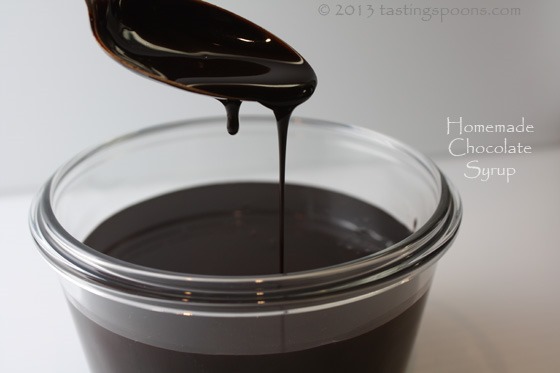
Oh, chocolate syrup, where have you been all my life? I cannot believe that since I started cooking when I was 20, to now when I’m in my 70s, that I’ve never thought to MAKE chocolate syrup. But of course, home made syrup would be better than the Hershey’s plastic squeeze bottle. Ha. By a long shot!

And it’s so EASY! It’s nothing more than water, sugar, powdered cocoa (unsweetened, Dutch process), salt and vanilla. You do have to cook it – but hey, it takes less than 10 minutes to make, start to finish, including going to get the ingredients. So you’ll have no excuse for not trying it.

I will tell you, however, that I buy a specialty cocoa, Penzey’s, their half pound bag. Their cocoa is really chocolaty, dark and doesn’t lump. I only use it in special things I make – where I’m sure the taste will come through in the finished baked good. I also use Hershey’s Special Dark when I can find it, but I’m all out of it at the moment.

The recipe came from Gourmet, back in 2003, according to epicurious. I looked at several recipes before I tried this one. Why this one? Because one commenter said she’s tried lots and lots of syrup recipes and once she tried this one, she’s never looked back. That was all the convincing I needed. Another commenter said this syrup is addictive – when you realize that it’s nearly fat-free – it’s not like eating chocolate candy, but you get the taste of full chocolate – she’d even sneak in the refrigerator now and then for a spoonful.

In a couple of days I’ll post a recipe for a bundt cake that I made with this chocolate syrup, then you’ll know why I went to the trouble of making the syrup myself. Once you dissolve (boil) the sugar and water, you add the cocoa and use a whisk to mix it in. The cocoa wants to clump, so using a whisk is necessary. I actually used one of those bounce-up-and-down whisks for this, to make sure there weren’t any little pockets of cocoa. It simmers for 3 minutes, while you whisk, and it’s done. It thickens up more when it cools. With my spatula in hand, once I poured all the syrup in the jar you see at top, I carefully scraped every last smidgen into my mouth. <grin>

So far I haven’t tried it ON anything, but if I do so before this post goes up, I’ll come back in and edit this part. What I tasted on the spoon was sensational. That ultra-dark chocolate taste I was looking for.

What’s GOOD: how EASY it is to make. I’ll never go back to Hershey’s squeeze bottle. Taste is fantastic; of course, the quality of the cocoa powder will determine how great the chocolate flavor is. Worth seeking out some good stuff.

What’s NOT: gosh, nothing.

printer-friendly CutePDF

MasterCook5+ file and MasterCook 14 file

* Exported from MasterCook *

Chocolate Syrup

Recipe By: Gourmet Mag, Feb. 2003
Serving Size: 16

1 cup water
1/2 cup sugar
2/3 cup unsweetened cocoa powder — preferably Dutch-process
1/4 teaspoon salt
1 teaspoon vanilla

Serving Ideas: This syrup is delicious over ice cream or as a base for an intense hot chocolate (heat 1 cup milk with 1/3 cup syrup).
1. Bring water and sugar to a boil, whisking until sugar is dissolved.
2. Whisk in cocoa and salt and simmer, whisking, until slightly thickened, about 3 minutes. Remove from heat and add vanilla, then cool (syrup will continue to thicken as it cools). Makes about 1 cup.
Per Serving: 33 Calories; trace Fat (11.0% calories from fat); 1g Protein; 8g Carbohydrate; 1g Dietary Fiber; 0mg Cholesterol; 35mg Sodium.

Posted in easy, Veggies/sides, on September 8th, 2013.

garlic_green_beans_dry_pan_roasted

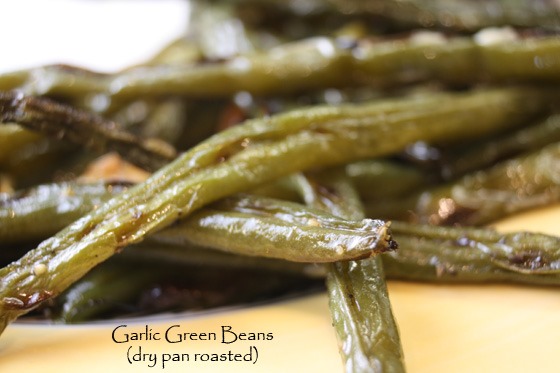
Well, the pan wasn’t quite dry, but almost. Just a little dab of butter was used to pan roast these delicious little beauties. It can’t get much easier than these.

Catching up on all the blogs I read is a steady, ongoing thing for me – I read so many, and if I let it get away from me, I’ll have over a thousand to read. Definitely over the top, and almost depressing to me – makes me feel like I can’t ever catch up! I can power-read occasionally – because it’s something I don’t like, or don’t think I’ll like, or it’s a subject not-dear to my heart. But when I read the Food52 blog pieces, generally I’m clicking over to the actual story and recipe on nearly every post. And they post several a day.

Perhaps you’ve already done these beans before – I never had, and it boggles my mind that you can actually cook green beans in nearly a dry skillet. Yup! The recipe is Spanish in origin, and a simpler method could hardly be found! Penelope Casas posted it on Food 52 recently. Mine, in the photo up top there, got a tad overdone, but they were still so tasty that my DH ate every single one on his plate before I could blink an eye, just about. And I finished off mine in a jiffy as well, before I even took a bite of the pork chops. And talk about easy.

Melt a little bit of butter, heat the pan to medium-high, toss in a bunch of cleaned, stem-trimmed green beans (dry them off well if you’ve washed them) and stir them around. In a few minutes they’ll begin to brown – you want those toasted brown spots on them. Not black, but several little strips of dark brown is just how you want them to be. Then, put a lid on it and turn down the heat. The instructions are specific – resist the temptation to add water, or anything at all. Just turn down the heat and cover, and cook them for about 15 minutes (depending on the size of the beans – if they’re those tiny haricot verts, less time will be needed). The moisture from the beans themselves will steam them done. Really. Yes. It works. Trust me. Then you toss them with the garlic and salt, and they’re ready to serve. Just like that.

What’s GOOD: How incredibly easy they were to make, and yes, I did want to put a little bit of water in that pan, but could hear the directive in my head – resist the temptation, the voice said. Delicious. I almost dare you not to like them! And yes, I’ll definitely be making them again. Sooner rather than later, if that tells you anything.

What’s NOT: Nothing at all – maybe just being careful about the heat levels – not too hot when you’re browning them (no burning) and then much lower when you’re cooking them (no burning then, either).

printer-friendly CutePDF

MasterCook 5+ file and MasterCook 14 file

* Exported from MasterCook *

Garlic Green Beans (Judias Verdes con Ajo)

Recipe By: Penelope Casas, on Food52, July 2013
Serving Size: 4

3/4 pound green beans
1 tablespoon butter
1 clove garlic — crushed
Coarse salt

1. Snap off the tops of the beans. Melt the butter in a skillet, add the beans, and cook them over a medium to medium-high flame, stirring, until they begin to brown.
2. Lower the flame, cover, and cook 15 to 20 minutes, or until the beans are the desired tenderness, stirring occasionally.
3. Mix in the crushed garlic, sprinkle with salt, and serve immediately.
Per Serving: 50 Calories; 3g Fat (48.6% calories from fat); 1g Protein; 6g Carbohydrate; 3g Dietary Fiber; 8mg Cholesterol; 34mg Sodium.

Posted in Grilling, Miscellaneous, Pork, on September 6th, 2013.

pork_chop_spicy_pesto_finger_lime_caviar

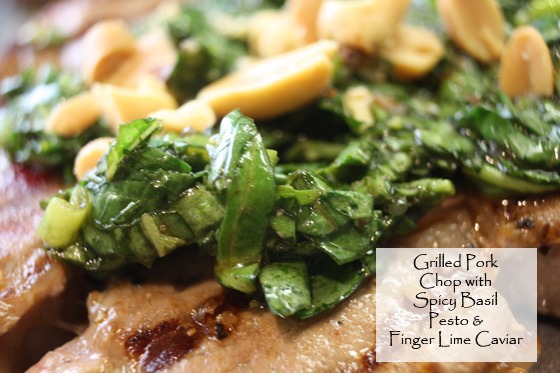
As a food blogger, it’s so fun when a company contacts me – gee, little old me – asking if they can send me some food product to try. No charge. No strings attached. Actually, Freida’s contacted me about Hatch green chiles, but almost as an afterthought, they threw in a box of finger limes.

Prior to this, I’d only read about finger limes. Before our trip to Australia 2 years ago, I thought I’d scour the food markets there (if I could) to find some. I wanted to taste them. (Alas, it was the wrong time of year for finger limes, so no, I didn’t see a one.)  The whole idea of the finger limes is so bizarre, in a way. Let’s backtrack . . . finger limes were developed in Australia. The limes are small, some pink, yellow, green and off white. When you cut them in half and squeeze them, the little balls of encapsulated lime juice roll out, almost like a roll of fluff. But they’re not fluff, they’re these little sacs of lime juice. Here you can see what they’re like. finger_limes2

The average finger lime, uncut, is about an inch long. I cut several in half and gently squeezed. As I was working , I cut several of the limes more lengthwise and tried to extract the little juicy gems. Hard to do, actually, but once I cut them in half crosswise, and did the squeeze technique, they came right out. I have yet to try these on a piece of fish – that will be the ultimate test, I think, with a bunch of these adorable things scattered on top of a sizzling hot swordfish steak. Some marketing type came up with the “caviar” name, but it’s actually very apt as the sacs kind of pop in your mouth.

The origin of the relish came from Southern Living. It is called a Peanut-Basil Relish. The basil is chopped up finely, then you add green onion tops (only), some fish sauce, garlic, sesame oil (a tiny amount) and olive oil. Serrano pepper was in the mixture, but I didn’t have one, so I substituted some chipotle chile. And then I got the idea about using the finger limes. Peanuts have a role in this – I kept them separate until I was ready to serve (because they absorb liquid easily). It took about 5 minutes to make the relish.

Meanwhile, I sprinkled about a teaspoon of light soy sauce on the pork chops, then a bit of olive oil and some Montreal pepper seasoning. Those went on the grill until the meat reached 150° and they were perfectly done. I spread the relish on top and we chowed down. It was delicious. I happen to have a bumper crop of basil at the moment and this made good use of it. The relish recipe suggested if you have left overs, to mix into pasta.

What’s GOOD: the relish is ever-so easy to make, and the chops were simple to season and grill. Loved the Asian flavors – they’re not overwhelming at all (either the soy sauce on the meat or the fish sauce in the relish) but gave it a piquant taste altogether. The relish would be delish on other things – it does need to be used right away, I think. The little bit that was left in the bowl when I got done was turning black, which is what basil does when it’s bruised and wet. I could have whizzed it up in the food processor and made a paste (with more oil, probably) but I liked it as a kind of rough relish.
What’s NOT: really nothing at all. Liked everything about it.

printer-friendly CutePDF
MasterCook 5+ file and MasterCook 14 file

* Exported from MasterCook *

Grilled Pork Chops with Spicy Basil Relish and Lime Caviar

Recipe By: Partly my own ideas, part adapted from Southern Living.
Serving Size: 4

PORK CHOPS:
2 1/2 pounds bone-in pork sirloin chops — or any cut of pork chops
4 teaspoons light soy sauce
2 tablespoons olive oil
Montreal seasoning pepper to taste
BASIL-PEANUT RELISH:
4 tablespoons green onion tops — (green part only)
1 1/2 cups basil leaves
2 cloves garlic — crushed
2 teaspoons fish sauce
1/2 teaspoon sesame oil
4 teaspoons finger lime caviar — or fresh lime juice
4 tablespoons olive oil
2 tablespoons unsalted peanuts — chopped

1. Dry pork chops with paper towels. Spread soy sauce on pork, then olive oil, followed by a moderate amount of Montreal pepper seasoning.
2. Grill pork, searing both sides, until the interior temperature reaches 150°. Remove to a heated platter, tent with foil and set aside for just a few minutes.
3. Meanwhile, in a bowl combine the green onion tops, chopped basil (use a ceramic knife if you have one, so it doesn’t bruise the basil), crushed garlic, fish sauce, sesame oil, olive oil, lime caviar (or lime juice) and add the peanuts last (or sprinkle them on top when serving). If you have left over relish, add a bit more oil and use it to season rice or pasta. Use it within a day, as the basil will turn black and look very unpalatable. Spread the relish on top of the grilled pork chops.
Per Serving: 476 Calories; 34g Fat (64.0% calories from fat); 39g Protein; 3g Carbohydrate; 1g Dietary Fiber; 1mg Cholesterol; 293mg Sodium.

Posted in Miscellaneous, Vegetarian, on September 4th, 2013.

dianes_dads_summer_sandwich

This came about because I was listening to NPR’s “All Things Considered,” the “Found Recipes” segment. You may THINK this sandwich doesn’t sound or look all that worthy of a blog post, but I’m telling you it absolutely IS good, if not fantastic.

So, the NPR program was all about mid-summer favorite dishes. Listeners were invited to send (or call) in their suggestions and the story that went along with the recipe, and the list was narrowed down to 3. Those 3 contenders’ stories (in their voices) were featured on the program, then listeners were asked to vote for their favorite. This recipe was the winner, and when I listened to the 3 stories, this is the one that stood out in my mind too. It was so unusual, I just had to try it myself.  (The other two stories were about a strawberry trifle and a spicy cole slaw).

We don’t keep sharp cheddar on hand, so we needed that, and a hothouse cucumber. And by the way, the author says it’s really important to have sharp cheddar, not medium or mild. The slice does not need to be all that thick to do its job. We have good grainy bread, but at the last minute I decided to make it with the super-soft white bread I had in the freezer. Usually the bread I use is a thin sandwich bread, but my DH bought the wrong kind. Oh well, no matter.

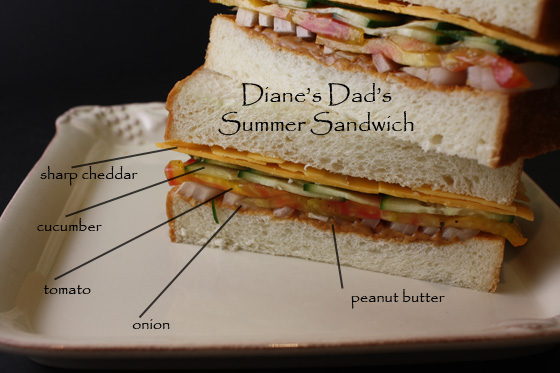
According to the story from Marti Oleson (an elementary school librarian), she used to work with Diane Dickey of the recipe’s name, but the recipe, if you can call it that – yes, it IS a recipe – was from Diane’s Dad. Hence the full title. According to the story – this sandwich, composed of bread, peanut butter, onion, tomato, cucumber and cheddar cheese – must be made in a specific stacking order. Here’s the exact order, from the bottom up . . .

P – peanut butter, CRUNCHY

O – onion

Cu – cucumber

T – tomato

Ch – cheddar, SHARP

My brain is getting old and remembering that order was going to be a problem, so I needed an acronym – POCU-TouCH. Not quite remember-able. but maybe it will stick in my brain. I’ve added the ou in the middle just because it helps to make a word –  and added the u for cucumber and the h for cheddar. Got it? Okay, good.

The full sandwich (2 regular slices, preferably grainy bread) uses 2 T. of crunchy peanut butter. I made a half a sandwich, so of course, used just 1 T. crunchy peanut butter. I also soaked the regular  onions in some acidulated water (1/2 c water, 1 T white vinegar) because I’m not so crazy about raw onions. Nor did I want to buy a sweet onion (they’re expensive) for just one slice of it. Soaking doesn’t take out the crunch from a regular onion, but it removes the rawness from the onion. I had a beautiful yellow heirloom tomato with just a few tinges of red on it. I sprinkled the tomato with salt and pepper, then added the thinly sliced hothouse cucumber, and finally the 2 thin-thin slices of sharp cheddar.

I took my first bite. Oh my goodness! Was it ever good. I mean it. I really, really mean it. How to describe it – you taste and feel the crunchy cucumbers and onions, but the tomato slightly squishes (in my sandwich, the tomato is thicker than any of the other interior components), and gives some nice moisture to the bite. The cheddar gives it loads of flavor. And the peanut butter – funny thing – I couldn’t even taste it until the last when all the cucumbers and onions were gone, when all that remained were tomato and cheddar.

When I entered the recipe into my MasterCook recipe program, it had a big hissy fit over the “1 slice cheddar cheese” – either the program’s got a bug, or defining calories of a “slice” of cheddar cheese is just not specific enough. It wanted to add about 800 calories for 2 slices of cheese. At any rate, the calories are a little off on the recipe below, but not by much. I ate HALF a sandwich and it satisfied me all afternoon. I’m not including the nutrition because I had to remove a few ingredients and make them text (meaning no calorie count added). Without doing that the calorie count was over 1800 calories. Adding in each ingredient, I finally narrowed it down the problem to the slice of cheese (obviously a variable) that was throwing off the numbers. Anyway, this sandwich is about 550 calories for a whole one. Maybe 600. Next time I’ll make it with the very thin sandwich bread. Or maybe I’ll use the good grainy bread I have. But eat it again, I will!

What’s GOOD: everything about it. The crunch from the cucumbers and onions, first and foremost. The fresh veggies. The squishy tomato. The soft, but tasty bread. Oh, the cheddar too. It’s just fantastic. Will I make it again? You betcha! Sooner rather than later, I’ll tell you for sure!
What’s NOT: nothing at all. It’s fabulous. Note that I made it with a soft white bread – you can decide. I also specify Laura Scudder’s peanut butter, but you can use whatever brand you want.

printer-friendly CutePDF
MasterCook 5 file or MasterCook 14 file

* Exported from MasterCook *

Summer Sandwich

Recipe By: Adapted slightly from NPR’s All Things Considered, Found Recipes, July, 2013
Serving Size: 1 (or 2 if you’re sharing one sandwich)

2 slices whole grain bread
2 tablespoons Laura Scudder’s Crunchy Peanut Butter
1/2 slice sweet onion — (thinly sliced) or sweet red onion
12 thin slices hothouse cucumber
2-4 slices ripe tomato
Salt and freshly ground black pepper to taste
sharp cheddar cheese slices

1. On the bottom slice of bread spread the crunchy peanut butter.
2. Separate the onion and place on top of peanut butter (you can use regular onion, but soak in acidulated water for 15 minutes to reduce the rawness of it – 1/2 cup water, 1 T white vinegar).
3. Overlap the cucumber slices on top of the onion, adding more layers if the slices are really thin.
4. Place sliced tomatoes on top of cucumber.
5. Add cheddar cheese and place top bread on. Pick up sandwich with both hands, with peanut butter on the BOTTOM and dig in!

Related Posts Plugin for WordPress, Blogger...