

Get new posts by email:

Archives

Currently Reading

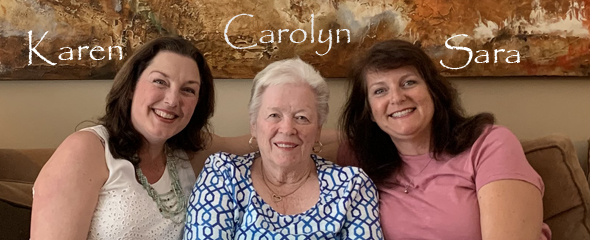
Here are the tastingspoons players. I’m in the middle (Carolyn). Daughter Sara on the right, and daughter-in-law Karen on the left. I started the blog in 2007, as a way to share recipes with my family. I’m still doing 99% of the blogging and holding out hope that these two lovely and excellent cooks will participate. They both lead very busy lives, so we’ll see.

– – – – – – – – – – – – – – – – – – – – – –

BOOK READING (from Carolyn):

Music of Bees, Eileen Garvin. Absolutely charming book about a woman in midlife, lonely, who raises bees, also makes unlikely friends. Heart-warming and very interesting about beekeeping.

A Postcard from Paris, Alex Brown. Really cute story. Dual time line, 1940s and present day about renovating an old apartment in Paris, things discovered.

Time of the Child, Niall Williams. Oh such a good book. Very small village in Ireland, 1960s. A baby is left on the doorstep. The town all whispers and helps. I listened to an interview of the author, which made me like him and his books even more.

Sipsworth, Simon Van Booy. If you like animals you’ll swoon. An old woman who really wants to die finds a tiny mouse in her house and befriends it and finds a reason to live. Utterly charming book.

The Forger’s Spell, Edward Dolnick. True story. For seven years a no-account painter named Han van Meegeren managed to pass off his paintings as those of Johannes Vermeer.

If You Lived Here, You’d be Home by Now, Christopher Ingraham. Could hardly put it down – about a journalist who takes on a challenge to move to small town in Minnesota and write about it. He expects to hate it and the people and place, but he doesn’t. Absolutely wonderful true story.

The River We Remember, William Kent Kreuger. 1950s, Minnesota. A murder and the aftermath. Could hardly put it down. Kreuger has such a vivid imagination and writing style.

How the Lights Gets In, Joyce Maynard. An older woman returns to New Hampshire to help care for her brain-injured son. Siblings and family, lots of angst and resentments.

The Filling Station, Vanessa Miller. Every American should read this book. A novelized retelling of the Tulsa massacre in 1921. Absolutely riveting.

The Story She Left Behind, Patti Callahan Henry. Love this author. Based on a true story. A famous author simply vanishes, leaving her husband and daughter behind. She had invented a mystical language no one could translate. Present day, someone thinks he’s solved the riddle, contacts the family. Really interesting read.

The Girl from Berlin, Ronald Balson. Love anything about Tuscany. An elderly woman is being evicted from a villa there, with odd deed provenance. Two young folks go there to help unravel the mystery. Loved it.

The Island of the Colorblind, Oliver Sacks, M.D. Nonfiction. The dr is intrigued by a remote Pacific island where most of the inhabitants are colorblind. He also unravels a mystery on Guam of people born with a strange neurological problem. Medical mysteries unveiled. Very interesting.

The Bookbinder, Pip Williams. Post 1914 London. Two sisters work at a bookbindery. They’re told to not read the books. One does and one doesn’t. One has visions beyond her narrow world; the other does not. Eventually the one gets into Oxford. Lovely story.

The Paris Express, Emma Donoghue. 1895 on a train to Paris, a disaster happens. You’ll delve into the lives of many people who survived and died in the crash.

A Race to the Bottom of Crazy, Richard Grant. This is about Arizona. Author, wife and child move back to Arizona where they once lived. Part memoir, research, and reporting in a quest to understand what makes Arizona such a confounding and irresistible place.

The Scarlet Thread, Francine Rivers. A woman’s life turned upside down when she discovers the handcrafted quilt and journal of her ancestor Mary Kathryn McMurray, a young woman who was uprooted from her home only to endure harsh frontier conditions on the Oregon Trail.

A Place to Hide, Ronald Balson. 1939 Amsterdam, an ambassador has the ability to save the lives of many Jewish children. Heartwarming.

Homeseeking, Karissa Chen. Two young Chinese teens are deeply in love, but in China. Then their families are separated. Jump to current day and the two meet again in Los Angeles.

North River, Pete Hammill. He always writes such a good story. A doctor works diligently healing people from all walks of life. His wife and daughter left him years before. One day his 3-yr old grandson arrives on his doorstep.

A Very Typical Family, Sierra Godfrey. A very messed-up family. Three adult children are given a home in Santa Cruz, Calif, but only if the siblings meet up and live in the house together. A very untypical scenario but makes for lots of messes.

Three Days in June, Anne Tyler. The usual Anne Tyler grit. Family angst. This wasn’t one of my favorites, but it was entertaining and very short.

Saved, Benjamin Hall. Author is a veteran war reporter. Ukraine, 2022, he nearly loses his life to a Russian strike. Riveting story – he survives, barely.

Grey Wolf, Louise Penny. Another Inspector Gamache mystery in Quebec. She is such an incredible mystery writer.

All the Colors of the Dark, Chris Whitaker. A missing person mystery, a serial killer thriller, a love story, a unique twist on each. Could hardly put it down.

Orbital, Samantha Harvey. Winner of 2024 Booker Prize. I don’t usually like those, but I heard the author interviewed and she hooked me. This is not a normal book with a beginning, a story and an end. It’s several chapters of the day in the life of various astronauts at the ISS (Int’l Space Station). All fictional. She’s been praised by several real astronauts for “getting it” about space station everyday life.

The Blue Hour, Paula Hawkins. An island off Scotland. Inaccessible except when the tide is out. Weird goings on. An artist. A present day mystery too.

Iron Lake, William Kent Krueger. A judge is murdered and a boy is missing. Riveting mystery.

Tell the Wolves I’m Home, Carol Ricks Brunt. 1980s. A 14-yr old girl loses her beloved uncle. Yet a new friendship arises, someone she never knew about.

Four Treasures of the Sky, Jenny Zhang. 1880s, a young girl is kidnapped in China and brought to the United States. She survives with many hurdles in the path.

The Boy Who Fell out of the Sky, Ken Dornstein. Memoir, 1988. The author’s brother died in the PanAm flight that went down in Lockerbie, Scotland. A decade later he tries to solve “the riddle of his older brother’s life.”

Worse Care Scenario, T.J. Newman. Oh my. Interesting analysis of what could/might happen if a jet crashed into a nuclear plant. Un-put-downable.

Song of the Lark, Willa Cather. Complicated weave of a story about a young woman in about 1900, who has a gifted voice (singing) and about her journey to success, not without its ups and downs.

Crow Talk, Eileen Garvin. Charming story which takes place at a remote lake in Washington State, about a few people who inhabit it, the friendships made, but also revolving around the rescue of a baby crow.

The Story Collector, Evie Woods. Sweet story about some dark secrets from an area in Ireland, a bit magical, faerie life, but solving a mystery too.

A Sea of Unspoken Things, Adrienne Young. A woman investigates her twin brother’s mysterious death. She goes to a small town in California to figure it out, to figure HIM out.

The King’s Messenger, Susanna Kearsley. 1600s England, King James. About one of his trusted “messengers,” and his relationship with a young woman also of “the court.” Lots of intrigue.

In the Shadow of the Greenbrier, Emily Matchar. Interesting mystery in/around the area of the famous resort in White Sulphur Springs, West Virginia.

Isola, Allegra Goodman. Hard to describe, survival story on an island in the 1600s.

Save the Date, Allison Raskin. Rom-com, witty, LOL funny. Clever.

The Sirens, Emilia Hart. Numerous time-lines, Australia. Mysteries abound, nightmares, abandoned baby, weird allergies.

Red Clay, Charles Fancher. LOVED this book. Mostly post-Civil War story about the lives of slaves in Alabama during Reconstruction.

Stars in an Italian Sky, Jill Santopolo. Dual time line, 1946 and recent time. Love stories and a mystery.

Battle Mountain, C.J. Box. Another one of Box’s riveting mysteries. Love his descriptions of the land.

Something Beautiful Happened, Yvette Corporon. A memoir of sorts in Greece, tiny island of Erikousa, where the locals hid Jews during WWII. All elusive stories told by the author’s grandmother.

The Jackal’s Mistress, Chris Bohjalian. 1860s Virginia, about a woman who saves the life of a Union soldier. Really good story.

Song of the Magpie, Louise Mayberry. Really interesting story about Australia back in the days when it was mostly a penal colony. Gritty strength of a woman trying to thrive with her farm.

The Boomerang, Robert Bailey. A thriller that will have you gripping the book. About a lot of secrets surrounding the president (fictional novel, remember) and his chief of staff and about cancer. A cure. Such a good story.

Care and Feeding, Laurie Woolever. Really interesting memoir of a woman driven to succeed in the restaurant business. She worked for Mario Batali and then Anthony Bourdain. Gritty stories.

Everything is Tuberculosis, John Green. Maybe not a book for everyone. A real deep dive into the deadly tuberculosis infection, its history. I heard the author interviewed and found the book very interesting.

The Book Lovers Library, Madeline Martin. Fascinating read about Boots’ drug stores’ lending library. And the people who worked in them.

The Arrivals, Meg Mitchell Moore. LOL funny, about a middle-aged couple whose children (and their various family members) return to the family home and the chaos that ensues.

My Life as a Silent Movie, Jesse Lee Kercheval. About grief. A big move to Paris, finding herself a new life with a new set of real blood family.

Escape, Carolyn Jessop. Another memoir about a woman really in bondage in Utah, Mormon plural marriage.


Tasting Spoons

My blog's namesake - small, old and some very dented engraved silver plated tea spoons that belonged to my mother-in-law, and I use them to taste my food as I'm cooking.

Scroll down to the bottom to view my Blogroll

Posted in easy, Healthy, Soups, on September 29th, 2013.

broccoli_white_bean_sausage_soup

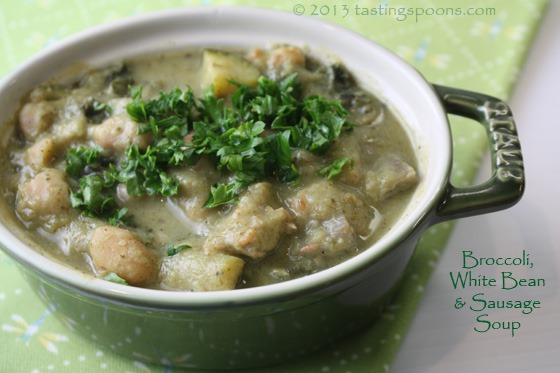
Hearty, comforting and healthy soup. There’s no cream in it – the broccoli provides the creamy texture. I know that sounds strange, but it’s true. Read on . . .

Rarely do I watch The Chew. The show is so fast-paced (frantic almost, like The View which I refuse to watch at all because they all talk over each other) and loud that I will only watch it on occasion and rarely do I ever try one of the recipes. A few over the years . . . but I know the show is well liked by many. When we were on our trip I happened to turn on TV and I tuned in to the program and Stacy London [a TV fashionista and co-host of the show What Not to Wear, another show I don’t watch] was making a soup. She had someone come to her home to cook for her and this recipe was borne of that professional relationship, as I understood it. Apparently, she had leftovers of both a healthy pureed broccoli soup and one with white beans and sausage and Stacy decided to combine the two. She loves it so much that she learned to make it herself and eats it by the gallon.

It’s no secret around here that I love soups. Not only for their ease (a meal in one pot) but soups are comforting and provide infinite variety. And often I add a little jot of cream to soups. This soup looked like it had cream in it, but it doesn’t. Nary a bit of cream or dairy at all. Basically you make 2 soups – a broccoli soup in one pot (which gets pureed and becomes the liquid in the other soup) and the spicy sausage and cannellini bean soup in the other. Once the broccoli soup is cooked through (takes no time at all) it’s whizzed up in the blender and then that’s added to the other. Because I had some mushrooms on hand, I added them, and I think I added some zucchini too, though neither of those were in the recipe.

The only fat in the entire soup is a tablespoon or two of olive oil to sauté the onions, the same for the chicken sausage soup plus whatever intrinsic fat is in chicken broth and the chicken sausage (not much, in other words).

Adapting the recipe a little, I added some fresh mushrooms and zucchini to the soup. Why not, I said? I wanted more veggies and texture since the broccoli is completely pureed. The recipes serves 8, and that’s about right – we had 2 dinners and 2 or 3 lunches out of the one preparation. I’m sure it would freeze well also.

What’s GOOD: I like that it’s a very healthy soup. I really had to work at it to taste the broccoli (and I like broccoli) since it’s pureed. You honestly think it’s a cream soup! My DH liked it a lot and told me each time I served it that it was really good. I felt the same way. A keeper. It’s not gourmet. It’s not over-the-top with flavor, but it’s just wholesome and good. It’s thick – you can see that from the photo. If you wanted a lighter soup, add more chicken broth and thin it some.
What’s NOT: nothing at all that I can think of.

printer-friendly CutePDF
MasterCook 5+ file and MasterCook 14 file

* Exported from MasterCook *

Stacy London’s Broccoli, White Bean & Sausage Soup

Recipe By: Adapted slightly From “The Chew”, Sept. 2013
Serving Size: 8

BROCCOLI SOUP:
1 tablespoon olive oil
1 large onion — (chopped)
2 large heads broccoli — (florets chopped; stems peeled and chopped)
5 cups chicken stock
CHICKEN SAUSAGE SOUP:
2 tablespoons olive oil
1 pound spicy chicken sausage — (removed from casing and crumbled)
1 bunch kale — (cut into 1/2-inch ribbons and chopped)
6 ounces button mushrooms — sliced [my addition]
2 small zucchini — chopped [my addition]
2 15.5 ounce cannelini beans, cooked — (drained and rinsed)
Salt and Pepper
1/2 cup Italian parsley — chopped (garnish)

1. Place a heavy bottomed pot over medium-high heat. Add 2 to 3 tablespoons of olive oil and then add onion. Season with salt and pepper and cook for 3 to 5 minutes, or until just translucent. Add the broccoli and again season with salt and pepper.
2. Pour the chicken stock over the broccoli and bring up to a boil and then reduce to a simmer. Cook for 8 to 10 minutes, or until the broccoli is fork tender.
3. Let cool slightly and then transfer, working in batches, to a blender. Cover the blender with a towel to ensure it doesn’t splatter, and puree until VERY smooth. Taste and adjust seasoning.
4. Place another heavy bottomed pot over medium high heat and add 1 to 2 tablespoons of olive oil. Add the sausage and brown on all sides, about 8 to 10 minutes. Add mushrooms and zucchini and continue cooking for 5-7 minutes.
5. When almost completely cooked, add the kale. Season with salt and pepper and cook for 3 to 4 minutes or until the veggies are all cooked sufficiently. Add the beans and cook for another 1 to 2 minutes.
6. Pour the broccoli soup in the sausage and kale and stir to combine. Let cook for one to two more minutes to let the flavors meld. Taste and adjust the seasoning, then serve while hot. Garnish with chopped parsley, if desired.
Per Serving: 401 Calories; 12g Fat (25.3% calories from fat); 35g Protein; 42g Carbohydrate; 16g Dietary Fiber; 53mg Cholesterol; 1450mg Sodium.

Posted in Cookbooks, on September 28th, 2013.

Having never heard of “The Cookbook MANifesto,” I was intrigued when I read about it on the Eat Your Books blog. It makes perfect sense to me:

  • Don’t buy a cookbook because everyone else has it.
  • Just because someone can act or sing, doesn’t mean they can write a cookbook.
  • If there are tons of ingredients you cannot pronounce, move along.
  • You should love the images.
  • If it makes you drool, that’s a good sign.
  • You should be able to actually make the recipes inside.
  • As a rule, you may make 6 – 8 recipes out of any given book, so see if you can find those first.

That’s just the BUYING part of the manifesto. There’s more about the using of cookbooks, and also about creating them. Click on over if you want to know more.

Posted in Chicken, easy, Pasta, on September 27th, 2013.

greek_cinnamon_stewed_chicken

Don’t we all welcome an easy and tasty chicken dish you can cook in less than about 30 minutes? This isn’t going onto any taste hall of fame, but it’s good and hearty.

We ate a lot of fish on our travels to the Pacific Northwest. So much so that when we got home I wasn’t craving anything fishy at all, but wanted chicken. I do get tired of it sometimes too, but our first night home I wanted some fowl. We visited Costco for a new stash of boneless, skinless chicken breasts and I bought some fresh mushrooms. Everything else was in the kitchen pantry.

The recipe came from an Oprah show some years ago, when Cat Cora visited the program. What makes this preparation Greek is really just the cinnamon. The Greeks do eat pasta, though, so it’s kind of a cross between Italian and Greek. The original recipe suggests using orzo pasta, which the Greeks do love – almost more so than the Italians. My changes to the recipe were: (1) I added mushrooms just because; (2) I had some Pecorino-Romano cheese that needed using up, so I mixed it along with the freshly grated Parmigiano; and (3) I added some crumbled Feta cheese. I must say that of those changes, it was the Feta cheese (because of the saltiness, I think) that made this dish taste so good. I also added just a tetch more cinnamon too.

The original recipe called for chicken pieces (which probably is more traditionally Greek). I used chicken breasts, so I’ve changed the directions as breasts cook so much faster, of course. If I had chicken pieces, I’d just cook it longer with a lid on to help develop some good flavor in the sauce. Chicken breasts without bones don’t impart a lot of character/flavor to anything, unfortunately. But it was what I had, so that’s what I did. I was too lazy to hunt in my pasta stash for orzo, so I grabbed thin linguine (my go-to favorite pasta, actually). My DH was so happy to have some pasta – we eat very little of it – maybe once a month at most. And yes, it did taste good!

My only caution: don’t over cook the chicken – since it’s cut into strips, it doesn’t take long to cook through. Every minute cooked after that just makes chicken breast meat more dry. Keep that in mind as you brown the pieces, then simmer in the sauce for a short time. Meanwhile make the pasta and combine. Don’t forget that Feta cheese.

When I entered this recipe into MasterCook, it shows a very high sodium content. It must be the tomato paste. I buy a very low sodium brand (Hunt’s I think). The Feta cheese and both Italian cheese add sodium to the dish as well. Watch how much extra salt you add, that’s all.

What’s GOOD: how quick it was to make – it was a satisfying dish. Comforting. As I mentioned at top, since this sauce is based on tomato paste, it’s not overwhelming in other, good flavors. Next time I make it I’m going to use chicken broth instead of water.
What’s NOT: this isn’t going to win any flavor contests, but remember, this is a quick, easy dinner to make in a short time. Your family will be happy.

printer-friendly CutePDF
MasterCook 5+ file and MasterCook 14 file

* Exported from MasterCook *

Greek Cinnamon Stewed Chicken

Recipe By: Adapted from an Oprah show with Cat Cora
Serving Size: 4

3 pounds boneless skinless chicken breast — cut into 1″ wide strips
1 teaspoon ground cinnamon
2 teaspoons kosher salt
1 teaspoon freshly ground black pepper
5 cloves garlic — peeled and minced
2 tablespoons extra-virgin olive oil
1 large yellow onion — peeled and coarsely chopped [I used a red onion]
2 cups water [next time I’ll use chicken broth]
6 ounces button mushrooms — cleaned and sliced
1 can tomato paste — (6 ounces)
1 tablespoon Italian herb seasoning
1 cup orzo — cooked according to package directions (or other pasta of your choice)
1/2 cup Parmesan cheese — grated
1/4 cup Pecorino-Romano cheese — grated
1/2 cup Italian parsley — chopped

1. Preboil water with sea salt.
2. Pat the chicken dry with paper towels. A wet chicken will cause the oil to splatter while the chicken is sautéing. Mix the cinnamon, salt and pepper in a small bowl. Rub the chicken pieces on all sides with the seasoning.
3. Heat the olive oil in a large, nonreactive, deep skillet over high heat. A 12-inch skillet with sides about 2 1/2 to 3 inches high will allow you to brown all the chicken at once. If you don’t have a skillet large enough, brown them in two batches using 1/2 the oil for each batch. What’s important is that the chicken isn’t overcrowded, which would cause them to steam rather than brown.
4. Add the chicken to the oil and brown for about 2-3 minutes on each side. Turn the pieces using a metal spatula, as they have a tendency to stick to the pan. Remove the pieces when they are well browned on at least 2 sides. Don’t over cook them as they’ll dry out when you cook the chicken in step 7.
5. Mince three of the garlic cloves. Lower the heat to medium-high, and add the onions and minced garlic. Cook for about 3 minutes, stirring constantly, until the onions have softened and are a rich golden brown. Add the mushrooms and cook for 3-5 minutes until softened. Add about 1/2 cup of the water and scrape the bottom of the pan with a spatula or spoon to deglaze the pan, loosening any particles stuck on the bottom.
6. When the water has evaporated, add the remaining 1 1/2 cups of water, tomato paste, Italian seasoning and remaining 2 garlic cloves, minced.
7. Return the chicken to the pan. The liquid should cover about 3/4 of the chicken pieces. If it doesn’t, add a bit more water. Cover the pot and simmer over medium-high heat for about 10-15 minutes, or until the chicken is tender and thoroughly cooked. If the sauce becomes too thick, it can be thinned with a little more water. Season the finished sauce with kosher salt and pepper to taste. Serve over orzo, cooked according to package directions, and sprinkle on all the cheeses, then add parsley on top.
Per Serving (I use tomato paste with no salt, so the sodium count is way off): 717 Calories; 17g Fat (21.2% calories from fat); 93g Protein; 45g Carbohydrate; 4g Dietary Fiber; 209mg Cholesterol; 1714mg Sodium.

Posted in Uncategorized, on September 25th, 2013.

(photo from wisegeek.org)

I was reading a blog post over at Food52. The staff there post several times a day, so if I don’t keep on top of it, next thing I know I’ve got 350 posts to scroll through. Yikes.

This particular one was very interesting to me – it listed all the different kinds of cooking oils and why a cook would use one vs. another. About the flash point; about the taste profiles and why you’d use one in a salad dressing and another for frying. I knew some of it already, but to tell you the truth, I forget. Probably I need some kind of chart to refer to, but I just don’t have the energy to create a spreadsheet to do that; at least not right now anyway.

Nevertheless, the post is a good one – you’ll need to read all the way through it to figure out which ones to use and for what reasons. Anyone want to make a spreadsheet for me? I’ll post it here if you do.

Posted in Travel, on September 25th, 2013.

poppy_menu_explanation

Pictured at left is the menu from Poppy, the Seattle restaurant we visited. Read on for more about it.

Our last night of the trip, we opted to spend in Seattle. The plan was to enjoy walking around Pike Place Market some and to have a non-descript dinner somewhere nearby since we had enjoyed our sumptuous dinner at The Willows Inn on Lummi Island the night before. We thought we might never want to eat again after that meal, but actually we weren’t overly stuffed since all the courses were small and many of the offerings were called “snacks.”

Leaving Lummi Island, the last morning we took the passenger ferry back to the mainland after having had a delicious breakfast at the Beach Store Café (by the ferry dock) for the 2nd day in a row (there isn’t any other place to eat on the island except the Willows, and that’s dinner and by reservation). Our rental car was right where it should have been, and we tootled off in the direction of Seattle. We stayed at a very nice hotel close to the Pike Place Market, at The Inn at the Market.

Actually, I forgot to even mention that before we visited Lummi Island, we spent one night in North Van (short for Vancouver) at a lovely, LOVELY B&B that I’d highly recommend. ThistleDown House, on a pretty tree-lined street. We had a delicious dinner at a restaurant about 3/4 mile away in the small village of Edgemont, at Canyon, a newly designated Michelin 1-star restaurant. The restaurant doesn’t have a website (how can that be? but I couldn’t find one) so I’ve provided the link to Trip Advisor’s site for it. Food was good; service was slow, but I think it’s because the chef (old school kind of one, I believe) cooks to order. We were very pleased with our meal. Anyway, the next day we drove slightly east of Vancouver to cross the U.S. border at a less-busy location (called the Sumas crossing, near Abbotsford) and headed south to our 2-night stay at Lummi Island.

Now, let’s get back to the Seattle section again. We happened to end up there on a Saturday night. Had NO idea whatsoever what kind of zoo the Pike Place Market would be on a busy, sunny, Saturday afternoon. It was mayhem. We searched for one particular store (to buy their signature Cinnamon Orange Tea) and couldn’t get out of Pike Market fast enough. The guys were throwing fish at the landmark fish market there, as they do, and the crowds went wild.

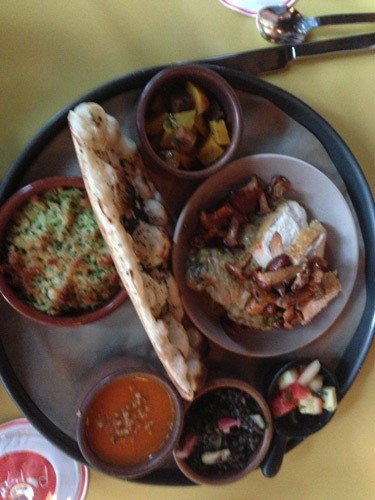
Some ladies on Lummi Island had recommended we make a reservation for dinner at Poppy, a Seattle Capitol Hill restaurant, known because of the chef, Jerry Traunfeld. He made his name famous for the years he created the menus and food at The Herbfarm, a stunning place east of Seattle in Woodinville. That restaurant burned down a few years ago (and has since reopened). Meanwhile Jerry moved on, opening this restaurant with a very unusual menu and food style. They serve dinner on a round platter with lots of little plates on it. Here’s what their website says about it:

[The] inspiration comes from the “thali,” a platter served to each guest holding a variety of small dishes. Poppy’s menu borrows the idea of the thali to present Jerry’s own style of northwest cooking, highlighting seasonal ingredients, fresh herbs, and spices. it’s a modern northwest tasting menu served all at once.

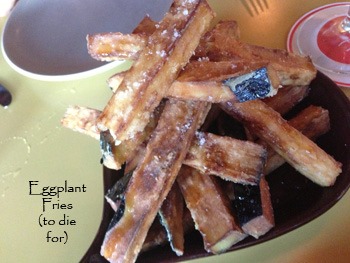
A Thali (tal-ee) is a Hindi or Nepalese word. But the food at Poppy wasn’t all about that region – it was various cuisines. First, we ordered one of their signature appetizers – eggplant fries with sea salt and honey. OH my goodness was that ever fabulous. eggplant_fries

When brought to our table, they were almost smoking hot. You can see a tiny bit of skin front-and-center on one of them (no big deal). The sea salt was clinging to the fries and the honey was very lightly drizzled. We let them sit for just a minute to cool down enough so we could pick them up.

This dish was an absolute revelation. If you go on the internet and search for “eggplant fries” you’ll find a few recipes for it – have no idea if any of them are the same as Poppy’s, but I’d sure like to know how to make them. They were THAT good!

I don’t know that I’ll ever really prepare them – I try not to cook anything fried like that, but oh, I might be tempted because these were so delicious. Soft inside and barely crispy on the outside. The salt was just the perfect amount and the very light drizzle of honey was so fun and it put these over the top in the flavor department. thalis1

thalis2Here are photos of the 2 thalis we ordered. I can’t even remember for sure what we both ordered (I had salmon, but that’s as much as I recall – I think it’s the one on the left). Naan bread is in the middle of both. There’s a pickle in one of the dishes, some veggies, a salad kind of thing and soup. We both loved our plates and the varied tastes each item provided. I’d definitely go there again if I lived in Seattle. The chef was there the night we dined – I asked the waitress to point him out to me. The very large kitchen was glassed in so you could see some of what was going on inside. Out behind the restaurant there is a very large herb garden (guests are invited to go visit if they want to – I did). I don’t recall that anything was labeled, but gosh, it was a riot of scents.

Our trip was really a good one – I am going to pat myself on the back that I planned a workable itinerary for us.  What I did differently this time was allow us to stay 2 nights most places. I’ve written up a synopsis itinerary below – it’s a pdf – of where we went, what we did and where we ate.

Pacific Northwest 11-14 day Itinerary CutePDF

Posted in Pork, on September 24th, 2013.

pork_chops_apple_rum

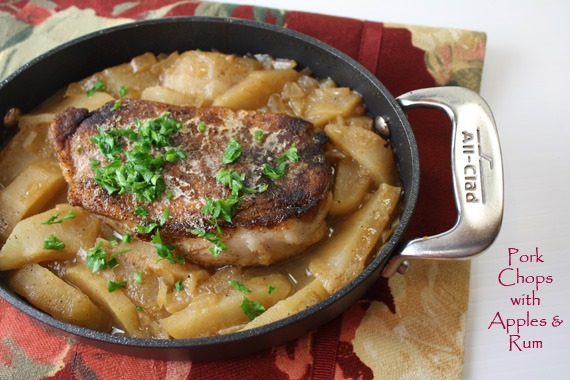
No, this isn’t a commercial for All-Clad. I do have these adorable little single-serving ramekins, though, that my friend Cherrie gave me a year or so ago and I forget to use them. They were just perfect for this dish. You could also use just a regular pan for both servings.

While we were on our trip I got a nice email from the folks at Frieda’s Produce. It’s apple season again (hooray) and they wanted to send me some. We got them a few days after our return, and after eating one out of hand right away, I tucked them away in the refrigerator because I knew I wouldn’t use them immediately. But some nights later, once I got back into the routine of fixing dinner (gosh, it was so nice to be on vacation and eat out every meal – no prep, no planning, no cleanup), I was ready to start using some of those organic apples. They sent me baby Cortlands, Cox’s Orange Pippins and Ribston Pippins. If you’re interested, at least the Cortlands are available at some Sprouts markets. Maybe not all. Call and ask. They’re an unusual apple because when you cut them up, they don’t turn brown. All of these are heirloom types: Cortlands date to 1898, the Cox’s from the early 1800s and the Ribston from 1708.

It was so nice of Frieda’s to send the apples to me. I just love apples. Ordinarily I would make dessert with them, but I talked myself out of that since we’d had ample desserts on our trip. I wanted to give ourselves a little break. Not that we had dessert every day – we did not, but even every other day is more than we do at home. If I did my favorite apple dessert, I’d be making my Mom’s Crisp Apple Pudding. I just don’t ever seem to tire of that one. And maybe I will still make that one of these days.

One day before we went on our vacation I decided to clean out one shelf in the freezer. It just wasn’t packed very well, and items kept falling off the shelf and onto my tender sandal-clad toes. Ouch. I found a package of 2 small thick-cut pork chops in there that I’d forgotten I had, so I placed them strategically in the front so I’d see them when we got back. Once we returned, I reached into the freezer for something else, and gosh, wouldn’t you know, those pork chops fell OUT and landed on my toes again. So, that made my decision – I’d cook them.

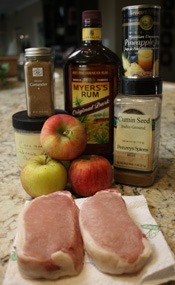
pork_chops_apple_rum_ingredientsMaking these was not difficult or all that time consuming, really. Once I seared the chops, removed them, then cooked the onion, then the apples and re-inserted the pork in the 2 pans, I stuck them in the oven (covered with foil) and baked them for about 20-25 minutes, until the pork was not quite fork tender.

Pork chops have a habit of either being too chewy, or once they reach a point of tenderness, and you continue to cook them, well, they get dry and hard to eat.

Actually, I didn’t serve them in the little pans – my DH wanted me to, but the All-Clad ramekins are nonstick, and  using a knife might have gouged the nonstick surface. So I removed them to a plate. We had cabbage to go along with it (my recipe for sweet and sour cabbage) which was just very tasty with it. If I’d been better prepared I would have made some rice to put beside the pork because there was a lot of very tasty juices running all over the plate.

What’s GOOD: apples and pork are a perfect pair, like salt and pepper, meatloaf and potatoes; you know what I mean. This wasn’t an over-the-top kind of dish, but it was relatively healthy and had enough flavor for a satisfying dinner. If you have apples on hand, use almost any variety – just don’t use the types that fall apart when cooked (like Delicious). You want the apples to stay in their perfect slices. It was easy enough to make and while the pork cooks you can slap together the rest of your dinner.

What’s NOT: nothing really. Next time I might sprinkle just a bit of flour on the chops, which would help thicken the sauce a little bit – that would be nice, then you could drizzle the sauce on top.

printer-friendly PDF

* Exported from MasterCook *

Braised Pork Chops with Apples

Recipe By: Adapted from Just Braise blog
Serving Size: 2

1/2 tablespoon unsalted butter
2 teaspoons olive oil
3/4 pound boneless pork top loin chops
1/2 teaspoon cinnamon
1 teaspoon ground cumin
1 teaspoon ground coriander pepper to taste
2 whole apples — (Granny Smith, Empire, Rome, Cortland), sliced into 16 wedges
1/2 medium yellow onion — chopped
1/3 cup dark rum
1/2 cup pineapple juice — or apple juice/cider
2 tablespoons Italian parsley — minced

1. Preheat oven to 350°.
2. In a deep oven-safe pan (or dutch oven) over high heat, warm butter and olive oil (to barely coat bottom of pan).
3. While pan is warming, prepare the pork chops: Wash and fully dry the meat. Coat evenly on both sides with cinnamon, cumin, coriander and pepper. Carefully place meat in pan and sear both sides until thoroughly browned; about 4 minutes each side. The spices will brown quickly – just don’t burn the meat, but dark brown is desirable.
4. Remove the pork chops from pan and reduce heat to medium. Add the onion and cook for 2-3 minutes until they are translucent. Deglaze by adding rum and scraping bits that have stuck to the pan. Add pineapple juice and apples. Braise the apple wedges in the juices until they are limp and have absorbed some juice; about 4 minutes.
5. Return pork chops to pan and move apples around the meat to cover sides and top (some may remain under the chops).
6. Cover pan and place in oven for 10-15 (or 20-25 if you’ve used thicker chops) minutes until pork chops are juicy and succulent and liquid has reduced. Serve with the apples on top and around the sides with the sauce all around. Garnish with Italian parsley. Ideally, serve this with some rice to soak up the juices.
Per Serving: 484 Calories; 16g Fat (35.2% calories from fat); 32g Protein; 34g Carbohydrate; 5g Dietary Fiber; 85mg Cholesterol; 69mg Sodium.

Posted in Travel, on September 23rd, 2013.

IMG_0128Only if you’re a foodie person would you likely make a trip to The Willows Inn for dinner. Some people who live in/around the Seattle area do – it’s a day trip, or rather an evening trip. The restaurant operates Wed-Sun nights, or off season from Thurs-Sun nights. We chose to stay on the island for 2 nights and had the feast one of the 2 nights.

If you go during most months of the year there is a car ferry, but as I explained in my post about Lummi Island a couple of days ago, we just happened to go there during the 3 weeks the car ferry was in dry dock for its annual maintenance. So we had to use the small passenger ferry that plies the half-mile distance between the mainland near Bellingham (about 15 miles west of the 5 fwy on the Lummi Nation Reservation) and the island itself. It was kind of special. Fun. Different. Certainly makes for good story telling, and my DH has been making the most of it (he’s good at that).

The meal is expensive. I mean ferociously expensive. $150 per person. We’d not usually pay that much for any dinner, but this was vacation, and it just got lumped into our trip expenses, I suppose. Dave and I talked about it before we went – were we willing to spend that much? We decided for an island destination, maybe it was, and hoped we’d be happy about it.

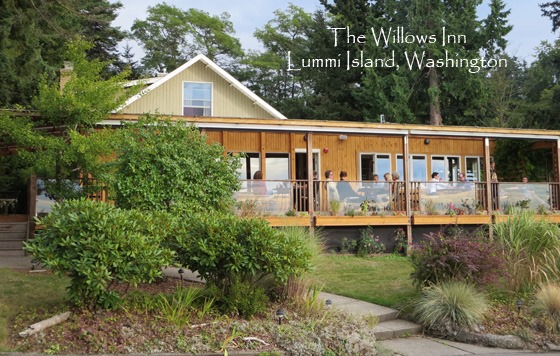
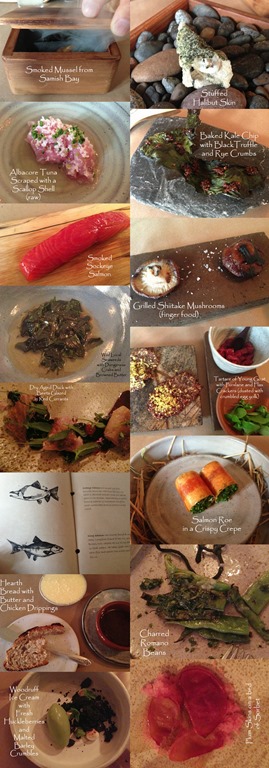
willows_innAnd, indeed, we were. It was a spectacular dinner (dining room is through the right hand side of the windows above – lobby was on the left side). Took 3+ hours with so many courses I could hardly keep track. I took photos of them all and you can see them below. The servers were kept hopping all night long, setting up for each course and then bringing some treasure that was lying on a rock, or hot rocks, or a plank, or rustic plates. Take a look at the photos, and then down below them I’ll tell you what my favorites were.

WillowsInnDinner

Most unusual: raw goat tartare (not my favorite, but I think it was just because it was raw – the meat came from goats on Lopez Island nearby); the baked kale chip with black truffle and buttered rye bread crumbs; the halibut skin – crispy and good – stuffed with some halibut mousse, I think; and definitely the woodruff ice cream. I wasn’t even sure what woodruff was – if you look closely at the plate bottom left you can barely see some greenery – that’s woodruff. It’s a low growing ground cover in that neck of the woods. The ice cream had a very refreshing flavor to it, and I was kind of enchanted with the malted barley crumbles alongside. Certainly never had those before! Probably the plum skins (which had some plum flesh on them) were delicious, but very  unusual! They’re at right on the bottom. I tried to get that photo to rotate, but every time I did the one on the left turned sideways. Gave up. Oh, and then the hearth bread was so good, but what made it unusual was the little bowl of hot chicken drippings. We were to butter our bread, then dip a bit of it into the drippings. Who would ever have thought we’d be eating chicken drippings.

Most tasty: the raw albacore tuna was sensational. It was scraped with a scallop shell into large, but thin pieces, then sitting in a delicious vinaigrette of some kind. The seaweeds were really wonderful – I think my favorite of the evening. Underneath the seaweed were chunks of the local and ever-so tasty Dungeness crab with a brown butter drizzled over it. Wow is about all I can say. And the charred Romano beans. Oh my. I could have eaten a plate full of them. They’d been cooked (steamed?) then grilled outdoors wrapped up in little bundles over oregano stems, then it was served with an oregano vinaigrette drizzled on top. It was fantastic.

My least favorites: the goat, as I mentioned, but most people just loved it – it actually didn’t have much flavor. I also didn’t like the smoked sockeye salmon. Normally I love smoked salmon, but for me it was too smoky. My DH ate his and 99% of mine. The duck was good, but not exceptional. I tried everything – even the goat, and the salmon and I ate all of the duck.

My DH ordered the wine pairing (an additional $70 per person). They were all Washington wines, from various places. Five wines were poured: 2012 Ross Andrew Meadow Rose (Walla Walla); 2012 Long Shadows Poet’s Leap Riesling (Columbia Valley); 2009 a Maurice Chardonnay (Walla Walla); 2011 Waitsburg Cellars Three Merlot, Malbec, Mouvedre (Columbia Valley); and 2012 Brian Carter Cellars Opulento Dessert Wine (Yakima Valley). They offered (for a fee, I’m sure) a juice pairing with the dinner too which included a sparkling blueberry, a cucumber, tomato, sorrel and elderflower. At the beginning of the meal they served to everyone as part of the dinner, a glass of hard cider (also Washington origin) which was delicious. I nursed that glass through several of the courses and had sparkling water as well.

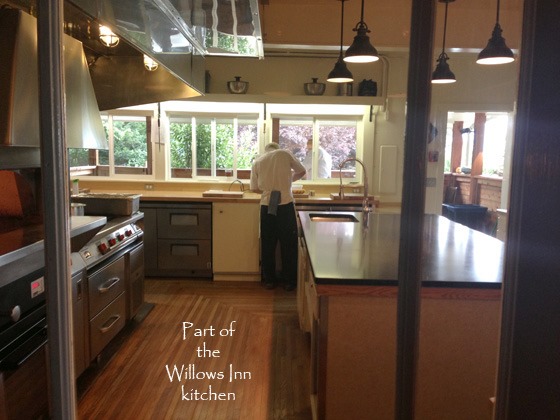
The next morning we went to the actual Inn (where we’d been to the dinner the night before) and checked out. We had some fresh coffee and a fabulous pound cake they had beside the coffee carafes – I had to try it. Oh my, it was SO good. I want that recipe! I snapped a photo of the kitchen – they were already working and it was just about 9:00 AM. willows_inn_kitchen

I found the article which got me intrigued about this hotel and restaurant. It was in April’s Bon Appetit, and it was titled the Best Food Lover’s Hotels in America. I think Sooke Harbour House was one of the nominees, but not one of the top 10.

Posted in Travel, on September 21st, 2013.

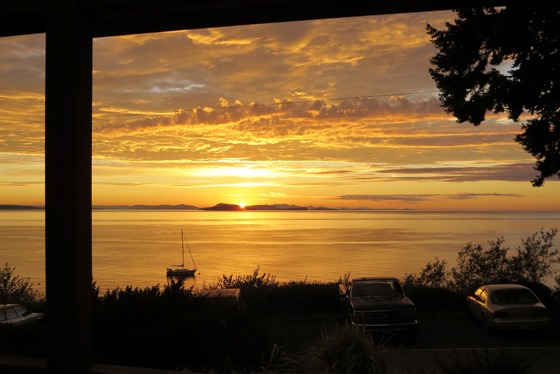
sunset_view_orcas_island

After leaving the west coast of Vancouver Island, we crossed on the ferry from Nanaimo to Vancouver, spent the night, then drove south across the border and wended our way to a ferry dock north of Bellingham . . .

Some months back I’d read an article about a bunch of top food destinations in the U.S. (of course, I can’t now find the article) and amongst the top contenders was The Willows Inn, on Lummi Island, Washington. Having never even heard of Lummi before (pronounced lumm-ee), I investigated online. Lummi is named for the Native American Indian Nation – most of them live on the mainland side, I believe. Reservations were made and the trip plans fell into place. Lummi is a small island, only accessible by ferry, and 3 weeks a year they haul out the car ferry for annual dry dock maintenance and during that time everyone who lives or visits Lummi must commute via a small passenger ferry. Only after I made the reservations did I find out that I chose a time during that 3-week period. Oh well.

If you go online to read about The Willows Inn, you’ll find that the Inn itself is quite small, with just a few rooms. But the resort (well, can one even call it a resort . . . not sure about that as it’s very small) has made its name because of their Executive Chef, 27-year old Blaine Wetzel. He’s an up and coming chef – no, I take that back, he’s arrived, since he was honored this year as a James Beard Foundation rising star nominee.

In a couple of days I’ll give you a write-up about the dinner we had there. For today, though, I’ll tell you about the Island.

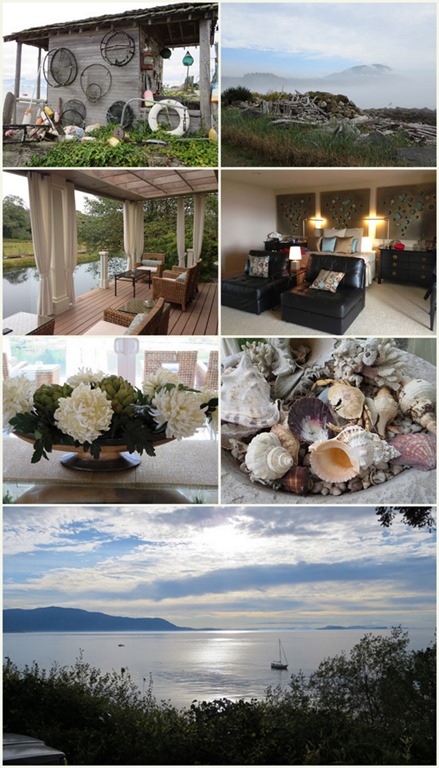
It’s just 8 miles long, and maybe 1 to 1 1/2 miles wide, with relatively few roads. If you have a car, you’ll be able to tootle around the island on your own, exploring every nook and cranny. For us, though, since the car had to be left on the mainland at the ferry dock, we relied on the staff at the Inn to take us one place or another. The Inn rents houses in various places on the island (because there are way more people wanting to visit and have dinner there, than they have rooms) and we stayed in one of those. Pictures below. Other than the Inn itself, there IS no town. There’s a ferry dock and a tiny little café about 200 yards up the road from the ferry. And there’s the Inn. That’s it. We had dinner at the café the first night, and at the Inn the 2nd night. Both mornings breakfast was provided at the café by the ferry dock also. The Island is fairly remote, quiet for sure, beautiful, but there isn’t a whole lot to do there. If I’d understood all of that we might have stayed just one night. But we stayed two, and that was fine. The in between day we took walks, watched the mist and fog, watched the reefnetters hauling in salmon right outside the front window of the house we stayed in, and read books on our Kindles. Here’s a collage of photos:Lummi Island

Clockwise from top left: a fishing hut right on the beach in front of where we stayed, in Legoe Bay; the Bay bathed in morning fog; the individual room where we stayed; some shells other guests had collected; a late afternoon view from the Inn; a lovely chrysanthemum arrangement on the dining room table at the house where we stayed; and a view from the rear deck overlooking the man-made pond.

Posted in Travel, on September 19th, 2013.

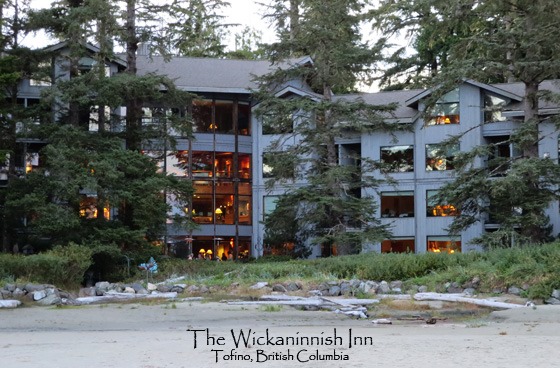
wickaninnishinn

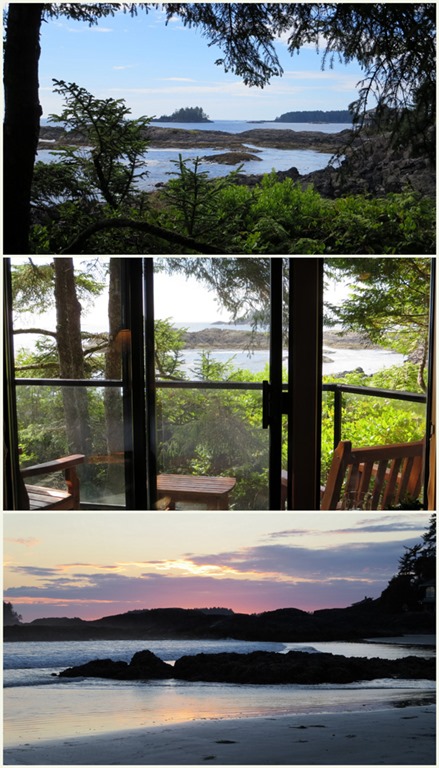
We visited The Wickininnish Inn (most folks just call it The Wick Inn) because two different friends of ours recommended it. It’s a long drive to get there, and there isn’t a whole lot of activities to keep you occupied unless you do active water sports or extensive hiking. But oh, is it ever beautiful in that part of the world.

Most people wouldn’t take the time to go further upland from Victoria, except maybe to the ferry at Nanaimo, or to visit Butchart Gardens. But because friends had recommended it, we fit it into our trip plans. From Sooke Harbour, it took us about 3 1/2 hours to drive (back toward Victoria, north to Nanaimo, then west for a long way, clear to the western coast of Vancouver Island). It’s a beautiful drive, although I’ll call it fatiguing because it’s on mostly 2-lane curvy roads nearly the entire distance. There are a few passing lanes (to get past all those campers and trucks) and a couple of places where the road is straight enough to pass, but otherwise, it’s a slow slog. Beautiful, though.

And then you’re there. The Wickaninnish Inn. It’s noted for its cuisine (Dave enjoyed it more than I did – the food combinations just didn’t appeal to me for whatever reason). We stayed in a building just to the left of the one in the photo at top. We had a spectacular view out over the ocean, facing west. The Wick is a posh place to stay, and definitely the priciest of our trip, but we enjoyed every single moment of our view and the nice amenities.

We had a delicious clam chowder at a funky outdoor dive down the road one of the days (people in that neck of the woods like to add other vegetables to their chowder, like corn, carrots and peas). We had a fabulous hamburger at a town 15 miles or so away. That was in Ucluelet (that’s pronounced you-clue-let), although the locals call the town Ukee for short. Anyway, we had a great lunch at The Blue Room Bistro. Nothing fancy for decor (trust me on that) but the food was really worth stopping for. The other day we were there we popped down the road just a bit from our hotel and had lunch at the Wildside Grill. When you’re in this part of the world, know that restaurants feature fish, fish and more fish. And it’s good, for certain. After days of fish, though, we wanted a change and ordered clam chowder there also, and we shared a barbecued chicken sandwich. Both were delicious.

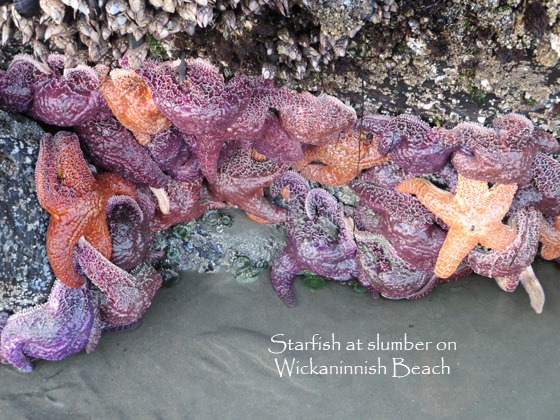
starfish_wiskaninnish_beach

Our second evening, after dinner, we took a walk on the beach in front of the hotel, and other than being happy the sand was a hard, compacted type which made for easy walking, we were astounded to find several groups of starfish clinging to the rocks. The tide was out. Here is a collage of pictures from The Wick.WickInn

Posted in Travel, on September 17th, 2013.

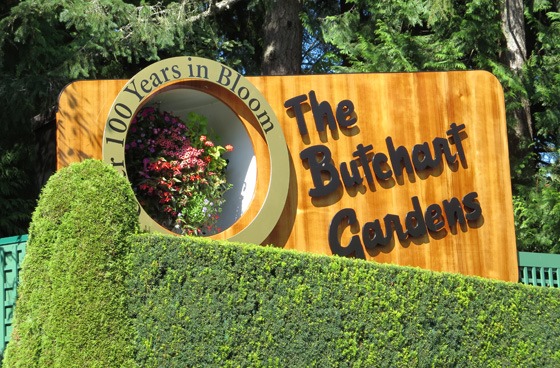
butchart_gardens_sign

Butchart Gardens is located 20 miles or so north of Victoria. It’s kind of out in the sticks. Its origin is interesting – Mrs. Butchart wanted to DO something with the land her husband had used as a quarry, so she decided to make it into a garden. She collected plants, shrubs, flowers and trees from all over the world and spent years creating the gardens. The deepest part of the quarry is the “Sunken Garden” in the park. Mrs. Butchart’s husband thought she was nuts! I would assume he changed his mind by the time she finished. It lives on, still owned and managed by the family.

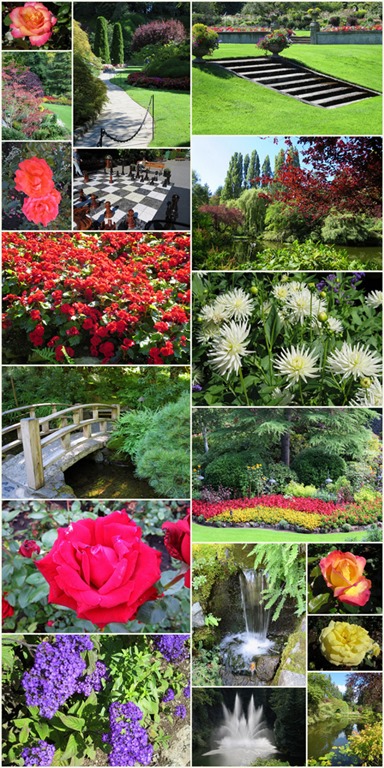
It’s a beautiful place. Takes about 2 hours to do it all. There are several restaurants, from order-at-the-counter, to more formal sit-down types. There are lots of places to just sit and admire the beauty. There is a gorgeous fountain, a Japanese garden with streams, an ornate Italian garden with ponds, a rose garden that usually has something in bloom too. There’s a life-sized chess board (see it below) and flowers from every color in the rainbow. Here’s a collage of what we saw.

Butchart Gardens

Related Posts Plugin for WordPress, Blogger...