Get new posts by email:

Archives

Currently Reading

Here are the tastingspoons players. I’m in the middle (Carolyn). Daughter Sara on the right, and daughter-in-law Karen on the left. I started the blog in 2007, as a way to share recipes with my family. I’m still doing 99% of the blogging and holding out hope that these two lovely and excellent cooks will participate. They both lead very busy lives, so we’ll see.

– – – – – – – – – – – – – – – – – – – – – –

BOOK READING (from Carolyn):

Music of Bees, Eileen Garvin. Absolutely charming book about a woman in midlife, lonely, who raises bees, also makes unlikely friends. Heart-warming and very interesting about beekeeping.

A Postcard from Paris, Alex Brown. Really cute story. Dual time line, 1940s and present day about renovating an old apartment in Paris, things discovered.

Time of the Child, Niall Williams. Oh such a good book. Very small village in Ireland, 1960s. A baby is left on the doorstep. The town all whispers and helps. I listened to an interview of the author, which made me like him and his books even more.

Sipsworth, Simon Van Booy. If you like animals you’ll swoon. An old woman who really wants to die finds a tiny mouse in her house and befriends it and finds a reason to live. Utterly charming book.

The Forger’s Spell, Edward Dolnick. True story. For seven years a no-account painter named Han van Meegeren managed to pass off his paintings as those of Johannes Vermeer.

If You Lived Here, You’d be Home by Now, Christopher Ingraham. Could hardly put it down – about a journalist who takes on a challenge to move to small town in Minnesota and write about it. He expects to hate it and the people and place, but he doesn’t. Absolutely wonderful true story.

The River We Remember, William Kent Kreuger. 1950s, Minnesota. A murder and the aftermath. Could hardly put it down. Kreuger has such a vivid imagination and writing style.

How the Lights Gets In, Joyce Maynard. An older woman returns to New Hampshire to help care for her brain-injured son. Siblings and family, lots of angst and resentments.

The Filling Station, Vanessa Miller. Every American should read this book. A novelized retelling of the Tulsa massacre in 1921. Absolutely riveting.

The Story She Left Behind, Patti Callahan Henry. Love this author. Based on a true story. A famous author simply vanishes, leaving her husband and daughter behind. She had invented a mystical language no one could translate. Present day, someone thinks he’s solved the riddle, contacts the family. Really interesting read.

The Girl from Berlin, Ronald Balson. Love anything about Tuscany. An elderly woman is being evicted from a villa there, with odd deed provenance. Two young folks go there to help unravel the mystery. Loved it.

The Island of the Colorblind, Oliver Sacks, M.D. Nonfiction. The dr is intrigued by a remote Pacific island where most of the inhabitants are colorblind. He also unravels a mystery on Guam of people born with a strange neurological problem. Medical mysteries unveiled. Very interesting.

The Bookbinder, Pip Williams. Post 1914 London. Two sisters work at a bookbindery. They’re told to not read the books. One does and one doesn’t. One has visions beyond her narrow world; the other does not. Eventually the one gets into Oxford. Lovely story.

The Paris Express, Emma Donoghue. 1895 on a train to Paris, a disaster happens. You’ll delve into the lives of many people who survived and died in the crash.

A Race to the Bottom of Crazy, Richard Grant. This is about Arizona. Author, wife and child move back to Arizona where they once lived. Part memoir, research, and reporting in a quest to understand what makes Arizona such a confounding and irresistible place.

The Scarlet Thread, Francine Rivers. A woman’s life turned upside down when she discovers the handcrafted quilt and journal of her ancestor Mary Kathryn McMurray, a young woman who was uprooted from her home only to endure harsh frontier conditions on the Oregon Trail.

A Place to Hide, Ronald Balson. 1939 Amsterdam, an ambassador has the ability to save the lives of many Jewish children. Heartwarming.

Homeseeking, Karissa Chen. Two young Chinese teens are deeply in love, but in China. Then their families are separated. Jump to current day and the two meet again in Los Angeles.

North River, Pete Hammill. He always writes such a good story. A doctor works diligently healing people from all walks of life. His wife and daughter left him years before. One day his 3-yr old grandson arrives on his doorstep.

A Very Typical Family, Sierra Godfrey. A very messed-up family. Three adult children are given a home in Santa Cruz, Calif, but only if the siblings meet up and live in the house together. A very untypical scenario but makes for lots of messes.

Three Days in June, Anne Tyler. The usual Anne Tyler grit. Family angst. This wasn’t one of my favorites, but it was entertaining and very short.

Saved, Benjamin Hall. Author is a veteran war reporter. Ukraine, 2022, he nearly loses his life to a Russian strike. Riveting story – he survives, barely.

Grey Wolf, Louise Penny. Another Inspector Gamache mystery in Quebec. She is such an incredible mystery writer.

All the Colors of the Dark, Chris Whitaker. A missing person mystery, a serial killer thriller, a love story, a unique twist on each. Could hardly put it down.

Orbital, Samantha Harvey. Winner of 2024 Booker Prize. I don’t usually like those, but I heard the author interviewed and she hooked me. This is not a normal book with a beginning, a story and an end. It’s several chapters of the day in the life of various astronauts at the ISS (Int’l Space Station). All fictional. She’s been praised by several real astronauts for “getting it” about space station everyday life.

The Blue Hour, Paula Hawkins. An island off Scotland. Inaccessible except when the tide is out. Weird goings on. An artist. A present day mystery too.

Iron Lake, William Kent Krueger. A judge is murdered and a boy is missing. Riveting mystery.

Tell the Wolves I’m Home, Carol Ricks Brunt. 1980s. A 14-yr old girl loses her beloved uncle. Yet a new friendship arises, someone she never knew about.

Four Treasures of the Sky, Jenny Zhang. 1880s, a young girl is kidnapped in China and brought to the United States. She survives with many hurdles in the path.

The Boy Who Fell out of the Sky, Ken Dornstein. Memoir, 1988. The author’s brother died in the PanAm flight that went down in Lockerbie, Scotland. A decade later he tries to solve “the riddle of his older brother’s life.”

Worse Care Scenario, T.J. Newman. Oh my. Interesting analysis of what could/might happen if a jet crashed into a nuclear plant. Un-put-downable.

Song of the Lark, Willa Cather. Complicated weave of a story about a young woman in about 1900, who has a gifted voice (singing) and about her journey to success, not without its ups and downs.

Crow Talk, Eileen Garvin. Charming story which takes place at a remote lake in Washington State, about a few people who inhabit it, the friendships made, but also revolving around the rescue of a baby crow.

The Story Collector, Evie Woods. Sweet story about some dark secrets from an area in Ireland, a bit magical, faerie life, but solving a mystery too.

A Sea of Unspoken Things, Adrienne Young. A woman investigates her twin brother’s mysterious death. She goes to a small town in California to figure it out, to figure HIM out.

The King’s Messenger, Susanna Kearsley. 1600s England, King James. About one of his trusted “messengers,” and his relationship with a young woman also of “the court.” Lots of intrigue.

In the Shadow of the Greenbrier, Emily Matchar. Interesting mystery in/around the area of the famous resort in White Sulphur Springs, West Virginia.

Isola, Allegra Goodman. Hard to describe, survival story on an island in the 1600s.

Save the Date, Allison Raskin. Rom-com, witty, LOL funny. Clever.

The Sirens, Emilia Hart. Numerous time-lines, Australia. Mysteries abound, nightmares, abandoned baby, weird allergies.

Red Clay, Charles Fancher. LOVED this book. Mostly post-Civil War story about the lives of slaves in Alabama during Reconstruction.

Stars in an Italian Sky, Jill Santopolo. Dual time line, 1946 and recent time. Love stories and a mystery.

Battle Mountain, C.J. Box. Another one of Box’s riveting mysteries. Love his descriptions of the land.

Something Beautiful Happened, Yvette Corporon. A memoir of sorts in Greece, tiny island of Erikousa, where the locals hid Jews during WWII. All elusive stories told by the author’s grandmother.

The Jackal’s Mistress, Chris Bohjalian. 1860s Virginia, about a woman who saves the life of a Union soldier. Really good story.

Song of the Magpie, Louise Mayberry. Really interesting story about Australia back in the days when it was mostly a penal colony. Gritty strength of a woman trying to thrive with her farm.

The Boomerang, Robert Bailey. A thriller that will have you gripping the book. About a lot of secrets surrounding the president (fictional novel, remember) and his chief of staff and about cancer. A cure. Such a good story.

Care and Feeding, Laurie Woolever. Really interesting memoir of a woman driven to succeed in the restaurant business. She worked for Mario Batali and then Anthony Bourdain. Gritty stories.

Everything is Tuberculosis, John Green. Maybe not a book for everyone. A real deep dive into the deadly tuberculosis infection, its history. I heard the author interviewed and found the book very interesting.

The Book Lovers Library, Madeline Martin. Fascinating read about Boots’ drug stores’ lending library. And the people who worked in them.

The Arrivals, Meg Mitchell Moore. LOL funny, about a middle-aged couple whose children (and their various family members) return to the family home and the chaos that ensues.

My Life as a Silent Movie, Jesse Lee Kercheval. About grief. A big move to Paris, finding herself a new life with a new set of real blood family.

Escape, Carolyn Jessop. Another memoir about a woman really in bondage in Utah, Mormon plural marriage.

 

Tasting Spoons

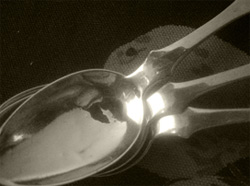
My blog's namesake - small, old and some very dented engraved silver plated tea spoons that belonged to my mother-in-law, and I use them to taste my food as I'm cooking.

Scroll down to the bottom to view my Blogroll

Posted in Soups, on June 16th, 2007.


Remember a couple of weeks ago I posted about my dinner visit to Cindy’s Backstreet Kitchen in St. Helena? And I showed a picture of the soup Cherrie and I had that night that we thought was so terrific – Tomatillo, Poblano and Asiago soup? And I researched on the internet and found a recipe from Stephan Pyles restaurant in Dallas.

Here’s what Cindy’s soup looked like:

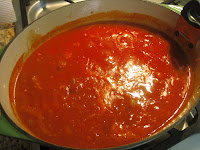
Here’s my soup: Well, I’m here to tell you, this is very close if not one and the same. It looks the same. It tastes just about the same. And I’m a very happy camper, because now I can make this soup in a big quantity and freeze it like I do with most of my soups.


So what’s different at all? Well, the waitress at Cindy’s told us they sautéed the tomatillos for one thing. And they use masa to thicken the soup. I hunted all over in my pantry, but didn’t have any. I didn’t have any fine grind corn flour either (other than cornstarch, and I was certain that wasn’t what we wanted here). I did have polenta and cornmeal, but they’re both too coarse. So I used the regular flour called for in the recipe. And she thought there wasn’t any cream in it, but this soup (with milk and a little cream) looks JUST like theirs, so I’d say they did. Make sure you don’t get a single poblano chile seed in the soup – it won’t puree very well.
If I changed anything next time I make it, I will use less cheese. Asiago has a slightly bitter taste on the palate, and I think less would be an improvement. I only had a little over 1/2 pound, and the recipe called for 10 ounces. I think it has ample at that, and could easily be reduced, so I’ve changed the quantity in the recipe below. Asiago melts into the soup well – it’s doesn’t become stringy and difficult as some cheeses can do when added to hot soups. I did quick/flash fry the tomatillos first. A little olive oil, a hot burner and they browned in a hurry. Tomatillos have a lot of water in them, so once that was rendered out, they reduced to small pieces. I also sautéed the onion with the tomatillo, then the poblanos before adding any of the liquid. I’ve changed the recipe to that effect. I also didn’t strain the soup. I think the little bit of texture tastes just fine. I blended it well, though, so it wouldn’t have to be strained.

I can tell you I love simple soups, and this is one. You’re not likely to have all the ingredients on hand, however, but this one is certainly worth a trip to the market to buy the poblanos, the tomatillos, Asiago cheese, spinach and cilantro. Oh, yes, I’ll be making this again. Most definitely. Soon.
Printer friendly PDF and MasterCook file (click link to open recipe)

Roasted Poblano-Asiago Cheese Soup

Recipe adapted from one by: Chef Matthew Dunn,
Stephan Pyles (restaurant), Dallas

Servings: 6  – Makes about 7 cups

5 tablespoons all-purpose flour
4 tablespoons butter — at room temperature
2 whole poblano chiles — roasted, peeled, seeded, chopped
1 whole onion — chopped
3/4 pound tomatillos — husked, rinsed, chopped
3 cloves garlic — chopped
1 1/2 cups chicken stock
1/2 cup heavy cream
2 cups milk
1 cup spinach — cleaned
4 ounces Asiago cheese — grated, or more to taste
1/2 bunch cilantro — chopped
Salt — to taste
Fresh ground pepper — to taste

1. In a mixing bowl, mix the flour and butter with a fork until the flour is totally incorporated.
2. Place the poblanos, onion, tomatillos, garlic, chicken stock, cream and milk in a pan and bring to a boil. Whisk in the flour and butter mixture and continue to whisk until lumps of flour disappear. Cook over medium heat until the mixture thickens. While stirring, add spinach, Asiago cheese and cilantro and continue to cook for 30 seconds. Transfer to a blender in batches and blend until completely smooth.
3. Strain through a medium strainer back into the heavy pan, season with salt and pepper and keep warm. Ladle the soup into warm bowls and garnish with tortilla strips and Pico de Gallo, if desired. Or sprinkle with additional chopped cilantro.

Posted in Appetizers, on June 15th, 2007.

At least 15 years ago I attended a cooking class taught by Michele Braden, and bought one of her cookbooks at the class, Fast & Fabulous HorsD’Oeuvres (the book is out of print, unfortunately). I have no recollection as to what items she demonstrated for the class, but I remember being very pleased with the wide variety of recipe ideas in the cookbook. I’ve made a number of things from the book in the ensuing years, but this one I’ve prepared umpteen times.

What’s unique about the cookbook is that each recipe offers three options. First, there’s a Fast one. Then she gives you a Flashy method, and lastly, a Fabulous presentation. At the time, I suppose, it was her little corner, or niche to make her cookbook different. From what I read now, anyone not amongst published authors who wants to submit a cookbook for possible publication must have something very creative and unusual, otherwise it will never get past the first editor.

So back to the Dunk. Wonder why this little number is called a Dunk? Once Braden began cooking as a young adult, she definitely didn’t like the word “dip.” It conjured up the ubiquitous onion dip or clam dip etc. So, she decided to elevate the genre of appetizer to a new level, and calls it a Dunk. Whatever it is, dip or dunk, this particular one will make you think you’re having a part of the BLT. Just no lettuce, and you either dip/dunk a cracker into the mixture, or spread it on toast, or even celery. It’s the BACON, however, that makes this. The original recipe calls for 5 slices of bacon (to make about 1 1/2 cups of dunk). If you’re using thick-sliced, obviously reduce the amount. And I’ve found that I can use considerably less bacon and still get the flavor. If you hand chop the bacon, every bite will have a bit of bacon in it, so don’t leave the bacon in larger pieces. And whatever you do, don’t just whiz up everything in the blender or food processor and think it will work. It doesn’t. You lose all the texture and it becomes a very loose liquid. Not pleasant. Trust me on this, okay? Sometimes I just make it by hand rather than mess up the blender.In the case of this recipe, Braden’s recommendation for FAST was to prepare up to 4 days in advance and refrigerate. The FLASHY preparation includes using pita chips, crackers and garnishing with minced green onions, parsley, more chopped tomatoes and bacon. For the FABULOUS method, add avocado, stuff it into raw mushrooms or cold hollowed-out potatoes. Normally I just use pita chips from Trader Joe’s, or the little bite-sized toasts, although I usually do garnish the top with some minced tomatoes and a little bit of extra bacon.

As noted in the recipe, I have made this with low-fat mayo, but it just doesn’t taste all that good. If you’re going to splurge and have a little bit of bacon – go for the gold and use Best Foods mayo. Enjoy.
Printer-friendly PDF

Bacon & Tomato Dunk

Recipe: Michele Braden, Fast & Fabulous Hors D’Oeurves, 1992
Servings: 6
Serving Ideas: I have made this with low-fat mayo. I’d be lying if I said it’s “just as good.” It isn’t, but if you crave a BLT, it will satisfy. Serve with baked pita chips, crackers, or baguette slices, toasted. You may garnish the dunk with minced onions, parsley, additional minced tomatoes or crumbled bacon.
NOTES: This dip/dunk is sinfully delicious. If you are using thick sliced bacon, use about half the number of slices. Don’t overblend or it loses its appeal, and if you have any leftovers, it’s delicious on leftover pasta or rice, or even as a salad dressing.

5 slices bacon
2 medium ripe tomatoes
1/2 cup mayonnaise — Best Foods brand or homemade
1 1/2 teaspoons Dijon mustard
2 tablespoons green onions — coarsely chopped
2 tablespoons parsley

1. Cook bacon until crisp, drain on paper towels and cool. Chop into very small pieces and set aside.
2. Combine in a food processor the green onions and parsley and process until it’s a fine mince. Scrape out into a medium bowl.
3. Cut tomatoes in half and scoop out the seeds as much as possible. Process the tomatoes in the food processor until they are minced, but not pureed. Pour out into the same bowl and add the mayonnaise and Dijon mustard. Add the bacon and stir it into the mixture, then cover, and refrigerate for up to 4 days. It’s best if allowed to chill for at least 8 hours.
Per Serving: 172 Calories; 18g Fat (90.2% calories from fat); 2g Protein; 2g Carbohydrate; 1g Dietary Fiber; 11mg Cholesterol; 209mg Sodium.

Posted in Cookbooks, on June 14th, 2007.

Earlier this month my friend Cherrie and I visited the CIA-Greystone (the Culinary Institute of America) in St. Helena, in the Napa Valley. It’s an imposing and impressive building and contains a restaurant open to the public for some meals. There were no classes offered that day, but guess what? The CIA store was OPEN. We must have spent at least an hour wandering all the little nooks and crannies, and left a hefty amount of money in their coffers. But stuck back in a corner was a discount/sale table of cookbooks. I leafed through a few that I don’t have, saw some that already reside on my own shelves, but this book just jumped out in my hands. Ever had that happen?

I’ve read most of Pat Conroy’s fiction – Beach Music, The Water is Wide, The Prince of Tides and others. Most are set in various places in the South and conjure up scenes of towns and harbors that, at the time I read them, I’d never been. He calls Beaufort, South Carolina his home, although now he lives near Atlanta most of the year. He’s had several wives, but seems to care about all of them (surprising). Thumbing through this cookbook/memoir I saw lots of recipes, typical Southern fare (shrimp salad, beaten biscuits, grits, etc.) but I also saw stories. Here’s the Amazon link for the book. It’s only available in hardback, but used copies through Amazon start at $2.92. If you’re a Pat Conroy fan – and you love to cook – you’ll thoroughly enjoy this read.

Conroy is a lyrical writer – he’s generous with the adjectives and adverbs wrapping every thought. I admire his choice of phrases sprinkled throughout. Each chapter is about a food subject – like oysters, Vidalia onions or a mentor in his life, of which there were many. Conroy was an Army brat, and has very few words for his fighter-pilot father, who wasn’t much of a parent to him. It’s surprising that he became such an avid cook since his mother didn’t really enjoy cooking, but he does credit her with his love of writing. She encouraged him every inch of the way. He’d never had fish (except fish sticks on Friday nights) until he was an older teen because it was never served at home. But an accomplished cook he did become, and he obviously thoroughly enjoys sharing recipes and the unique flavors of the Low Country.

He writes, in effect, his autobiography through the course of the book. Each chapter begins with a very descriptive section about food, or how a specific person opened his mind and palate to new experiences. Then he follows up each chapter with a series of recipes relating to the story. You follow him through his junior high and high school years, college, then early marriage, and so forth. And he gives lots of praise to those people who steered him down a particular path.

I just loved reading this cookbook. His stories are magical, in a way. Several of the chapters brought tears to my eyes as he described some of the loving, giving people who helped him chisel a life for himself. He failed, so the speak, as a teacher, but finally began to write when there seemed nothing else he could do, with no source of income and a wife and several hungry children at home. Thank goodness he did take the risk, because he writes a very entertaining story, whether it be fiction or cookbooks.

I read on somebody else’s blog that there probably should be a 12-step program for people like me who have a cookbook obsession. Ever heard of one in your neighborhood? If so let me know when and where it meets, ‘cuz I probably ought to be attending.

Posted in Cookies, Desserts, on June 13th, 2007.


I’m an avid reader of Cooks Illustrated. The magazine, founded and edited by Chris Kimball, is about recipes, of course, but the interesting difference is the fine tuning the developers do with each and every subject. Now you can buy special book editions of Cooks Illustrated recipes.

I’ve been a magazine subscriber, though, for probably 20 years. They take no advertising whatsoever, and each issue is about 24+ pages long. Each contains maybe 10 articles altogether, so it’s not overwhelming. They take a subject — like cabbage, let’s say, or brownies in this case — and they not only develop the recipe or a group of recipes, but the writer explains the process in great length and detail. I like that – I enjoy reading about the trials and errors. That may not be for everybody, however. So they talk about the ingredients process, sometimes the chemistry behind food combinations, and explain why using something in the recipe didn’t work and how she/he/they finally found the “right” recipe. Of course, it’s just their opinion, but I’ve rarely been disappointed by any of C.I. recipes. They also do taste tests of canned or bottled items – like tomatoes, (Muir Glen won the last time they tested them) or paring knives, or pie crust shells. That kind of thing.

So, back to brownies. This recipe was printed in April, 2004. The recipe developers and authors, Erika Bruce and Adam Ried, worked on this recipe for awhile to come up with their combination. After reading the article I just had try it. I was doing a dinner party that weekend for a fairly sizable crowd, and wanted something like finger food for dessert. The brownies were prepared, baked, and about an hour before the guests arrived I carefully cut them up and delicately balanced rows of them on an elevated cake stand and covered them with plastic wrap so they wouldn’t dry out before people got around to eating them. People began to arrive and someone oohed and aahed over the large stand full of brownies. She reached in and grabbed one and ate it right then. She was in ecstasy, she said. So, someone else had to have one. Then someone else. About a third of the brownies were gone before I’d even served appetizers (*$%!+$). But the consensus was that these were the best brownies. Do I agree?Absolutely. I’ve made them several times since then, just not recently.

So when I was telling my younger daughter, Sara, about the creation of my blog a couple of months ago, she immediately piped up and said,”Mom, the Best Ever Brownies have to go on your blog.” Now she’s an affirmed chocoholic from wa-a-ay back. But, this being 2007, I’d almost forgotten about them, lo these many years ago (3). Since I had a hankering for some chocolate today, and I’m meeting my friends Joan, Janet and Darlene later this afternoon for coffee, I thought I’d surprise them with a little treat. We have a new Peet’s that’s opened up about 4-5 miles away (we have another one closer, but it’s small). The new one is large and has lots of outdoor seating. And it’s not that crowded yet. I do love Peet’s coffee – they have a corner on the foam market in my book. I know, some people don’t like or want foam, but I love it. Theirs is dense and flavorful. Always. We buy our regular drinking coffee from Peet’s and have for years. I make espresso mostly, but Dave drinks Peet’s Decaf Sumatra nearly every day.

These brownies aren’t all that unusual, really. If you put the ingredients side by side with other brownie recipes you might not find much difference. It probably has more eggs – 4 – and not a lot of flour (although it is cake flour) which gives them a bit of a chiffon texture, so they’re not as cakey as some. There is a punch of chocolate in these, but they make 24, so really 6 ounces isn’t all that unusual. The color of the finished brownie is more like cocoa, or milk chocolate, but there isn’t any of either in the brownies. The chocolate flavor is certainly there, but it’s not like these are dense or chewy.
I’ve used Ghiradelli chocolate and Lindt too. And now I really like using Scharffen Berger. But in’04 people hadn’t gotten into designer chocolate like they have now. When I entered the recipe into my recipe program I noted back then that I didn’t have any unsweetened chocolate (which is what it calls for), so I’d used Valrhona dark instead and cut down on the sugar. Funny thing. I didn’t have any unsweetened chocolate today, either, so I used Trader Joe’s Bittersweet (it’s a Belgian chocolate) and reduced the sugar by about 1/3. The pan preparation is a bit unusual – you line the pan in both directions with foil (leaving the edges hanging over the sides, which you use to grab ahold of when you’re removing them), then spray the foiled pan with baking spray (the kind that has both oil and flour in it). I forgot to sprinkle the pecans on the top of these, as directed, but mixed them into the batter instead. Whatever you do, don’t overbake these, and it’s easy to do. I rely on my handy-dandy cake tester whenever I bake. My oven runs a few degrees hot, so I always cut down the temp by at least 5 degrees, sometimes 10, and reduce the baking time. These took 27 minutes today at 315 degrees.

You could make a half of a recipe, which might be less dangerous to have around. These freeze nicely, however. See how long these last in YOUR house! And Sara, these are for you.
Printer friendly PDF

Classic Brownies (the best brownies ever)

Recipe: Erika Bruce & Adam Ried
Source: Cooks Illustrated, 4/2004
Servings: 24
NOTES: The first time I made them I didn’t have the unsweetened chocolate, so I used Valrhona dark, which doesn’t have as much sugar in it as some chocolate. In the same article the writers did a taste test of chocolates and the tasting team preferred Ghiradelli Bittersweet best. In 2nd place was Lindt Dark Chocolate. However, both of those contain sugar, so reduce sugar in the recipe if you use them.

4 ounces pecans — chopped
1 1/4 cups cake flour
1/2 teaspoon salt
3/4 teaspoon baking powder
6 ounces unsweetened baking chocolate — chopped fine
1 1/2 sticks unsalted butter
2 1/4 cups sugar
4 large eggs
1 tablespoon vanilla extract

1. Adjust oven rack to middle position; heat oven to 325°. Cut 18-inch length foil and fold lengthwise to 8 inch width. Fit foil into length of 13 x 9 inch baking dish (preferably glass), pushing it into corners and up sides of pan; allow excess to overhang pan edge. Cut 14-inch length foil and, if using extra-wide foil, fold lengthwise to 12-inch width; fit into width of baking pan in same manner, perpendicular to first sheet. Spray foil-lined pan with nonstick baking cooking spray. If using nuts, spread nuts evenly on rimmed baking sheet and toast in oven until fragrant, about 4-8 minutes. Set aside to cool. Whisk to combine flour, salt and baking powder in medium bowl. Set aside.
2. Melt chocolate and butter in large heatproof bowl set over saucepan of almost simmering water, stirring occasionally, until smooth. (Alternatively, in microwave, heat butter and chocolate in large microwave safe bowl on high for 45 seconds, then stir and heat for 30 seconds more. Stir again, and if necessary, repeat in 15-second increments; do not let chocolate burn. When chocolate mixture is completely smooth, remove bowl from saucepan and gradually whisk in sugar. Add eggs one at a time, whisking after each addition until thoroughly combined. Whisk in vanilla. Add flour mixture in 3 additions, folding with rubber spatula until batter is completely smooth and homogenous.
3.Transfer batter to prepared pan; using spatula, spread batter into corners of pan and smooth surface. Sprinkle toasted nuts (if using them) evenly over batter and bake until toothpick or wooden skewer inserted into center of brownies comes out with few moist crumbs attached, 30-35 minutes. Cool pan on wire rack at room temperature about 2 hours, then remove brownies from pan by lifting foil overhang. Cut brownies into 2-inch squares and serve. Store leftovers in airtight container at room temperature up to 3 days (they won’t last that long!).
Per Serving : 226 Calories; 14g Fat (51.6% calories from fat); 3g Protein; 26g Carbohydrate; 1g Dietary Fiber; 51mg Cholesterol; 73mg Sodium.

Posted in Grilling, Pork, on June 11th, 2007.

It seems that I’m on a Hugh Carpenter roll. Maybe I’d better buy his cookbook, Hot Barbecue, since I’ve prepared several recipes from that cookbook and like them all. Yesterday was a beautiful Southern California day, perfect for a backyard grilled dinner. Since Dave is a diabetic, I tend to not prepare sweet barbecue sauces except on rare occasions. And that’s probably why I was attracted to this recipe because it has a limited amount of sugar in it. (And, in fact, I forgot to add the honey to the recipe at all, but next time I will.) I remember when I attended the grill class and these ribs were prepared for everyone – I enjoyed them then, and we enjoyed them yesterday. The ribs came from Niman Ranch, and they’ve been in my freezer for several months from an order I placed with them back then. If you’ve never had any Niman Ranch meats, you’re in for a treat. Only available by mail order or phone, they raise very healthy animals, no antibiotics, no hormones. Although, their bacon (which is excellent and contains no nitrates or nitrites) is available at some Trader Joe’s, and occasionally you can find their pork chops there also. If you get on the Niman Ranch email list, they’ll tell you when meats are on special. Find a friend who will order as well and the shipping will be less that way. These ribs were exceedingly lean. Maybe not healthy-lean, but certainly better than any ribs I buy locally.

First you make a sauce/marinade: peanut butter, soy sauce, Hoisin, ginger, garlic, sherry and some Vietnamese chili sauce, among other things. You marinate the ribs in the sauce for an hour or two. Or three, or up to 8 hours. The sauce isn’t hard to make – whizzed up in the blender – then you pile the ribs into plastic bags with the sauce and just let them stew in the refrigerator. Really very easy.

Carpenter has developed his own method for using the grill. He likes high heat at first, then you lower the temperature to let meat settle in for some long, slow cooking. This method is very similar to the Ribeye Steaks with Amazing Glaze that we made several weeks ago. Click HERE to refer to that recipe.

We sat outside overlooking our beautiful view of the California coast, under our new pergola, in the shade, sipping on a magnificent bottle of 2002 Iron Horse Alexander Valley T Bar Vineyard Merlot. We watched blue jays swoop down to our small table and grab little pieces of corn chips, while the ribs were slowly baking. The birds seem almost tame, as they would come within about 6 inches of my hand to pick up crispy pieces I’d toss their way. We’ve seen these birds before. They may even have a nest somewhere on our slope as they’d dive just over and down behind the foreground palm tree in the photo. Very entertaining. And very peaceful and relaxing. Off in the distance in the photo is the Pacific Ocean, looking toward Long Beach and Palos Verdes. It’s about 10 miles to the ocean, although it’s kind of hazy out in the distance. What a lovely end to a nice weekend.
Printer friendly PDF

Baby Back Ribs with Spicy Peanut Butter Slather

Recipe By:Hugh Carpenter, Hot Barbecue
Servings: 4
NOTES: You can make these in the oven also – if so, bake at 250° or 275° (low and slow) for about 90 minutes. It’s very difficult to remove the membrane. Sometimes I’ve just not been able to accomplish the tedious task, so I usually poke some holes in the membrane but not enough that the rib section might fall apart.
Serving Ideas : Serve with cold salads or a cold vegetable.

1 pound pork backribs
1/2 cup chunky peanut butter
1/2 cup dry sherry
1/2 cup hoisin sauce
1/4 cup soy sauce
1/4 cup honey
2 tablespoons dark sesame oil
2 tablespoons chili sauce — hot, Vietnamese
6 whole garlic clove — minced
1/4 cup fresh ginger — finely minced
1 tablespoon grated lime rind
1/4 cup green onion — minced
1/4 cup fresh cilantro — minced

1. Prepare the marinade by combining all ingredients in a blender and whiz until smooth. Makes 2 1/2 cups.
2. Remove the membrane from the back of the ribs. Ideally, ask your butcher to do it for you. Alternately, use a small paring knife and gently nick the membrane, then grab it quickly with your fingers and gently pull it off completely. This allows the marinade to penetrate the meat. If you don’t remove the membrane, absolutely none of the marinade with reach the back side of the ribs. Sometimes a paper towel will help you to grab the membrane.
3. Place the ribs in the sauce. You may use a large plastic bag or shallow metal tray. Allow to sit for at least 15 minutes, but no more than 8 hours.
4. Preheat the grill to medium – 400-425°. Place ribs on the grill, away from direct heat source (charcoal or gas), then reduce heat to about 300° and allow to cook slowly for about an hour, maybe longer. Ribs are done when you look at the end of the bones and the meat has begun to shrink away from the bone. Remove from grill, turn up on edge and slice off one rib to check for doneness. Cut each rib the same way and serve immediately.
Per Serving: 643 Calories; 41g Fat (58.2% calories from fat); 22g Protein; 44g Carbohydrate; 4g Dietary Fiber; 58mg Cholesterol; 1764mg Sodium.

Posted in Beverages, on June 10th, 2007.

It seems that alcoholic beverages of all varieties are very much in vogue again. And with variety like we’ve never seen. Everything from alcoholic smoothies, to the be-all, end-all Martini. My friend Linda T’s daughter Kris introduced me to this drink on Christmas Day, 2006, at her mother’s home in Carlsbad. We were en route to our daughter’s home in Poway to celebrate Christmas Day and dinner, and stopped for a brief visit. Kris was bartender for the day, and was offering two mixed drinks: one made with Pimm’s, or this one, a rum-based drink with fruit juices. I opted for the latter, and have enjoyed this concoction numerous times in the ensuing months. As long as you have the ingredients on hand – tangerines, limes, ginger ale, and mint, you’re in business. Normally I’m out of tangerines and limes, maybe even ginger ale, so I need to plan ahead. Currently we’re out of tangerine season here, so I’ve used orange juice, and particularly like the color when I’ve used blood oranges. I’ve used sugar-free ginger ale and added Splenda to sweeten the drink, with no appreciable change in flavor. It’s the fruit juices and mint that travel through, and the rum is subtle, as long as you don’t overdo it.

Kris got this from a little cookbook of drinks, Highballs High Heels – a Girl’s Guide to the Art of Cocktails (currently out of print). This is very refreshing drink and will make a really nice break in a warm, almost hot, sunny Southern California afternoon. The picture was taken in Linda’s kitchen a few weeks ago when I spent a very fun weekend with her in Carlsbad. She remembered that I had enjoyed the drink and provided the ingredients, so we both had one. What fun! Thanks, Linda. Thanks, Kris.
Printer friendly PDF

Hot as Haiti

Source: Linda T’s daughter Kris
Author: Highballs High Heels – a Girl’s Guide to the Art of Cocktails

2 pieces lime, seeded, 1-inch wedge
2 pieces tangerine, seeded 1-inch wedge
1 tablespoon sugar
6 whole ice cubes, or 6-8 cubes crushed
1 oz. dark rum
3 oz. ginger ale, chilled

Place the lime wedges, tangerine wedges, and sugar in bottom of an 8 ounce double old fashion glass or a thick, heavy bottom glass. Muddle the mixture until juice is extracted and the sugar dissolves. Add enough ice to fill the glass. Pour in the rum, and top with ginger ale to serve.
Per Serving: 257 Calories; 1g Fat (2.3% calories from fat); 2g Protein; 53g Carbohydrate; 5g Dietary Fiber; 0mg Cholesterol; 14mg Sodium.

Posted in Salads, Veggies/sides, on June 9th, 2007.

A week or two ago I mentioned Hugh Carpenter, a very talented chef, author and restaurant consultant. I think his name cropped up in the Los Angeles Times Food Section one year (this was back in the mid-80’s) because he was consulting with several new restaurants, helping them develop their menus and specifically the food. Back then he was really into Asian food, but was one of the early advocates of fusion – Asian fusion – Pan-Asian, or Pan-Californian. We zipped up to L.A. on several occasions to try the food in these restaurant establishments and were very interested in the food combinations and layers of flavor. He lives up in wine country, but must spend some time in L.A. So when Carpenter began teaching at the Bristol Farms facility in South Pasadena, I drove up there to take some classes. I was impressed. He’s a very engaging, entertaining guy, high energy and skinny as a rail. Still is. He must not eat a lot of the food he prepares, or else he’s one of those kind of guys who has a very natural high metabolism. His wife, Teri Sandison, was there with him, and we learned that she helped in the kitchen, but her angle was pottery. More than one of the Carpenter cookbooks contains nothing but his wife’s plates, platters, bowls, etc. and she’s listed as a co-author.

This recipe was from one of the classes, although it could have been from a more recent one rather than years ago. I’m not sure, nor do I know which of his cookbooks this is from. I’ve made it several times, and it seemed very appropriate today since we’re going to an afternoon barbecue with a group of friends. All I do know is that it’s tasty. I happen to love watercress. It has a peppery tang that dances on my tongue. It’s a little difficult to find these days . . . I don’t know why, but it is. The salad is different (because of the jicama, the watercress, and the abundance of pecans), crunchy (also because of the jicama), and the dressing is a cloud of flavor with every bite (unique because of fresh lime juice and honey). But you just gotta use the walnut or pecan oil. Under no circumstances should you substitute olive oil or even vegetable oil. Actually I don’t think I’ve ever seen pecan oil, but walnut oil isn’t too hard to find these days. Just remember to keep the oil in the refrigerator – it doesn’t have a long shelf life at room temp. Give yourself ample time for all the chopping and mincing. I think it takes about an hour from start to finish, but it’s good to chill everything before actually serving, so if possible, allow an extra hour for that.
Printer friendly PDF

Tex Mex Jicama Salad

Recipe: Hugh Carpenter, cookbook author
Servings: 4
NOTES: The dressing is sensational, and could also be drizzled on grilled salmon or halibut. Since jicama has very little taste, it’s the dressing you DO taste. Give yourself plenty of time to julienne the jicama and red bell pepper. If you don’t have Asian chile sauce, use some kind of hot sauce to give it a kick.

1 pound jicama
2 cups watercress
1 whole red bell pepper
1 cup pecan halves
1/4 cup lime juice — freshly squeezed
3 tablespoons walnut oil — or pecan oil
2 tablespoons honey
1 teaspoon hot chili sauce
1/2 teaspoon ground cumin
1/2 teaspoon salt
1 whole garlic clove — minced
2 tablespoons cilantro — chopped

1. Advance Preparation: Preheat oven to 325°. Using a knife, trim off the jicama skin – hold the jicama on it’s edge and slice away pieces of skin. This is much easier than using a potato peeler. Cut the jicama in small julienne pieces. You want about 4 cups total. Place in a plastic bag and refrigerate. Wash the watercress, discard any tough ends, and refrigerate. Char the red pepper over a gas flame or under the broiler. Just cook until the skin is charred on all sides. Transfer to a plastic bag, seal and set aside for 10 minutes. Then rub away any skin, stem it and cut into matchstick sized pieces. Refrigerate.
2. Place nuts on a baking sheet and toast for about 15 minutes. In a small bowl combine the lime juice, oil, honey, chile sauce, cumin, salt, garlic and cilantro. Refrigerate. All of the above can be done up to 8 hours in advance.
3. To serve: In a large bowl combine the jicama, watercress, red pepper, and nuts. Stir the dressing and pour over the jicama, then toss until evenly coated. Transfer to a salad platter or on individual plates.
Serving Ideas : Good with grilled meat. Since I have trouble finding watercress I have used arugula and it was just great.
Per Serving: 361 Calories; 29g Fat (67.5% calories from fat); 4g Protein; 27g Carbohydrate; 8g Dietary Fiber; 0mg Cholesterol; 281mg Sodium.

Posted in Soups, on June 7th, 2007.

Ramekins, the cooking school Cherrie and I visited last Saturday and Sunday is in Sonoma. It’s been in existence for a long time, and first came to my attention because Joanne Weir, one of my all-time favorite cooking instructors, mentioned that she occasionally demonstrated there. Also, Tarla Fallgatter, a local Orange County teacher, also taught there in years past. Over the years I’ve looked at Ramekins‘ website and watched who was visiting there to teach, when, etc. One trip to wine country I even dropped by the school and peeked in to see what it was like, and was fortunate to be able to see some of the guest rooms (it’s a B&B also). That’s when I decided that someday I’d go for a class and an overnight.The cooking school is housed in a lovely building about 3 blocks from the main square in downtown Sonoma, just next door to The General’s Daughter, a fabulous restaurant we visited one night last week. Unlike some cooking schools which are side rooms of cookware stores (often cramped), this one was set up to be a cooking demo and participation kitchen. Actually the building also has a very large banquet room (and accompanying commercial kitchen) to seat about 100+ people, and they do large parties, weddings, etc. there. A lovely patio adds to the charm of the place. In the picture, the banquet room is on the left, the kitchen school on the right, the B&B rooms upstairs (which are just lovely) and the delightful patio under those leafy trees.

The cooking school kitchen has ample room for seating or prep tables. Most of Ramekins’ classes are participation style (you are given an overview of the class, then everyone digs in and prepares a part of the meal). We chopped, minced, sautéed, pureed, tossed, etc. whatever our assignment was, then went to tables outside (both days were just beautiful weather, ideal for sitting out under their big shady trees) and the staff served us the meal we’d all fixed.

So, on Saturday, the class was French Bistro favorites. We had the soup (below), a country paté, mussels in broth, steak with Béarnaise sauce, pommes Anna and chocolate soufflés. I doubt I’ll make any of the other dishes, but the tomato soup was outstanding. One point the teacher, Lisa Lavagetto (the cooking school manager), told us was the importance of using only San Marzano canned tomatoes. You may already know about these, but I didn’t, and having tasted them right out of the can today, I can definitely say they’re
far sweeter and more tasty than any canned tomato I’ve ever met before. They’re not at your neighborhood chain grocery – you’ll need to find an upscale grocery or an Italian deli. The 28 ounce cans I bought were $3.69 each, but well worth the expense. The soup isn’t hard to make, at all. You just have to have the ingredients at the ready – onions, carrots, celery, tomato paste, the San Marzano tomatoes, some fresh herbs, chicken broth. Oh, and some heavy cream. This isn’t exactly low calorie or low fat, but a cup of heavy cream for 8 people is only 2 tablespoons per person.
That’s not bad! And this soup will definitely be a staple in my repertoire from now on. I doubled the recipe so I’ll have some to freeze.
Printer friendly PDF
and MasterCook file (click link to open recipe)

Cream of Tomato Soup

Recipe: Lisa Lavagetto, cooking school manager at Ramekins, Sonoma, California
Servings: 8
NOTES: A serving will be about 1 1/2 cups or less. The instructor highly recommended Swanson’s Natural Goodness chicken broth, but it’s too high in sodium for me, so I used Health Valley. The instructor also mentioned that carrots help round out the flavor of tomatoes – she uses them often in any dish that uses a lot of tomatoes.
Serving Ideas: The original recipe called for using puff pastry, cut into squares and rolled out thin, then draped over an ovenproof bowl filled with the soup, then baked at 425° for 10-15 minutes until toasty crisp. We in the class felt that the pastry was very hard to cut – how do you do that with only a spoon, but awkward for sure even with a knife or fork when it’s perched on top of a bowl. So we all decided that making croutons with butter and olive oil would be a better choice.

4 tablespoons butter
2 pieces thick-sliced bacon — diced
1/2 large onion — peeled, diced
1 stick celery — diced
1 medium carrot – – peeled & diced
1/3 cup all-purpose flour
8 tablespoons tomato paste
6 cups chicken broth — or vegetable broth
15 ounces chopped tomatoes — San Marzano brand, with juice
2 sprigs rosemary — fresh
5 sprigs thyme — fresh
1 whole bay leaf kosher salt & freshly ground pepper
1 cup heavy cream
3 cups croutons — homemade, not packaged
1. In a large, heavy bottomed pot melt the better. Add bacon, onion, carrot and celery. Sauté until lightly browned. Mix in the flour, forming a roux, then cook until the mixture resembles a fine sandy texture. Do not burn. Remove from heat and add the tomato paste. Return the pan to the heat and gradually add the 6 cups broth and bring to a boil, stirring constantly to break up any tomato paste chunks.
2. Combine the fresh herbs and bay leaf into a bouquet garni (tie up with a string) and add to the soup. Add tomatoes with juice and season lightly. Simmer for 40-45 minutes, occasionally skimming off any fat that might arise to the top.
3. Meanwhile, prepare the croutons (chunks of white bread drizzled with olive oil and butter, then baked or drizzle olive oil and butter in a frying pan and brown them).
4. Remove the herbs (bouquet garni) from the soup and discard. Use a stick blender (or food processor or blender) and liquidize the soup until smooth. Or, if you prefer to have a bit of texture, just blend the ingredients part way, then return to the pot and add the cream. Adjust the consistency – if the soup is a little too thick, add a bit more broth or cream. If you prefer a very smooth soup you can strain through a conical strainer at this point. Adjust the seasonings again, then ladle into bowls, top with some hot croutons and serve.
Per Serving : 302 Calories; 21g Fat (60.2% calories from fat); 9g Protein; 22g Carbohydrate; 3g Dietary Fiber; 59mg Cholesterol; 911mg Sodium.

Posted in Desserts, on June 6th, 2007.

This isn’t my recipe. It’s from a new book on the horizon called The Perfect Scoop, by David Lebovitz. So, how’d I find out about it? From reading food blogs, of course (The Traveler’s Lunchbox, to be exact)! Early in my blog reading, I heard about David Lebovitz and soon subscribed to his very entertaining blog.

David is an American in Paris (can you hear Gershwin’s music trilling?), although he worked for 13 years at Chez Panisse in Berkeley. I talked a bit about the dinner we had last week at that restaurant, and I recall one of the waiters mentioning the favorite dessert there is whatever cobbler is on the menu. Interestingly, David Lebovitz just wrote up a blog posting about a new rendition of cobbler using polenta, click here, and he talks about his stint at Chez Panisse. And totally off the subject of food – I sent out (to a bunch of my friends) a link to his blog after reading his “take” on Europeans, the French, the Italians, and the Americans on the subject of B.O. It’s also about the very American expression we hear everywhere, “Oh my God.” His write up is LOL (that’s cyberspeak for laugh out loud) funny. If you’re interested, click here. If you read it, read the comments at the bottom – they’re almost as funny as his blog posting.

How do you segue from body odor to ice cream. With difficulty, I think. But trudge on, I say. I tried this recipe from reading the blog, and once the book came out I ordered it for myself on Amazon for $16.47 (hardback). The book is chock full of very unusual combinations. Here’s a sampling of ice creams, sorbets or granitas in the book: Sweet Potato Ice Cream with Maple-Glazed Pecans, Roquefort-Honey Ice Cream, Oatmeal Raisin Ice Cream, Malted Milk Ice Cream (one of his favorites, he says), Chocolate-Coconut Sorbet or Black Currant Tea Ice Cream. He also includes some cookie or bar recipes that he calls “vessels” for serving ice cream. And he adds in a few toppings like glazed or candied nuts or fruits.

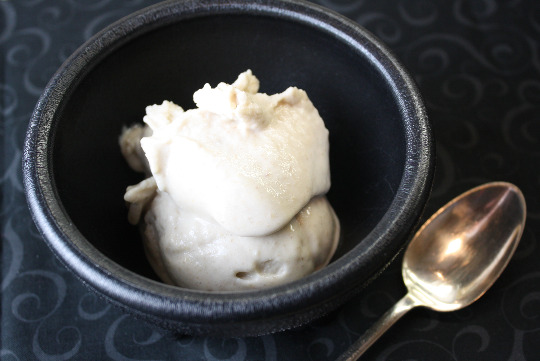
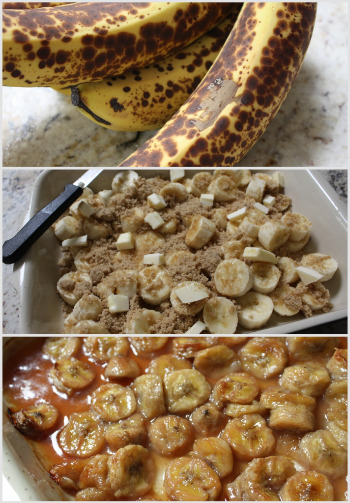
After falling in love with Banana Gelato at Gelato Vero in San Diego (see previous post about this) I was certain I’d like this rendition. You roast the ripe bananas in the oven with brown sugar and butter, then scrape out every last bit from the pan, and mix with the milk base, chill, and freeze. The brown sugar comes through, and it has a very full, rounded flavor of the bananas and caramel. It disappeared in no time, although I did serve it to guests, so there wasn’t much left after that. The best part is it’s low in calories and fat – yes, really, just 4 g of fat per serving – see nutrition info just below the recipe.
Printer friendly PDF

Roasted Banana Ice Cream

Recipe By: David Lebovitz, The Perfect Scoop
Servings: 6
NOTES: This doesn’t have a custard base, which means putting it together is a snap. The other benefit is that it doesn’t actually contain any cream. Just that little bit of butter and some milk – that’s all. But you’d never know it since it tastes as rich and creamy as any super-premium ice cream out there. But don’t take my word for it – go make some yourself!

3 medium bananas — ripe, peeled
1/3 cup brown sugar — 70 grams
1 tablespoon butter — cut into small pieces
1 1/2 cups whole milk — (375ml)
2 tablespoons granulated sugar
1/2 teaspoon vanilla extract
1 1/2 teaspoons lemon juice — freshly-squeezed
1/4 teaspoon salt

1. Preheat the oven to 400°. Slice the bananas into 1/2-inch pieces and toss them with the brown sugar and butter in a 2-quart baking dish. Bake for 40 minutes, stirring just once during baking, until the bananas are browned and cooked through. Scrape the bananas and the thick syrup in the dish into a blender or food processor (or a large bowl, if you’re using an immersion blender). Add the milk, granulated sugar, vanilla, lemon juice and salt, and puree until smooth. Chill the mixture thoroughly in the refrigerator, then freeze it in your ice cream machine according to the manufacturer’s instructions (or freeze in a covered container, blending every couple of hours with an immersion blender until it becomes solid).
2. If the chilled mixture is too thick to pour into your machine, whisking will thin it out.
Per Serving: 156 Calories; 4g Fat (23.2% calories from fat); 3g Protein; 29g Carbohydrate; 1g Dietary Fiber; 13mg Cholesterol; 142mg Sodium.

Posted in Restaurants, Travel, on June 5th, 2007.

Years ago I began following the cooking of Cindy Pawlcyn. She cropped up on the Napa Valley radar when she opened Mustards, in the early 1980’s. She is an innovative chef, but rounds out her food with all the trappings of comfort food. As I believe I mentioned earlier, this was where I first tasted roasted garlic. Since it was very difficult, then, to even get into Mustards, one always had to wait for a table, even with a reservation. While waiting, what more obvious a thing to do than have a glass of the ubiquitous white wine of the decade (chardonnay, of course, because just about everybody was drinking the varietal at that time), and as you became more and more hungry watching and smelling the trays of food whisked from kitchen to tables, you might order a little something to slake your raging appetite. I remember asking the barman what we should have. He grinned and said, “the roasted garlic, of course.” I’m sure I must have made a face: even though I love garlic, I knew nothing about roasting it and about how the flavor changes so dramatically. To utter smoothness, to cream.

So anyway, that began my enjoyment of Cindy Pawlcyn’s food. And discovering how terrifically easy it is to make roasted garlic. Years have gone by, and I did enjoy many a dinner at Mustards, although now it’s been some years. But when I began planning this trip, my friend Darlene raved about Pawlcyn’s newer place, Cindy’s Backstreet Kitchen. The name is thus because the restaurant sits in a cute and funky little house on the next street over from the main drag through St. Helena. The town itself is small. There’s really just the one road that wends through the town, Highway 29. Tra Vigne is at the southern end of town, and Cindy’s place is about in the middle of town. A month ahead it was difficult getting a reservation here, but I was successful only with an early hour. Our waitress was funny as a stitch. She told us about the specials of the day and went non-linear about the soup. She just insisted we
HAD to try it – a Tomatillo, Poblano and Asiago Soup. She said the wait staff was in love with it. So, what could we possibly do? We each ordered it. Oh – my – gosh! I cannot begin to tell you. I wanted another bowl. I did my best to get information about what was in it, other than the obvious. She didn’t think there was cream, although she said it was thickened with masa. (To me, it looked like there was some cream.) So, today I did a search on the internet, and lo and behold I found a recipe from the chef at Stephan Pyle’s restaurant in Dallas. [Since I posted this story, the recipe has been taken down; the chef – not Stephan Pyle – left the restaurant and had gone elsewhere – likely that’s why.] I’ve never been there, but have certainly heard a lot about Stephan Pyles over the years. I haven’t tried this yet, but I will. I can promise you I will because Cherrie and I went nuts over this soup. I’ll let you know whether it compares with Cindy’s. When I make it I’ll try it without the flour, but with masa, and I’ll taste it before adding any cream.

Cherrie ordered one solitary oyster with spinach, shallots and a melting cheese. I ordered the stuffed zucchini blossoms (with Jack, cheddar and Asiago, with a dollop of guacamole) lightly sauteéd. We also ordered a delicious grilled chicken dish, Chicken Pollo Loco (we shared one order) that was moist and tender.
It was stuffed with Jack cheese and California chiles and spinach, maybe flash fried with shallots and extra virgin olive oil.

Cindy’s Backstreet Kitchen is a winner. The food was outstanding. The wait staff was very fun. The atmosphere very enjoyable. Where I was sitting I looked out a window – isn’t this cute?

Cindy’s Backstreet Kitchen, 1327 Railroad Avenue, St. Helena, California

Related Posts Plugin for WordPress, Blogger...