

Get new posts by email:

Archives

Currently Reading

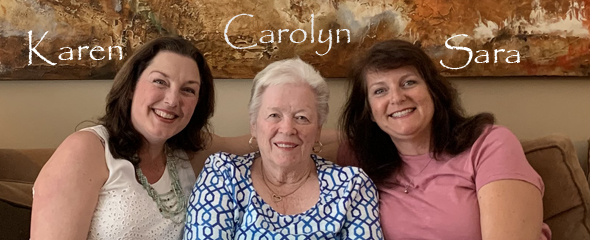
Here are the tastingspoons players. I’m in the middle (Carolyn). Daughter Sara on the right, and daughter-in-law Karen on the left. I started the blog in 2007, as a way to share recipes with my family. I’m still doing 99% of the blogging and holding out hope that these two lovely and excellent cooks will participate. They both lead very busy lives, so we’ll see.

– – – – – – – – – – – – – – – – – – – – – –

BOOK READING (from Carolyn):

Music of Bees, Eileen Garvin. Absolutely charming book about a woman in midlife, lonely, who raises bees, also makes unlikely friends. Heart-warming and very interesting about beekeeping.

A Postcard from Paris, Alex Brown. Really cute story. Dual time line, 1940s and present day about renovating an old apartment in Paris, things discovered.

Time of the Child, Niall Williams. Oh such a good book. Very small village in Ireland, 1960s. A baby is left on the doorstep. The town all whispers and helps. I listened to an interview of the author, which made me like him and his books even more.

Sipsworth, Simon Van Booy. If you like animals you’ll swoon. An old woman who really wants to die finds a tiny mouse in her house and befriends it and finds a reason to live. Utterly charming book.

The Forger’s Spell, Edward Dolnick. True story. For seven years a no-account painter named Han van Meegeren managed to pass off his paintings as those of Johannes Vermeer.

If You Lived Here, You’d be Home by Now, Christopher Ingraham. Could hardly put it down – about a journalist who takes on a challenge to move to small town in Minnesota and write about it. He expects to hate it and the people and place, but he doesn’t. Absolutely wonderful true story.

The River We Remember, William Kent Kreuger. 1950s, Minnesota. A murder and the aftermath. Could hardly put it down. Kreuger has such a vivid imagination and writing style.

How the Lights Gets In, Joyce Maynard. An older woman returns to New Hampshire to help care for her brain-injured son. Siblings and family, lots of angst and resentments.

The Filling Station, Vanessa Miller. Every American should read this book. A novelized retelling of the Tulsa massacre in 1921. Absolutely riveting.

The Story She Left Behind, Patti Callahan Henry. Love this author. Based on a true story. A famous author simply vanishes, leaving her husband and daughter behind. She had invented a mystical language no one could translate. Present day, someone thinks he’s solved the riddle, contacts the family. Really interesting read.

The Girl from Berlin, Ronald Balson. Love anything about Tuscany. An elderly woman is being evicted from a villa there, with odd deed provenance. Two young folks go there to help unravel the mystery. Loved it.

The Island of the Colorblind, Oliver Sacks, M.D. Nonfiction. The dr is intrigued by a remote Pacific island where most of the inhabitants are colorblind. He also unravels a mystery on Guam of people born with a strange neurological problem. Medical mysteries unveiled. Very interesting.

The Bookbinder, Pip Williams. Post 1914 London. Two sisters work at a bookbindery. They’re told to not read the books. One does and one doesn’t. One has visions beyond her narrow world; the other does not. Eventually the one gets into Oxford. Lovely story.

The Paris Express, Emma Donoghue. 1895 on a train to Paris, a disaster happens. You’ll delve into the lives of many people who survived and died in the crash.

A Race to the Bottom of Crazy, Richard Grant. This is about Arizona. Author, wife and child move back to Arizona where they once lived. Part memoir, research, and reporting in a quest to understand what makes Arizona such a confounding and irresistible place.

The Scarlet Thread, Francine Rivers. A woman’s life turned upside down when she discovers the handcrafted quilt and journal of her ancestor Mary Kathryn McMurray, a young woman who was uprooted from her home only to endure harsh frontier conditions on the Oregon Trail.

A Place to Hide, Ronald Balson. 1939 Amsterdam, an ambassador has the ability to save the lives of many Jewish children. Heartwarming.

Homeseeking, Karissa Chen. Two young Chinese teens are deeply in love, but in China. Then their families are separated. Jump to current day and the two meet again in Los Angeles.

North River, Pete Hammill. He always writes such a good story. A doctor works diligently healing people from all walks of life. His wife and daughter left him years before. One day his 3-yr old grandson arrives on his doorstep.

A Very Typical Family, Sierra Godfrey. A very messed-up family. Three adult children are given a home in Santa Cruz, Calif, but only if the siblings meet up and live in the house together. A very untypical scenario but makes for lots of messes.

Three Days in June, Anne Tyler. The usual Anne Tyler grit. Family angst. This wasn’t one of my favorites, but it was entertaining and very short.

Saved, Benjamin Hall. Author is a veteran war reporter. Ukraine, 2022, he nearly loses his life to a Russian strike. Riveting story – he survives, barely.

Grey Wolf, Louise Penny. Another Inspector Gamache mystery in Quebec. She is such an incredible mystery writer.

All the Colors of the Dark, Chris Whitaker. A missing person mystery, a serial killer thriller, a love story, a unique twist on each. Could hardly put it down.

Orbital, Samantha Harvey. Winner of 2024 Booker Prize. I don’t usually like those, but I heard the author interviewed and she hooked me. This is not a normal book with a beginning, a story and an end. It’s several chapters of the day in the life of various astronauts at the ISS (Int’l Space Station). All fictional. She’s been praised by several real astronauts for “getting it” about space station everyday life.

The Blue Hour, Paula Hawkins. An island off Scotland. Inaccessible except when the tide is out. Weird goings on. An artist. A present day mystery too.

Iron Lake, William Kent Krueger. A judge is murdered and a boy is missing. Riveting mystery.

Tell the Wolves I’m Home, Carol Ricks Brunt. 1980s. A 14-yr old girl loses her beloved uncle. Yet a new friendship arises, someone she never knew about.

Four Treasures of the Sky, Jenny Zhang. 1880s, a young girl is kidnapped in China and brought to the United States. She survives with many hurdles in the path.

The Boy Who Fell out of the Sky, Ken Dornstein. Memoir, 1988. The author’s brother died in the PanAm flight that went down in Lockerbie, Scotland. A decade later he tries to solve “the riddle of his older brother’s life.”

Worse Care Scenario, T.J. Newman. Oh my. Interesting analysis of what could/might happen if a jet crashed into a nuclear plant. Un-put-downable.

Song of the Lark, Willa Cather. Complicated weave of a story about a young woman in about 1900, who has a gifted voice (singing) and about her journey to success, not without its ups and downs.

Crow Talk, Eileen Garvin. Charming story which takes place at a remote lake in Washington State, about a few people who inhabit it, the friendships made, but also revolving around the rescue of a baby crow.

The Story Collector, Evie Woods. Sweet story about some dark secrets from an area in Ireland, a bit magical, faerie life, but solving a mystery too.

A Sea of Unspoken Things, Adrienne Young. A woman investigates her twin brother’s mysterious death. She goes to a small town in California to figure it out, to figure HIM out.

The King’s Messenger, Susanna Kearsley. 1600s England, King James. About one of his trusted “messengers,” and his relationship with a young woman also of “the court.” Lots of intrigue.

In the Shadow of the Greenbrier, Emily Matchar. Interesting mystery in/around the area of the famous resort in White Sulphur Springs, West Virginia.

Isola, Allegra Goodman. Hard to describe, survival story on an island in the 1600s.

Save the Date, Allison Raskin. Rom-com, witty, LOL funny. Clever.

The Sirens, Emilia Hart. Numerous time-lines, Australia. Mysteries abound, nightmares, abandoned baby, weird allergies.

Red Clay, Charles Fancher. LOVED this book. Mostly post-Civil War story about the lives of slaves in Alabama during Reconstruction.

Stars in an Italian Sky, Jill Santopolo. Dual time line, 1946 and recent time. Love stories and a mystery.

Battle Mountain, C.J. Box. Another one of Box’s riveting mysteries. Love his descriptions of the land.

Something Beautiful Happened, Yvette Corporon. A memoir of sorts in Greece, tiny island of Erikousa, where the locals hid Jews during WWII. All elusive stories told by the author’s grandmother.

The Jackal’s Mistress, Chris Bohjalian. 1860s Virginia, about a woman who saves the life of a Union soldier. Really good story.

Song of the Magpie, Louise Mayberry. Really interesting story about Australia back in the days when it was mostly a penal colony. Gritty strength of a woman trying to thrive with her farm.

The Boomerang, Robert Bailey. A thriller that will have you gripping the book. About a lot of secrets surrounding the president (fictional novel, remember) and his chief of staff and about cancer. A cure. Such a good story.

Care and Feeding, Laurie Woolever. Really interesting memoir of a woman driven to succeed in the restaurant business. She worked for Mario Batali and then Anthony Bourdain. Gritty stories.

Everything is Tuberculosis, John Green. Maybe not a book for everyone. A real deep dive into the deadly tuberculosis infection, its history. I heard the author interviewed and found the book very interesting.

The Book Lovers Library, Madeline Martin. Fascinating read about Boots’ drug stores’ lending library. And the people who worked in them.

The Arrivals, Meg Mitchell Moore. LOL funny, about a middle-aged couple whose children (and their various family members) return to the family home and the chaos that ensues.

My Life as a Silent Movie, Jesse Lee Kercheval. About grief. A big move to Paris, finding herself a new life with a new set of real blood family.

Escape, Carolyn Jessop. Another memoir about a woman really in bondage in Utah, Mormon plural marriage.


Tasting Spoons

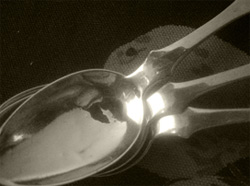
My blog's namesake - small, old and some very dented engraved silver plated tea spoons that belonged to my mother-in-law, and I use them to taste my food as I'm cooking.

Scroll down to the bottom to view my Blogroll

Posted in Appetizers, on November 5th, 2009.

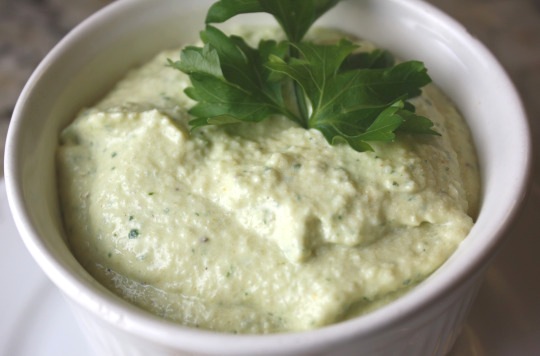
cauliflower pate

Good friends of ours, Lynn & Sue, often exchange dinners with us. We’ve been doing it for years, and always enjoy their company whether it’s at our house or theirs. Sue’s a very good cook, so we have great conversations about food and about choir/church. Lynn and Dave have guy talk – about wine, travel, and choir/church. They’re both 2nd tenors. Sue and I are both 2nd altos. The day I’m writing this [over a week ago] we just sang our little hearts out for Reformation Sunday. Our choir, which has now swelled to about 140, and may be up to 150 starting next week, was a significant part of our church service, with the help of a brass ensemble multiple drums and flute, guitar, organ, piano and a synthesizer. It was gorgeous music – both to sing and hear. We sang some of the old hymns that I know nearly by heart – Great is Thy Faithfulness, for one.

Normally I don’t use my blog as a venue for discussing my faith, but I just had to share a bit about my Christian music life. Anyway, Sue & Lynn invited us for dinner that night, even though we didn’t get home from singing completely through two services, until about 12:30 pm. I’d offered to bring a couple of things, though, to make it easier on Sue. We do that generally, the guest brings something and a bottle of wine.

I’d given Sue a list of options of things I’d thought about making, and she chose two of them. But then Lynn started joking about a dinner I fixed one night a year or so ago when I made tabbouli salad, but instead of bulgur wheat, it was made with cauliflower. I didn’t tell any of the guests what was in it. Lynn, who professes to dislike cauliflower in most forms, liked it a lot. Then I told him what was in it. He’s never forgotten that I like to slip some in under his radar.

So, of course, I had to find some kind of cauliflower appetizer. Where he wouldn’t have a clue. It’s a kind of game we play. I couldn’t find much except some Indian-type ones making roasted cauliflower, flavored with Indian spices, which sounded more like a side vegetable anyway. But baking cauliflower florets would be much too obvious. Had to find something with camouflage. So this is the one. Found it on the internet, although it was a very oddball website and I’m not going to link to it. Besides, I changed the recipe, so it’s not really anybody else’s anymore. It was called a pate so I figured I could get away with serving it to Lynn, telling him it is a bean pate.
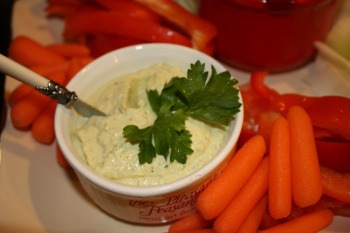
curry pate platter It’s really a dip – and contains many of the usual ingredients for one – like cream cheese (light), and sour cream (light). But then it veered off in another direction:  hardboiled eggs, an onion, a small quantity of cannellini beans, and some cooked cauliflower. The seasonings are mild – salt, pepper, curry and parsley. As a matter of fact, the online recipe I found called it curried cauliflower pate, but the recipe didn’t contain any curry. I added curry powder and also lime juice because it needed just a little something to zip it up some. And I’d probably add even more curry powder, but didn’t want to overwhelm the palates of us all. I used less beans, less sour cream, less cream cheese, and MORE cauliflower. The online recipe contained butter, but I left it out.

I served it with some veggies and pita chips. along with a second appetizer too (an almond dip, which I’ll post in a day or so). A Greek type one based on skordalia, the Greek sauce made with baked potato. More on that one later. I also took a Roasted Sweet Potato, Black Bean and Red Bell Pepper Salad with a jalapeno dressing, which was really good (I posted that one last week). Very international menu, based on what I was bringing! Sue made a delish Mexican baked chicken dish with tomatoes, sour cream, avocado and a tomatillo sauce. And a very nice spinach, apple and pomegranate salad. Oh yes, and for dessert we had pieces of Julia Child’s chiffon pumpkin pie that I thought was fabulous. She’s going to give me the recipe.

So, you want to know how it went? Lynn tried both dips and didn’t say much at first. He then pointed to the skordalia dip and said “now, you didn’t slip some cauliflower in this one, did you?” Honestly, I could say with great laughter, “no, no cauliflower.” Sue asked him how he liked the other dip, this pate, and he said great. Liked it. We all did. When I told him it WAS cauliflower, he didn’t believe me. We all laughed and nearly finished the bowl. It was good. Not like a meat-based one (like clams) or a very major veggie one (like caramelized onions or artichokes) – in this one you really cannot taste or feel cauliflower. I liked the curry hint to it – it might not be to everyone’s taste. I liked the texture. And it’s fairly low cal and low fat.
printer-friendly PDF

Curried Cauliflower Pate

Serving Size: 8

4 ounces canned cannelini beans — drained
4 ounces light cream cheese — room temp
3/4 cup sour cream, light
7 ounces cauliflower — cooked
1 cup grated cheddar cheese
1 small onion — cut in small chunks
2 large eggs — hard boiled
1 teaspoon salt — or more to taste
1 teaspoon black pepper — or more to taste
1 teaspoon curry powder — (or up to 2 tsp. to taste)
2 teaspoons lime juice — (juice from one lime)
1 teaspoon fresh parsley — minced
2 teaspoons fresh parsley — minced and whole, for garnish

1. Using a food processor, blend white kidney beans, cream cheese, sour cream, cooked cauliflower, curry powder, lime juice, Cheddar cheese, red onion, eggs, salt, black pepper and parsley. Puree until smooth. Taste for seasoning. Add more curry powder if desired, and/or salt and pepper.
2. Pour into small ramekins and chill until ready to serve. Garnish with fresh minced Italian parsley.
2. Serve with crudites, crackers and/or pita chips. Serving Ideas: This tastes best with crispy pita chips. Or celery sticks. A fairly neutral something to get it from plate to mouth since the flavorings in the dip are quite subtle.
Per Serving: 140 Calories; 9g Fat (56.8% calories from fat); 8g Protein; 7g Carbohydrate; 2g Dietary Fiber; 78mg Cholesterol; 495mg Sodium.

A year ago: Pork Tenderloin with Cherry Grape Sauce

Posted in Essays, on November 4th, 2009.

bacon freeze

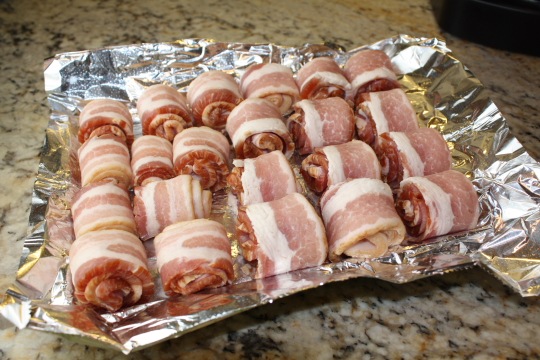
Every time I pop my package of frozen bacon out of the freezer, and somebody happens to be here, they usually ask “what’s that?” And I explain that these are my bacon rolls. “Bacon rolls? What are bacon rolls?” I’ve mentioned them here before, and I don’t recall where I heard this suggestion. Probably at a cooking class. When I buy bacon, usually I buy the uncured nitrate- and nitrite-free Niman Ranch thick bacon (carried at our local Trader Joe’s, and some upscale markets). It’s a rare morning when we eat bacon and eggs, so a package of bacon lasts a long time at our house. This uncured bacon doesn’t have a long shelf life, so the best thing for me is to freeze it. Mostly I use it in cooking, to flavor things. Like a stews, soups, green beans, or sprinkled on a salad even.

So, the above picture shows you what I do with them. I let the bacon package sit out at room temp for about 10 minutes. Otherwise when you try to pull off the first bacon strip, it almost tears, and it’s hard to roll, almost cracking in the process. Once it’s warmed a bit, the slices are easy to pull apart and roll up. So, I carefully peel off each strip of bacon, roll it up in a tight little ball and place it on a foil-lined baking sheet, with the end edge down. Just press the roll down a bit and it will stay firmly in place. The tray you see above was before freezing . . . I just pop that tray into a flat place in the freezer, loosely covered with another sheet of foil, until they’re frozen solid, then the whole batch is wrapped in heavy-duty foil and placed in a heavy-duty freezer bag. The bacon keeps for months. Then, whenever I need bacon, I just pull out ONE roll/strip. Or, I may even cut one of the rolls in half and use just that. Cutting frozen bacon is very easy because the fat doesn’t freeze very hard – a good butcher knife will sink right through. I find chopping frozen bacon far easier than crumbling or chopping it up later.

So, there’s one of my pantry secrets, if you can call it that!

A year ago: “Divorce” salad dressing (the story was better than the dressing, but it’s good for a laugh)

Posted in Brunch, on November 3rd, 2009.

Roulade cheese_1

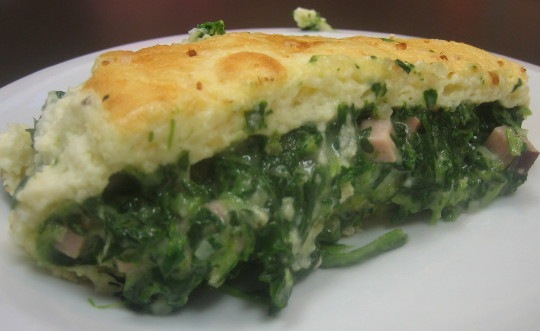
This was SO good. And it looked like more work than I’d ordinarily want to do. I didn’t make this myself, but it was served to me at a recent cooking class. A class with nothing but Julia Child recipes. Phillis Carey taught the class, and made only a couple of tiny changes to Julia’s recipes, but this was just delish. It’s ideal for a sit-down lunch, if you do such things, or probably a brunch would be perfect. Could be done for a dinner, but it’s rich and filling, so you wouldn’t want anything else very substantial in addition to this. My friend Cherrie and I talked about doing it for a brunch, but it would be best if somebody else could/would help you with some of the work. Either with the soufflé, or with the other parts of the meal, like the fruit plate you might want to have, or the champagne cocktails. How’s that sound?

So what’s a fallen soufflé? Nothing but a soufflé that’s allowed to fall, which it will do all by itself if you just leave it alone. You do do the whipped egg whites folded into your egg mixture, it’s baked flat on a large baking sheet, turned out of the pan onto a flat surface. In that short time, the soufflé falls some – not so flat as scrambled egg-like, but it’s not as high as it is when it first exits the oven. Once briefly cooled, it’s stuffed with a Béchamel-rich spinach sauce (a Béchamel sauce is really just a cream sauce) and rolled. Then cut and served immediately, while it’s hot. In the photo above, there is an egg part underneath the spinach, it’s just that there was so much spinach it kind of rolled out the side. Notice how nice and fluffy the egg layer is.

If the meal didn’t require too much other work (like maybe a green salad and bread) this could be accomplished easily enough. The spinach and sauce can both be made ahead of time and reheated. It’s the soufflé part that can’t be even mixed ahead. Eggs are temperamental things – once they’re puffed up with air, they need to be cooked right away. Everything could be mis en place (ingredients put together on a tray, all ready). The baking sheet, buttered, parchment papered and buttered, all the whisks, whips bowls and mixers ready.

The Béchamel sauce is thicker than usual – in order to hold together the filling. Half of it goes into the soufflé, and the other half is used for the spinach filling. So there’s really only one sauce to make. The filling is not all that difficult – it uses frozen spinach, and you buy the Black Forest ham and cube it up quite small. So this dish is really do-able as long as you plan the menu accordingly.
printer-friendly PDF

Cheese Souffle Roll with Spinach & Ham

Recipe By: A Julia Child recipe, from one of her cookbooks
Serving Size: 5
NOTES: Separate the eggs when they’re cold – they separate more easily. Adding the cheese at the very end of the preparation means the cheese doesn’t completely dissipate throughout, so you still will see and taste the cheese.

THICK BÉCHAMEL SAUCE:
1/2 cup unsalted butter
2/3 cup flour
3 cups whole milk — heated
1/2 teaspoon salt
1 pinch freshly ground black pepper
1 pinch freshly ground nutmeg
SOUFFLE:
1/2 of the above Béchamel Sauce
6 large eggs
1/4 teaspoon cream of tartar
1/8 teaspoon salt
1 cup Gruyere cheese — grated [or Emmentaler]
1 tablespoon unsalted butter
1/2 cup fresh bread crumbs — coarsely crushed [divided use]
SPINACH FILLING:
4 tablespoons unsalted butter
4 tablespoons shallots — minced
20 ounces frozen spinach — chopped, thawed, squeezed dry
1 1/2 cups Black Forest ham slices — cut in tiny cubes
Salt and pepper to taste
1/2 of the Béchamel Sauce above
3 tablespoons milk — (approximate) to thin the sauce
1/4 cup Gruyere cheese — grated

1. BÉCHAMEL SAUCE: Melt butter in a 3-quart saucepan. Whisk in flour and cook over medium heat until bubbly, 1-2 minutes. Whisk in hot milk (must be hot milk) until smooth. Cook, whisking constantly, as the sauce returns to a boil. Sauce will be very thick. Beat in salt, pepper and nutmeg. Divide sauce in half.
2. SOUFFLE: Preheat oven to 425.
3. Butter a 12×17 inch jelly roll pan (with sides) and line with parchment paper, leaving a 2-inch overhang of paper at each end. Butter the parchment (yes, you must do this) and dust with flour. Melt 1 T. butter in a small skillet and add the bread crumbs. Toss over medium heat until toasted. Set aside to cool.
4. Place HALF the Béchamel in a bowl. Whisk in one egg yolk at a time (or you can temper the egg yolks with some of the hot Béchamel sauce).
5. Beat the egg whites until smooth peaks form. Ideally start the whites at a low speed, then increase as they become thicker. Don’t overbeat the whites – they should not be “dry.” When the eggs are still frothy add the cream of tartar and salt. Once stiff peaks form, fold about 1/4 of the egg whites into the Béchamel to lighten up the mixture. Add the remaining whites and gently fold and turn the bowl until there are no more streaks of egg white. Do not overmix. Gently fold in the cheese.
6. Pour souffle mixture into the prepared pan and smooth the top with an offset spatula, clear into the corners. Bake for 12-15 minutes (12 if using pure convection, 15 if conventional oven) or just until the souffle has puffed and top feels slightly springy.
7. SPINACH FILLING: While souffle bakes prepare the spinach filling. Melt butter in a medium skillet over medium heat and add the shallots. Cook for one minute. Stir in the tiny cubes of ham and toss for one minute. Stir in the spinach (squeezed VERY dry) and Béchamel, adding more milk if necessary to thin out the sauce. The mixture should be spreadable but not too thin. Stir in the cheese and taste for seasoning.
8. SOUFFLE: Remove souffle from oven and sprinkle top with half of the toasted breadcrumbs. Use a spatula all around the edge of the souffle so it’s not sticking to the edges anywhere. Lay a piece of parchment paper over the top of the souffle and carefully turn the pan over onto a bread board or countertop. Let rest 5 minutes, remove pan, then carefully peel off the paper.
9. Spread the hot spinach filling over the warm souffle, leaving a 1-inch border along one long side, the side farthest from you. Fold back the bottom parchment paper partially (about an inch), and roll up the souffle, using the parchment paper to help. As you do this have a hot serving plate/platter next to the far edge and gently roll the souffle onto the platter, making sure the open edge is on the bottom side. Sprinkle with the remaining toasted bread crumbs and serve immediately. Serving Ideas : Ideally serve this at a sit-down brunch, or a more formal luncheon. The souffle cannot be made ahead of time, but everything else can be. Would be nice served with a lightly dressed green salad and some bread.
Per Serving: 752 Calories; 53g Fat (63.3% calories from fat); 41g Protein; 29g Carbohydrate; 4g Dietary Fiber; 429mg Cholesterol; 1213mg Sodium.

A year ago: Goat Cheese Potato Gratin

Posted in Essays, on November 2nd, 2009.

granny smith apples

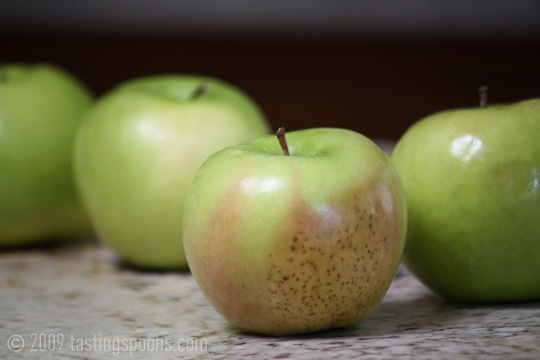
Every time I open Russ Parsons’ book, ‘>How to Pick a Peach: The Search for Flavor from Farm to Table, I learn something. His book is so informative without being pedantic (too wordy, drivel type or preachy). He gives you the facts in a couple of different forms, as well as a few recipes, his favorites for that particular fruit or veggie. So it was that I learned we Americans are quite proprietary about our apples. Parsons thinks it’s because of our pioneer heritage – we hold hardiness and plain goodness as really important. We used to dominate the apple market worldwide, but no more. Bet you’d never guess who’s moved into first and second place, would you? (1) China; and (2) Chile. Those were surprises to me.

China barely knew apples 30 years ago, but they now harvest a third of all the apples grown in the world. But, there’s a bit of trouble in river city . . . the Chinese haven’t worked out storage very well, nor have they excelled with apple quality either, so they haven’t totally controlled the market. Yet.

It used to be that Golden & Red Delicious were the “IT” apples here in the U.S. But they’ve slid way down the desirable scale (more on that story below). So varieties like Gala, Fuji, Honey Crisp and Pink Lady have slid up into top types. Apparently Golden Delicious apples used to be a really superior apple – but only when it was allowed to mature on the tree to a golden hue. But the farmers and producers were lured into harvesting and shipping early, when they were still green, and the apples suffered. That’s still the case, unfortunately.

Then there’s the Red Delicious. I can recall that being one of the few eating apples I ever bought from about 1965 to 1995. But something happened to the red variety farming. Because we consumers wanted redder varieties, the farmers began pushing the producers of tree seedlings to bring out redder skinned apples. Guess what? The taste suffered because when skin darkens it becomes more bitter. Now we see red delicious that are almost black in color. Not good. We continued to buy them, because we trusted the variety. I stopped buying them some years ago when I couldn’t seem to find a really crisp one anymore. Every Red Delicious I bought was soft and mealy. We consumers buy fruit too much on color and may not realize the blacker the skin the more bitter the finish.

Finally, apple eaters began complaining, but the farmers didn’t want to hear it. They thought they had a lion by the tail and weren’t about to change their ongoing success. Eventually we did stop buying this old favorite. So the farmers began selling their product abroad. No, they weren’t going to change the breeding. They found exporters, instead. Then, as Parsons puts it, the sleeping giant (China) woke up and began producing big time, so American farmers suddenly lost business. Big time. During the last 15-20 years thousands of apple farmers went out of business. Trees and orchards were upended and farms sold. Some apple farmers had begun growing Pacific varieties (Fuji from Japan and Gala from New Zealand) and when they couldn’t sell them abroad they began selling them here. Voila! We started seeing them in our markets. Now they’re fairly standard issue.

apples honeycrisp

So here are the different varieties he discusses (when I mention below about storage, it’s mostly the cold storage at harvest, not our home refrigerator chilling):

FUJI: a Japanese-bred cross between Red Delicious and Ralls Janet. Holds its shape during cooking, good sauce apple, buttery flavor. Stores well, but don’t buy them past mid-summer.

GALA: Cross between Cox’s Orange Pippin and Golden Delicious. A tart apple, golden with pinkish orange strips. Good for cooking, sauce, buttery flavor with a hint of spice. One of the earliest harvests. Does NOT keep well once purchased, so eat them up right away and stop buying in early Spring.

BRAEBURN: one of the first Southern Hemisphere apples to become popular. Probably a chance seedling from cross-pollination between Lady Hamilton and a Granny Smith. Spicy, tart bite, juicy crisp texture. Good for cooking, stores well and okay to buy into early summer.

JONAGOLD: New York apple, an offspring of Golden Delicious and Jonathan. Tangy, slightly soft, though, when eating out of hand. Not good for storing and don’t buy them after Spring.

EMPIRE: Also a New York apple, mostly available on the East Coast [I’ve never seen an Empire apple here in California]. A cross between McIntosh and Red Delicious. Good flavor, holds its shape in cooking, but buy before the end of Spring.

PINK LADY: From Australia. Crisp and honeyed, pinkish cast, a champagne tartness, and one of the last apples harvested, usually starting in late September. Stores well.

CAMEO: A chance mutation in Washington State from a Red Delicious. Bright red-striped with unique white spots. Good flavor, sweet and mildly tart. Lots of crispness and staying power. Because of its dense flesh, Cameos take longer to cook than most apples.

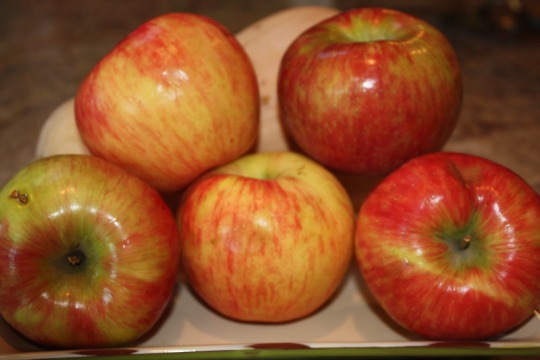
HONEYCRISP: Crisp and sweet, holds its shape during cooking, red with a golden background [our Costco has them right now in a 12-pack]. Developed at the University of Minnesota, mostly grown in northern Midwest. Remarkable storage characteristics, i.e. does well in long storage. Interesting to me is that scientists have done DNA testing on apples (yes, really) and have discovered the Honeycrisp is not a cross between a Macoun and Honeygold, and they still don’t know its heritage.

– – – – –

Grown: Washington State, New York, Michigan, California and Pennsylvania

Choosing: look for smooth skins, deep color; yellow apples should be golden, striped apples have a background that’s golden. Look for heavy apples that are firm.

Storing: In the refrigerator, as close to 32 degrees as possible; lots of humidity – best in a perforated plastic bag that will retain water, but not collect it. Your crisper drawer is best. Red Delicious apples are the first ones that turn brown once they’re cut – but all apples will keep for awhile if you put them in acidulated water – lots of water plus fresh lemon juice.

Recipes: Parsons included his favorite baked apple recipe (brown sugar and butter only); also an applesauce made with bourbon, sour cherries and hazelnuts; and a gratin of apples and dried cranberries.

Here on my blog you’ll find apple recipes for the following:

Escarole, Belgian Endive & Apple Salad
Bombay Cheese Ball (best served with apple slices)
Cinnamon & Apple Bread Pudding
Baked Brie & Apples
Caramelized Apple Gingerbread
Grandgirl’s Fresh Apple Cake
Crisp Apple Pudding (my all-time favorite apple dessert)
Apple Buttermilk Scone Round
Applesauce Spice Cake with Caramel Glaze (a real favorite)
Apple Pear Upside Down Cake
Apple & Parsnip Soup
Cranberry Relish with a Zip (I make this, without fail, every Thanksgiving)
Roasted Butternut Squash Soup (includes roasted apples and onions)
Apple, Dried Cherry & Walnut Green Salad
Crostini with Apples, Watercress & Blue Cheese (one of my very favorite appetizers)

Posted in Essays, on October 31st, 2009.

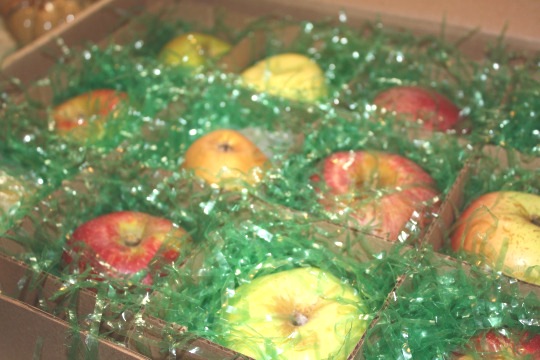
applesource heirloom apple box

A few years ago my friend Cherrie and I attended a cooking class (at a wonderful venue in San Juan Capistrano that is no longer a cooking school) where the subject was apples. No ordinary apples however, but mostly heirloom ones. About 15 years or so ago my DH and I were with good friends, Jerry & Judy, on a driving trip in New England – in September when the leaves were just beginning to turn – and the first farm stand I saw with a big sign announcing “Fresh Apples,” I yelled and asked if we could stop. Back here in California it was in the high 90’s, but that Fall day in Vermont or New Hampshire, it was c-o-l-d, misting with rain. So East Coast Fall. I promptly bought about a dozen apples, of three varieties. I know one of them was Northern Spy. Another had “black” in the name, but I don’t recall it. The flavors were sublime. Different.

You see, where we live in Southern California, we can get nothing – and I mean nothing – except Golden, Pippin, Granny Smith, Red Delicious, McIntosh, Jonathan, Fuji, Braeburn (my DH’s favorite), and now the new Honey Crisp. Occasionally we can find Gala too. As I’m writing this I’m thinking that for many people that’s a LOT of types. But after years and years of those, and knowing there are others out there that offer very different flavor and texture, I’m in an apple-want state of mind. Actually most of those don’t come from California, but from Washington State. We have no heirlooms at all in our neck of the woods. I don’t believe they’d grow here even if we tried since our climate is only good for a couple of unique varieties (Anna, for one). We had an Anna apple in the backyard of our last house. The new owners tore down all of our gorgeous fruit trees (about 5) and put in an expansive cement-lined dog run. Makes me sad just thinking about it because the Anna tree produced some really nice apples.

So anyway, back to that cooking class. We tasted apples of a plethora of types. All very different. And from that class I still make two of the recipes – the Apple, Blue Cheese, Watercress & Honey Crostini, and the Caramelized Apple Gingerbread. There were another 5 or 6 recipes from that class, but they weren’t as memorable as the above.

The cooking class included information from the apple supplier, Applesource in Chapin, Illinois. You can order all their products online. We sampled 12 varieties that day. I made notes that the Calville Blanc was a French dessert apple (soft, good for Tarte Tatin), that Jonalicious is soft, juicy, high sugar, though. And that I liked the Macoun (like a McIntosh). And I knew I liked Northern Spy. The quote included about that apple was: “There’s no pie like a Spy Pie.”  But there were other types: Matsu, Pink Pearl, Ashmead’s Kernel (tart, firm), Cox’s Orange Pippin (very popular in the U.K., crisp, special aftertaste, but also soft, unlike our American Pippins), Esopus Spitzenberg (supposedly the parent apple of a Jonathan).

So recently I suggested to my friend Cherrie that we share an apple purchase from Applesource. The boxes arrived about 2+ weeks ago, and they’ve been stored in our wine cellar ever since. Every few days I pop down there and pick out a new variety to try. All heirlooms. Many different types than the ones we sampled at the class. All enjoyable. We’re only had four of the 12 so far. And they were on the pricey side, what with shipping and all. The idea (I thought) was that if we found some we really, really liked, maybe I’d order a bigger box of one or more of them. I might still do that, but I must remember that the shipping takes the price way up there in the stratosphere. You really want to be an apple connoisseur to do that. What we ordered was an “Antique Sampler.” They also have a (regular) Sampler of 12 too. The types change with whatever varieties happen to be ripe at the time you order or they ship.

We also ordered their cookbook. I haven’t yet made anything from it, but it’s a nice book and full of many different kinds of dishes, all using apples in one way or another. On Monday I’m going to write up a different kind of apple post – more info about apples in general. So stay tuned if you are an apple lover like I am.

Posted in Salads, Veggies/sides, on October 30th, 2009.


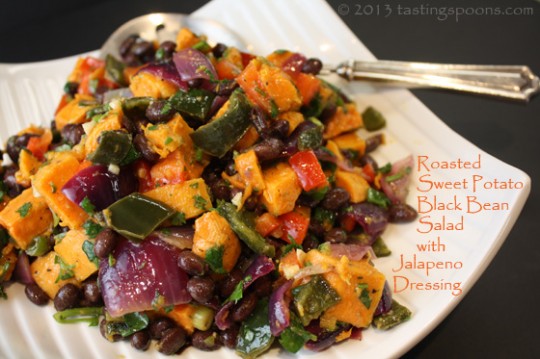
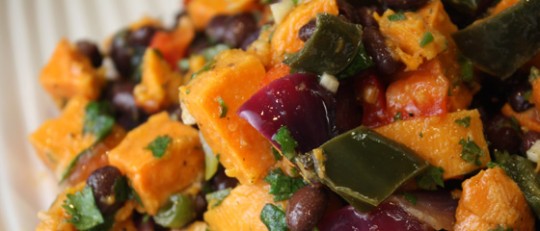
roasted_sw_pot_black_bean_saladReading as many recipes as I do in the course of a few months, unless I make notes, or recognize the print style, I can’t recall where I read or heard about a recipe. Such with this one. I think it was on somebody’s blog that I read about it. And the writer sent us off to the New York Times’ website to retrieve it, which I did, as it was in that week’s food section. I think. It wasn’t all that long ago – like a month. It’s  a Mark Bittman recipe – he of restaurant and TV fame. And cookbook fame too – he’s done one or more books about sw_pot_black_bean_widethe “Best” of specific recipes (kind of like Cook’s Illustrated in a way). I don’t own any of his tomes. But, I will tell you this recipe is awfully darned good. When I did a search for this recipe I noticed a lot of other food bloggers are on this recipe’s bandwagon too. I’m  delighted to join the parade.

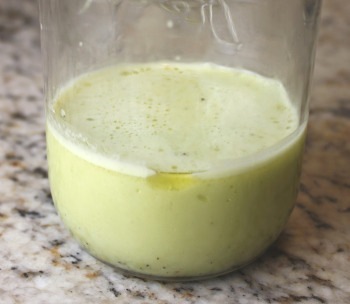
jalapeno dressing It’s a salad, or a side vegetable combo. The list of ingredients is simple: sweet potatoes (I used the dark orange type we call yams), onions, both roasted with olive oil, S&P, then tossed with some canned black beans (rinsed & drained), some minced bell peppers, a passel of cilantro chopped, and then the very simple dressing (pictured at left) of olive oil, some minced green chile (hot type like jalapeno), garlic and lime juice. Very simple. And very extra delicious, I assure you. The recipe said to toss the salad with the dressing just before serving, but I think soaking it in the dressing for awhile just brightened all the flavors. There was still a bit of dressing in the bottom of the bowl which I just left there for the leftovers. My first foray into Mark Bittman’s world produced a great recipe. I’d make this again anytime.
printer-friendly PDF

Roasted Sweet Potato Salad with Black Beans and Chili Dressing

Recipe By: Mark Bittman, in New York Times article 9/30/2009
Serving Size: 6

1 1/2 pounds sweet potatoes — peeled and cut into 1-inch chunks
1 large red onion — peeled, chopped
Salt and freshly ground black pepper
2 tablespoons olive oil
2 cups cooked black beans — drained (canned are fine)
1 red bell pepper — or yellow, seeded and finely diced (or mix with both)
1 cup chopped fresh cilantro
DRESSING:
6 tablespoons olive oil
1 tablespoon jalapeno chile pepper (1 to 2)
1 clove garlic — peeled
2 tablespoons fresh lime juice — (from 2 limes)

1. Heat oven to 400 degrees. Place sweet potatoes and onions on a large baking sheet, drizzle with 2 tablespoons oil, toss to coat and spread out in a single layer. Sprinkle with salt and pepper. Roast, turning occasionally, until potatoes begin to brown on corners and are just tender inside, 30 to 40 minutes. Do NOT overcook the mixture as the potatoes will dry out. Remove from oven; keep on pan until ready to mix with dressing.
2. Put chiles in a blender or mini food processor along with garlic, lime juice, remaining olive oil and a sprinkle of salt and pepper. Process until blended.
3. Put warm vegetables in a large bowl with beans and bell pepper; toss with dressing and cilantro. Taste and adjust seasoning if necessary. Serve warm or at room temperature, or refrigerate for up to a day.
Per Serving: 339 Calories; 19g Fat (48.3% calories from fat); 7g Protein; 38g Carbohydrate; 8g Dietary Fiber; 0mg Cholesterol; 14mg Sodium.

A year ago: Peppers for Cold Meats (a kind of relish – I liked it so much I’ve posted about it twice and have made it 3 times in the last 6 months)

Posted in Uncategorized, on October 29th, 2009.

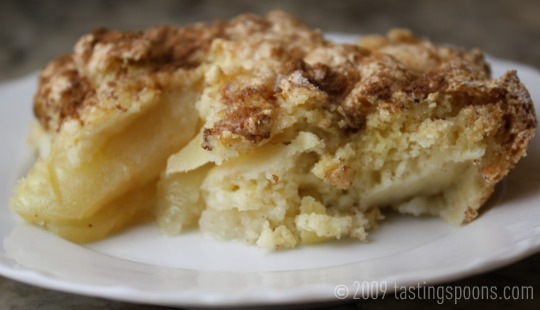
crisp apple pudding

apple crisp

Just so you know . . . there’s no oatmeal here. No brown sugar here either. An apple crisp of a different order.

This isn’t a new recipe to this blog. Just an old, but big family favorite. Well, we don’t have “family” at home anymore – just my hubby and me. So I should rephrase: likely it’s just MY favorite. I just love-love this stuff. My mother’s recipe, tinkered with just slightly over the years. Very easy, goes together in about 20 minutes. I’ve even been known to eat a little bowl of it for breakfast. Especially if I’ve made it with Splenda. This time I made it for my friend Norma who needs all the calories she can get, so I used all sugar. And even sprinkled more sugar than usual on the top of her dish. I made a second, smaller casserole of these apples for us – with less sugar. Enough for just a couple or three servings.

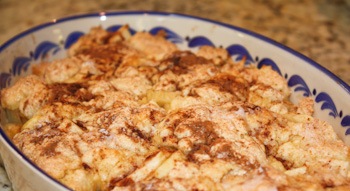
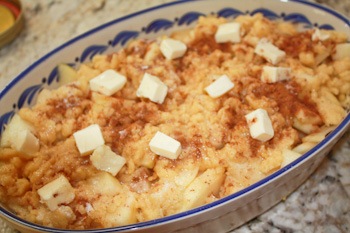
apple crisp before baking Doesn’t look much different here, before baking, than it does when it’s fully cooked. Here you see the crumbled flour, sugar, baking powder, egg mixture  sprinkled all over, dotted with butter, spices (cinnamon & nutmeg) and then sprinkled with some cold water (which gives it the crisp part). Those butter pats are quite small – this was not a really large oval baker – about 5×9 – and I used about 2 T. unsalted butter altogether.

It’s baked for about 40 minutes (35-45, depending on the apples and the thickness of the apple layer), cooled, then scooped out in a bowl with some vanilla scented and sweetened whipped cream (my favorite) or vanilla ice cream (second choice) or drizzled with heavy cream (third choice). My favorite thing about this type of apple dessert is the crispy topping. It’s not like a biscuit exactly (it’s not that thick); it’s not like any of the oatmeal-based toppings (this topping isn’t chewy in the least); it’s not like a crumbled pie crust, either (it’s crumbled anyway, not rolled or formed). It’s not a sweet top either (because there’s not that much sugar in it to begin with). The only sugar in this apple dessert is in the topping. There’s none at all in the apples. Did I mention that I made these with “honey crisp” apples? They’re very crunchy and sweet. So I cut down on the sugar by about a quarter, and they were still plenty sweet. On the baker for my friend I added more sugar on top, as I mentioned above. On the one we kept I reduced the sugar. I can vouch – it was as good as ever.

If you want the recipe – it’s in my archives from 2007. It’s a winner.

Posted in Fish, on October 28th, 2009.

amber halibut steaks

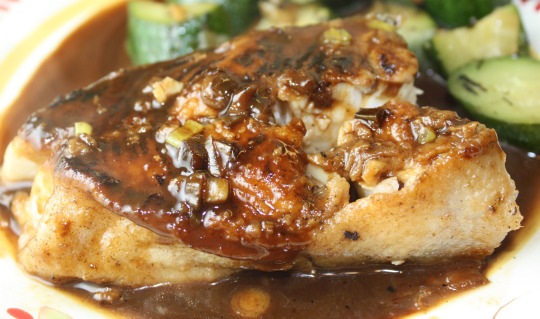
This sort of looks like a sirloin steak, doesn’t it? Nope. It’s a huge, thick, tender, fresh halibut steak that was just falling apart. Good kind of falling apart. Full of flavor. I forgot to put some more green onions on top for garnish. They’re in the sauce, but hardly visible in the photo.

This recipe came via our daughter-in-law Karen’s mother, Barbara. She got it from a cookbook:  Elena’s Favorite Foods: California Style by Elena Zelayeta. Barbara served this one night when we were all together for a dinner. So, I asked her for the recipe! And when I tell you this is EASY, please believe me. It’s truly easy and comes together in less than 10 minutes. I served it with pan-sautéed zucchini and a veggie-laden green salad.

So what’s in the amber sauce? Nothing but soy sauce, sherry, lemon juice (I used lime) and green onions. How cinchy is that? The halibut is dipped in seasoned flour (seasoned only with pepper since the soy sauce provides plenty of sodium) and pan fried in a little oil. After browning both sides the sauce is added and you steam it until it’s just done. I removed the center bone afterwards, which is why it began to fall apart. Our steak was large enough for two people, so I probably should have cut it in half before cooking. Once cooked the bone didn’t cut apart with any ease. So, whack that steak in half first. Our neighborhood Costco had these fresh Alaskan halibut steaks for $6.99/lb.
printer-friendly PDF

Amber Halibut Steaks

Recipe By: From Barbara D, our daughter-in-law Karen’s
mother, from a cookbook by Elena Zelayeta
Serving Size: 4

40 ounces halibut steaks (8-10 ounces each)
1/3 cup flour
Pepper to taste
1 tablespoon olive oil
1/4 cup soy sauce — (use lower sodium if desired)
1/4 cup sherry
1 tablespoon lemon juice — (or lime juice)
2 tablespoons green onion — chopped
1 tablespoon green onion — for garnish

1. Rinse halibut under running water and blot on paper towels.
2. In a shallow plate sprinkle the flour and pepper. Mix, then dip the halibut in the flour mixture.
3. Meanwhile, heat a skillet (just a bit bigger than the halibut pieces) and add the oil and heat until the oil is shimmering.
4. Carefully place halibut in the hot oil and brown on both sides until they’re a golden color.
5. If pan is very hot, remove from the heat, then pour in the soy, sherry, lemon juice and green onions. Simmer until halibut is just cooked through.
6. Place on a heated plate and garnish with the sauce and some more raw green onions.
Per Serving: 412 Calories; 10g Fat (23.7% calories from fat); 61g Protein; 11g Carbohydrate; 1g Dietary Fiber; 91mg Cholesterol; 1184mg Sodium.

A year ago: Thai Pumpkin Shrimp Soup (oh, that was so delish – I need to make that one again)

Posted in Veggies/sides, on October 27th, 2009.

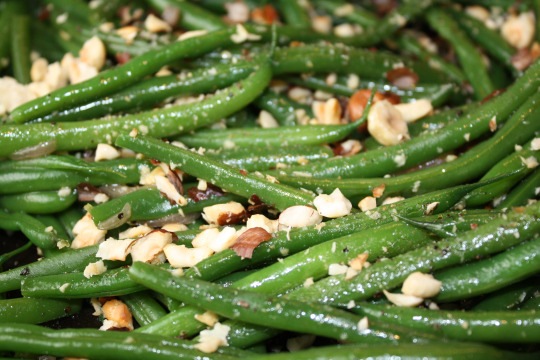
green beans hazelnuts Really, I do love green beans. You can fix and eat them in SO many ways. Even plain with just a hint of butter, salt and pepper. If you’ve read my blog for long you know that I’m a huge fan of a recipe for Garlic Green Beans & Olive Oil. So easy, and I could eat a mountain of them. I was lured from the olive oil and garlic route in a class with Phillis Carey, awhile back. Hers have the allure of hazelnuts. But they’re also very easy. A dish you could make for guests, as long as you cook the beans ahead of time and have them and the hazelnuts all ready to finish just before dining.

When I made them a few days ago with some of the haricot verts (baby) beans from Costco, I decided to change the recipe a little bit, mainly because the hazelnuts I had needed to be skinned. Trader Joe’s carries them most of the year, but they’re not roasted or skinned, so the little buggers have to be toasted and rubbed to get the skin off. The easiest way to do this is to roast the nuts in a hot oven for a few minutes, then roll them around between two layers of terry cloth towels.

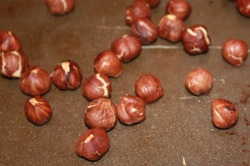
hazelnuts roasting After roasting the nuts in a 400 oven for about 4-7 minutes, they looked like this – notice the cracks on some of them. They got hot enough that the skins began to crack off. That’s a good sign.

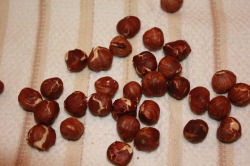
hazelnuts ready to roll terry cloth Here they are on a rough towel just before I started rolling them. You simply place the other half of the towel over the nuts and use the flat of your hands on the top towel to rub and roll around. Sometimes an errant nut will escape. I usually gather them back into a closer circle and do it again and again. Takes just a minute or so.

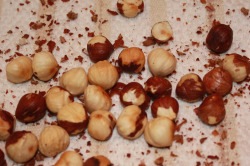
hazelnuts after rolling This is the result: most of the nuts have released their skins. You’ll notice one nut (top right) didn’t. I rolled that one several times all by itself. It still didn’t release the skin, so I chopped it anyway. A few skins won’t matter, but it’s good to get most of them off the nuts. The skins are bitter (well, somewhat bitter), therefore you do need to do this step – unless you can find mostly skinned ones already.

Since the skinning process toasted them, I didn’t want to pan-toast as in Phillis’ recipe. So I decided to use olive oil (rather than butter) and ADD some true hazelnut oil at the end. Then I tossed the chopped hazelnuts in at the end. I used my pounder to chop the nuts – that took about one minute max. Either way you make this, it has a distinct hazelnut flavor. Really delicious – either hot or cold. I served these as leftovers a night or two later, cold, and they were just as good. If you used butter you’ll need to reheat the beans to melt the butter – with olive oil you don’t.
printer-friendly CutePDF

Files: MasterCook 5+ and MasterCook 14 (click link to open in MC – 14 contains photo)

Green Beans with Browned Hazelnut Butter

Recipe By: Adapted from a Phillis Carey recipe
Serving Size: 6

1 1/2 pounds green beans — thin, trimmed
1/4 cup unsalted butter — or olive oil
1/3 cup hazelnuts — skinned, chopped Salt and pepper to taste
1 tablespoon hazelnut oil — (optional)

1. Drop green beans into a pot of boiling salted water and cook for 4-7 minutes, or JUST until cooked through, but still bright green. Drain and plunge the beans into a large bowl of ice water to stop the cooking process. When cooled, drain and set aside. Dry on paper towels or cloth towels.
2. Melt butter in a medium skillet over medium-high heat. Cook the butter until it starts to brown, taking care not to let it burn. Add the hazelnuts and toss them until they’re toasted golden brown. Add the green beans and cook until the beans are heated through, about 4-5 minutes. Don’t overcook.
Per Serving: 168 Calories; 15g Fat (74.9% calories from fat); 3g Protein; 8g Carbohydrate; 4g Dietary Fiber; 21mg Cholesterol; 7mg Sodium.

A year ago: Pumpkin Pie with Ginger

Posted in Soups, on October 26th, 2009.

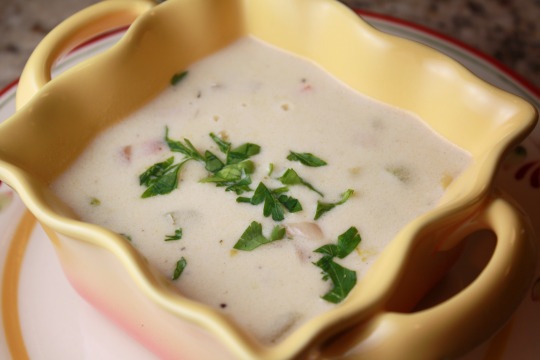
cheddar cheese soup Lately it seems we can’t get enough of soups. All kinds of soups. Meat soups. Chicken soups. Even fish soups. But hot soups altogether. I don’t very often make vegetarian soups unless they have plenty of heft to them – not meaning fat or carbs – but chewiness or texture. This soup doesn’t really have either chewiness or a whole lot of texture. But it has some, and it’s got lots of gentle flavor. The flavor is regulated by the kind of sharp cheddar you put into it. If you want some heft, then you use a very strong Cheddar. I recommend an English cheddar, like a Cotswold, or some other kind of very sharp English type. See what your local cheese shop or market has to offer. Just remember: sharp, sharp, sharp.

This soup comes together in less than 20 minutes. Yes, really. Chopping the vegetables is the most time consuming thing you have to do. It contains chicken broth and half and half, some dry sherry, some thyme, cayenne, Bay leaf. Then the grated Cheddar is added in AFTER you take it off the heat. If you add most cheeses into a hot liquid, while you’re still simmering, it will separate. There are very few cheese that don’t cause that chemical reaction – Fontina being one of them. Can’t remember the others. But Fontina is not what you want in this soup – it’s far too mild tasting. This soup doesn’t have other strong flavors, so the Cheddar is IT. So anyway, you need to have the soup off-heat, then you whisk in the cheese. The soup is very hot, so it doesn’t take long for the cheese to melt completely. Ladle into bowls immediately and chow down. Ideally, you’ll serve this with some bread or savory muffin on the side. Even English muffins toasted with some cheese would be nice (and easy). In the class, Phillis served this with cornmeal, cheddar and sun-dried tomato muffins. I was lazy and didn’t do any of those, so we ended up having 1 1/2 bowls of soup instead.
printer-friendly PDF

Creamy Cheddar Cheese Soup with Sherry & Thyme

Recipe By: Phillis Carey cooking class 10/09
Serving Size: 4

1/4 cup unsalted butter
1 cup onion — minced
1/3 cup carrot — minced
1/4 cup celery — minced
1 teaspoon garlic — minced
1/4 cup all-purpose flour
2 1/4 cups low-sodium chicken broth
2 1/2 cups half and half
1 whole bay leaf
1 pinch cayenne
3 tablespoons dry sherry
3 cups sharp cheddar cheese — grated
1 teaspoon dried thyme — or 1 T. fresh
Salt and pepper to taste
Italian parsley for garnish

1. Melt butter in a large pot over medium heat. Add the onion and cook until softened, about 4 minutes. Add carrot, celery and garlic, and cook another minute or two.
2. Stir in the flour to coat the vegetables and cook until mixture begins to brown on the bottom of the pot, about 2 minutes. Turn up the heat if it’s going too slowly, but watch it carefully so it doesn’t burn.
3. Gradually whisk in the chicken broth and half and half; add the bay leaf. Increase heat to medium high and bring to a boil, stirring occasionally. Reduce heat to medium low and simmer until vegetables soften and soup is thickened, about 10 minutes.
4. Remove the soup from the heat and add cayenne and sherry. Cool soup for about one minute, then slowly whisk in the cheddar cheese and thyme. Stir until cheese is melted completely. Season with salt and pepper and ladle into soup bowls immediately. If reheating, do not boil the soup or it will separate.
Per Serving: 722 Calories; 59g Fat (71.1% calories from fat); 34g Protein; 20g Carbohydrate; 2g Dietary Fiber; 176mg Cholesterol; 626mg Sodium.

Related Posts Plugin for WordPress, Blogger...