Get new posts by email:

Archives

Currently Reading

Here are the tastingspoons players. I’m in the middle (Carolyn). Daughter Sara on the right, and daughter-in-law Karen on the left. I started the blog in 2007, as a way to share recipes with my family. I’m still doing 99% of the blogging and holding out hope that these two lovely and excellent cooks will participate. They both lead very busy lives, so we’ll see.

– – – – – – – – – – – – – – – – – – – – – –

BOOK READING (from Carolyn):

Music of Bees, Eileen Garvin. Absolutely charming book about a woman in midlife, lonely, who raises bees, also makes unlikely friends. Heart-warming and very interesting about beekeeping.

A Postcard from Paris, Alex Brown. Really cute story. Dual time line, 1940s and present day about renovating an old apartment in Paris, things discovered.

Time of the Child, Niall Williams. Oh such a good book. Very small village in Ireland, 1960s. A baby is left on the doorstep. The town all whispers and helps. I listened to an interview of the author, which made me like him and his books even more.

Sipsworth, Simon Van Booy. If you like animals you’ll swoon. An old woman who really wants to die finds a tiny mouse in her house and befriends it and finds a reason to live. Utterly charming book.

The Forger’s Spell, Edward Dolnick. True story. For seven years a no-account painter named Han van Meegeren managed to pass off his paintings as those of Johannes Vermeer.

If You Lived Here, You’d be Home by Now, Christopher Ingraham. Could hardly put it down – about a journalist who takes on a challenge to move to small town in Minnesota and write about it. He expects to hate it and the people and place, but he doesn’t. Absolutely wonderful true story.

The River We Remember, William Kent Kreuger. 1950s, Minnesota. A murder and the aftermath. Could hardly put it down. Kreuger has such a vivid imagination and writing style.

How the Lights Gets In, Joyce Maynard. An older woman returns to New Hampshire to help care for her brain-injured son. Siblings and family, lots of angst and resentments.

The Filling Station, Vanessa Miller. Every American should read this book. A novelized retelling of the Tulsa massacre in 1921. Absolutely riveting.

The Story She Left Behind, Patti Callahan Henry. Love this author. Based on a true story. A famous author simply vanishes, leaving her husband and daughter behind. She had invented a mystical language no one could translate. Present day, someone thinks he’s solved the riddle, contacts the family. Really interesting read.

The Girl from Berlin, Ronald Balson. Love anything about Tuscany. An elderly woman is being evicted from a villa there, with odd deed provenance. Two young folks go there to help unravel the mystery. Loved it.

The Island of the Colorblind, Oliver Sacks, M.D. Nonfiction. The dr is intrigued by a remote Pacific island where most of the inhabitants are colorblind. He also unravels a mystery on Guam of people born with a strange neurological problem. Medical mysteries unveiled. Very interesting.

The Bookbinder, Pip Williams. Post 1914 London. Two sisters work at a bookbindery. They’re told to not read the books. One does and one doesn’t. One has visions beyond her narrow world; the other does not. Eventually the one gets into Oxford. Lovely story.

The Paris Express, Emma Donoghue. 1895 on a train to Paris, a disaster happens. You’ll delve into the lives of many people who survived and died in the crash.

A Race to the Bottom of Crazy, Richard Grant. This is about Arizona. Author, wife and child move back to Arizona where they once lived. Part memoir, research, and reporting in a quest to understand what makes Arizona such a confounding and irresistible place.

The Scarlet Thread, Francine Rivers. A woman’s life turned upside down when she discovers the handcrafted quilt and journal of her ancestor Mary Kathryn McMurray, a young woman who was uprooted from her home only to endure harsh frontier conditions on the Oregon Trail.

A Place to Hide, Ronald Balson. 1939 Amsterdam, an ambassador has the ability to save the lives of many Jewish children. Heartwarming.

Homeseeking, Karissa Chen. Two young Chinese teens are deeply in love, but in China. Then their families are separated. Jump to current day and the two meet again in Los Angeles.

North River, Pete Hammill. He always writes such a good story. A doctor works diligently healing people from all walks of life. His wife and daughter left him years before. One day his 3-yr old grandson arrives on his doorstep.

A Very Typical Family, Sierra Godfrey. A very messed-up family. Three adult children are given a home in Santa Cruz, Calif, but only if the siblings meet up and live in the house together. A very untypical scenario but makes for lots of messes.

Three Days in June, Anne Tyler. The usual Anne Tyler grit. Family angst. This wasn’t one of my favorites, but it was entertaining and very short.

Saved, Benjamin Hall. Author is a veteran war reporter. Ukraine, 2022, he nearly loses his life to a Russian strike. Riveting story – he survives, barely.

Grey Wolf, Louise Penny. Another Inspector Gamache mystery in Quebec. She is such an incredible mystery writer.

All the Colors of the Dark, Chris Whitaker. A missing person mystery, a serial killer thriller, a love story, a unique twist on each. Could hardly put it down.

Orbital, Samantha Harvey. Winner of 2024 Booker Prize. I don’t usually like those, but I heard the author interviewed and she hooked me. This is not a normal book with a beginning, a story and an end. It’s several chapters of the day in the life of various astronauts at the ISS (Int’l Space Station). All fictional. She’s been praised by several real astronauts for “getting it” about space station everyday life.

The Blue Hour, Paula Hawkins. An island off Scotland. Inaccessible except when the tide is out. Weird goings on. An artist. A present day mystery too.

Iron Lake, William Kent Krueger. A judge is murdered and a boy is missing. Riveting mystery.

Tell the Wolves I’m Home, Carol Ricks Brunt. 1980s. A 14-yr old girl loses her beloved uncle. Yet a new friendship arises, someone she never knew about.

Four Treasures of the Sky, Jenny Zhang. 1880s, a young girl is kidnapped in China and brought to the United States. She survives with many hurdles in the path.

The Boy Who Fell out of the Sky, Ken Dornstein. Memoir, 1988. The author’s brother died in the PanAm flight that went down in Lockerbie, Scotland. A decade later he tries to solve “the riddle of his older brother’s life.”

Worse Care Scenario, T.J. Newman. Oh my. Interesting analysis of what could/might happen if a jet crashed into a nuclear plant. Un-put-downable.

Song of the Lark, Willa Cather. Complicated weave of a story about a young woman in about 1900, who has a gifted voice (singing) and about her journey to success, not without its ups and downs.

Crow Talk, Eileen Garvin. Charming story which takes place at a remote lake in Washington State, about a few people who inhabit it, the friendships made, but also revolving around the rescue of a baby crow.

The Story Collector, Evie Woods. Sweet story about some dark secrets from an area in Ireland, a bit magical, faerie life, but solving a mystery too.

A Sea of Unspoken Things, Adrienne Young. A woman investigates her twin brother’s mysterious death. She goes to a small town in California to figure it out, to figure HIM out.

The King’s Messenger, Susanna Kearsley. 1600s England, King James. About one of his trusted “messengers,” and his relationship with a young woman also of “the court.” Lots of intrigue.

In the Shadow of the Greenbrier, Emily Matchar. Interesting mystery in/around the area of the famous resort in White Sulphur Springs, West Virginia.

Isola, Allegra Goodman. Hard to describe, survival story on an island in the 1600s.

Save the Date, Allison Raskin. Rom-com, witty, LOL funny. Clever.

The Sirens, Emilia Hart. Numerous time-lines, Australia. Mysteries abound, nightmares, abandoned baby, weird allergies.

Red Clay, Charles Fancher. LOVED this book. Mostly post-Civil War story about the lives of slaves in Alabama during Reconstruction.

Stars in an Italian Sky, Jill Santopolo. Dual time line, 1946 and recent time. Love stories and a mystery.

Battle Mountain, C.J. Box. Another one of Box’s riveting mysteries. Love his descriptions of the land.

Something Beautiful Happened, Yvette Corporon. A memoir of sorts in Greece, tiny island of Erikousa, where the locals hid Jews during WWII. All elusive stories told by the author’s grandmother.

The Jackal’s Mistress, Chris Bohjalian. 1860s Virginia, about a woman who saves the life of a Union soldier. Really good story.

Song of the Magpie, Louise Mayberry. Really interesting story about Australia back in the days when it was mostly a penal colony. Gritty strength of a woman trying to thrive with her farm.

The Boomerang, Robert Bailey. A thriller that will have you gripping the book. About a lot of secrets surrounding the president (fictional novel, remember) and his chief of staff and about cancer. A cure. Such a good story.

Care and Feeding, Laurie Woolever. Really interesting memoir of a woman driven to succeed in the restaurant business. She worked for Mario Batali and then Anthony Bourdain. Gritty stories.

Everything is Tuberculosis, John Green. Maybe not a book for everyone. A real deep dive into the deadly tuberculosis infection, its history. I heard the author interviewed and found the book very interesting.

The Book Lovers Library, Madeline Martin. Fascinating read about Boots’ drug stores’ lending library. And the people who worked in them.

The Arrivals, Meg Mitchell Moore. LOL funny, about a middle-aged couple whose children (and their various family members) return to the family home and the chaos that ensues.

My Life as a Silent Movie, Jesse Lee Kercheval. About grief. A big move to Paris, finding herself a new life with a new set of real blood family.

Escape, Carolyn Jessop. Another memoir about a woman really in bondage in Utah, Mormon plural marriage.

 

Tasting Spoons

My blog's namesake - small, old and some very dented engraved silver plated tea spoons that belonged to my mother-in-law, and I use them to taste my food as I'm cooking.

Scroll down to the bottom to view my Blogroll

Posted in Desserts, on June 1st, 2010.

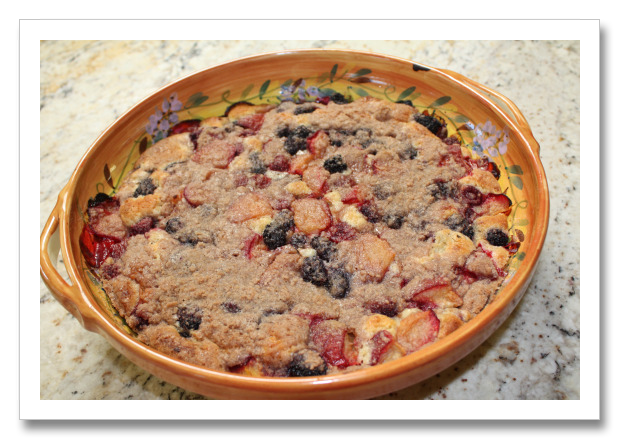
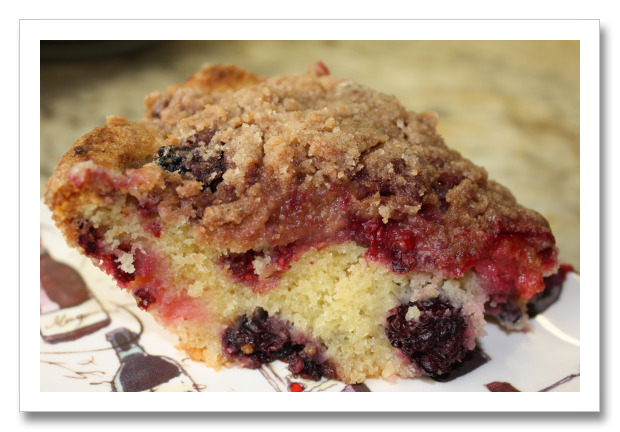
At yet another cooking class last week, when Tarla Fallgatter was making this streusel cake, it sounded familiar. Like maybe she’d made this for a previous class, perhaps. When I got home I checked my recipe software and sure enough, she had made this before, but with slightly different fruit. The one from 2007 used mostly peaches. This one was mostly apricots and plums. But the cake is the same. The streusel is the same. And it’s very good. Altogether good. Also quite easy too. It was served warm with a nice scoop of vanilla ice cream. I think everyone at the class did everything possible except lick the plate. This is going on my favorites list, if it’s not already there.

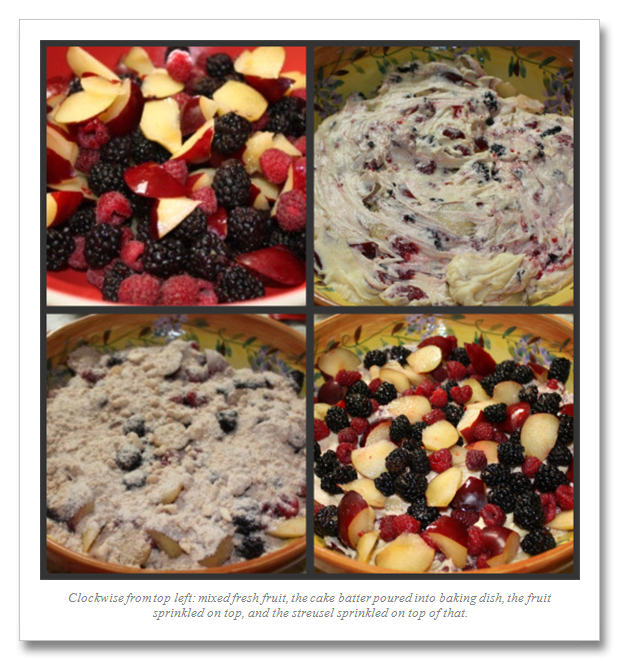
There’s a cake batter. There’s a streusel mixture that’s made in a food processor. And there’s chopped up fresh fruit (mostly stone fruit, or you can use whatever fruit you’d like in this case). You add half the fruit TO the cake batter, spread it in a 9×9 (or something close to that size) pan, then sprinkle the top with the remaining fruit, then add the streusel. Bake. Easy. Quick. And extra tasty. Tarla happened to use plums, which are in season at the moment. And I used them too. She used apricots too (I didn’t). We both used raspberries and blackberries too. Do make the preponderance of the fruit stone fruit. She also said you could add lemon zest to the batter. And if you like nuts in this kind of dish, substitute about 2 T. of nuts for 2 T. of the flour in the streusel mixture. The dish full will serve a lot of people, actually, as you serve relatively small portions. Do note that it’s more fruit than it is cake. I like that part, and there’s only 1 1/3 cups of sugar in the whole thing. The recipe says it’ll serve 10; I think it’s more like 12, but with smaller portions. Use a large spoon to scoop a serving onto a plate, then add the ice cream on the side. Then dig in.


printer-friendly PDF

Apricot-Plum-Raspberry Streusel Cake

Recipe By: From a Tarla Fallgatter cooking class, 2010
Serving Size: 10
NOTES: If you like nuts, substitute some of the flour in the streusel for chopped nuts. This can be made with any stone fruit and different berries. Whatever is available in season.

STREUSEL:
1/3 cup all-purpose flour — minus one tablespoon
1/4 cup sugar
1 teaspoon ground cinnamon
1 pinch salt
1/4 cup unsalted butter — cut in small pieces, chilled
CAKE:
1 1/3 cups flour
1 1/2 teaspoons baking powder
1/2 teaspoon salt
1 1/2 sticks unsalted butter — softened
1 cup sugar
1 1/2 teaspoons vanilla
1/4 teaspoon almond extract
3 large eggs
1/4 pound apricots — cut in 1/2 inch pieces
1/4 pound plums — cut in 1/2 inch pieces
1/4 pound raspberries
2 1/2 cups vanilla ice cream

1. Position rack in lower third of oven and preheat to 375. Butter a 9-inch square baking pan, or an oval pan of a similar size. (Make sure there is sufficient room in the dish for all the cake and fruit – you don’t want it to overflow in the oven.) Butter the pan.
2. STREUSEL: In a food processor combine flour, sugar, cinnamon and salt. Add cold butter and pulse in until the butter pieces resemble small peas. Set aside.
3. CAKE: Mix the flour, baking powder and salt together. Beat butter and sugar in a food processor until creamy. Add vanilla and almond extracts. Add eggs, one at a time. Add flour and pulse just to combine. Gently fold in HALF of each of the three fruits into the batter and spread batter into the prepared pan. Distribute the remaining fruit evenly on top.
4. Sprinkle streusel over the fruit and bake until the cake springs back in the center when lightly pressed, about 45-55 minutes. Let cake cool in its pan on a rack. Serve warm with ice cream.
Per Serving: 443 Calories; 24g Fat (47.7% calories from fat); 6g Protein; 53g Carbohydrate; 2g Dietary Fiber; 128mg Cholesterol; 244mg Sodium.

A year ago: Oven Fried Chicken
Two years ago: Frosty Strawberry Squares

Posted in Cookies, Desserts, on May 31st, 2010.

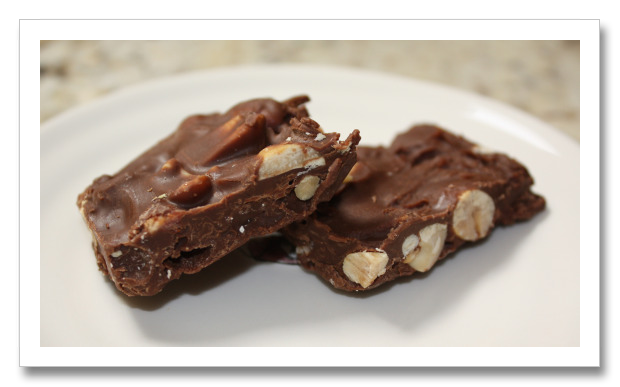
Do not, I mean it, do not turn up your nose at this combination! Do you like chocolate? Do you like peanuts? Do you like bacon? Do you like salted caramel? Well then, you’ll like this. Caramel isn’t in this bark, but I’m talking about the taste combination of caramel and salt. The bacon provides the salty taste. You can see a bit of the bacon on the left piece in the photo – the kind of rusty brown color sticking up a bit in the middle. The bacon gives the bark a chewy crunch. The bacon isn’t really crispy, but it’s chewy. That’s when you get the salty taste.

Phillis Carey made this bark at the cooking class about bacon. She happened to use milk chocolate, but if I make it I’ll use some dark chocolate too. Making it is super easy. Really. First you cook up some chopped bacon (using thin bacon like Farmer John’s, and not maple flavored). You can microwave the chocolate (Trader Joe’s bar chocolate is great), then you add the peanuts and bacon, pour it out onto a parchment-lined baking sheet and refrigerate. See, I said it’s easy. Very do-able. And a great taste.

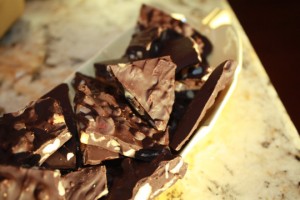
This note added later: my friend Cherrie, who went to the class with me, made the bacon bark, but with dark chocolate and macadamia nuts. And the bacon, of course. It was outstanding. For me, better than the milk chocolate. The photo of the dark chocolate/macadamia ones are on the right.
printer-friendly PDF

Chocolate, Bacon and Peanut Bark

Recipe By: Phillis Carey
Serving Size: 12
NOTES: You can also add some chopped dried apricots or dried cranberries to this mixture if that sounds appealing. If the nuts you use are not salted, add some salt to the chocolate mixture.

8 slices bacon — not thick type, not maple flavored
1 pound milk chocolate — or dark, if preferred, chopped
1 cup roasted peanuts — or hazelnuts — salted

1. Cook bacon over medium heat in a large nonstick skillet, until crispy and browned. Remove to paper towels to drain. Chop bacon finely.
2. Place chocolate in a large glass or pottery bowl and place in microwave on high power for one minute. Stir and cook another minute longer, and stir until smooth. Stir in bacon and peanuts.
3. Pour mixture over a parchment-lined baking sheet. Refrigerate at least one hour or until firm. Break (preferably) or cut into pieces to serve. It’s best served at room temp.
Per Serving: 290 Calories; 20g Fat (58.2% calories from fat); 7g Protein; 25g Carbohydrate; 2g Dietary Fiber; 12mg Cholesterol; 197mg Sodium.

A year ago: Grilled Flatbread with Lamb & Feta, and Mini-Muffins with Apple, Sage and Goat Cheese
Two years ago: Syrian Pita Bread Salad (a green salad with pita chips)

Posted in Veggies/sides, on May 28th, 2010.

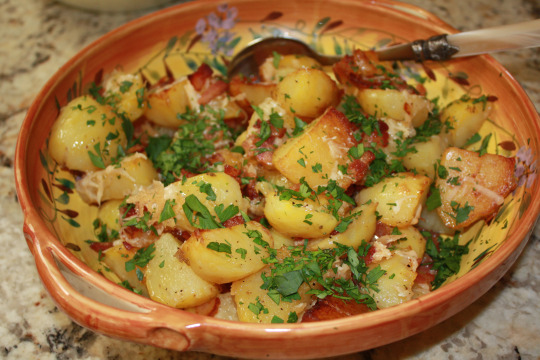
It’s just downright amazing how fat (bacon in this case) can make just about anything taste delicious. Oh my yes. Bacon. These potatoes are just fantastic. You need to make these the very next time you want potatoes as a side dish. This is another recipe from my class with Phillis Carey.

First you need to select the right sized potatoes – you want Yukon Gold’s that are a max of 3 inches long, about. You’ll eventually cut them in half crosswise, so you want them to be rounder rather than longer, if you get the drift. The potatoes are simmered in water (with skin) until they are just barely tender, then once cooled, you remove the skins, cut them in half and place them cut sides down in an oiled (and bacon drizzled) baking dish. Then they are baked further before sprinkling with cooked bacon, cheese, and garlic. The parsley is sprinkled on before serving. Just scrumptious. Ideally serve these with a nice roast, or filet mignon, or grilled steak. Even a roast chicken!
printer-friendly PDF

Roasted Yukon Gold Potatoes with Bacon, Parmesan and Parsley

Recipe By: From a Phillis Carey cooking class 5/2010
Serving Size: 4

1 1/2 pounds Yukon Gold potatoes — (each about 3″ in diameter), or red potatoes
3 ounces bacon — halved lengthwise, then cut crosswise 1/2″ pieces
1 tablespoon olive oil
1/4 cup Parmigiano-Reggiano cheese — grated (or use cheddar, or sprinkle Blue on at end)
1 whole garlic clove — finely chopped
2 tablespoons Italian parsley

1. Preheat oven to 425° with rack in lowest position.
2. Generously cover potatoes with cold water (in a 2-quart pot with 1 1/2 teaspoons salt added). Bring to a boil, then simmer, partially covered, until potatoes are JUST tender when pierced with a small, sharp knife, about 12 minutes. Drain. Cool potatoes until they’re cool enough to handle, then peel. Cut potatoes in half crosswise.
3. Cook bacon in a large, heavy skillet over medium heat, stirring, until cooked through, but still flexible. Drain on paper towels, reserving fat in skillet.
4. Brush bottom of a 15×10 shallow baking pan with oil and half of the reserved bacon fat. Sprinkle potatoes with a little salt and pepper and arrange, cut sides down, in baking pan, in a single layer. Bake until the undersides are golden brown, about 30-35 minutes.
5. Reduce oven temp to 375°. Turn potatoes over, then sprinkle with cheese, bacon and garlic, then drizzle with remaining bacon fat (if fat has congealed, reheat briefly). Bake until cheese is melted, about 15 minutes. Sprinkle with parsley and serve.
Per Serving: 317 Calories; 15g Fat (44.3% calories from fat); 13g Protein; 31g Carbohydrate; 2g Dietary Fiber; 22mg Cholesterol; 444mg Sodium.

A year ago: Sicilian Tuna Salad (a favorite)
Two years ago: Apple Buttermilk Scone Round

Posted in Appetizers, Breads, on May 27th, 2010.

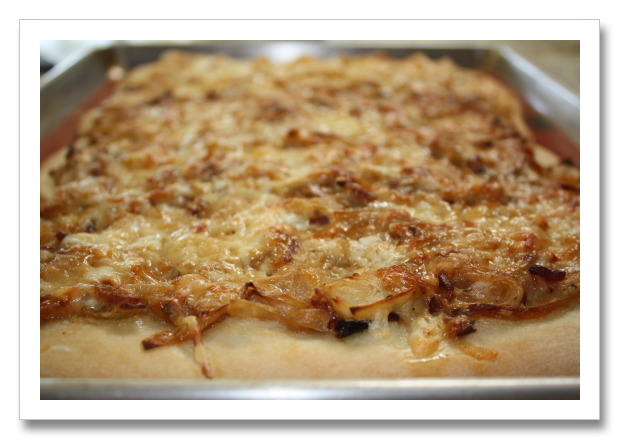
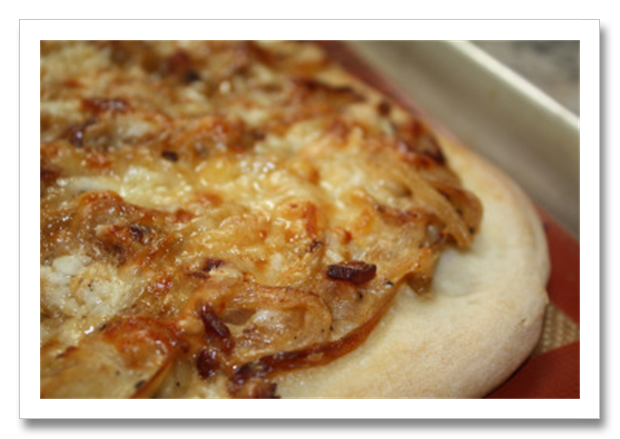
At the bacon-oriented cooking class last week, Phillis Carey served numerous dishes, including this bread/tart/pizza thing that she mentioned was one of her top favorite dishes anytime, anywhere. That kind of recommendation is something I listen to closely. So when it was served early-on in the class, we all had great expectations. It did not disappoint!

This could be served as an appetizer. It could be served as a dinner dish – with a salad (that’s what I did) – or with soup. If there was such a thing as a French pizza, this would be it. It’s rich. Not only are the onions rich, but you stir it up with some sour cream (I used light) and an egg, along with a little squirt of Dijon mustard. Then you add some cheese on top. I happened to have some goat-cheese Monterey jack cheese on hand (Trader Joe’s). I mixed it with Gruyere and sprinkled that on top – you don’t need much. Oh my yes this was fabulous.

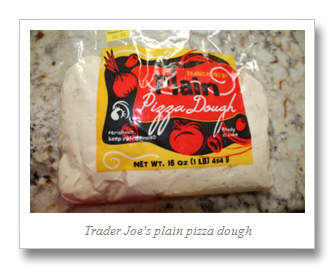
Buying a raw ball of pizza dough is so darned easy. A 1-pound ball (Trader Joe’s) is just enough to fill one of the 15×10 baking pans. Do use a Silpat underneath . . . the dough will adhere to it well and it takes very little effort to push it out to the edges. If you don’t have a Silpat, I am pointing my finger at you … telling you to go out and buy one. You’ll not regret it. I use mine all . . . the . . . time. The filling is piled on top (leaving a 1/2 inch border of dough) then cheese is sprinkled. It bakes for about 25 or so minutes – do use convection bake on this one. You want the underside of the pizza to be just golden brown – so check for that as it’s baking.

If you don’t have convection bake it might take another 5 minutes or so of traditional baking time. Let it rest for a few minutes (so you don’t burn the roof of your mouth) before serving.
printer-friendly PDF

Bacon and Caramelized Onion Focaccia Tart

Recipe By: From a Phillis Carey cooking class 5/2010
Serving Size: 6

8 slices bacon — smoky type, thick-sliced, chopped
5 cups yellow onions — sliced
1 large egg
1/2 cup sour cream
2 teaspoons Dijon mustard
1/2 teaspoon salt — (maybe optional)
1/2 teaspoon freshly ground black pepper
1 pinch ground nutmeg — freshly grated
1 pound pizza dough
1/2 cup Gruyere cheese — grated

1. Preheat oven to 375 using convection bake, if that’s available.
2. Saute bacon in heavy, large skillet over medium-high heat until slightly crisp. Drain out most of the bacon drippings. Add onions to bacon and saute over medium heat until onions are very tender and golden, about 20 minutes. Cool.
3. Whisk egg, sour cream, mustard, salt (if using), pepper and nutmeg in a large bowl to blend. Stir this into the cooled onion mixture.
4. PIZZA DOUGH: Use a large baking sheet and line it with a Silpat. Roll and stretch the pizza dough out onto the Silpat. If it shrinks, stretch it as far as it will go, cover with a slightly dampened tea towel and wait 10 minutes. Stretch the dough again. Allow it to rest a 2nd time and stretch the dough until it’s nearly filled the pan.
5. Spread the onion mixture over the dough, leaving a 1/2 inch unadorned border around edges. Sprinkle the pizza with the cheese (it will seem like very little, but it’s sufficient). Bake the tart until the onion-custard is set and crust is golden brown around the edges and on the bottom (use a knife to lift up the crust to see if the bottom is browned), about 25 minutes.
6. Remove the pizza from the pan and put out onto a cooling rack (off the baking sheet). Allow to cool about 10 minutes, then slice and serve in wedges or rectangles.
Per Serving: 357 Calories; 14g Fat (35.4% calories from fat); 13g Protein; 45g Carbohydrate; 3g Dietary Fiber; 61mg Cholesterol; 392mg Sodium.

A year ago: ButterSCOTCH pudding
Two years ago: Mashed Potatoes with Shallots and Truffle Oil

Posted in Breads, on May 26th, 2010.

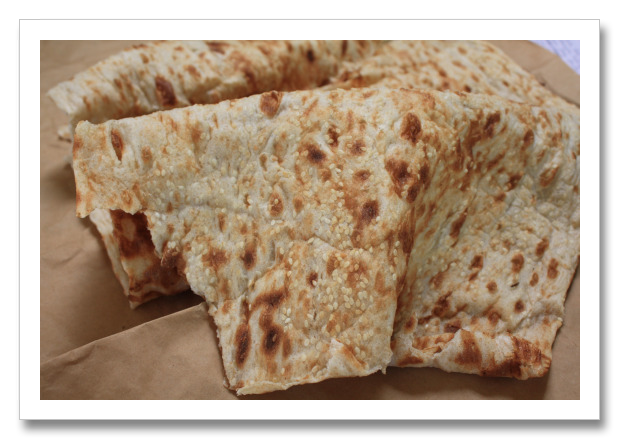
Most of you have probably never heard of sangak. It’s a bread. A wonderfully fragrant, thin stretchy sesame-topped bread. At a local market here, called Wholesome Choice, they carry a variety of ethnic foods, provide a full meat department, including helal, plus an indoor hot deli with ethnic foods from about 4-5 different cuisines.

Last week I stopped at Wholesome Choice in Irvine and while I shopped for produce, my DH waited in the hot bread line to buy a strip of sangak (also written sagnak sometimes). It’s an Iranian bread, cooked in a hot stone oven, and it’s popular in their culture. Sangak is/was the staple food of the Persian army. It’s soft, chewy, light, holey, stretchy, spongy and moist all at the same time. I absolutely love this stuff. The pieces are about 12-14 inches wide and probably 3-4 feet long. Maybe longer. A family of 4 would easily devour the entire thing.

When we buy it, it’s brought absolutely blistering hot right from the stone oven on a dowel and flopped over onto a piece of lightweight brown butcher paper. It’s loosely folded up and placed in your grocery cart. And I defy you to not have some as you browse the shelves or stand in the check-out line.

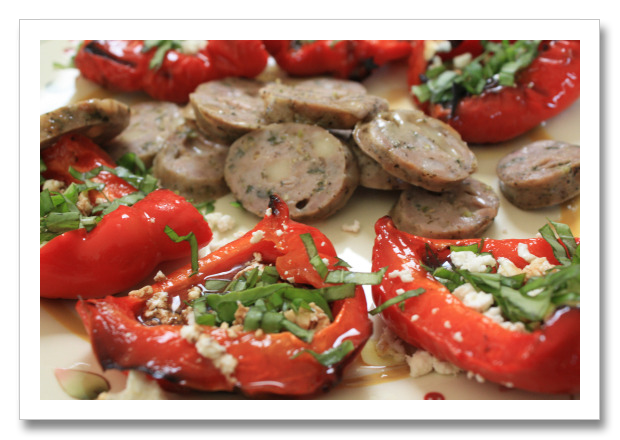
That night our longtime friend Joe came to visit and stay overnight with us. Instead of going out to eat (my choice), by popular demand, I brought out some leftovers and we made dinner with sangak, some Sabra brand hummus with lemon, grilled red bell peppers I had on hand, with some Feta, basil, olive oil and balsamic. We also had a little bit of leftover grilled Italian sausage. It was a heavenly light dinner. We ate all but about 6 inches of the sangak bread. I haven’t tried this technique yet (but was informed this works), but if you have leftover sangak, tear or cut it into pieces, layer it between waxed paper, seal in plastic and freeze it. When defrosted (eat it within a day or two) reheat it in a skillet or on the grill for just a brief time.

A year ago: Mini-Mocha Choc Chip Cookies
Two years ago: Field Greens with Fire Roasted Poblanos
Three years ago: Sausage Pinwheels

Posted in Appetizers, on May 25th, 2010.

Last week my friend Cherrie and I attended a cooking class with Phillis Carey. And the class subject? Bacon. There was bacon in absolutely every single dish. Yes, including dessert. You’ll have to stay tuned for that one!

Certainly you wouldn’t want to serve all of the bacon-laden dishes in the same meal, but oh, there are some real winning recipes in the bunch. I’ll be posting them in the next week or so. Maybe I’ll intersperse them with some others so you don’t go into bacon-reading overload.

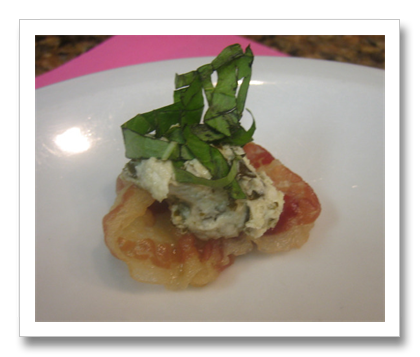
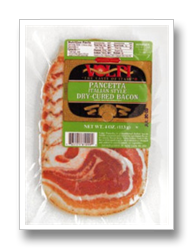
Pancetta. You know what it is – an Italian bacon, but it’s not smoked. We Americans are much more interested in smoked food than other cuisines and cultures, apparently. Many major grocery stores now sell a little package of sliced pancetta. Pancetta comes in a round tubular shape, like a log, and they slice it super-thin. That’s what must be used for this appetizer. Here’s a photo of a typical pancetta package. Each of those tiny rounds is laid flat on a parchment-lined baking sheet (not touching) and reshaped slightly if necessary (you want it to be a complete round, not a u-shape).

The pancetta pieces are baked at a high heat until they turn golden-crisp, about 10 minutes. They need to be carefully slid onto a rack or on paper towels to drain. Meanwhile you mix up the filling. I use that word loosely as the pancetta rounds kind of crinch-up a bit, they get humpy and bumpy (examine the picture at top and you’ll see what I mean), so really all you do is carefully place a teaspoon of the goat cheese/pesto mixture on top. Whatever you do, don’t press down on the pancetta or the careful little tower you’ve built will collapse and shatter. Garnish with a little sliced basil and you’re done. Serve them while they’re still warm, if you can and eat the crisp in one bite.

Do make extra of these, as you’ll likely crumble a few. An average pancetta package holds about 8 slices, so you’ll need at least two of them, if not more. These are just scrumptious, so everyone will want at least two of them. Maybe you can buy the pancetta at an Italian deli also.
printer-friendly PDF

Pancetta Crisps with Pesto Goat Cheese

Recipe By: From a Phillis Carey cooking class 5/2010
Serving Size: 16
NOTES: You can substitute sun dried tomato pesto for the basil, if preferred. MAKE AHEAD: You can also crisp the pancetta an hour or two ahead of time, then rewarm them for about 4-5 minutes at 350 before continuing with the filling, etc. The pancetta you want to use is extremely thin – you could almost see through it. Some markets sell it sliced and prepackaged, or buy from an Italian deli and have the butcher slice it for you. The crisps are very fragile, so do make more than needed as there will be some breakage.

16 slices pancetta — very thin slices (the round shaped type)
freshly ground black pepper
3 ounces goat cheese — or cream cheese, softened
2 tablespoons pesto sauce — (basil)
1/4 cup fresh basil — finely shredded (sliced)

1. Preheat oven to 450°.
2. Place wafer-thin slices of pancetta in a single layer on a parchment-paper lined baking sheet. Reform the slices so each are more solidly round (overlap as needed). Sprinkle pancetta with pepper. Bake them until golden, and crisp, about 10 minutes. Using a spatula, VERY CAREFULLY slide pancetta crisps onto a paper-towel lined plate. Allow them to cool slightly.
3. In a small bowl mash together the goat cheese and pesto. Gently spoon about one teaspoon onto the top of each pancetta crisp (don’t press down on it or the pancetta will shatter). Top each crisp with some shredded basil and serve.

A  year ago: Grilled Skirt Steak with Quesadillas
Two years ago: Cashew Caramel Cookies
Three years ago: Roast Pork Loin with Apricot Compote

Posted in Chicken, easy, on May 24th, 2010.

Every Thursday night we go to choir practice at 7 pm. So I have to make a meal in time to sit down at 6 pm (or before if I can manage it), leaving us just enough time to eat without too much rushing, time to do the dishes and put away any leftovers, and get to church in a timely manner. We’re doing 2 1/2 hour rehearsals now, in preparation for a concert on June 6th. Feverish practicing required.

Anyway, I’d defrosted chicken breasts, and turned to my favorite chicken cookbook, Phillis Carey’s cookbook, Fast & Fabulous Chicken Breasts.

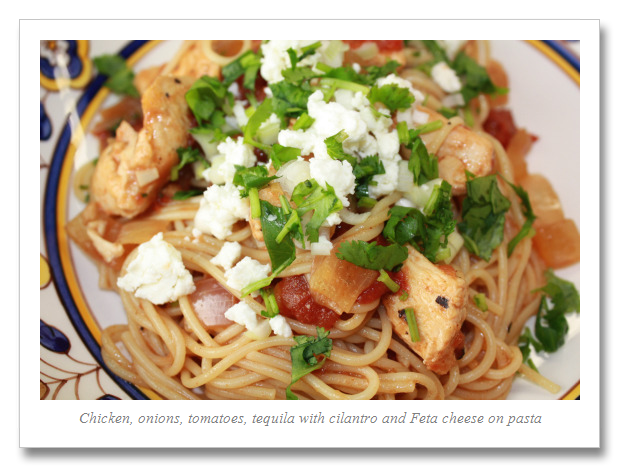
After perusing about 10 different recipes, I settled on this one. We hadn’t had any pasta for ages, and this was a skillet-prepared dish – except for boiling the pasta, of course. Easy. And extremely tasty.

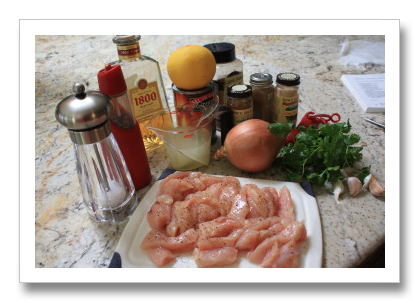
First I gathered together all the ingredients (oops, I forgot the Feta cheese and the pasta in my photo . . . sorry about that) and it all came together in a jiffy. There’s no advance marinating required, no brining, just chunks of chicken cooked in a bit of oil, then you  make an ample amount of pan sauce with a big fat onion, garlic, chicken broth, tomatoes, tequila (it takes 3/4 of a cup!), and seasonings (chili powder, coriander and cayenne). Just at the end you add some lime (in my case lemon) juice.

Phillis recommended bowtie pasta, but I used vermicelli instead. The pasta is tossed in with the sauce so it absorbs some of the liquid. There’s just enough to scoop some chicken and a bit of sauce on the top, before you garnish with more cilantro, Feta, and I added some minced green onions too.

I’d whipped up a nice green salad to serve alongside, with an herby garlicky dressing and it went perfectly with the delicious Cabernet Dave served with dinner. The alcohol in the tequila boils off almost completely, so there is no distinct tequila flavor – you just know there’s some kind of elusive taste to this dish. It has plenty of spice and heat. Altogether delicious. I’m looking forward to having the leftovers.
printer-friendly PDF

Tequila Chicken Pasta

Recipe By: Adapted from a Philis Carey recipe in
Fast & Fabulous Chicken Breasts
Serving Size: 4
NOTES: This dish would lend itself well to shrimp in lieu of chicken.

CHICKEN:
4 whole boneless skinless chicken breast halves
Salt and pepper to taste
2 tablespoons olive oil
SAUCE:
1 tablespoon olive oil
1 large onion — chopped
5 cloves garlic — minced or mashed
2/3 cup chicken broth
14 1/2 ounces canned tomatoes — diced, including juice
3/4 cup tequila
2 teaspoons ground cumin
1/2 teaspoon ground coriander
1 tablespoon chili powder
1/8 teaspoon cayenne
6 tablespoons fresh lime juice — [I used lemon]
8 ounces pasta — bowtie, or your choice
1/4 cup fresh cilantro — chopped
3/4 cup Feta cheese — preferably sheep’s milk, crumbled
3 whole green onions — chopped

1. Trim chicken and cut into thin strips, 2″ x 1/2″ x 1/2″. Season with salt and pepper. Heat the oil in a wok or large skillet over medium high heat. Add the chicken and toss until almost cooked through, 2-3 minutes. Remove chicken from pan with a slotted spoon.
2. Add additional oil to pan and add the onions. Cook them for about 5 minutes until they’re nearly tender. Add the garlic and stir briefly (about a minute). Then add chicken broth, tomatoes, tequila, chili powder, cumin, coriander and cayenne. Bring this mixture to a boil, then reduce heat and simmer until sauce has just begun to thicken slightly, no more than 15 minutes. (You actually want ample soupy-sauce as the pasta absorbs some of it.)
3. Meanwhile, bring a large pot of water to a boil and cook the pasta until it’s al dente. Reserve about 1/2 cup of pasta water, then drain the pasta.
4. Into the tomato sauce add the lime juice and chicken (including any juices). Simmer until the chicken is cooked through, about 1-2 minutes. If the pasta is too dry, add about 2 T. of pasta water to it, and add more if needed.
5. Add the pasta to the sauce along with half the cilantro and toss it to coat with the sauce. Serve with Feta, green onions and cilantro on top. Leftovers might require thinning down with a little more water since the pasta will have absorbed all of the fluid.
Per Serving: 663 Calories; 19g Fat (30.9% calories from fat); 42g Protein; 56g Carbohydrate; 4g Dietary Fiber; 93mg Cholesterol; 699mg Sodium.

A year ago: Bacon-wrapped Mini-Meatloaves
Two years ago: Lemon-Ginger Frozen Yogurt
Three years ago: Avocado Butter (an appetizer spread)

Posted in Essays, on May 23rd, 2010.

A friend of mine in my book club told us this story the other day. It was so funny – yet not so funny – I decided I had to share it with you.

My friend’s daughter works at a local bank. Her best friend at the bank has a mid-20’s aged son who is autistic. I guess the son has never really been able to do much – he’s unable to work – but he manages. Mostly he stays at home while his mom works. [And I would guess the son watches a fair amount of cartoons and/or he reads.] Anyway, one day last week she got a frantic phone call from her son.

“Mom, Mom,” he said, “. . . come quick, I caught a troll!!!!” She, naturally, said “WHAT?” What do you mean, you caught a troll? He said again, “Mom, I caught a troll.”

She was able to leave work and drove like crazy to her home. As she turned the corner onto her street she went into complete panic mode when she saw her house surrounded by police cars. She screeched to a halt, and ran out of the car. The police, at first, wouldn’t let her pass until she identified herself. She ran into the house to find out that this is what happened. . . .

Earlier, when the doorbell rang, her son had answered the door. The dwarf/little person at the door was a 2010 census taker. The autistic son grabbed the little person and dropped him in a closet in the house. Then he quickly shut the door and put a chair under the knob so the “troll” couldn’t get out. Then he called his mother!

Fortunately, the unharmed census taker had the presence of mind to have his cell phone on him and he called 9-1-1. The police arrived. The census taker was very gracious and decided, once he understood what had happened, not to press charges. True story.

Posted in Essays, on May 22nd, 2010.

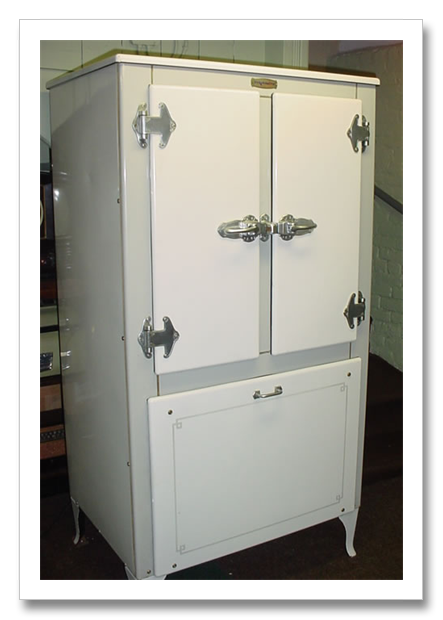
My friend Cherrie was telling me a week or so ago about how much she enjoys reading Saveur magazine. Now I’d not ever read it, so I bought an issue. And have now subscribed. Cherrie was telling me that her hubby Bud reads it from cover to cover whenever it arrives. Usually before Cherrie gets to read it. And that he’d really enjoyed the May issue’s story about refrigerators, written by Sara Dickerman. All the info comes from her article. (He was also intrigued by the article about mac and cheese and they’ve already made one of those recipes to great praise, apparently.)

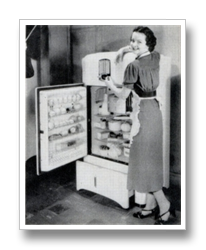
Sure enough. He’s right. I found the article just fascinating. I wanted to snap photos of the page with pictures of all the old refrigerators on it, but I don’t want to get in trouble with the photo police. So I went online and found a couple of images that were on lots of sites, so figured they were safe to use.

Not only did I enjoy reading about the timeline of the refrigerator, but they included a blurb at the end about the misinformation regarding food storage in today’s refrigerators. I learned a thing or two.

So here’s your history lesson about fridges:

7th Century AD – icehouses were known to exist in Persia – cold stream water was routed into dome-shaped, tile lined huts

1803 – the engineer Thomas Moore coined the word “refrigerator”

1810s – Zinc or tin lined wood cabinets (ice boxes) become the forerunners of today’s fridge – home ice delivery made it possible – with a compartment for the ice and a tray below to catch the melt-off

1926 – Clarence Birdseye invented the blast freezer and his frozen vegetables and fruits zoomed in popularity – they produced over 500 tons a year

1927 – GE sells the first home fridge equipped with a round compressor that sat atop each unit – it cooled with sulfur dioxide

1933 – a fellow named Guy Tinkham (an engineer) invented the flexible ice cube tray at a cost of 50 cents

1933 – Crosley Radio Corp introduced the “Shelvador,” with shelves in the door, increasing space inside the fridge by 50%, they claimed

1947 – fridges with separate freezer units came on the market

1949 – the first self-defrosting units were introduced

1955 – Kelvinator introduced the Foodarama, the first side-by-side unit (8 feet wide!), which also had a non-refrigerated drawer for bananas – and supposedly it also had a built-in plastic-wrap dispenser [you ever see one of those? I haven’t]

1970’s – Fridges started adding crisper drawers, lazy Susan’s, butter compartments, and the interiors became plastic – oh yes, colors like avocado green and harvest gold were popular (yup, I had one of those)

2000s – we’re demanding more compartmentalized fridges, and the way of the future, apparently, is separate units (not necessarily put together in one place) which all cool at different temps (like meat, cheese, produce etc) – in my kitchen I have a separate refrigerator and freezer (both big) and a 2-drawer under-the-counter refrigerator unit where we store beverages and overflow from the refrigerator – AND we have a 2nd more traditional refrigerator in the garage with a bottom drawer freezer, which is where I store all of my frozen meat

– – – – – – – – – – – – –

And here’s the definitive guide to how to store food in today’s fridge:

Butter shouldn’t be kept in the butter compartment – it’s too warm – it should be in the coldest place which is the front of the top shelf [I don’t think that’s where I want to store butter . . . it would be in the way of everything for me]

Leftovers should also be kept in the coldest spots – either top shelf front, or middle shelf rear [actually I do store leftovers in that area]

Meat – only goes in the meat drawer if you have one – should be kept the coldest [we have a middle, wide drawer, but it has grids that are open to the whole refrigerator . . . it’s where I store cheese, and as I learned that’s not where I should be storing cheese . . . sigh]

Crisper drawer – good for greens, produce of most types AND cheese – it’s moist (good) [well, good thing the crisper drawer is for keeping things crisp since that IS where I keep all my produce, but not cheese]

Herbs – believe it or not, THEY should go in the butter compartment (warmer spot) [wow, this was a big surprise – I keep herbs in the crisper – and actually my DH stores his injectable insulin in the egg compartment because I already knew we aren’t supposed to put eggs in those egg depressions in the fridge – they’re supposed to be left in the boxes and stored on a fridge main shelf area]

Drinks and condiments – in the door (that’s a warm spot) [yes, I do store bunches of bottles of condiments in the door, plus milk, cream, juices . . . spot on that one]

Cold-sensitive veggies (like mushrooms, corn) – should be kept in the warmest spot in the fridge – that’s the front of the bottom shelf [this was a revelation – maybe this is why mushrooms don’t keep very long in my fridge because they get too cold in the crisper – maybe they’d be best in the butter compartment . . . ]

That’s it, folks. Hope you enjoyed this little lesson in refrigeration . . .

A year ago: Seven sins of chocolate (a book)
Two years ago: Cream of Cucumber Soup (my friend Jackie’s recipe, SO good)
Three years ago: Apricot Ice Cream

Posted in Uncategorized, on May 21st, 2010.

My cousin Gary, from the Bay Area, spends most Christmases with us. When he was here this last December, he asked us if he and his close friends, the Smith clan, and their extended family (that go back to his college years) could come stay with us for a weekend in June when their son graduates from UCR (University of California, Riverside). Of course, we said we would be happy to have them visit.

In the last few days I’ve been thinking ahead about the big dinner we’ll have with this group on the Saturday night of their visit. The whole family is going to Disneyland for the day and then we’ll have a celebratory dinner that evening. Fine. Well, that was, until I heard about the litany of dietary restrictions of this group. I figured sure, I can do this, right? I’m an experienced cook. I know how to create meals around some diet issues. My cousin Gary is GF (gluten-free) so I’m always thinking ahead when I see GF recipes. If it were only that I’d be okay.

Don’t get me wrong, here – and in case any of the Smith family happen to read my blog – there will be no shirking of responsibility here. I’m up to the task! It’s just so unusual that there would be so many “issues” relating to food! I thought all of you, my trusty readers, would get a kick out of this project. And you know that my cousin has most likely told the family all about my cooking exploits. So they’re expecting great things. Whew, the pressure is on!

First I’ll give you the list of restrictions. Later on (maybe after the fact) I’ll tell you what I actually fixed. And hopefully I’ll be able to share what worked. Or didn’t.

Here’s what the individual folks can’t eat because of food allergies (of course, this isn’t all the foods for all the people; each person coming has some kind of problem or problems and they’re all different):

No soy (no tofu, no problem, I rarely cook with it anyway, but no soy sauce either or soy milk)
No red meat (okay, no beef, pork or lamb; that leaves chicken or fish)
No animal protein (but she eats eggs, cheese, etc. so I’ll have to prepare a hearty vegetarian side)
No citrus (no lemon, orange, lime, grapefruit, kumquat in anything, so nix the lemon gelato I thought about making)
No spicy food (herbs are okay, but no hot sauce, jalapenos, chilies, spicy heat, so no chips and salsa)
No chocolate (oh my, that’s a tough one – eliminating chocolate from my recipe repertoire really limits my dessert possibilities)
No gluten (so that means no cakes, pies, cheesecake [because of graham cracker crusts], no breading of meats, no pasta, no cookies either)
No Caesar (oh my, all of my favorite salad dressings have a kind of Caesar bent to them, will have to do something different)
No peanuts
No corn
No mushrooms
No Brussels sprouts
And no cake – one of the group has a personal aversion (not an allergy) to cake.

So, you can see what’s ahead of me. I’ve prepared a list of my tried and true recipes that might work. One salad got eliminated because there’s lemon juice in the dressing. Another got eliminated because once I read the recipe, I realized corn was an important component. Substitutions may be possible. The plan at the moment is that we’re going to barbecue several different things (sausages, chicken, ribs) so people can choose. I’ll just need to have sufficient chicken types and fewer of the pork type. And grilled vegetables (red bells, red onions, zucchini probably). And a couple of salads – one a hearty bean type and a green type. And maybe one other carb type salad. Don’t know what I’ll do for dessert yet. A day or two ago my cousin emailed me to tell me that one of the guests is leaving early and won’t be coming to the dinner after all. But the new college grad IS coming. I haven’t heard anything so far about his food allergies. But in any case, the young man who isn’t going to be here was the anti Caesar- peanuts – cake person, so gosh, that’s opened up my possibilities by a lot! Stay tuned.

A year ago:  Summer Hummer (a drink)
Two years ago: Layered Eggplant & Hummus (a real favorite)

Related Posts Plugin for WordPress, Blogger...