Get new posts by email:

Archives

Currently Reading

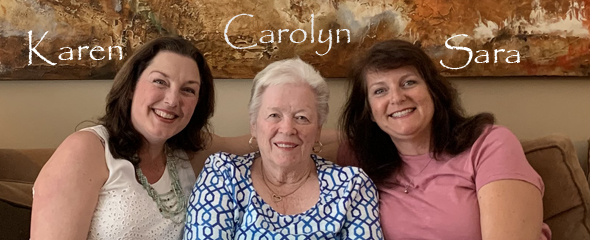
Here are the tastingspoons players. I’m in the middle (Carolyn). Daughter Sara on the right, and daughter-in-law Karen on the left. I started the blog in 2007, as a way to share recipes with my family. I’m still doing 99% of the blogging and holding out hope that these two lovely and excellent cooks will participate. They both lead very busy lives, so we’ll see.

– – – – – – – – – – – – – – – – – – – – – –

BOOK READING (from Carolyn):

Music of Bees, Eileen Garvin. Absolutely charming book about a woman in midlife, lonely, who raises bees, also makes unlikely friends. Heart-warming and very interesting about beekeeping.

A Postcard from Paris, Alex Brown. Really cute story. Dual time line, 1940s and present day about renovating an old apartment in Paris, things discovered.

Time of the Child, Niall Williams. Oh such a good book. Very small village in Ireland, 1960s. A baby is left on the doorstep. The town all whispers and helps. I listened to an interview of the author, which made me like him and his books even more.

Sipsworth, Simon Van Booy. If you like animals you’ll swoon. An old woman who really wants to die finds a tiny mouse in her house and befriends it and finds a reason to live. Utterly charming book.

The Forger’s Spell, Edward Dolnick. True story. For seven years a no-account painter named Han van Meegeren managed to pass off his paintings as those of Johannes Vermeer.

If You Lived Here, You’d be Home by Now, Christopher Ingraham. Could hardly put it down – about a journalist who takes on a challenge to move to small town in Minnesota and write about it. He expects to hate it and the people and place, but he doesn’t. Absolutely wonderful true story.

The River We Remember, William Kent Kreuger. 1950s, Minnesota. A murder and the aftermath. Could hardly put it down. Kreuger has such a vivid imagination and writing style.

How the Lights Gets In, Joyce Maynard. An older woman returns to New Hampshire to help care for her brain-injured son. Siblings and family, lots of angst and resentments.

The Filling Station, Vanessa Miller. Every American should read this book. A novelized retelling of the Tulsa massacre in 1921. Absolutely riveting.

The Story She Left Behind, Patti Callahan Henry. Love this author. Based on a true story. A famous author simply vanishes, leaving her husband and daughter behind. She had invented a mystical language no one could translate. Present day, someone thinks he’s solved the riddle, contacts the family. Really interesting read.

The Girl from Berlin, Ronald Balson. Love anything about Tuscany. An elderly woman is being evicted from a villa there, with odd deed provenance. Two young folks go there to help unravel the mystery. Loved it.

The Island of the Colorblind, Oliver Sacks, M.D. Nonfiction. The dr is intrigued by a remote Pacific island where most of the inhabitants are colorblind. He also unravels a mystery on Guam of people born with a strange neurological problem. Medical mysteries unveiled. Very interesting.

The Bookbinder, Pip Williams. Post 1914 London. Two sisters work at a bookbindery. They’re told to not read the books. One does and one doesn’t. One has visions beyond her narrow world; the other does not. Eventually the one gets into Oxford. Lovely story.

The Paris Express, Emma Donoghue. 1895 on a train to Paris, a disaster happens. You’ll delve into the lives of many people who survived and died in the crash.

A Race to the Bottom of Crazy, Richard Grant. This is about Arizona. Author, wife and child move back to Arizona where they once lived. Part memoir, research, and reporting in a quest to understand what makes Arizona such a confounding and irresistible place.

The Scarlet Thread, Francine Rivers. A woman’s life turned upside down when she discovers the handcrafted quilt and journal of her ancestor Mary Kathryn McMurray, a young woman who was uprooted from her home only to endure harsh frontier conditions on the Oregon Trail.

A Place to Hide, Ronald Balson. 1939 Amsterdam, an ambassador has the ability to save the lives of many Jewish children. Heartwarming.

Homeseeking, Karissa Chen. Two young Chinese teens are deeply in love, but in China. Then their families are separated. Jump to current day and the two meet again in Los Angeles.

North River, Pete Hammill. He always writes such a good story. A doctor works diligently healing people from all walks of life. His wife and daughter left him years before. One day his 3-yr old grandson arrives on his doorstep.

A Very Typical Family, Sierra Godfrey. A very messed-up family. Three adult children are given a home in Santa Cruz, Calif, but only if the siblings meet up and live in the house together. A very untypical scenario but makes for lots of messes.

Three Days in June, Anne Tyler. The usual Anne Tyler grit. Family angst. This wasn’t one of my favorites, but it was entertaining and very short.

Saved, Benjamin Hall. Author is a veteran war reporter. Ukraine, 2022, he nearly loses his life to a Russian strike. Riveting story – he survives, barely.

Grey Wolf, Louise Penny. Another Inspector Gamache mystery in Quebec. She is such an incredible mystery writer.

All the Colors of the Dark, Chris Whitaker. A missing person mystery, a serial killer thriller, a love story, a unique twist on each. Could hardly put it down.

Orbital, Samantha Harvey. Winner of 2024 Booker Prize. I don’t usually like those, but I heard the author interviewed and she hooked me. This is not a normal book with a beginning, a story and an end. It’s several chapters of the day in the life of various astronauts at the ISS (Int’l Space Station). All fictional. She’s been praised by several real astronauts for “getting it” about space station everyday life.

The Blue Hour, Paula Hawkins. An island off Scotland. Inaccessible except when the tide is out. Weird goings on. An artist. A present day mystery too.

Iron Lake, William Kent Krueger. A judge is murdered and a boy is missing. Riveting mystery.

Tell the Wolves I’m Home, Carol Ricks Brunt. 1980s. A 14-yr old girl loses her beloved uncle. Yet a new friendship arises, someone she never knew about.

Four Treasures of the Sky, Jenny Zhang. 1880s, a young girl is kidnapped in China and brought to the United States. She survives with many hurdles in the path.

The Boy Who Fell out of the Sky, Ken Dornstein. Memoir, 1988. The author’s brother died in the PanAm flight that went down in Lockerbie, Scotland. A decade later he tries to solve “the riddle of his older brother’s life.”

Worse Care Scenario, T.J. Newman. Oh my. Interesting analysis of what could/might happen if a jet crashed into a nuclear plant. Un-put-downable.

Song of the Lark, Willa Cather. Complicated weave of a story about a young woman in about 1900, who has a gifted voice (singing) and about her journey to success, not without its ups and downs.

Crow Talk, Eileen Garvin. Charming story which takes place at a remote lake in Washington State, about a few people who inhabit it, the friendships made, but also revolving around the rescue of a baby crow.

The Story Collector, Evie Woods. Sweet story about some dark secrets from an area in Ireland, a bit magical, faerie life, but solving a mystery too.

A Sea of Unspoken Things, Adrienne Young. A woman investigates her twin brother’s mysterious death. She goes to a small town in California to figure it out, to figure HIM out.

The King’s Messenger, Susanna Kearsley. 1600s England, King James. About one of his trusted “messengers,” and his relationship with a young woman also of “the court.” Lots of intrigue.

In the Shadow of the Greenbrier, Emily Matchar. Interesting mystery in/around the area of the famous resort in White Sulphur Springs, West Virginia.

Isola, Allegra Goodman. Hard to describe, survival story on an island in the 1600s.

Save the Date, Allison Raskin. Rom-com, witty, LOL funny. Clever.

The Sirens, Emilia Hart. Numerous time-lines, Australia. Mysteries abound, nightmares, abandoned baby, weird allergies.

Red Clay, Charles Fancher. LOVED this book. Mostly post-Civil War story about the lives of slaves in Alabama during Reconstruction.

Stars in an Italian Sky, Jill Santopolo. Dual time line, 1946 and recent time. Love stories and a mystery.

Battle Mountain, C.J. Box. Another one of Box’s riveting mysteries. Love his descriptions of the land.

Something Beautiful Happened, Yvette Corporon. A memoir of sorts in Greece, tiny island of Erikousa, where the locals hid Jews during WWII. All elusive stories told by the author’s grandmother.

The Jackal’s Mistress, Chris Bohjalian. 1860s Virginia, about a woman who saves the life of a Union soldier. Really good story.

Song of the Magpie, Louise Mayberry. Really interesting story about Australia back in the days when it was mostly a penal colony. Gritty strength of a woman trying to thrive with her farm.

The Boomerang, Robert Bailey. A thriller that will have you gripping the book. About a lot of secrets surrounding the president (fictional novel, remember) and his chief of staff and about cancer. A cure. Such a good story.

Care and Feeding, Laurie Woolever. Really interesting memoir of a woman driven to succeed in the restaurant business. She worked for Mario Batali and then Anthony Bourdain. Gritty stories.

Everything is Tuberculosis, John Green. Maybe not a book for everyone. A real deep dive into the deadly tuberculosis infection, its history. I heard the author interviewed and found the book very interesting.

The Book Lovers Library, Madeline Martin. Fascinating read about Boots’ drug stores’ lending library. And the people who worked in them.

The Arrivals, Meg Mitchell Moore. LOL funny, about a middle-aged couple whose children (and their various family members) return to the family home and the chaos that ensues.

My Life as a Silent Movie, Jesse Lee Kercheval. About grief. A big move to Paris, finding herself a new life with a new set of real blood family.

Escape, Carolyn Jessop. Another memoir about a woman really in bondage in Utah, Mormon plural marriage.

 

Tasting Spoons

My blog's namesake - small, old and some very dented engraved silver plated tea spoons that belonged to my mother-in-law, and I use them to taste my food as I'm cooking.

Scroll down to the bottom to view my Blogroll

Posted in Salad Dressings, on July 18th, 2009.

tomato blue saffron vinaigrette

For years I’ve been trying to find a recipe something like the tomato vinaigrette served at the Soup Plantation. (The dressing isn’t on their website anymore, so perhaps they don’t serve it any longer.) It’s mostly canned tomatoes with a vinaigrette dressing around it. But it’s served as part of their salad dressing options. I’ve searched for recipes in my own copious files (nothing), looked in all my cookbooks for anything similar (nothing) and looked several times on the internet for something similar (nothing). In the deep pan at Soup Plantation it looks almost like plain canned tomatoes, except that the top is shiny with oil – the oil isn’t exactly visible, just shiny, so you know there’s oil there.

I’ve never tried starting out with a can of tomatoes and attempting to concoct a dressing. I know there must be oil and vinegar in it, and sugar. And the tomatoes. Not sun dried. Nor oven charred. Not even fresh, I think, but canned. The tomatoes must be added in at the end because they’re still in small chunks, like right out of the can. It doesn’t have balsamic vinegar in it, either. But that’s all I can determine. Every time I find a tomato based vinaigrette in a magazine or online, I save it.

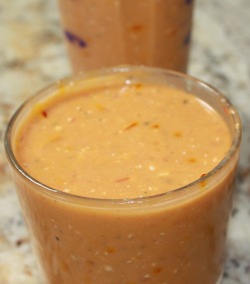
For this dressing (which isn’t really like Soup Plantation’s, sorry to say) I started with an old recipe I found online, years and years ago. It was credited to a tavern in Annapolis, Maryland. After I got through making it I decided it needed something else, so added some blue cheese to it. Note if you look closely at the picture, you can see some saffron threads floating in it, as well as a few crumbles of the blue cheese.
printer-friendly PDF

Tomato, Blue Cheese and Saffron Vinaigrette

Servings: 16

1 1/2 tablespoons Dijon mustard
1 1/2 teaspoons saffron threads
3 tablespoons shallots — cut in chunks
1/2 cup Champagne wine vinegar
1/2 cup diced fresh tomatoes
2 teaspoons fresh tarragon
Salt and pepper to taste
1 cup extra virgin olive oil
3 tablespoons blue cheese

1. In the bowl of a blender add the mustard, saffron, shallots, vinegar, salt and pepper, diced tomatoes (skin and all), and tarragon.
2. Blend until mixture is smooth, then slowly drizzle in the olive oil through the top.
3. Crumble in the blue cheese and blend briefly until the chunks have just barely pureed (you still want to see a few of the pieces). Refrigerate for an hour or so before serving.
Per Serving: 129 Calories; 14g Fat (95.0% calories from fat); trace Protein; 1g Carbohydrate; trace Dietary Fiber; 1mg Cholesterol; 37mg Sodium.

Two years ago: Asian (cole) Slaw (a family favorite with grilled meats)

Posted in Salads, Veggies/sides, on July 16th, 2009.

IMG_0495

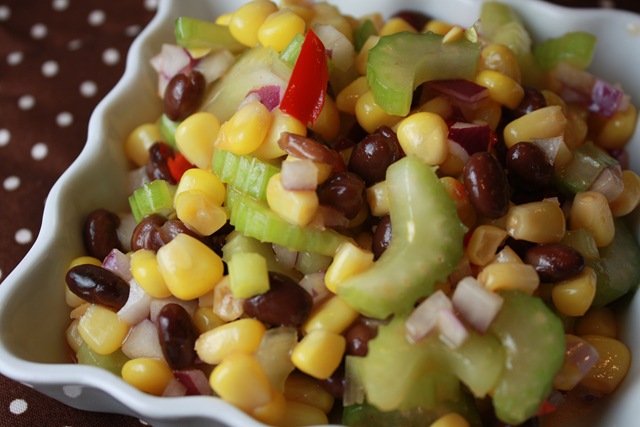
Since I was just talking about corn yesterday, this seems like a perfectly appropriate time to share a corn salad recipe. There must be as many variations for such as shells in the sea. This one is on the sweet side (sugar – or Splenda – in the dressing) and it’s marinated for a minimum of 8 hours.

When we visited our friends at Cardwell Hill (the winery in Oregon) a few days ago, Nancy served this salad for our late lunch. It was SO good, I asked her for the recipe. It popped into my email inbox yesterday.

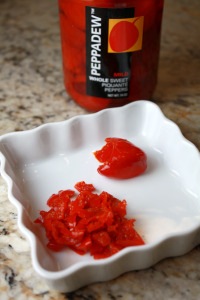
peppadew peppers The recipe calls for canned corn (shoe peg actually, but my DH did the shopping and he couldn’t find any shoe peg white corn) so this is just ordinary canned corn. You could easily use fresh corn too. Instead of pimientos, I used peppadew peppers. There’s a picture (left) of the jar, one whole pepper, and several of them minced up. I’ve talked about peppadew peppers before – they’re favorites of mine and are grown in South Africa. Some olive bars at upscale markets have them. They’re sweet and tart at the same time.

I didn’t have any green bell pepper (could have used some red, yellow or orange just as easily).

Because I try to reduce sugar anywhere I can, I used less than the original recipe called for – and I used Splenda – so if you think it tastes too vinegar-y, by all means add more sweetener. It’s really tasty – can be made up ahead – and likely will keep for several days. The dressing can also be used again, so don’t throw it out – just add different veggies to it for a 2nd rendition.

So thanks, Nancy, for this great recipe.
printer-friendly PDF

Corn & Black Bean Salad

Recipe: Adapted from my friend Nancy Chapel of Cardwell Hill Winery
Servings: 8
NOTES: You could use fresh corn, but one of the nice things about this salad is that if you have the cans on hand, it can be made any time of year.

DRESSING:
1/2 cup sugar — or Splenda [I used less]
1/2 cup vegetable oil
1 tablespoon red wine vinegar
1 1/2 teaspoons soy sauce
1/4 teaspoon salt
1/4 teaspoon paprika
1/8 teaspoon pepper
1/4 teaspoon garlic powder
1/2 teaspoon dry mustard
SALAD:
11 ounces white shoepeg corn — drained
11 ounces black beans — drained, rinsed
4 ounces pimiento — or Peppadew peppers if available
1 large green bell pepper — or red pepper
1 large onion — chopped
1 cup celery — sliced

1. DRESSING: In a food processor combine all ingredients except the oil. Turn on processor and add oil in a steady stream until emulsified. Refrigerate.
2. SALAD: In a large ziploc bag combine the salad ingredients with the dressing and refrigerate for about 8 hours (or up to 24), if possible to let flavors develop. Drain salad before serving.
Serving Ideas: The salad dressing can be reused – i.e., add more cans of corn and black beans (or corn and other kinds of beans, even green beans) to make the dressing.
Per Serving: 319 Calories; 15g Fat (39.4% calories from fat); 10g Protein; 40g Carbohydrate; 7g Dietary Fiber; 0mg Cholesterol; 232mg Sodium.

A year ago: Flank Steak with Orange Marinade
Two years ago: The BEST Bean Salad (a family favorite, low calorie, but you’d never guess it)

Posted in Veggies/sides, on July 16th, 2009.

fresh white corn

We’re home from our trip. I’m definitely not back into the cooking groove yet. Have been to two grocery stores to stock up on essentials, but what we’re both craving is more simple foods. I baked a chicken for dinner our first night home and had it along with a panful of button mushrooms sauteed in butter with some fresh thyme. And some tomatoes from our own bushes with some fresh mozzarella cheese. Last night’s dinner was more of the same. Except that I’d purchased some fresh white corn, so we had some of that too. It’s so good to be home.

Probably some of you know far more about corn than I do. But fresh corn-on-the-cob is at all the farmstands these days – the delish white sweet corn. So I thought I’d post something from my go-to book on fruits and vegetables, Russ Parsons’ tome How to Pick a Peach. He also has another book under his belt (that I don’t own) called How to Read a French Fry. So, synopsized from the Peach book is all you’ve ever wanted to know about corn, from the consumer’s point of view.

It used to be that fresh corn on the cob, once it was pulled from the plant, started to go to starch right away. The sugar in the corn converted to starch very fast. But genetics being what they are these days, the researchers were very busy for several decades nnow developing strains of corn that overcame many of those early types. These newer and more improved varieties are almost all you can buy nowdays. Some people (Parsons included) aren’t altogether sure it’s been for the best as they believe there is a lot more to corn flavor than just the sweetness.

Corn is a grain, of course, which is why it’s a carb rather than a vegetable. We eat corn in an immature state – grown to maturity, corn is as hard a wheat kernels. Much of the corn grown is such (and used for many industrial applications like sweeteners, textiles and automotive fuels). The corn WE eat is picked within a month of pollination.

The oldest “improved” variety of corn is referred to by its shorthand – SU – for sugary. Actually mentioned in seed journals as early as the 1820s. Farmers merely selected seed from the plants that produced the sweetest eating corn. But it still had the problem of converting to starch, losing 2/3 of its sugar within 24 hours, even if refrigerated.

The next variety was SE – for sugar-enhanced. It actually starts converting sugar to starch right away, but because the corn variety was sweeter than most, it could take up to a week before the sweetness level fell down to the level of normal corn.

Then we get to what Parsons refers to as the King Kong of corn. Called SH2 because of the way the kernels shrivel and appear shrunken after drying. They contain 30-45% more sugar than traditional corn. Only trouble is these seeds are very expensive, so most farmers won’t buy it and consumers don’t want to pay the price.  Instead, farmers allowed the normal kind of evolution of breeding seeds from the tallest and sweetest producing seeds. A kind of natural mutation I guess you could say.

According to the article the flavor is basically the same from white, yellow or bicolor corn. (Could have fooled me, I’m a convert to white sweet corn which is the first corn available here in Southern California.) The farmers have done all kinds of genetics to the SH2 with adding good corn flavor from the SE and SU.  Now I’ve never seen “Silver Queen” corn. It must not be grown where I live. But per the chapter on corn, lots of people claim it’s the Cadillac of corn, but in blind taste tests consumers prefer the new SE and SH2 varieties, and that if farmers claim they’re selling Silver Queens, they’re likely not.

Where they’re grown: More than half the U.S. production comes from Florida, California and New York.

Choosing: Husks should be fresh and green, no drying. Silk golden and fresh. Check the corn tips – kernels should be well filled-out and evenly spaced. Pop a kernel with your thumbnail – it should spurt milky juice. (Just don’t let the produce dept. catch you doing that!)

Storing: refrigerate whole (husked, etc.) and eat as soon as possible.

Preparing: Shuck and cook corn just before serving. [I’ve found that using a paper towel helps a lot to get the silk off the cobs.] To Grill: soak whole, unhusked cobs in water for 20+ minutes, then pop on the grill. Grill over hot fire until they are a dark yellow and well marked by the grill, about 25-30 minutes. Don’t worry if the husks start to char; that just adds to the smoky flavor. The silk is much easier to remove after grilling.

Russ Parsons’ recipes in the book: Fresh Corn Blini with Crema Fresca; Grilled Corn and Arugula Salad; and Shrimp and Sweet Corn “Risotto.”

– – – – –

Recipes here on my blog where corn plays a starring role:

North African Grilled Corn on the Cob
Gulliver’s Creamed Corn
Sweet Corn Cakes
Southwest Squash & Corn
Calabacitas (a southwest staple vegetable mixture)
Custard-Filled Cornbread

Posted in Uncategorized, on July 15th, 2009.

That Tuscan cooking has remained so simple is a long tribute to the abilities of peasant women who cooked so well, that no one, even now, wants to veer into new directions . . . Frances Mayes (author of Under the Tuscan Sun)

Posted in Uncategorized, on July 14th, 2009.

meryl streep

I don’t know about you, but I can’t wait until this movie comes out in early August. This is the one that chronicles part of Julia Child’s life and Julie Powell’s one year of cooking Julia Child’s recipes. Meryl Streep plays Julia Child – the trailers I’ve seen are amazing with Meryl’s rendition of Julia Child.

So anyway, I was reading some of my blogs and there was this very interesting one . . . Amy from Cooking with Amy has written up a very fascinatig post about the food stylists who made all the food for the movie. So, do go on over to her blog to read all about it.

That’s Meryl Streep there in the picture.

Posted in wine, on July 13th, 2009.

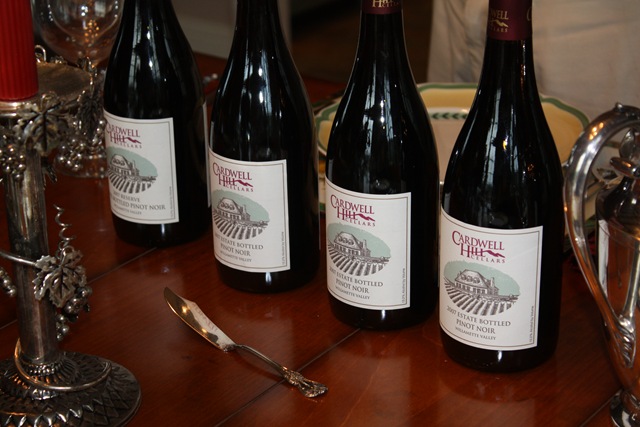
cardwell hill wines

We have friends of ours, who live most of the time near us in Southern California, who also own a well-respected winery in the southern Willamette (that’s pronounced wil-LAM-ett) Valley of Oregon. We knew we’d be driving within a few miles of their winery, so we went to visit them yesterday. Indeed, the winery is about 30-40 miles off Hwy. 5, near Salem. What a gorgeous place it is. And I have no pictures of the scenery because it was raining the entire time we were there.

Dan and Nancy raise pinot noir grapes (well, they also make some pinot gris and rose), but it’s the pinot that has put Cardwell Hills wines on the oenology map. We were so thrilled for them when the Wine Spectator named one of their pinots as 75th out of 100 best wines in the world for 2008.

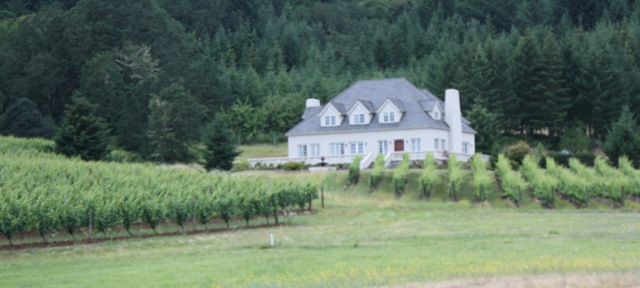
cardwell hill home They started it all with a dream about owning a winery in the area, eventually purchased an abandoned vineyard and really started from scratch. Some of the original vines were rejuvenated, and they have 30+ acres planted now. Dan designed, then had built a winery, then he designed a custom country French house nearby (see photo right). Is that house not gorgeous? It’s every bit as beautiful inside as you could think it would be.

What a lovely time we had. Cardwell Hill wines are available at Total Wine stores on the East Coast, and at some selected wine stores in the West. Or, at the winery, of course.

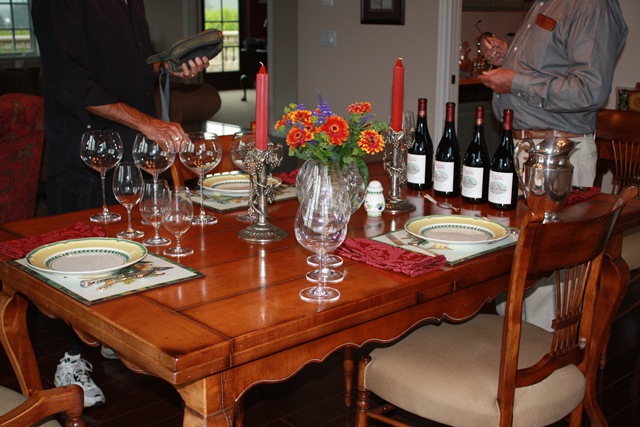
cardwell hill lunch

There was the dining room table, all ready for the tasting. I should have taken photos of both Dan and Nancy to include.

Cardwell Hill Cellars
24241 Cardwell Hill Drive
Philomath, Oregon  97370
(541) 929–WINE (929-9463)

Directions (it’s near Corvallis)

http://www.cardwellhillwine.com/

Posted in Travel, on July 12th, 2009.

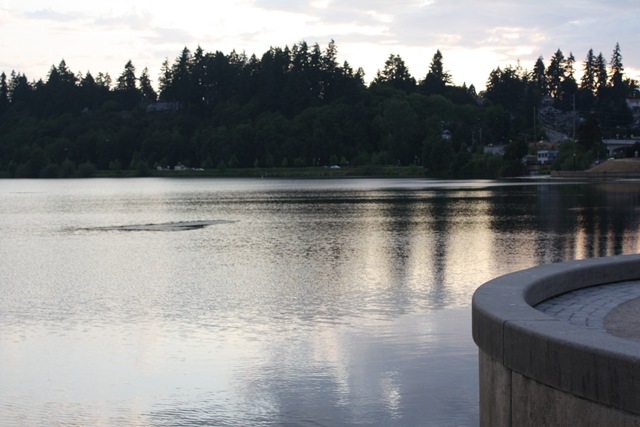
olympia lake

We’re on our way home. The car’s nose is headed south, like she knows where she’s going. We got on the 5 fwy and have been on it for two days. And we’re still only in southern Oregon as I write this. Here are some photos I’ve snapped along the way. Above is a small lake just below the Olympia (Oregon) State Capitol building. We had dinner at a restaurant almost in its shadow.

peace arch

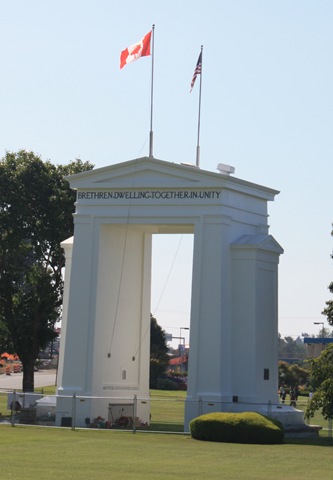
The Peace Arch at the U.S. – Canada border. We sat in line for about an hour to get back onto U.S. soil and during one of the long wait periods I hopped out of the car and took this picture. There were hundreds of people having family picnics near here. It’s a lovely park. Just not much fun when you’re waiting. And waiting. The cars are at a dead stop. They allow cars through in groups of about 40-50, then you crawl forward car by car.

border traffic

See the small Canadian flag done in flowers over on the right side?

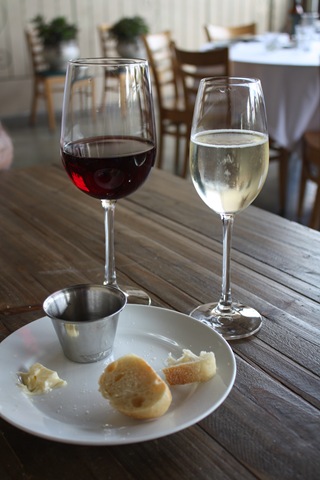
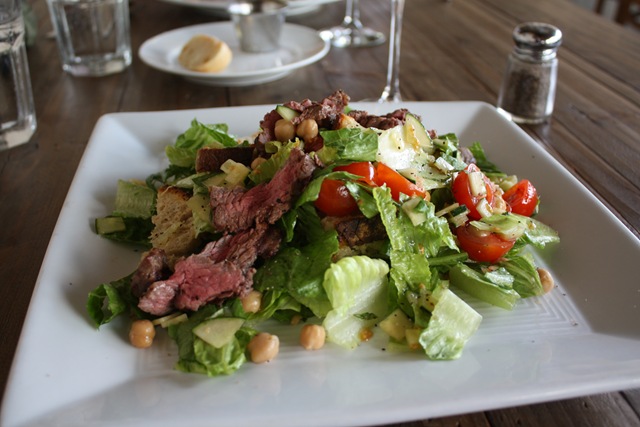
 We spent the night in Olympia at a fairly nondescript B&B. Not memorable enough to even mention. But they recommended dinner at the Waterstreet Cafe. Very nice food. I had a bread salad (picture right). And I had a glass of delish prosecco (sparkling Italian wine).

waterstreet cafe wine

waterstreet bread salad


This morning we headed out to visit friends of ours who own a winery near Salem. Stay tuned for more info and photos about that. We have been in solid rain all day, but will be breaking out into the hot California sunshine tomorrow.

Posted in Books, on July 11th, 2009.

ship library

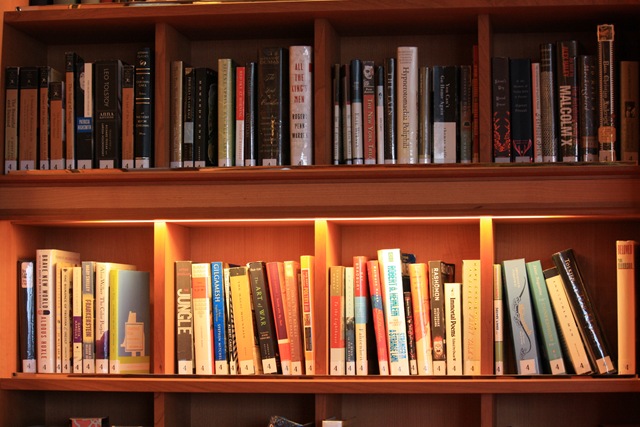
We’ve spent countless hours on the ship this week. We did take a tour – in Juneau. The other shore excursions were excessively expensive, we thought, so since we’d been here before, we decided not to partake of others.  Am so glad we had a nice verandah stateroom, though, as we were able to enjoy sitting there for many, many hours enjoying the scenery. The photo above is one I took in the ship’s library.

I brought along my Kindle, with several books loaded on it. But since the Zuiderdam (pronounced zeye-der-dam) has a very extensive library, I decided to utilize theirs. And read some books I might not normally have done.

Testimony (Anita Shreve) – almost like a Jodi Piccoult book, I thought. Shreve took a very volatile subject (rape . . . or was it rape, the reader questions from about the 3rd page?) and tells each chapter from the point of view of the many different people who were profoundly affected by the event (not just the 3 barely adult boys having sex – and videotaping it – with a 14-year old girl at a private school) It was a fascinating read.

It Ain’t All About the Cookin’: a memoir (Paula Deen) – hmmm. Well, more like a tell-all of Paula Deen’s life. She said she didn’t hold anything back, and I learned things I almost wish I hadn’t. Certainly learned more about her sex life than I ever wanted to know. She did pull herself up by her bootstraps, and definitely knew how to stretch a dollar to feed her children. Until she met Michael (her current husband) she made some really bad choices in men. Until recently Paula didn’t have a very good self image. And her language? Oh my goodness. What a foul mouth she has, and makes no apologies for it.

The Independence of Miss Mary Bennet (Colleen McCullough) – You know Colleen McCullough, the author of The Thorn Birds, The Ladies of Missalonghi, the 7 books in the “Masters of Rome Series,” the first one was The First Man in Rome, and one of my favorite books, Morgan’s Run. She’s a prolific writer. This book is so off the normal track for her. It’s about Mary Bennet – you remember her? The younger, lesser sister from Pride & Prejudice, Jane Austen’s classic? McCullough takes that singular character, skips 20 years and has written a book about a year of her life. Mary spent those 20 years caring for the Bennet mother until her death, and where the book starts she decides to become an agent for change. She knows children are being exploited in the workforce. It’s very much in the Jane Austen style. Cute book.

Are You Somebody? An Accidental Memoir of a Dublin Woman (Nuala O’Faolain) – actually this book was one I brought along with me. For my book group which meets the day after we get back home. I’d never heard of this author. And obviously I’m not all that well-read in the classics. O’’Faolain drops names (author’s names) like bread crumbs on a nature walk. Mostly Irish and English authors I’ve never read. And most I’d never heard of, either. She grew up poor, although she did get a very good college education by great happenstance. Learned more about her sex life than I wanted to know, too, which started at a frighteningly young age. (What IS it about women baring their sex souls?) She grew up in an era when being Irish was nothing to be proud of, but later in life, when she finally makes a name for herself in the world of journalism, she finally accepts her Irish-ness and moves back home to Dublin. Single. Lonely. Unhappy, mostly. And still looking for the right man. But at least she’s on her own and financially independent. In a second edition of this book she adds an “afterword” which was perhaps more revealing than all the rest of the book. She was just overwhelmed with notes, calls and letters from people who had lived a similar Irish life (who read her first edition). It seemed to give the author some kind of character validation, I think. I liked the book better after reading that part, but I don’t think I’ll be prompted to read any of her novels. After attending my book group, I heard that the author lost her life to lung cancer last year. She’d finally found a man in New York and had been living with him for awhile before her cancer diagnosis, although she went home to Ireland before her death, and she’s buried there.

Tell Me Where It Hurts: A Day of Humor, Healing and Hope in My Life as an Animal Surgeon (Dr. Nick Trout) – Another memoir, this one from a veterinarian. The cover was what got me – it’s a photo of a very adorable Boston terrier with the doctor’s hand and a stethoscope pressed to the dog’s chest. Wouldn’t be interesting to anyone who doesn’t love animals. Medicine has always fascinated me, though I don’t suppose I could have been a physician. But reading this book, a compilation of stories about a day in the life of a veterinarian, convinces me I probably wouldn’t have what it takes to be one. Interspersed amongst the stories are chapters and paragraphs about veterinary philosophy (pet insurance, euthanasia, even the wisdom or lack thereof, of some cat and dog names. Very interesting read, though.

Posted in Travel, on July 10th, 2009.

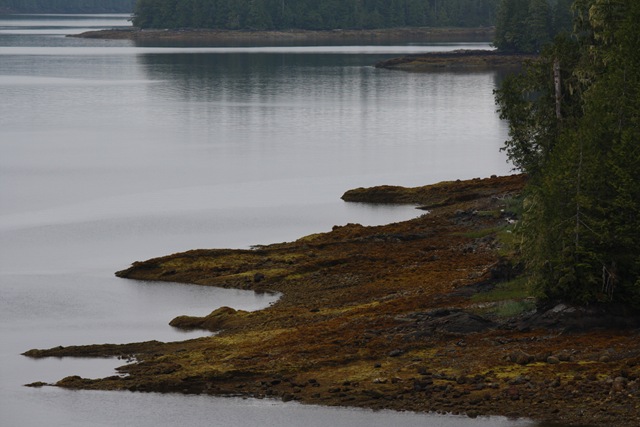
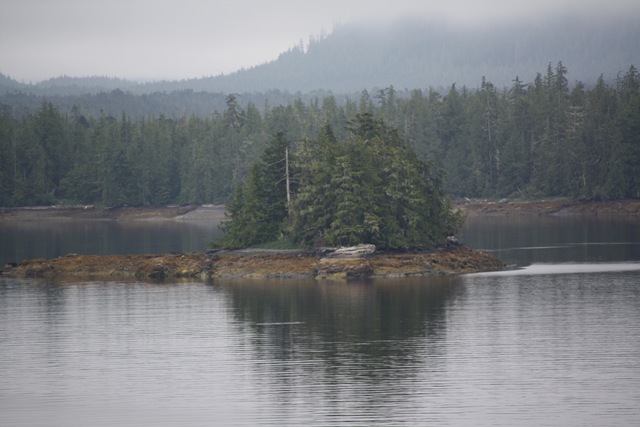
inland passage 1 It’s a cloudy, overcast and foggy day. But no rain. We’ve had phenomenal weather on this 7-day cruise. Can’t complain about that one bit. Today we’re at sea all day, between Ketchikan and Vancouver, to arrive tomorrow morning (Saturday). At the moment it’s cool outside, probably about 55 or 60 degrees. I snapped several pix this morning as we cruised by some islands in the Inland Passage.

inland passage treesI was enamored with the little topknot on that one pine tree. These islands are just barely above sea level, all covered in trees.

inland passage sm island 2Here was another little bitty island. Cute as a bug, eh? I thought so. There are some homes (few and far between) on an island or two – much bigger islands than this one. All accessed by boat since we’d see a tiny dock and one or possibly two small boats with outboards. One with a small wind machine. There has been zero wind today

Tomorrow morning we get off the ship early. Very early, actually. We have to put our suitcases outside our stateroom door by 1 am. We exit the ship at about 7:30 am, then will take a little minibus to where our car has been parked all week (a short distance, maybe not more than a couple of blocks, actually) and off we go. Hoping the waiting line at the U.S. border crossing will be short.

So I’ve written up a blog post about all the books I’ve read these past 7 days. Many more than usual. Tomorrow we’re driving south and I will likely write up something about it the next day. We’re headed towards home, but won’t get there for a few more days yet. Thanks for coming along on the photo ride with me.

Posted in Travel, on July 9th, 2009.

margerie glacier 3

This is the Margerie Glacier, deep in Glacier Bay National Park, as far into the Tarr Inlet as you can go, with Mt. Quincy Adams (13,650 feet) and Mt. Salisbury (12,000 feet) in the center distance. In the foreground is the face of the Margerie Glacier, but it continues up with the river of ice through the center of the picture. The temp was about 50 most of the day, but very pleasant sitting in the sunshine.

When we took this cruise last time, years ago, we didn’t have a whole day in Glacier Bay. We came into the Bay during the night, woke up to the massive face of one of the glaciers (not sure which one), hung around for a couple of hours waiting for the glacier to calve. It didn’t, even though the captain sounded the ship’s horn, which sometimes will cause one (and likely the Park officials have laid down the law about trying to cause calving anymore, because the glaciers are receding at such a rapid rate). Back then, we saw some of the whale breeding grounds and did see whales off at a long distance, then we left in order to reach Sitka by early afternoon.

This time we spent the entire day there, from early morning when we picked up some Park Rangers who gave us mini-lectures on the ship’s radio periodically during the day. We “hung out” at the Margerie Glacier (pictured above) for about an hour or so. During that time we could hear the glacier cracking – sounds like gunshots or as rumbly as thunder). An eerie sound. Then hung out a shorter time at the less attractive Grand Pacific Glacier.

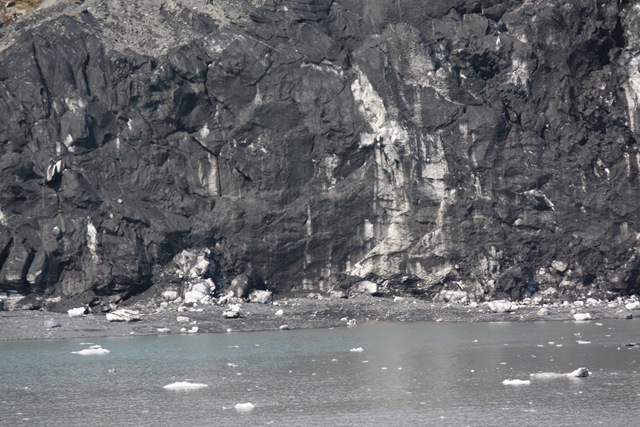
grand pacific inlet This looks like a rock wall, but it’s all glacier. Just black because of all the dirt and rock the glacier picked up when it was growing. Now it’s receding, so it drops small chunks of ice, but when this one calves it looks the same, because it’s so full of dirt and gravel.

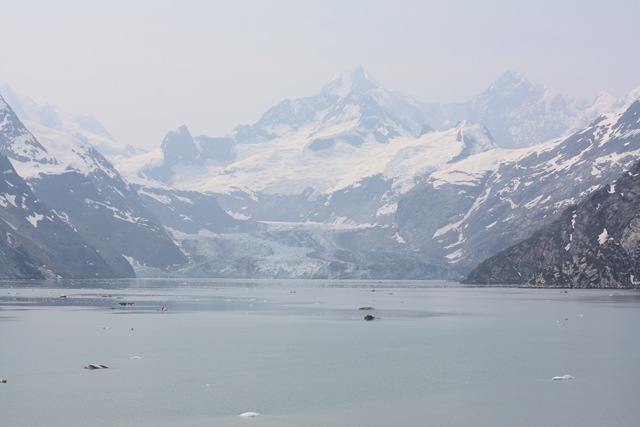
johns hopkins inlet 2 This was as close as we were allowed to go in the Johns Hopkins Inlet (Johns Hopkins Glacier is right there in the center as it meets the sea). Harbor seals give birth (the Park Rangers call it pupping) on small icebergs way back in there (the safest place they can birth because of land predators like bears). Except for the ship’s engines, it was ever so quiet.

The Park Rangers spent some time talking about the glaciers. Their makeup, their history, and about the known evolution of them. The map they gave us shows the glacier masses over the course of the last 100 years. They have ebbed and grown, both. But she said that the glaciers receded PRIOR TO the Industrial Revolution, too. That likely thousands of years ago the glaciers did the same thing – receded dramatically. Not that man (and the burning of fossil fuels) hasn’t contributed to it, but they do believe it’s a natural phenomena.

As I’m writing this we’ve actually just docked in Ketchikan (after a long 8 hours or so at sea, when my stomach was not happy because we were actually out in the open ocean). We did see a few killer whales cavorting just beside the ship last night as we were eating dinner. That was fun! But I didn’t have my camera with me. I was concentrating on keeping my stomach under control as we were lightly rolling. Seasickness is just a fact of life for me. Hard to believe I married a man who is a sailor. He’s incredibly patient and understanding with me, though. Even he gets seasick occasionally, although I’ve never seen it happen to him, and we’ve been married for 26 years.

It’s overcast, foggy and cold here in Ketchikan. So don’t know that I’ll have many photos. Stay tuned.

Related Posts Plugin for WordPress, Blogger...