Archive for May, 2007

Gone fishin’ - not

I’ll be back in a week. My laptop will accompany me, but don’t know whether I’ll be able to get online and post anything. My friend Cherrie and I are taking a little trip to do some shopping, maybe try a few wines, attend some cooking classes at Ramekins in Sonoma, and enjoy some good food. Here are some of the other places we’re going to visit:

Dinner: Chez Panisse, Berkeley (Alice Waters’ restaurant - she was the earliest restaurateur to proclaim the virtues of fresh and organic lettuces and vegetables - we’re eating in the café, not the more elegant restaurant.)

Dinner: Cyrus, Healdsburg (One of the top restaurants in the Healdsburg area - you have to pre-pay $100 for dinner here, not refundable if you change your mind. Geez! They will give you “store credit” though. It had better be worth it!)

Lunch: The Girl & the Fig, on the square in Sonoma (Dave and I have eaten here before, thought it was wonderful. The chef has her own personal line of fig products like fig vinegar, fig conserve, etc. Obviously, she’s in love with figs! What I remember most about it last time was the great mojito I had. I know, I know, this is wine country, but I was tired of tasting wine from morning til night.)

Dinner: The General’s Daughter, Sonoma (another landmark near the square in Sonoma. Highly recommended by one of the cooking instructors/classes I frequent.)

Dinner: Cindy’s Backstreet Kitchen, St. Helena (Cindy Palcywn, of Mustards Grill fame, has been on my radar screen for over 20 years. First tried baked garlic at her restaurant back in the early 80’s. My friend Linda gave me the Mustards’ cookbook. This is a more recently opened restaurant, casual, highly recommended by my friend Darlene.)

Oh, almost forgot, we’re also going to the Scharffen Berger Chocolate Factory in Berkeley. We have an appointment for a tour there, which should be oodles of fun. I’m a fan of good chocolate and use Scharffenberger’s in baking, always, providing I have it on hand. The Scharffenberger family used to be into wines, mostly sparkling wine, which was one of my favorites of the champagne-style. I was quite disappointed when they sold the business. But then they decided to focus on producing the finest, European-style chocolates. It took them a couple of years to learn all about it and purchase the equipment, etc., but they’ve since had great success and acclaim.

Cheerio!


Sausage Pinwheels

In years gone by, I used to entertain on the fly a lot more than I do now. So I always needed recipes that were quick. My problem is that quick doesn’t always mean good or tasty to me. Or at least back in those years I didn’t have many quick recipes that were also exceptional. One of my other problems is that when I prepare a dinner for friends, at the back of my mind I’m always wanting to wow them. I’ve learned that’s just not possible with every part of a meal, but I still try. So, this recipe was a regular for me because I could make it ahead and it “lived” in the freezer until I needed some tasty hot appetizer for guests. Originally I made this just around holiday time, but it’s really just fine any time of year. I might not make it in the heat of summer just because I prefer cold foods then.

And when I tell you this is easy, I really mean easy. Bisquick dough is hardly difficult - it rolls out easily (really). But as you’ll read in the recipe itself, you simply must use a fatty sausage. No Jimmy Dean or butcher ground lean stuff. You want the grocery store tube (I used to buy Farmer John, I think, because that was what my local market carried). High fat. It’s necessary to give the biscuit dough the tender flakiness. I tell you this because I’ve made the mistake of buying leaner sausage, and it absolutely doesn’t look right. Doesn’t taste good, either. So trust me on this. The other caveat is that you simply must allow the sausage to warm to room temperature - about an hour - before you start spreading it. You can separate the sausage into smaller bits and it will take less time. So, you spread out the sausage on the Bisquick dough and sprinkle it with a tad of cayenne. A tiny tad, actually. Roll up the rolls, reshape them gently, seal the edge, cut them into smaller sections if desired, wrap in waxed paper, then in foil and freeze. The small sections allow you to use only a small amount for a few people, if that’s what you need. Otherwise you will be making a lot of them.

Here’s a picture of them in the frozen state. When you’re ready to prepare them, you must leave them out at room temperature for at least 15 minutes, maybe 20, in order to cut them. If you don’t the dough will crack off, which you don’t want, of course. As long as you warmed up the sausage ahead of time, this doesn’t take more than 15 minutes to prepare, start to finish. You can trust me on that, too.

Hot Sausage Pinwheels
Recipe By :I’ve been making these for so long I don’t remember where the recipe came from!
Serving Size : 12 Preparation Time :0:30

1 pound pork sausage — NOT lean
1 dash cayenne
2 cups Bisquick® baking mix
2 tablespoons margarine — softened
Milk

1. Important: allow sausage to warm to room temperature, then blend in cayenne. Mix Bisquick with butter, then add milk according to the “biscuit” directions on the box. On a floured surface, roll dough to a rectangle measuring 12″ x 18″. With your fingers, spread sausage on the dough, leaving a dough edge around it. Starting from one of the short sides, roll dough like a jelly roll. Seal edge with water and press lightly to seal well. Press doughy ends in a little and seal as best you can.
2. Wrap the rolls in waxed paper, then in foil, seal well, and place on a flat surface in the freezer. Once frozen place in a plastic bag to seal.
3. Preheat oven to 375°. Remove about 10 minutes before you need to slice them. Slice in 1/3 inch slices and place on baking sheet and bake for 15 minutes, or until golden brown.

NOTES : I think I could make these in my sleep. These are really tasty and if your crowd is hungry they’ll disappear in a flash. In years gone by I used to keep one or more of these rolls in the freezer at all times, just in case I might need them. It is necessary to use good-old fatty sausage for this dish in order to make the crust tender. Brands like Jimmy Dean are too meaty.

Per Serving (excluding unknown items): 255 Calories; 20g Fat (70.3% calories from fat); 6g Protein; 13g Carbohydrate; 1g Dietary Fiber; 26mg Cholesterol; 508mg Sodium. Exchanges: 1 Grain(Starch); 1/2 Lean Meat; 3 1/2 Fat.
Printer friendly recipe.


Tomato Knife

Here’s something I use often in my kitchen. It’s a 6-inch tomato knife. A very razor-sharp serrated edged knife with a sleeve to store it in, that is specifically made for slicing tomatoes. Does it work? Absolutely - you can get almost paper thin slices with little effort. Is it worth buying a knife just for tomatoes, you ask? I think so. And just in case you didn’t catch it a couple of sentences ago. . . Is it sharp? Yes, indeed. I cut myself with it soon after getting it, so now am very, very careful when I use it. Why is it different than any other serrated blade? I wish I could tell you; I can’t, but it works and that’s why I am recommending it. I believe I ordered mine from a catalog (don’t remember which one, but it wasn’t Williams-Sonoma or Sur la Table) about 2-3 years ago. It’s made by PureKomachi (Japan) and is available at several on-line retailers. Here’s the Amazon link where it’s $14.98. It appears they no longer make this knife with the hard plastic sleeve, although they’ve changed the tip to include small points to remove the core. That sounds like a good improvement, although my less pointed tip suffices for removing small cores.

Avocado Butter - an oxymoron?


Avocado tastes butter-like already. Butter is butter. Why would you put a butter-like food with more of the same? Well, because is just tastes so good. It gives the avocado a different texture when it’s slicked with butter. It wasn’t my idea, although I’ve been making this long enough that I could easily begin to think it was. But no, it was Sunset Magazine’s idea, probably 30 years ago. The upside: taste, ease of preparation, it’s freezable (unlike guacamole), and it quickly defrosts. It keeps for a few days, although with some discoloration. The downside: well, the fat, I suppose, although remember that avocado part is a good fat. But you don’t need much to smear on a cracker to get that velvety avocado taste. It has some of the classic components of guacamole (lemon juice, and garlic salt). But this time you mix the ingredients with a little gelatin and half and half or milk or cream, and chill it for an hour or so before serving. The gelatin solidifies it enough and makes it spread a lot easier. It might be fine without it, however. I’ve never tried it, trusting Sunset that they knew what they were doing.

If you have a few extra avocados and don’t have plans to use them before they’d go bad, think about this butter, and put it in a couple of small crocks in the freezer for some night when you need a nice appetizer and don’t have time to fix one.

Avocado Butter
Recipe By :Sunset Magazine Serving Size : 12 -16
Preparation Time 15 minutes

1 medium avocado
8 ounces butter
1/2 envelope gelatin
2 tablespoons boiling water
2 tablespoons lemon juice — fresh
garlic salt — to taste
2 tablespoons half and half

1. Peel and mash the avocado, add softened butter and beat until thoroughly blended. Soften gelatin in cream and stir in boiling water until gelatin is dissolved. Add to avocado with lemon juice and garlic salt. Turn into small loaf pan or dish; spread smoothly. Cover and chill thoroughly. May also be frozen for a few months with no loss of flavor (seal it well, however).
2. Leave butter out at room temperature for about 30 minutes before serving. Serve with plain crackers.
Serving Ideas : Best served with simple crackers - even saltines are good. The flavor is delicate, so don’t overwhelm the butter with a very flavorful crackers.

NOTES : It helps if you have an avocado tree, but even if you don’t, this makes a wonderful appetizer, that’s very different. It freezes well, believe it or not, and doesn’t take all that long to defrost. Spread it into small ramekins, cover with plastic wrap (completely covering the butter mixture) and pop in the freezer.
Per Serving based on serving 12: 170 Calories; 18g Fat (93.2% calories from fat); 1g Protein; 2g Carbohydrate; trace Dietary Fiber; 42mg Cholesterol; 161mg Sodium. Exchanges: 0 Fruit; 0 Non-Fat Milk; 3 1/2 Fat; 0 Other Carbohydrates.
Printer friendly recipe.


Obsessive, compulsive cookbooks - ever heard of this disorder?

I can hardly say enough good things about this book. I either heard or read an interview with the author, who was the White House main chef for 8 years - 4 years with the Clintons and 4 years with the Bushes. In the interview, he was very well spoken, and extremely entertaining, and I knew I needed - had to have - coveted - this book. Amazon loves me because this kind of thing happens to me often. Here’s the link on Amazon for The White House Chef, by Walter Scheib. Prior, he’d been the chef at the Greenbrier, that exquisite country hotel in White Sulphur Springs, West Virginia, which gave him lots of credentials to fill the chef shoes at the White House. He already knew how to serve private parties of 8 and dinners for 1000. That place has always been on my want-to-go list, but it’s pricey. Very pricey.
So, now we go to last night. Since my dear hubby is sailing on the East Coast with our friends Jerry & Judy (I get seasick, so I don’t do small boats in the ocean; I rarely do big boats in the ocean), I made a vegetable dinner for myself and started reading. I kept reading. Did the dishes. Kept reading. Made myself some ginger-gensing tea and kept reading. Yes! This morning I made breakfast and started reading again. But then I got anxious to share this with you. So I haven’t finished it yet. I need to put flags in the book on interesting recipes to try.
Maybe this book wouldn’t appeal to just everyone. I enjoy reading about the behind-the-scenes stories of chefs. And what more interesting than at the White House, I ask? I have read Bourdain (eh, not so thrilled with his tyrannical nature), and recently read Heat, by Bill Buford (I liked this one a lot - it was almost a page turner). Then I saw an interview with Julia Child’s nephew, regarding the book about his aunt’s early years in France, My Life in France. I just loved that book. So much so that I bought one of her cookbooks because of it. (See, I told you I have a problem.)
So having gotten the White House Chef, here are my comments. It isn’t gossipy in the least. He’s very ethical and respectful of his position, and it didn’t go to his head, either. He honors the friendships with the First Families to not tell tales. But he does tell interesting stories - like the cooking lessons he gave Chelsea, teaching her to cook before she went off to Stanford, for instance. The most engrossing were the details of his job interviews and the luncheon for 10 people that was his interview with Hillary. Apparently he clinched the deal with lamb, which Hillary loves, but he didn’t know that little fact! Sadly, one small story - he arrived his first day of work with 25 knives, in his knife case, all personally monogrammed, and within two months all but two of them had disappeared. Amazingly hard to believe. Reading about the White House kitchen was also interesting, about the table settings, the flowers, the protocol issues, the food allergy issues for big dinners. All fascinating to me.
His recipes are do-able. They’re not pretentious or all that complicated. They’re not 30-minute meals, however. For the book he adjusted the recipes for the home cook, which is helpful. Hillary Clinton had a plan - she wanted him to showcase American homegrown products, and he celebrates them throughout the book. I like that. What better place than at the White House with State Dinners and hundreds of fancy events, to highlight America’s bountiful harvests.
I expect I’ll try some of the recipes soon. And I’ll post them when I do. The book is at least half stories and the remainder recipes, some photographs, and facts about the White House and staff. So if you have someone who loves reading these kinds of things (maybe you?), I highly recommend this book. Would make a lovely Christmas or birthday present too. It’s $16.47 at Amazon. But if you order several books the shipping is free. See how my logic goes?*

*My secret is that I keep a wish list on Amazon, so when I have enough there to qualify for free shipping, my wish list books can easily be dropped into my shopping cart. Yippee.

Cranberry Noels - what? This is May isn’t it?

Are all cookies seasonal in your book? Certainly I have a few cookie recipes that I don’t make year around . . . like gingerbread men . . . or sugar cookies decorated with red and green. But otherwise, cookies are calendar universal. I had a bag of dried cranberries that needed to be used, and I remembered this recipe that’s become a personal favorite since 2000 when my friend Darlene brought them to a Christmas cookie exchange.

If you haven’t ever been to a cookie exchange, you should try it. These days, every woman’s magazine blasts ideas for how to streamline our shopping, wrapping, decorating, cooking and entertaining during the holidays. Happily I’ve hostessed cookie exchanges for years. I had my first one in about 1971. And I’ve had them many times since - not every year, but every few. I love to have a variety of cookies to serve friends and family during the holidays, so what’s easier than inviting a group of baking friends to share everyone’s goodies. I can remember many times trying to figure out the math - okay, 11 people coming, everyone’s bringing 5 dozen, how many of each cookie do we take? Got it. Oh, one gal didn’t come at the last minute? Oops, change the number. Oh, another gal only got 50 out of her batch? Uhm, what do I change the number to now? Eventually we just took a bunch and if there were still lots of cookies, we’d make another turn around the cookie table adding a few more to our stashes.

I didn’t intend this to be a lesson in cookie exchanges, but one thing I’ve learned is that each different cookie needs to go into its own plastic bag and sealed. Otherwise, someone’s double mint cookies will infect all the other cookies in your container with mint. And all the bags go directly into the freezer after the exchange.

These Cranberry Noel cookies were the hit of the cookie exchange that year. Hands down. (Thank you, Darlene.) They came from Martha Stewart, but at the time they were the #1 winner of a Christmas cookie contest Martha had on her website. For this posting I did look it up and finally found it on one of Martha’s forums here. I know they were originally part of a cookie contest because I wrote it into my recipe program in 2000. Martha subsequently published it in a Christmas special issue, apparently. These are super simple - you mix up the batter, roll into two logs, roll the logs in shredded coconut, chill, slice and bake. And once they’re cooled they go into Ziploc freezer bags and back into the freezer.

So, just because these contain dried cranberries, pecans and coconut, that doesn’t mean you can’t have them in May! I had one yesterday in the mid-afternoon with my cup of Earl Grey tea. Delicious.

Cranberry Noels
Recipe: Winner of MarthaStewart.com’s online Cookie Contest, 2000
Serving: 48 Preparation Time 15 minutes

1 cup unsalted butter — room temp
1/2 cup sugar
2 tablespoons milk
1 teaspoon vanilla extract — or rum (I always use vanilla)
1/2 teaspoon salt
2 1/2 cups all-purpose flour
3/4 cup dried cranberries (sometimes I chop them a little)
1/2 cup pecans — chopped
3/4 cup shredded coconut meat — unsweetened

1. In a bowl of an electric mixer fitted with the paddle attachment, beat the butter and sugar on medium speed until light and fluffy, about two minutes. Add milk, vanilla, and salt. Beat until just combined. Gradually add flour, cranberries and pecans. Mix on low speed until fully combined.
2. Divide dough in half and shape each half into 8-inch logs, about two inches in diameter. Roll logs in coconut, pressing firmly to coat the outside of the logs, but without misshaping the logs. Wrap logs in plastic wrap and refrigerate until firm, about two hours.
3. Heat oven to 375°. Using a sharp knife, cut logs into 1/4 inch thick slices. Transfer to an ungreased cookie sheet, placing about 1 - 1.5 inches apart. Bake until the edges are just golden brown, about 12 minutes. Transfer cookies to a rack to cool.

Per Serving: 78 Calories; 5g Fat (57.8% calories from fat); 1g Protein; 8g Carbohydrate; trace Dietary Fiber; 10mg Cholesterol; 23mg Sodium. Exchanges: 1/2 Grain(Starch); 0 Lean Meat; 0 Fruit; 0 Non-Fat Milk; 1 Fat; 0 Other Carbohydrates.

Printer friendly recipe.


A Nice Sunday Pork Roast . . on Friday


Deciding what to serve guests? For me, making decisions about a company meal usually starts out with the decision about the entrée. So, is it beef, fish, chicken, pork or lamb? I’ll flip through my big personal cookbook (two large 3-ring binders containing all 405 of my recipes, divided up by categories), and start making a list of the options. I may pull out those recipes (each is in a plastic sleeve) before I decide. Here’s what I do:

  • make a list of a couple of the meat dishes that sound good to me. Then I’ll think about what should go with it;
  • vegetables (depends on the season, maybe two vegies and no carb), add to the list;
  • another side/carb (does this dinner need a carb, would my guests prefer not to have a carb, is it too many calories already? think about the color on the plate since we like to have some variety); add to the list;
  • a salad (green type? or another? special additions like pecans or walnuts, a new dressing? an old favorite?), add to the list;
  • dessert (look over the menu so far, think about my timetable, what I can manage with all the other dishes, does it need to be lower calorie? a splurge? chocolate or no?); add to the list;
  • and lastly appetizers (do I need to make something homemade? can I make do with chips and salsa? if we’re not having carbs with the dinner, maybe hummus would be fine with crackers and vegies?).

So, for this particular dinner I wanted a pork roast using a recipe I’ve had for some years, after taking a class with Tarla Fallgatter, a local cooking instructor. But, I wanted a simple, but JUICY pork roast. The last few times I’ve baked a pork roast I’ve been disappointed and had concluded it was the pork, not the cook (moi, how could it be moi?). I was convinced it’s this new, leaner pork, the other white meat, that was just too lean, with not enough fat in the grain to provide any juiciness. So I consulted my local independent butcher. He told me that the pork I bought at Costco was probably the same pork I bought from him, or at least they were from the same or similar pork producers in Iowa as Costco uses (okay, no help there.) But, he did tell me that if I wanted a bit more marbling of fat, I should buy a roast from the rib end (more toward the country ribs part). He just happened to have one (oh good). BUT, he told me, the most important thing I should remember was to not overcook the meat (uh oh, maybe I am the culprit after all?). I asked him (always good to get a second opinion) at what temperature I should remove the pork. He didn’t know (hmm, not good, a butcher doesn’t know this?). Okay, back to my recipe, which said 145°.

So, once I’d decided on having pork, chosen the recipe (below) I rounded out the meal with the zucchini gratin (my posting on Saturday), a nice green salad, chips and salsa, and I made some strawberry mascarpone ice cream from over at Culinary Concoctions by Peabody. It was a very nice meal with a couple of bottles of red wine. We were all very mellow by 10:00 pm.

As for the pork, I was careful to use my meat thermometer. But, I found out
that the part of the sensor that reveals the oven temperature isn’t working, so think I’ll have to buy a new one - I dropped it a month or so ago and bent the connector that goes into the little digital box - most likely that’s the problem. I’m glad it wasn’t the interior meat temp that wasn’t working! I removed the roast at exactly 145°, let it sit for about 10 minutes while I prepped the rest of the meal. The pork was perfectly cooked. And JUICY! I have no qualms about spending the money to buy a new meat thermometer. It convinced me once again what an invaluable instrument it is in the kitchen!

The apricot compote is a bit different than some. The addition of a whole vanilla bean - well not the bean itself, but the contents - makes it unusual. Whole vanilla beans have such a fragrance - a perfume, if you will - that could easily

overpower. You carefully slit the bean open, to butterfly it (it’s a little like microsurgery - attacking this tiny, narrow little thing - do use a small knife with a very thin and sharp point) and scrape the miniature grains out of the bean. You’ll get about 1/4 to 1/2 teaspoon total. And you can see the grains in the finished sauce - you may want to tell your guests so they don’t think it’s sand!

Roast Pork Loin with Apricot Compote
Recipe By: A cooking class with Tarla Fallgatter
Serving Size : 10 Preparation Time 35 minutes

COMPOTE:
1 1/2 cups white wine — sweeter variety, if available
1 1/2 cups apple cider
2 whole cinnamon sticks
1 whole vanilla bean — split & scraped
2 tablespoons sugar
12 ounces dried apricot halves — chopped

ROAST PORK:
4 1/2 pounds pork loin — chine bone removed
1 1/2 teaspoons salt
1 1/2 teaspoons ground pepper
1 1/2 tablespoons oil

1. Compote: In a medium pan combine wine, cider, cinnamon, sugar and vanilla bean scrapings. Bring to a boil, reduce heat and add apricots. Simmer for 20 minutes or until a syrup consistency is achieved. If the syrup has not reduced sufficiently, remove apricots and boil the syrup until it reaches the desired consistency. Remove from heat and set aside or keep warm to serve. Can be made one day ahead.
2. Pork: Preheat oven to 350°. Season meat with salt & pepper. In a large pan heat oil over medium high heat and brown pork on all sides. Place on a rack in a roasting pan and bake for about 30 minutes, turn meat over, then bake an additional 30 minutes, or until an instant-read thermometer inserted in the center registers 145°. Remove pork from oven, cover loosely with foil for 10-15 minutes, then cut into portions, and spoon hot compote over meat.
Start to Finish Time: 1 hour
NOTES : It may be preferable to use two pork tenderloins for this recipe. If so, bake them for about 20 minutes total. You can, if necessary, use vanilla extract in place of the vanilla bean, but the flavor will be significantly reduced. It really is worth the time and trouble to buy the whole bean.
Per Serving: 332 Calories; 9g Fat (26.6% calories from fat); 27g Protein; 30g Carbohydrate; 5g Dietary Fiber; 64mg Cholesterol; 379mg Sodium. Exchanges: 0 Grain(Starch); 3 1/2 Lean Meat; 1 1/2 Fruit; 1/2 Fat; 0 Other Carbohydrates.

Printer friendly recipe.


Making a Proper Pot of Tea

I’ve been under-the-weather this weekend. I think it’s a flu bug? Not sure, but food doesn’t thrill me. I’ve had juice, but am just going to go make myself a pot of tea. So thought I’d tell a little story about my tea and teapots. Growing up, probably like most of you, the only time I drank tea was when I was sick and my mother would brew Lipton’s with a teabag and some milk and honey. Then once I was able to eat a little something my mother would lovingly make me some milk toast - a piece of toast, buttered and sprinkled very lightly with sugar, placed in a wide shallow bowl and topped with about 1 cup of hot milk.

Until I became an adult - even a middle-aged adult, I’d never had anything except Lipton’s. Then in 1981 we met the English couple Jimmy & Pam - the couple I talked about a couple of weeks ago on this blog - Pamela, the professional chef, and Jimmy, the retired RAF Wing Commander. When we met them, that momentous evening at the local pub in Ilminster, they insisted we had to come and stay with them for a couple of days. Now when was it you met someone and they invited you to come stay in their home? We were overwhelmed. We actually had plans to drive down into Devon for a couple of days, but agreed we’d come back through Somerset and stay for two nights.

So, a couple of days later, we arrived at their home at about 4 pm. It was cold, drizzly Fall weather, so when we took our suitcases inside, Pamela said come into the kitchen, where we sat down with them to have a spot of tea. We had some wonderful thick sliced wheat bread with peanut butter and tea. It was the tea that sort-of exploded in my mouth - wow, I thought, this is absolutely delicious. It was nothing whatsoever like Lipton’s. And even though I’d been to England before, I’d always drunk coffee, even though it wasn’t the national drink!

When Pamela showed us the guest room upstairs, she pointed out the tea tray that was sitting on the window sill, including a little, unique pitcher of milk (sealed with plastic wrap) on the tray. They lived in a very old house with thick walls, and the milk stayed very cold. If we woke up in the night, she said, we could brew some tea. I must say, it probably had never occurred to me to brew myself some tea in the middle of the night. But the next morning when we awoke, we did make a pot of tea right there in our bedroom. Most Britons buy electric kettles, like this, or this, to brew hot water. Nowadays you can buy them here in the U.S., but for many years the only place I ever saw them was in the British Isles. They range in price from $11 for plastic, to upwards of $100 for stainless steel, cordless models. And no, I don’t have one.
I was enchanted with the little cream pitcher (pictured here), which I bought on a subsequent trip to England because I just think it’s so darned CUTE!

The next day they took us on a whirlwind drive around Somerset, including Lyme Regis, and a British military air museum in a nearby village. But that visit set the stage for many more with them. We always stay two nights. One night Pamela cooked dinner and the other night we took them out. But it was on the second trip to Britain that I was, again, in love with Pamela’s tea. So the first morning there she decided to give me a “tea lesson.” She made her own blend - she explained about the differences between standard black teas, and the smokey teas that lend a real depth of flavor. She would never, ever, use a tea bag. (There is also green tea, but I don’t like green tea, so I won’t give you any info about that.) My recollection is that she mixed 2/3 regular teas (two different kinds) and the other third a smokey tea. After we returned from that trip Pamela mailed us a package of different English teas, which I used to make my own blend.

But, she then proceeded to show me exactly how to make a PROPER pot of tea, and ever since that day, I’ve not wavered from this technique. Here’s what you need:

A teapot
A tea cozy (it’s a cover for the teapot)
Tea leaves (loose only)
A strainer, or tea ball to put inside the pot
A small pitcher of milk, warmed
Sugar, if desired

For me, part of the fun of making tea is the presentation, so I have my favorite tea tray (which I couldn’t find this morning) given to me by my friend Darlene 24 years ago. Because I often bring the tea tray upstairs to my office, when I do have tea, it needs to be easy to handle. While the water is boiling I put everything I need onto the tea tray - the strainer, a pretty tea spoon, the pitcher of warmed milk, and my sugar bowl. You’ll notice that on my tea tray this morning I put my bright red sugar bowl - I collect those little sugar bags from our travels. I never take more than one or two at a place, but I still have a large collection of sugars from different places in the world, and in languages I don’t begin to understand, either. Pamela gave me that idea, and I thought it was a very fun one, so adopted it.

Making a Proper Pot of Tea
1. Bring the pot of water to a boil.
2. Pour about 1 cup of very hot water into the teapot, swirl it around, then pour it out. This is an important step to warm the teapot before you pour the real hot water into the pot. You want to start with a hot pot. Alternately, you can use the hottest tap water and allow the teapot to sit while the water is boiling, then pour it out.
3. Drop the tea leaves into the pot and pour the hot water over it. Put the lid on, then place on the tray with the tea cozy on top. If you don’t have a tea cozy, cover the teapot with a kitchen towel to keep the heat in.
4. Allow the tea to stew for a maximum of 5 minutes.
5. Pour out into mugs, through a strainer, then add milk or sugar. In Britain, you don’t use both - you either use milk OR sugar. But sometimes I do anyway. It depends on the type of tea I’m drinking. My favorite sweetener is honey, but usually I add Splenda.

Because of Pamela’s influence in my life with all-things-tea, I’ve acquired a number of teapots over the years. The red one is certainly the most colorful, but it makes about 6 cups. The one on the tea tray is probably my favorite because it makes just the right amount for me to have 2 cups of tea. I also have a very fancy, small teapot that belonged
to my grandmother. I love it for its beauty, but it doesn’t keep the tea very hot, so it’s relegated to the cupboard, I’m afraid.

A very special one, though, is Pamela’s teapot, the one she gave me when she and Jimmy were downsizing their big, old house and moving to one of the Cotswolds towns. She asked me if there was anything I’d like to have, and I requested a teapot. She chose this one, and I brought it home with me as a carry-on. Very carefully. It also makes a big pot of tea, though, so I don’t use it very often. And although I have a collection of fancy china tea cups, I never use them for myself because tea just doesn’t stay hot in them. I prefer mugs, always.

I’m including one other pot here - it’s actually a coffeepot - I bought it at a lovely tea shop in the Cotswolds one year. It’s Staffordshire china, and a press pot. I did use it regularly for several years after I bought it, and was very cautious because it’s quite fragile. Mostly I
make espresso (a latte, actually) now, and Dave makes a pot of coffee for himself in our big Cuisinart grind and brew machine.
So, to finish the story, I’ve become a connoisseur of tea, even though I don’t make it often - but for some years when I was working I’d wake up in the middle of the night and couldn’t sleep (now I know it was the Claritin-D keeping me awake), I’d get up, make myself a pot of tea and quietly watch tv or turn on my computer and play mindless solitaire games. One year, I think it was 2000, Cherrie and I took a 10-day “Tea Tour” to England. She and I both like Earl Grey - and 12 of us, all ladies, journeyed to Britain. We had afternoon tea 5 times in 10 days. By the 5th time we’d all had enough of the afternoon tea, but it was sure fun.
So, go ahead, why don’t you make yourself some tea too.

Ina’s Zucchini Gratin

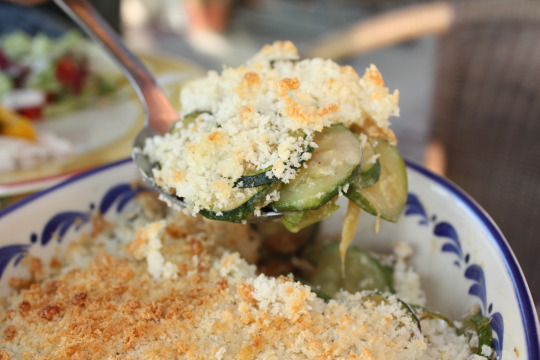
For me, serving a variety of vegetables is the spice of life. I can always sauté zucchini with a little onion and garlic and call that the vegie side for a dinner. But other times I really like finding new and different ways to make vegetables. Hence this recipe. Some people don’t like Ina Garten. I don’t really understand why, because every dish I’ve tried of hers has turned out very well. Agreed, the woman has made millions with her TV Food Network show, and her cookbooks, but I have concluded that she is a great cook. My friend Linda gave me Ina’s book Barefoot in Paris. This recipe comes from that book, and I’ve made this about 5 times in recent months.

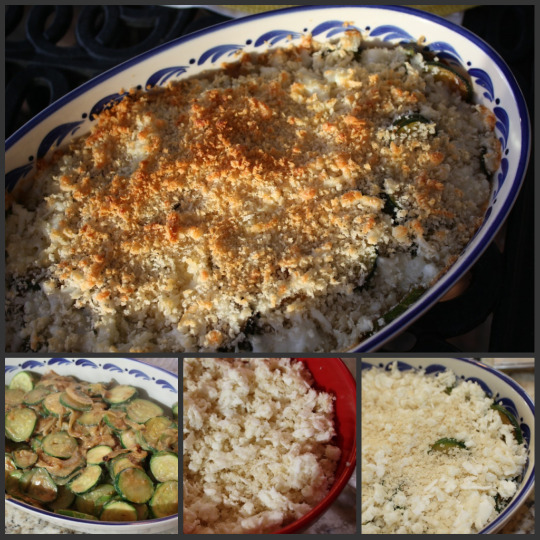
What I really like about the dish - other than the fabulous taste - is that you only dirty up two pans to make it. Even though you may think a gratin might be complicated, you make it in a large sauté pan and pour it into a baking dish, so this absolutely is NOT complex or difficult. I guarantee it. So, here are the stages:

1. You can do the slicing by hand, but this is what I do. First I dug out my Oxo mandoline. I may only use this every two weeks, but when I do I fall in love with it all over again. It makes slicing so incredibly easy.

2. I sliced up the onion and got that cooking in my large sauté pan. Meanwhile, I sliced up all the beautiful farmstand zucchini I bought a few hours before. It took me about 5 minutes total to slice everything. Then I added that to the pan and cooked it for a short time.

3. Then I add the flour, salt, pepper, freshly grated nutmeg to the pan, then the hot milk and in a jiffy you have the thickened dish ready to go. You pour the whole thing into a large baking dish.

4. Do you know Panko? I’d heard of it, but never bothered to buy it. I said - gee, it’s just bread crumbs, right? That was until a few years ago when a cooking instructor served it on a

chicken dish, and I was amazed at how good it was. It’s not that the Panko crumbs have a lot of taste. They don’t, because they’re simply a bread product, a Japanese bread product to be specific, chopped up very fine. But, it stays crispy throughout the cooking, so there is something they do differently to make it act like that. That’s what’s so unique about Panko, and I use it regularly now. Trader Joe’s carries it under their own label (see package picture below); otherwise most major grocery stores also have it, usually in the Asian food section. So you mix the Panko with grated Gruyere or Parmesan (I have always used the latter), sprinkle it on top, bake and you’re done.

The casserole will sit for awhile waiting to be baked, or you can refrigerate it earlier in the day too. It’s a very forgiving recipe in all respects. Less zucchini? No problem. Not much cheese? No problem. Only have fat-free milk? No problem. You have yellow squash instead? No problem. You get the drift.

Our friends, Bud & Cherrie (my cohort in crime at many cooking classes) came for dinner last night, and the amount I made should have served at least 6 people. Hmmm. Guess what? We four slicked it up clean. You need to try this recipe; you’ll be very glad you did.

Zucchini Gratin
Recipe By Barefoot in Paris by Ina Garten
Servings : 8 Preparation Time :0:35

6 tablespoons butter
1 pound yellow onions — cut in half, then sliced
2 pounds zucchini — sliced 1/4″ thick
1 1/2 teaspoons Kosher salt
1 teaspoon ground black pepper
1/4 teaspoon ground nutmeg — freshly ground
2 tablespoons all-purpose flour
1 cup milk — hot
3/4 cup bread crumbs — or Panko crumbs
3/4 cup Gruyere cheese — or Parmesan, grated
1 tablespoon butter

1. Preheat oven to 400°.
2. Melt butter in a very large (12 inch) sauté pan and cook the onions over low heat for about 20 minutes, or until tender, but not browned. Add the zucchini and cook, covered, for 10 minutes, or until tender. Add the salt, pepper and nutmeg and cook uncovered for 5 more minutes. Stir in the flour until you no longer see any dry bits of flour, then add the hot milk and cook over low heat for a few minutes until it makes a sauce. Pour the mixture into an 8×10 baking dish.
3. Combine the bread crumbs or panko and cheese together in a small bowl, then sprinkle on top of the zucchini mixture. Dot the 1 tablespoon of butter cut into very small bits and bake for 20 minutes, or until bubbly and browned.
Serving Ideas : This could be a main dish for a vegetarian meal. You could also add a little bit of goat cheese to the mixture before baking.
NOTES : Ina Garten’s recipe calls for 2 tsp. of Kosher salt, but I tested it first using less, and thought it was fine, so have reduced the recipe by 1/2 teaspoon. Taste it before you decide for yourself. I also use Parmigiano-Reggiano cheese if I don’t have Gruyere on hand. This can be made ahead and refrigerated, then reheated later. The baking time is very forgiving - if the dish is sharing the oven at 350°, it will be just fine, just bake a little longer. I much prefer using Panko crumbs as they stay nice and crunchy throughout the baking time.
Per Serving: 232 Calories; 15g Fat (57.3% calories from fat); 7g Protein; 18g Carbohydrate; 3g Dietary Fiber; 42mg Cholesterol; 596mg Sodium. Exchanges: 1/2 Grain(Starch); 1/2 Lean Meat; 1 1/2 Vegetable; 0 Non-Fat Milk; 2 1/2 Fat.
Printer friendly recipe.


Have you tried Mister Charlie?

I absolutely promise that my blog is not going to be all about casseroles. It’s too bad that the word itself is a semi-bad one on blogs. I don’t have all that many casserole recipes. Honest. But those of you old enough to remember the casserole era (that would be the 1960’s and into the 70’s for you young’ns) probably have many of your own of similar ilk as this one. I’m trying to give you some variety here on this blog, and I wouldn’t have chosen this as a subject of a blog post except that this happened to have come out of the freezer the other night - literally it kept falling out of the freezer every time I opened the door. It was trying to tell me something, I finally concluded.

Some of you may know that way back in my deep, dark past, I was a Navy wife. My former husband was an air intelligence officer, and we lived in a variety of places (Florida, Washington, D.C., Whidbey Island, Washington and Denver, Colorado) over the years of his Navy service. During one of the early years I acquired a Navy Officer’s Wives Cookbook, with hundreds and hundreds of recipes from other American Navy officer’s wives from all over the globe. Actually there was a series of them (one of each of these: salads, desserts, casseroles & breads, meats, and one on international foods too). I still go to those cookbooks sometimes to get ideas about dishes to try, even though the plastic spiral bindings are nearly disintegrated on all of them. I was in my mid-20’s then and new to the day-to-day cooking arena when these books went to press, so I didn’t even think of submitting one of my recipes for any of the books. I’m not even sure I had any recipes I could call my own at that time.

As many of you probably remember, casseroles were a staple in every cook’s repertoire. They were popular for family meals, and more elegant casseroles were very popular for guests too. They certainly were in mine, and they were inexpensive. In the 1960’s my normal weekly food budget was $20, and that fed two people for 7 days, 3 meals a day. So, in the Meat cookbook of that era, amidst the little spots of food that spilled there is this recipe for Mister Charlie. Heaven knows why it’s called Mister Charlie. Was Charlie the inspiration? Was he the cook and his wife submitted the recipe? Or, I like to think it’s the dog’s name, because he ate Suzie Q’s portion when she dropped it on the floor? Do you ever ponder why recipes receive the names they do? I’ve asked myself this question about this dish for many years. Undoubtedly I’ll never know the story. I even did a Google search for the title to just see if there was anything official out there for a pasta casserole called Mister Charlie. Nope. Over the years I’ve adapted the recipe some (I use Italian sausage rather than ground beef) and I’ve added mushrooms and cheddar cheese to it. So maybe I should call it Missus Carolyn? What do you think?

Well, then. There isn’t anything startling in this casserole - pasta, meat, mushrooms, a variety of cheeses and a tomato-based sauce. That’s it. But in combo, they make a very tasty dish. Casseroles sometimes don’t look very appealing. Does the photo convey a little bit of the 1965-ish boredom of the tops of many such casseroles? What it does have going for it is that it makes a LOT. It can be made ahead. It’s high in carbs (sigh). But all-in-all, it’s still a keeper. Most of all, it’s American comfort food. So, enjoy Mister Charlie, wherever he is. Woof.

Mister Charlie
Serving Size : 12 Preparation Time :0:45

2 tablespoons olive oil
1 1/2 pounds Italian sausage
1 whole onion — minced
2 cloves garlic — minced
12 ounces tomato paste
8 ounces fresh mushrooms — sliced
24 ounces water
1 tablespoon Italian seasoning — or oregano, basil, thyme combination
1 pound cottage cheese
1/2 pound cheddar cheese — grated
1/2 pound Mozzarella cheese — grated and sliced both
1 pound pasta — your choice of type (penne rigate, macaroni)
1/2 cup parsley — chopped

1. Heat large skillet, adding olive oil. Add diced onion and cook while preparing other ingredients. Add the Italian sausage (mashed into small pieces) and continue cooking until all the pink is gone.
2. Add the garlic, herbs and mushrooms, then add the tomato paste and water. Cook for about 15 minutes until well blended. Taste for seasoning (salt and pepper). Set aside to cool slightly. Preheat oven to 350°.
3. Meanwhile, cook pasta until it’s just under-done. Drain.
4. Into a very large bowl add the pasta, cottage cheese, then add the slightly cooled meat mixture. Prepare the cheese - about 1/3 of it should be in thin slices, the remainder should be shredded. I freeze the big ball of mozzarella cheese for about 20 minutes to make it easier to grate. Pour into two 9 x 13 pans, or a combination of other types. Place cheese slices on top. Bake about 20 minutes until the cheese is bubbly.

Serving Ideas : You need nothing with this except a crispy green salad. Back in the day, I’d always make garlic bread, but it isn’t really necessary.
NOTES : This makes a big gooey, mushy mixture, but as it bakes it firms up some. I actually prefer it when it’s sat overnight before baking. Seems to solidify the flavors, I guess. You can alter the amount of water you add - the original recipe said to add 4-5 cans (from the tomato paste) of water. I usually add about 4 cans, which should be 24 ounces. You can also add canned, drained tomatoes to this. Ricotta can be substituted for the cottage cheese too. Originally this recipe called for ground beef, but I like the flavor of the sausage better.
Per Serving: 561 Calories; 33g Fat (52.3% calories from fat); 29g Protein; 38g Carbohydrate; 3g Dietary Fiber; 83mg Cholesterol; 995mg Sodium. Exchanges: 2 Grain(Starch); 3 Lean Meat; 1 1/2 Vegetable; 4 1/2 Fat.

Printer friendly recipe.