Get new posts by email:

Archives

Currently Reading

Here are the tastingspoons players. I’m in the middle (Carolyn). Daughter Sara on the right, and daughter-in-law Karen on the left. I started the blog in 2007, as a way to share recipes with my family. I’m still doing 99% of the blogging and holding out hope that these two lovely and excellent cooks will participate. They both lead very busy lives, so we’ll see.

– – – – – – – – – – – – – – – – – – – – – –

BOOK READING (from Carolyn):

Music of Bees, Eileen Garvin. Absolutely charming book about a woman in midlife, lonely, who raises bees, also makes unlikely friends. Heart-warming and very interesting about beekeeping.

A Postcard from Paris, Alex Brown. Really cute story. Dual time line, 1940s and present day about renovating an old apartment in Paris, things discovered.

Time of the Child, Niall Williams. Oh such a good book. Very small village in Ireland, 1960s. A baby is left on the doorstep. The town all whispers and helps. I listened to an interview of the author, which made me like him and his books even more.

Sipsworth, Simon Van Booy. If you like animals you’ll swoon. An old woman who really wants to die finds a tiny mouse in her house and befriends it and finds a reason to live. Utterly charming book.

The Forger’s Spell, Edward Dolnick. True story. For seven years a no-account painter named Han van Meegeren managed to pass off his paintings as those of Johannes Vermeer.

If You Lived Here, You’d be Home by Now, Christopher Ingraham. Could hardly put it down – about a journalist who takes on a challenge to move to small town in Minnesota and write about it. He expects to hate it and the people and place, but he doesn’t. Absolutely wonderful true story.

The River We Remember, William Kent Kreuger. 1950s, Minnesota. A murder and the aftermath. Could hardly put it down. Kreuger has such a vivid imagination and writing style.

How the Lights Gets In, Joyce Maynard. An older woman returns to New Hampshire to help care for her brain-injured son. Siblings and family, lots of angst and resentments.

The Filling Station, Vanessa Miller. Every American should read this book. A novelized retelling of the Tulsa massacre in 1921. Absolutely riveting.

The Story She Left Behind, Patti Callahan Henry. Love this author. Based on a true story. A famous author simply vanishes, leaving her husband and daughter behind. She had invented a mystical language no one could translate. Present day, someone thinks he’s solved the riddle, contacts the family. Really interesting read.

The Girl from Berlin, Ronald Balson. Love anything about Tuscany. An elderly woman is being evicted from a villa there, with odd deed provenance. Two young folks go there to help unravel the mystery. Loved it.

The Island of the Colorblind, Oliver Sacks, M.D. Nonfiction. The dr is intrigued by a remote Pacific island where most of the inhabitants are colorblind. He also unravels a mystery on Guam of people born with a strange neurological problem. Medical mysteries unveiled. Very interesting.

The Bookbinder, Pip Williams. Post 1914 London. Two sisters work at a bookbindery. They’re told to not read the books. One does and one doesn’t. One has visions beyond her narrow world; the other does not. Eventually the one gets into Oxford. Lovely story.

The Paris Express, Emma Donoghue. 1895 on a train to Paris, a disaster happens. You’ll delve into the lives of many people who survived and died in the crash.

A Race to the Bottom of Crazy, Richard Grant. This is about Arizona. Author, wife and child move back to Arizona where they once lived. Part memoir, research, and reporting in a quest to understand what makes Arizona such a confounding and irresistible place.

The Scarlet Thread, Francine Rivers. A woman’s life turned upside down when she discovers the handcrafted quilt and journal of her ancestor Mary Kathryn McMurray, a young woman who was uprooted from her home only to endure harsh frontier conditions on the Oregon Trail.

A Place to Hide, Ronald Balson. 1939 Amsterdam, an ambassador has the ability to save the lives of many Jewish children. Heartwarming.

Homeseeking, Karissa Chen. Two young Chinese teens are deeply in love, but in China. Then their families are separated. Jump to current day and the two meet again in Los Angeles.

North River, Pete Hammill. He always writes such a good story. A doctor works diligently healing people from all walks of life. His wife and daughter left him years before. One day his 3-yr old grandson arrives on his doorstep.

A Very Typical Family, Sierra Godfrey. A very messed-up family. Three adult children are given a home in Santa Cruz, Calif, but only if the siblings meet up and live in the house together. A very untypical scenario but makes for lots of messes.

Three Days in June, Anne Tyler. The usual Anne Tyler grit. Family angst. This wasn’t one of my favorites, but it was entertaining and very short.

Saved, Benjamin Hall. Author is a veteran war reporter. Ukraine, 2022, he nearly loses his life to a Russian strike. Riveting story – he survives, barely.

Grey Wolf, Louise Penny. Another Inspector Gamache mystery in Quebec. She is such an incredible mystery writer.

All the Colors of the Dark, Chris Whitaker. A missing person mystery, a serial killer thriller, a love story, a unique twist on each. Could hardly put it down.

Orbital, Samantha Harvey. Winner of 2024 Booker Prize. I don’t usually like those, but I heard the author interviewed and she hooked me. This is not a normal book with a beginning, a story and an end. It’s several chapters of the day in the life of various astronauts at the ISS (Int’l Space Station). All fictional. She’s been praised by several real astronauts for “getting it” about space station everyday life.

The Blue Hour, Paula Hawkins. An island off Scotland. Inaccessible except when the tide is out. Weird goings on. An artist. A present day mystery too.

Iron Lake, William Kent Krueger. A judge is murdered and a boy is missing. Riveting mystery.

Tell the Wolves I’m Home, Carol Ricks Brunt. 1980s. A 14-yr old girl loses her beloved uncle. Yet a new friendship arises, someone she never knew about.

Four Treasures of the Sky, Jenny Zhang. 1880s, a young girl is kidnapped in China and brought to the United States. She survives with many hurdles in the path.

The Boy Who Fell out of the Sky, Ken Dornstein. Memoir, 1988. The author’s brother died in the PanAm flight that went down in Lockerbie, Scotland. A decade later he tries to solve “the riddle of his older brother’s life.”

Worse Care Scenario, T.J. Newman. Oh my. Interesting analysis of what could/might happen if a jet crashed into a nuclear plant. Un-put-downable.

Song of the Lark, Willa Cather. Complicated weave of a story about a young woman in about 1900, who has a gifted voice (singing) and about her journey to success, not without its ups and downs.

Crow Talk, Eileen Garvin. Charming story which takes place at a remote lake in Washington State, about a few people who inhabit it, the friendships made, but also revolving around the rescue of a baby crow.

The Story Collector, Evie Woods. Sweet story about some dark secrets from an area in Ireland, a bit magical, faerie life, but solving a mystery too.

A Sea of Unspoken Things, Adrienne Young. A woman investigates her twin brother’s mysterious death. She goes to a small town in California to figure it out, to figure HIM out.

The King’s Messenger, Susanna Kearsley. 1600s England, King James. About one of his trusted “messengers,” and his relationship with a young woman also of “the court.” Lots of intrigue.

In the Shadow of the Greenbrier, Emily Matchar. Interesting mystery in/around the area of the famous resort in White Sulphur Springs, West Virginia.

Isola, Allegra Goodman. Hard to describe, survival story on an island in the 1600s.

Save the Date, Allison Raskin. Rom-com, witty, LOL funny. Clever.

The Sirens, Emilia Hart. Numerous time-lines, Australia. Mysteries abound, nightmares, abandoned baby, weird allergies.

Red Clay, Charles Fancher. LOVED this book. Mostly post-Civil War story about the lives of slaves in Alabama during Reconstruction.

Stars in an Italian Sky, Jill Santopolo. Dual time line, 1946 and recent time. Love stories and a mystery.

Battle Mountain, C.J. Box. Another one of Box’s riveting mysteries. Love his descriptions of the land.

Something Beautiful Happened, Yvette Corporon. A memoir of sorts in Greece, tiny island of Erikousa, where the locals hid Jews during WWII. All elusive stories told by the author’s grandmother.

The Jackal’s Mistress, Chris Bohjalian. 1860s Virginia, about a woman who saves the life of a Union soldier. Really good story.

Song of the Magpie, Louise Mayberry. Really interesting story about Australia back in the days when it was mostly a penal colony. Gritty strength of a woman trying to thrive with her farm.

The Boomerang, Robert Bailey. A thriller that will have you gripping the book. About a lot of secrets surrounding the president (fictional novel, remember) and his chief of staff and about cancer. A cure. Such a good story.

Care and Feeding, Laurie Woolever. Really interesting memoir of a woman driven to succeed in the restaurant business. She worked for Mario Batali and then Anthony Bourdain. Gritty stories.

Everything is Tuberculosis, John Green. Maybe not a book for everyone. A real deep dive into the deadly tuberculosis infection, its history. I heard the author interviewed and found the book very interesting.

The Book Lovers Library, Madeline Martin. Fascinating read about Boots’ drug stores’ lending library. And the people who worked in them.

The Arrivals, Meg Mitchell Moore. LOL funny, about a middle-aged couple whose children (and their various family members) return to the family home and the chaos that ensues.

My Life as a Silent Movie, Jesse Lee Kercheval. About grief. A big move to Paris, finding herself a new life with a new set of real blood family.

Escape, Carolyn Jessop. Another memoir about a woman really in bondage in Utah, Mormon plural marriage.

 

Tasting Spoons

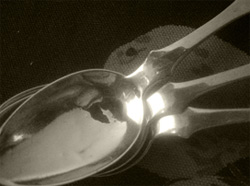
My blog's namesake - small, old and some very dented engraved silver plated tea spoons that belonged to my mother-in-law, and I use them to taste my food as I'm cooking.

Scroll down to the bottom to view my Blogroll

Posted in Miscellaneous sides, on May 17th, 2007.

Remember a couple of weeks ago when I wrote up the Stacked Enchiladas? They had these crispy, crunchy onions as a garnish with drizzled Mexican crema? Well, the Stacked Enchiladas are long gone, but I’d put the remains of these onions in a little plastic baggie in the refrigerator. You know how sometimes you poke around in there and find all kinds of gems? Maybe moldy gems. Perhaps something unidentifiable? And then, perhaps some tasty gems when you’re trying to throw together something in a hurry, and it doesn’t LOOK like there’s anything in the darned thing? This was lunch yesterday – Dave and I shared this one sandwich. It was some wonderful Citterio rosemary ham from Trader Joe’s, a little smear of Best Foods mayo, some pale ale mustard, sliced vine-ripened tomatoes, a few thin slices of avocado, a good grinding of freshly ground black pepper, and then I topped it with the vinegary red onions and some feathery leaf lettuce. Lo and behold – a magnificent sandwich. It’s the crunch that is the lure for me. I’ll make these again just for other dishes. I used some of the onions in a tuna salad sandwich a week or so ago, which were also delicious, and still had some left. These aren’t nibbling onions – they’re far too sour, vinegar-y (just like they’re supposed to be) but laced on a sandwich they’re sensational. Here’s a repeat of just the onions.

printer-friendly PDF

Vinegary Red Onions

1 whole red onion, peeled, thinly sliced
3/4 cup rice wine vinegar
Place onions in a medium skillet. Add vinegar and bring to a boil over high heat, stirring occasionally, about 2-3 minutes. Remove from heat and let stand until cool, stirring often. Add salt to taste. Serve immediately, or cover and refrigerate up to 3 days. Serve with a slotted spoon. Note: obviously these keep far longer than 3 days. It’s been 2 weeks and counting.

Posted in Cookies, on May 16th, 2007.


One of the joys of reading food blogs is finding new recipes that are tried and true. Naturally, celebrated chefs know how to cook. Often they cook things that are quite complex and complicated. AND time consuming. Sometimes famous chefs actually pay a recipe developer to create recipes for the cookbooks they “write.” Kind of boggles my mind that chefs are willing to take that kind of risk to put their name to a cookbook and then pay somebody else to develop recipes and claim them as their own. Not many do this (I hope). Food magazines do this too, but one hopes that the developers know what they’re doing and work hard at creating something special. For all kinds of tastes.

But when you find a blog with photos taken in a home kitchen, you’re assured this is the real thing. These aren’t professional photos (although some of them could rival those taken by the glitzy pros who do the photography for cookbooks and magazines). One of my favorite blogs with fabulous photography is Lucullian Delights. Ilva, originally Swedish, is a wonder behind the camera lens. You never know what you’re going to find on her blog – food sometimes, but also scenes from her home territory, Tuscany.

So, back to cookies. I’ve been reading Culinary Concoctions by Peabody for many months, and always enjoy reading her witty and sometimes pithy posts. And when she posted this recipe, I knew I needed to give it a whirl. (Her photos are great too, by the way.) It’s really been made in a home kitchen AND it’s good. You’ll see Peabody’s link over there on the right in my list of blogs I read. And these cookies, these cute little mounds, are just plain deliciousness. You’ll notice the little flecks of orange peel, and the hint of chopped dried cranberries. I must admit, though, that I made a boo-boo from the original recipe. Can you imagine that I made a mistake? I forgot to flatten the cookies just before baking. Guess what? It didn’t make a whit of difference. I may have added a minute of cooking time, but that’s about it.

Cookies last a good long time in my house because after cooling them, they’re always piled into freezer Ziploc bags and frozen. I don’t eat a cookie every day. Maybe every other. And this recipe will be a keeper, and they are just perfect with a cup of afternoon tea or coffee. The batch I made a month ago is just now gone, so it’ll be back to the kitchen for me. Soon. Thanks, Peabody.
Printer friendly PDF

Cranberry Orange Cookies

Recipe: Adapted from Land O’Lakes Holiday Cookies 2005
Source: Culinary Concoctions by Peabody (food blog)
Servings: 30

NOTES: You can try pistachio nuts in place of the macadamia. Do not use pecans as they overpower the delicate flavor. These are crumbly cookies, but very, very tasty.
Start to Finish Time: 45 minutes

ORANGE SUGAR:
1/3 cup sugar
1 tsp grated orange peel — fresh
COOKIES:
1 cup sugar
3/4 cup butter — room temperature
1 large egg
2 cups all-purpose flour
1 1/2 teaspoons baking powder
1/4 teaspoon baking soda
1/2 cup dried cranberries — chopped
1/2 cup macadamia nuts — chopped
1 tablespoon grated orange peel

1. Heat oven to 350°. Combine all ORANGE SUGAR ingredients in a small bowl; stir until well mixed. Set aside.
2. COOKIES: combine 1 cup sugar, butter and egg in a large bowl; beat at medium speed until creamy. Reduce speed to low; add flour, baking powder and baking soda. Beat until well mixed. Add all remaining ingredients. Continue beating just until mixed. Shape dough into 1-inch balls; roll balls in orange sugar. Place 2 inches apart on ungreased cookie sheets. Flatten with bottom of glass to 1 ½-inch circles.
3. Bake for 7 to 11 minutes or until edges are lightly browned. (DO NOT OVERBAKE). Cool 1 minute; remove from cookie sheets.
Per Serving: 124 Calories; 6g Fat (46.2% calories from fat); 1g Protein; 16g Carbohydrate; trace Dietary Fiber; 19mg Cholesterol; 84mg Sodium.

Posted in Veggies/sides, on May 15th, 2007.

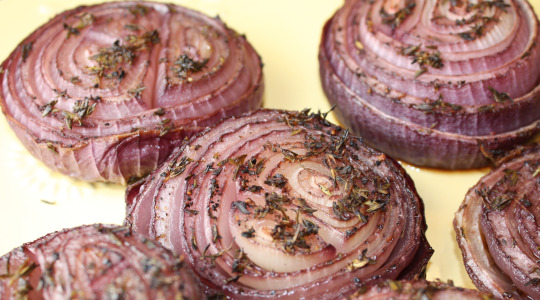
Credit must go to my daughter, Sara, for this recipe. She read it in one of my issues of Gourmet Magazine, when we were trying to figure out what to make for dinner one evening. Our families were together, and she recalled reading this recipe. We tried it, and it’s been a fixture on my summertime menu ever since. It really could be made any time of year, but seems like it goes so well with grilled meats, even though it’s done completely in the oven.

baked onionsAlthough the preparation is simple, you do have to be hanging around in the kitchen off and on for the better part of 2 hours. It’s amazing that onion halves in a 400° oven take nearly 2 hours to settle into soft silkiness, but they do. Don’t skimp on the olive oil as it definitely enhances the flavor, and don’t allow the pan to dry out because the wine and oil will definitely burn. Generally I add a bit more red wine and always have to add additional water towards the end of the baking time. If you don’t have fresh thyme, you may use dried. Be generous with the herbs.
Printer friendly CutePDF

Files: MasterCook 5+ and MasterCook 14 (click link to open in MC – 14 contains photo)

Baked Onions with Thyme

Recipe By: Gourmet, January, 2001
Servings: 12
NOTES: If you use REALLY big onions, they will take longer to cook, but a small onion is too small. So medium-large is ideal. These onions are just mouth-watering, they’re so good. It’s a simple dish to make, and just requires you to be nearby. Be careful that the wine doesn’t boil away completely, as then they will burn. Add water periodically if it does evaporate, and reduce the oven temperature a little bit. If you want to reduce the cooking time, cut the onions into wedges instead of halves, and they’ll cook in about 90 minutes.

6 large red onions — about 3.5 pounds
3 tablespoons extra virgin olive oil
10 sprigs fresh thyme
1 pinch sea salt
2/3 cup Chianti — or other dry red wine
1/4 cup water — and you may need more

1. Preheat oven to 400°. (Do not use convection for this.) Remove both ends from the onions. Discard outer layers from the onions and cut each onion in half, crosswise.
2. Spray a 9 x 13 pan with olive oil spray and place onion halves, trimmed ends down into the pan. Drizzle with a little olive oil. Pour the wine over the onions, moistening each onion top some with the wine. Remove the leaves from the fresh thyme and sprinkle all over the onions. Season with the sea salt to taste and fresh cracked pepper.
3. Bake, uncovered, in the middle of the oven, basting with pan juices twice during the baking, for 40 minutes. Add water to the pan and bake until the onions are browned and tender, about another 50 minutes, watching that the pan doesn’t dry out. Serve hot, or cool to room temperature to serve.
Serving Idea: You may want to double the batch so you’ll have leftovers, as they are wonderful to throw into pasta, a salad, or just by themselves.
Per Serving: 101 Calories; 4g Fat (47.4% calories from fat); 1g Protein; 8g Carbohydrate; 2g Dietary Fiber; 0mg Cholesterol; 14mg Sodium.

Posted in Salads, Veggies/sides, on May 14th, 2007.

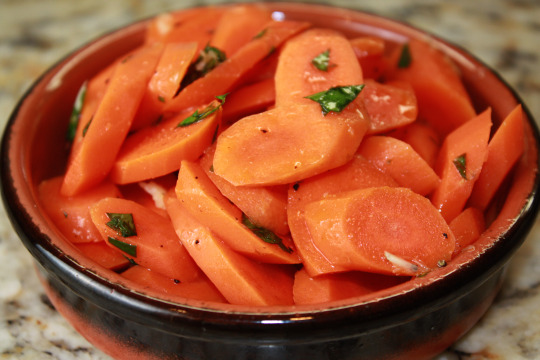
This could be another garlic post. But it’s not. Although there certainly is garlic in this dish. I think it’s the combination of garlic and lemon juice that gives it the tart and tangy flavor. The carrots, when cooked, become mellow, so it’s a perfect foil for the dressing.

I prefer this served cold or better yet, at room temperature. It will keep for at least a week, so I suggest doubling or tripling the recipe. You’ll be very glad to have some leftovers to serve at another meal.

On one California road trip I bought this cookbook: The Good Cook’s Book of Oil and Vinegar by Michele Anna Jordan (it’s no longer in print, but if you’re intrigued you can find a used copy). She focuses in on specifics about all kinds of oils and various vinegars, and she knows her stuff. I’ve used a number of recipes from the book over the years, but this is probably my favorite. And it’s easy. The toughest job is slicing the carrots. In the picture above I cut them much thicker than usual (note to self: re-read the recipe before I begin!). I prefer them when they are very thinly sliced, so use your mandoline or food processor slicing blade if you have one. The benefit of the thin slice is that more of the dressing permeates the carrots. And do give the carrots time to marinate in the dressing – it’s much better. And for goodness’ sake, don’t overcook the carrots. You don’t want to be eating carrot mush, and the thinner the carrot slices, the greater the risk of overcooking. Oh yes, I almost forgot, whatever you do, do not use those abominable “baby” carrots in the little bags. You know, don’t you, that those really are not baby carrots – they’re big carrots trimmed down to look like baby carrots. I prefer using young carrots, but even medium sized ones will work fine in this recipe.
Printer friendly PDF and MasterCook file (click link to open recipe)

Algerian Carrots

Recipe: Good Cook’s Book of Oil & Vinegar, by Jordan
Servings: 6
NOTES: This recipe originally came from a Sonoma bistro called Chez Nous. I’ve altered the recipe by reducing the amount of dressing called for. So, if it seems too light for you, just double the amount of dressing. It’s very garlicky, so if you don’t really like the taste of garlic, reduce the amount.

1 pound carrots — peeled
2 tablespoons extra virgin olive oil
1/2 teaspoon ground cumin
1/2 teaspoon brown sugar
2 cloves garlic — minced
2 tablespoons lemon juice
1 tablespoon Italian parsley — minced

1. Cut the carrots (at an angle if you can) to make slices about 1/8 inch thick. Steam the carrots until they are just tender, about 10 minutes. Do not overcook!
2. Combine the dressing in a small bowl (or blender, if you want) and mix together. Remove the carrots from the heat and allow them to cool a little. If serving immediately, drain and just add dressing. Or place all the carrots in a large ziplock plastic bag and add dressing. Seal and mix around so the dressing covers well. Refrigerate, if desired and serve cold, or re-heat.
3. A variation noted in the recipe suggests steaming an equal amount of zucchini and adding the same quantity of dressing to it – more garlic added and more lemon juice. Omit brown sugar and parsley. Then, serve both vegetables side-by-side.Serving Ideas : Since it’s good cold, would be great for a picnic.
Per Serving: 73 Calories; 5g Fat (54.5% calories from fat); 1g Protein; 8g Carbohydrate; 2g Dietary Fiber; 0mg Cholesterol; 25mg Sodium.

Posted in Beef, on May 13th, 2007.

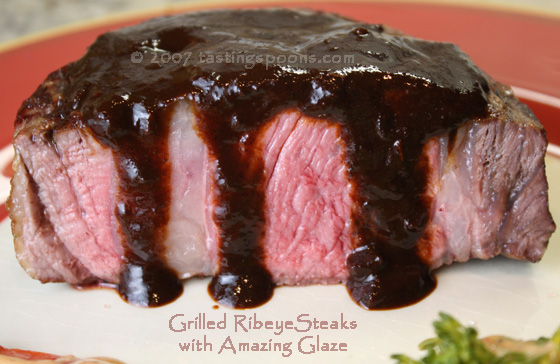
If we’d wanted these ribeye steaks to turn out any better than they did, I don’t know what we could have done to make them so. The recipe is very exact in its cooking method, and with the help of my meat/oven thermometer, they cooked to perfection. The smear underneath is a puckery sauce made ahead and plopped on the hot plate just before serving.

Up until last night’s dinner, we’ve been a bit disappointed with steak we’ve purchased lately. The Costco ribeyes weren’t all that tender, and even the steaks from Whole Foods weren’t very tasty or tender, either. So we decided to splurge on our next steak dinner and buy U.S.D.A. Prime meat, only available at a local, independent butcher (Pacific Ranch Market in Orange Park Acres).

It was money well spent, as these steaks were outstanding in every way. The recipe comes from Hugh Carpenter, a prolific cookbook author and entertaining instructor. He came to my attention about 16 years ago with classes he taught in Los Angeles and Pasadena. I’ve purchased several of his books, and a couple of years ago he taught a grill or barbecue class at Sur la Table in Newport Beach (SLT is rarely doing guest chefs anymore, so don’t look for him there or at any other SLT store . . . perhaps I’ll write a rant about the Sur la Table cooking school on another posting . . . I used to be a big fan, but no longer). This was the recipe he prepared that night, and it’s been a success every time. I believe it’s from his book Hot Barbecue printed a few years ago, which I do not own.

Buy the best quality meat you can afford. Make sure you have a very reliable meat thermometer like the one pictured here. This little number has been a lifesaver for me more times than I can count. And as good as anyone thinks he/she is as a grill king, it will make a believer out of you that every cook needs one. This particular model by Polder tracks the temperature in the grill oven as well as the food so you can make adjustments. The method of cooking is this: the steak is marinated for a few hours. Meanwhile, make the Amazing Glaze sauce and allow it to cool.

After removing some to serve on the finished plate, drain the steaks, blot them dry and let them sit in remaining glaze for about 40 minutes. Heat grill to medium high, sear the steaks for one minute on each side, then put them on a rack on a baking sheet and place back in the grill at 300° but not over the direct heat. Watch the meat thermometer carefully and remove them when they hit 120°. Allow to sit for 5 minutes covered loosely with foil. Serve! You won’t be disappointed.
Happy grilling . . .
Printer friendly PDF

Ribeye Steaks with Amazing Glaze

Recipe: Hugh Carpenter, cookbook author
Serving: 4
NOTES: Sauce is very spicy. If you prefer more highly seasoned, add more Tabasco. And this recipe assumes a VERY hearty eater with 12 ounces of steak per person. Most people would eat an 8 ounce steak. Another option: buy bigger ribeyes and cut them in half after they’re grilled. The “secret” to this recipe is the cooking method and it has worked perfectly every time. We take the steaks off at 120° and let them sit for a few minutes covered lightly with foil. The sauce keeps for months and months in the refrigerator.
Serving Ideas : This is best served with a smooth carb – like garlic mashed potatoes or creamy polenta. Grilled onions make a good accompaniment as well.

48 ounces steaks — 4 ribeyes, 12 ounces each
10 ounces Worcestershire sauce
3 whole lemons — squeezed
1/4 cup water
1 tablespoon olive oil
1/2 whole yellow onion — chopped
6 cloves garlic — minced
2 tablespoons fresh thyme
2 cups red wine
1 1/2 cups Heinz 57 Sauce
3 tablespoons brown sugar
2 1/2 tablespoons dark sesame oil
2 tablespoons chili powder
1 tablespoon molasses
1 tablespoon fresh oregano
1 tablespoon paprika
1/2 tablespoon fresh sage
1/4 teaspoon Tabasco sauce

1. Place the steaks in a large rectangular container. In a small bowl combine the Worcestershire sauce, lemon juice and water. Pour over the meat and chill for 1-8 hours.
2. Meanwhile, prepare the Sauce: In a 2 1/2 quart saucepan add oil and onion. Sauté until onions are translucent, about 8 minutes. Add garlic and continue cooking for just 30 seconds. Add all remaining ingredients, bring to a boil, cover, reduce heat to simmer and cook for 20 minutes. Remove lid, increase heat and boil until the sauce has reduced about half. Transfer to a bowl, cool, cover and refrigerate.
3. Set aside one cup of the sauce to serve with the meat. Drain and discard the meat marinade. Blot the steaks of excess liquid, then spread remaining sauce liberally over the steaks, to coat evenly.
4. Grilling meat: Preheat oven to 300°. Use convection, if available. Then preheat a stovetop grill over high heat. Grill steaks on hot grill and cook about 1 minute per side. Place steaks in oven on a rack, on a baking sheet and insert a meat thermometer in the center of one steak. Bake about 15 minutes, or until the internal temperature is about 120° – 130°. At 120° = medium rare, at 130° = medium. Cut into one steak when it is about 5° below desired temp. It may require a few more minutes, depending on your oven temperature.
5. Remove steaks from oven and allow to sit for about 5 minutes. Slice steak into thin slices and serve on a heated plate with a puddle of the sauce beneath it.
6. If you would prefer to use a GAS GRILL, preheat it to medium heat. Brush the grill with oil, then lay on the steaks, marking them, but cooking no longer than that. Have ready a rimmed baking sheet with a rack, and place steaks on the rack in the grill, but not over direct heat. Reduce heat to 300°. Insert meat thermometer, close lid and continue to cook until meat reaches temperature desired (see above). Allow to cool 5 minutes before serving.

Posted in Veggies/sides, on May 12th, 2007.

Since today I’m posting a recipe that came from another blogger, I thought I’d explain a bit about how I got to doing this blog in the first place. Sometime last Fall I read an article in a magazine that listed the URL addresses for about 4-5 food blogs. I’d never heard of a blog before that. I took a look at them and found I was reading their entire blogs, sometimes years in the past. I was fascinated. Mesmerized. Greedy for more. Hooked on more and more blogs. Nearly every food blog has a list of other food blogs that those bloggers read (sometimes called a “blog roll”), and I quickly began looking at all of those too. Then I heard about Google Reader and decided to give that a try. Once you have a Google account you access the Reader and as you find blogs you want to read (the blogs have an RSS feed, it’s called) you simply add them to a subscription within Google Reader. Then I added the Google Reader to my Favorites so it’s only two clicks away and I now have a list of all the blogs I frequent. I don’t have to go to each individual blog site. New postings show up within Reader when they’ve been updated. They’re viewable in a shortened version, usually, and if I want to see the full read, then I click on over to see the actual website itself. Otherwise, I read the blog from the Reader.

As I read the stories other people wrote, I was intrigued, but kept talking myself out of being a blogger. It looked like it would take too much time. Writing stories every day??? How could I fit that into my busy schedule? And doing photos all the time? Whoa! Yes, I have a digital camera, but I don’t have photos of most of my recipe collection (which now numbers over 400). Most of the bloggers use a free blog service. The only limitation is whatever the provider allows in html conversion. I know nothing-zipponada about writing computer language (htm and html) which is actually how these stories get into the ether so you can view it. I type into a limited word processing kind of window, and I can add photos and links, make something bold or italic, but that’s about all I can do. My words and photos get converted into html and somehow, magically, when I click the button called “publish” it appears on the website. One of my photos graces the top of the blog, and I can add elements, they are called, like my list of books I’m reading. Then I upload the pdf to my website – I output the recipe from within my MasterCook recipe program (more on that in another post) and print it to a pdf file, then upload it to my website. The link is available, so I paste that into a hyperlink, and when you click on that, at the bottom of each post, you get my pdf file from my recipe collection.

So six months have gone by since I began following the long list of bloggers I read, and suddenly one day I decided I wanted to do this too. I’ve always wanted to write, but never found a niche that was right for me. I don’t have the creative bent to actually write fiction, but explaining cooking, or telling stories about our travels and food, etc. would be a cinch. I just hope I won’t become too long winded and you folks out there get bored reading my stuff.

Only one other thing: at the top is a line to make a COMMENT. That’s a place for you to add something. Any of you who would like to comment, I’d be very appreciative. Otherwise I have no clue whether my posts are even being read. I’ve subscribed to a free service (Feedburner) that is supposed to give me stats on my readers.

So, now on to today’s recipe. One of the early bloggers in blogdom, I suspect, is Kalyn’s Kitchen. Kalyn Denny lives in Salt Lake City and is an avid advocate of the South Beach diet, which works for her. Her recipes are usually low on carbs, and she uses a lot of vegetables, which I like. I’ve been trying to incorporate more vegetables into our diet. We eat them every day anyway, but now I’m often making two vegetables and a protein with no carbs except those contained in the natural vegetables themselves. Since Dave is a Type 1 diabetic and has been for nearly 60 years (yes, really), he needs to watch carbs – at least count them carefully to calculate how much insulin to take at each meal – and it doesn’t hurt me a bit to reduce carbs either.

Now don’t get me wrong. I really, really like vegetables. But cauliflower wasn’t up there on my yes-list at all. So, until this and one other recipe, cauliflower wasn’t one of the vegetables I prepared very often. Steamed, plain cauliflower is not something I’d ever order. I eat it because I know I should, but not usually with much interest. So when I read Kalyn’s recipe for the vegetable with bacon and mushrooms, I thought ah-ha. I like mushrooms. Bacon is something I like a lot too, and have found that even half of a slice of bacon can impart tons of flavor. I buy lean, thick sliced bacon without sulfates (Niman Ranch is probably the best, available at Trader Joe’s and I also buy some from Whole Foods that’s without additives). Normally I buy a package, use a slice or two, then roll up each remaining bacon slice and freeze them individually on a cookie sheet, then pile them into a Ziploc bag to pop back in the freezer. It takes no time at all to defrost a slice of bacon.

As I prepare this dish (I’ve made it innumerable times in the last 6 months) I have a very hard time keeping my fingers out of the pan. As the cauliflower begins to brown, I just have to test it often – you know – to find out if it’s the correct texture of done-ness, right? This is best eaten just after making it. Although I have reheated it, it gets a bit soggy. So, try to make just enough for the one meal. I also have added garlic to this and enjoyed it too.
Printer friendly PDF

Cauliflower with Bacon & Mushrooms

Recipe: Kalyn’s Kitchen (blog), but originally from “Vegetable Love”
Kalyn’s writeup: click here

Servings: 6
4 slices bacon, thick sliced, chopped (I usually use 2 slices)
1 small head cauliflower, cut into florets or bite-sized pieces
8 ounces mushrooms, halved, then cut into slices
1/2 red onion, diced
1/2 cup parsley, chopped (I use Italian)
Salt & pepper to taste

In a large sauté pan add the bacon and cook until quite crisp and remove to a paper towel to drain. Pour out most of the bacon grease, but do not wipe out the pan. Add the prepared cauliflower and mushrooms and cook over very high heat (important), stirring constantly, for about 5 minutes. Add the pre-chopped onions and cook about 2 more minutes, or until the vegies seem nearly done and are starting to brown a bit. This is when you need to test the cauliflower for tenderness, knowing you’re going to cook it for another 2-3 minutes. Add the bacon and parsley and continue to cook for 2-3 minutes more. Taste again for tenderness . . . Add about 1/4 cup water, then scrape the pan to get any browned bits off and cook until the water has evaporated. Season to taste with salt and pepper and serve piping hot.

Posted in Breads, on May 10th, 2007.

It was an easy decision when he told me his men’s Bible study group would be meeting at our house this morning, and I knew I needed to bake something for the boys to eat. So I turned to my newest cookbook, Baking: From My House to Yours, by Dorie Greenspan (amazon.com, $26.40). Now, I’d never heard of Dorie before a few months ago. She’s an accomplished and witty writer, and now I’ve joined the legions of bloggers who are part of her fan club. She has her own blog, where she wrote yesterday about winning a James Beard Award for this book.
She collaborated with Julia Child some years ago for one of her books, and also with Pierre Herme.This is my second Dorie recipe. I’ll write about the other one, ginger-scented brownies, another day. I don’t bake muffins very often – we rarely eat them anymore, probably since I realized how laden they can be with fat, sugar and overall carbs. But since I know how Dave likes carrot cake, this seemed fitting for the group. They were easy to mix up – I did use my stand mixer, but on very low speed and only enough to blend the ingredients, and then I stirred in the coconut, carrots and raisins (I used golden). My muffin tin makes larger than average, so I only got 7 muffins from this recipe. They’re delicious – the way muffins are supposed to be, not a cake posing as a muffin. What I really liked is the balance of spices – you can definitely taste the spices, but they don’t overpower at all. Dorie nailed it on this one.

And I’m such a novice at this blogging stuff . . . how’d I do all this and post the recipe before 8:00 am, you ask? I baked the muffins yesterday, sealed them up in a Ziploc bag. I wrote up the recipe last night without tasting it (I had no doubt they’d be wonderful). This morning I dashed downstairs in my jammies a few minutes before 7:00 and cut one muffin in half, snapped the photo, grabbed a half to nibble on (delicious) and zipped back upstairs before the guys began arriving. Now it’s from my kitchen to yours.
Printer friendly PDF

Carrot Spice Muffins

Recipe: Dorie Greenspan’s BAKING: From My Home to Yours
Makes 12
Notes: These are at their best about 30 minutes after baking. They will keep for one day, well covered, but then they should be frozen (up to 2 months). Reheat them (whole or cut in halves) for a few minutes at 350°. And if you bake them in a larger muffin tin, this will make 7, and you’ll need to bake them slightly longer.

2 cups all-purpose flour
1/2 cup sugar
1 tbsp baking powder
1 1/2 tsp ground cinnamon
1/2 tsp ground ginger
1/4 tsp baking soda
1/4 tsp salt
1/2 cup light brown sugar, packed
2/3 cup vegetable oil
2 large eggs
3/4 cup whole milk
1 tsp vanilla extract
1 cup shredded carrots, about 3, peeled and trimmed
1/2 cup shredded coconut, sweetened
1/3 cup raisins or currants
1/3 cup pecans or walnuts, toasted, cooled and chopped

Center a rack in the oven and preheat to 375°. Butter or spray the 12 muffin molds in a regular sized muffin tin, or fit the molds with paper muffin cups. Alternately, use a silicone muffin pan, which needs neither greasing nor paper cups. Place the muffin pan on a baking sheet.
In a large bowl, whisk together the flour, sugar, baking powder, cinnamon, ginger, baking soda and salt. Stir in the brown sugar, making certain there are no lumps. In a large glass measuring cup or another bowl, whisk the oil, eggs, milk and vanilla extract together until well combined. Pour the liquid ingredients over the dry ingredients and, with the whisk or a rubber spatula, gently but quickly stir to blend. Don’t worry about being thorough – a few lumps are better than over-mixing the batter. Stir in the carrots, coconut, currants and nuts. Divide the batter evenly among the muffin cups.
Bake for 20 minutes, or until a thin knife inserted into the center of the muffins comes out clean. Transfer the pan to a rack and cool 5 minutes before carefully removing each muffin from its mold.
Per Serving: 310 Calories; 17g Fat (48.0% calories from fat); 4g Protein; 37g Carbohydrate; 2g Dietary Fiber; 37mg Cholesterol; 219mg Sodium.

Posted in Soups, on May 9th, 2007.

A short time warp to 1981. Dave and I were on our first trip to England. At a small pub and restaurant in Ilminster, Somerset, an older gentleman simply pulled up a chair as we were served our dinner. Friendly sort, he was. Said he enjoyed hearing Yanks talk. Shortly, he called over to the bartender and asked him to phone his wife to come join us, which she did. That began a friendship that has withstood the years. Jimmy (a retired RAF Wing Commander) had a hundred and one WW II war stories to tell. Pamela, who had also served in the WAAFs (Women’s Auxiliary Air Force), the ground transport wing of the RAF, had an equal number of stories to tell, and among other things, she was a professional chef. To this day, we still discuss food whenever we talk. Either in person, or on the phone. Sadly, Jimmy passed away a few years ago. But we have visited them and now her many, many times over those years.

But the summer of 1990, when two of our children were nearly graduated from college, we took them to England and Ireland for a few weeks and included a visit to Jimmy & Pam. The weather was fair that day, the sun shone brightly, and we enjoyed a multi-course luncheon on the back lawn. It was glorious. It was magical. It was memorable. They were so happy to meet our children. We were so proud to show them off. They were so delighted it was a pretty day. We were thrilled to enjoy Pam’s cooking again. Jimmy was in rare form, warbling on about his military past (mostly he ferried planes from Canada to England) to our kids, and Pamela had outdone herself with an elegant meal. We had a Pimm’s, with fresh cucumber, mint and raspberries (pronounced raws-brees) on special twigs in each drink. We had a summer pud(ding), a very seasonal treat only available in mid-summer when berries are at their peak. Our daughter vividly remembers that summer pud to this day. A summer pudding is made in a large round bowl, with layers of soft de-crusted white bread, sugar and fresh berries. It sits for 24 hours while the berries give up their juice to soak into the bread, then it’s unmolded onto a platter and served with whipped cream. And, naturally, we had some good English tea. The main dish was a large, cold poached salmon elegantly festooned with layered, thinly shaved cucumber slices to resemble fish scales. What was almost comical was that our daughter didn’t eat fish. So poor Pamela insisted on returning to the kitchen to cook her an egg.

It’s the soup that has become one of my regulars and it may be one of the very simplest recipes I make. When the weather turns hot (it will be in the mid-90’s in Southern California today), I remember this soup, which is so refreshing. As long as you have the frozen peas (only the very best will do, the smaller the better), consommé or beef stock, the half-cream (that’s half and half in British-speak), and the fresh mint from the garden you’re in business. Allow to chill thoroughly before serving. You can make this with fat-free half and half, although most of those products contain some sugar or sweetener, which doesn’t always taste as good as a natural dairy product in a savory soup. Sometimes I add a splash of cream sherry to the mixture too.
Printer friendly PDF

Cold Green Pea Soup

Recipe: From my dear friend, Pamela J., England
Servings: 6
NOTES: This is very refreshing, either summer or winter, and oh, so easy. You can add a splash of cream sherry to the mixture if you like it.
Yield: 4 cups

1 pound frozen peas — defrosted, or rinsed briefly in hot water
12 ounces canned consommé or beef broth
1 cup half and half
2 tablespoons fresh mint
3 tablespoons sour cream or créme fraiche

Place defrosted peas in a blender with the consomme and mint. Purée it until it is completely smooth then add the cream. Pour into a container and chill for several hours. Serve with a small dollop of sour cream, and sprinkle with additional mint or chopped chives. Taste for seasoning.
Per Serving: 134 Calories; 6g Fat (42.4% calories from fat); 7g Protein; 13g Carbohydrate; 4g Dietary Fiber; 18mg Cholesterol; 255mg Sodium.

Posted in Chicken, on May 8th, 2007.

I really like to have a bunch of different ways to prepare boneless chicken breasts. But I think it’s easy to ruin them because they often get overcooked and are dry and somewhat tasteless. We buy them because if we are meat-eaters, we like to eat healthier sometimes. Having made and discarded at least a hundred recipes for chicken breasts, I was skeptical when Phillis Carey began talking about her method for chicken breasts. After the first sample some years ago of one of her recipes, I knew that SHE knew what she was talking about, and SHE knew how to prepare them.

Since I’ve attended Phillis’ classes for about 5 or more years, I soon learned she was writing a cookbook about chicken, Fast and Fabulous Chicken Breasts, published by The Casual Gourmet. Click here to go to a website where you can buy her books; it’s a store where she teaches in Encinatas. Once available, I bought one and continue to use the book regularly. Obviously, I recommend it. Phillis is a kind of casual, no-nonsense type of chef – not in her manner (she’s very cute and funny), but in her recipe design and preparation. She uses some canned things to save time (rather than making beans from scratch, for instance), but she knows how to punch a recipe with lots of flavor. That’s what I like, and it’s so important with chicken breasts, which don’t really have a ton of flavor to begin with. So it’s the sauce or what goes on it or with it that provides it. Click this to go to Phillis’ website to learn about the other places she teaches, etc.

So, on to chicken breasts. Until I met Phillis I certainly didn’t understand the cooking chemistry of chicken breasts. With or without a bone, the normal shape of a boneless chicken breast means that some of it cooks quicker (obviously the narrower, tapered end) and the thicker, meatier portion takes longer. Duh. We all know that, right? So, what do we do about it?


Preparing boneless chicken breasts (Phillis’ method):
(1) Remove the chicken tender and reserve it for something else (or I usually cook it with the dish, but a lot less time and remove it early).
(2) Remove any obvious fat and specks of bone if there are any.
(3) Have ready two pieces of plastic wrap – put one down on a flat surface and place a chicken breast on it, shiny side up, i.e. not the side where the chicken tender was. Place the 2nd piece of plastic wrap on top, then using a pounder (not the spiky side, but a flat side, or one of these pounder things pictured here) gently but firmly pound the meaty end only of the chicken breast. It will take about 10-12 whacks, and not heavy handed ones, to flatten the breast to an even thickness. You don’t want to make it as thin as the tapered end as that would be too thin, but pound to about 1/2 inch or a little less. The chicken breast kind of squishes around inside the plastic wrap, but hold the tapered end to help keep it in place.
(4) When cooking, if possible roll the short, tapered end under, which will help keep it from drying out (an optional step).

What I also learned was that prepared this way, it takes but minutes to cook a chicken breast whether pan frying it or baking it and it will be fully cooked, tender and juicy. Maybe I remember all those stories about salmonella and thought all chicken needed to be cooked much longer. Not so. And I’ve had much better success with chicken ever since. Thanks to you, Phillis.

Now on to the recipe itself. I’ve prepared this several times. It would make a very nice dinner for guests, but it’s also simple enough for a family meal too. If you want more of the sauce to spoon over linguine or rice or polenta, double the volume of the liquids, and add more garlic and prosciutto if desired. If I’m out of prosciutto (I try to keep a package on hand of the vacuum sealed type), I use thick-sliced smoked bacon, which is just fine. The breasts are lightly breaded and seasoned, then pan-sautéed to develop a lovely golden brown.

The only other caveat is: don’t use a non-stick pan, as you can’t develop the browning (I think it’s called the fond) necessary to flavor the dish. If you haven’t got one, well, maybe you should acquire one, but in a pinch, use the non-stick, but I think you’ll be disappointed.
printer-friendly PDF

Chicken Breast Sauté with Prosciutto, Mushrooms and Basil

Recipe: Phillis Carey, cooking instructor
Servings: 6
NOTES : Do NOT use a nonstick pan for the browning process as you’ll never develop the browned, caramelized flavor that is necessary for this dish. And don’t be tempted to add salt to this because the prosciutto adds enough. Taste at the end to make sure, then you can add some if needed.
Serving Ideas : Phillis suggested serving this with linguine tossed with garlic, olive oil, pine nuts, butter and Parmesan cheese.

6 pieces boned and skinned chicken breast halves
4 tablespoons unsalted butter
3/4 cup flour
2 cloves garlic — minced (you know me and garlic – use more)
1/2 cup prosciutto — chopped or shredded, or thick-sliced smoked bacon
1 pound mushrooms — sliced
1 cup vermouth
1 cup chicken broth
6 tablespoons fresh basil — sliced (I use more)
1/2 cup Parmesan cheese — grated
1 cup fresh tomatoes — chopped, optional

1. Trim chicken breasts of any noticeable fat, then pound them to an even depth, about 1/2 inch. Don’t pound the narrow, thin end. Season with salt and pepper. Heat a large skillet and add 2 T. butter. Dredge chicken in flour and add to skillet. Cook for about 2 minutes per side to brown lightly, but do not cook through. Transfer chicken to a plate.
2. Add remaining 2 T. butter to the skillet and the prosciutto for a few minutes. Separate the pieces so they don’t stick together. Add minced garlic and cook for about 1 minute. Add mushrooms and cook until almost all the liquid evaporates and the mushrooms have begun to brown, about 6-8 minutes. Add wine, bring to a boil, scraping up any brown bits from the bottom of the pan. Add chicken broth and bring to a simmer, then add reserved chicken breasts and cook for about 7 minutes total, turning them once. Add tomatoes to just heat through. Transfer chicken pieces to serving plates. Stir basil into the sauce and just barely bring to a boil. Spoon sauce on top of chicken. Top with grated Parmesan and serve.
Per Serving: 414 Calories; 13g Fat (33.8% calories from fat); 40g Protein; 20g Carbohydrate; 2g Dietary Fiber; 108mg Cholesterol; 856mg Sodium.

Posted in Salad Dressings, on May 7th, 2007.

A citrus dressing is not always the appropriate fit for every meal. But when it is, this recipe is my go-to citrus dressing. It may not be the right fit for a side green salad either, depending on the ingredients with which you compose your salad, i.e., I wouldn’t use it with tomatoes, fennel, onions, or many of the other myriad vegetables you might use in a salad. The flavor of the citrus is just so BRIGHT in this salad, it needs to stand almost alone. I have no doubt you’ll like it if you try it.

This came from a cooking class Cherrie and I took at Our House, South County, the cooking school in San Juan Capistrano, which we frequent with some regularity. Actually, I found this exact recipe on RecipeZaar, so perhaps the cooking school found it there too. Unless you have an extensive citrus garden, you may have to plan ahead to make it since it requires limes, lemons and tangerines. When tangerines are in season, freeze some juice in ice cube trays, then put them in a double plastic zip bag, so you’ll have it on hand. I’ve also made this with blood oranges instead of tangerines. I almost always have shallots on hand, and y’all know how fond I am of garlic, so that always exists in my pantry too. I usually use Splenda as the sweetener instead of sugar, although I didn’t include it in the recipe. We have a Valencia orange tree on our slope, and a Meyer lemon tree, so I freeze juice and zest every year, so I don’t waste much of the fruit.
Printer friendly PDF

Tangerine Vinaigrette

Servings: 16
Yield: 2 cups
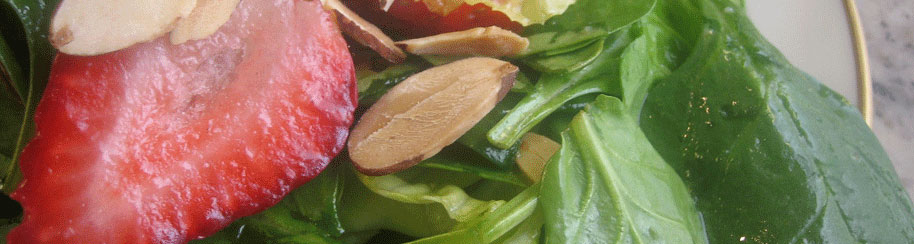
Serving Ideas: Makes a lovely dressing for a salad of baby spinach, caramelized walnuts, sliced fresh oranges and pomegranate seeds.

1 tablespoon garlic — minced
1 tablespoon shallot — minced
1/4 cup fresh orange juice
1 tablespoon grated orange peel
4 tablespoons fresh lime juice
1 tablespoon grated lime rind
10 tablespoons tangerine juice — fresh
1 1/2 tablespoons lemon juice — fresh
2 tablespoons sugar
3/4 cup extra virgin olive oil

Combine all the ingredients except the oil and whisk to blend and dissolve the sugar. Slowly whisk in the oil to emulsify and thicken. This is better if made the day before using, and it will keep for 2 weeks in the refrigerator.
Per Serving 105 Calories; 10g Fat (85.1% calories from fat); trace Protein; 4g Carbohydrate; trace Dietary Fiber; 0mg Cholesterol; trace Sodium.

Related Posts Plugin for WordPress, Blogger...