

Get new posts by email:

Archives

Currently Reading

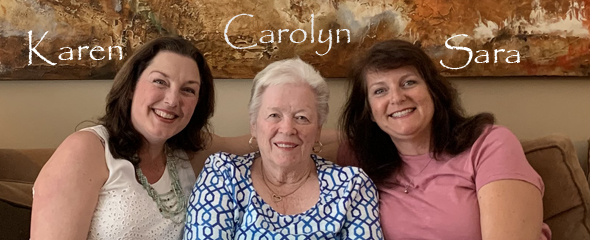
Here are the tastingspoons players. I’m in the middle (Carolyn). Daughter Sara on the right, and daughter-in-law Karen on the left. I started the blog in 2007, as a way to share recipes with my family. I’m still doing 99% of the blogging and holding out hope that these two lovely and excellent cooks will participate. They both lead very busy lives, so we’ll see.

– – – – – – – – – – – – – – – – – – – – – –

BOOK READING (from Carolyn):

Music of Bees, Eileen Garvin. Absolutely charming book about a woman in midlife, lonely, who raises bees, also makes unlikely friends. Heart-warming and very interesting about beekeeping.

A Postcard from Paris, Alex Brown. Really cute story. Dual time line, 1940s and present day about renovating an old apartment in Paris, things discovered.

Time of the Child, Niall Williams. Oh such a good book. Very small village in Ireland, 1960s. A baby is left on the doorstep. The town all whispers and helps. I listened to an interview of the author, which made me like him and his books even more.

Sipsworth, Simon Van Booy. If you like animals you’ll swoon. An old woman who really wants to die finds a tiny mouse in her house and befriends it and finds a reason to live. Utterly charming book.

The Forger’s Spell, Edward Dolnick. True story. For seven years a no-account painter named Han van Meegeren managed to pass off his paintings as those of Johannes Vermeer.

If You Lived Here, You’d be Home by Now, Christopher Ingraham. Could hardly put it down – about a journalist who takes on a challenge to move to small town in Minnesota and write about it. He expects to hate it and the people and place, but he doesn’t. Absolutely wonderful true story.

The River We Remember, William Kent Kreuger. 1950s, Minnesota. A murder and the aftermath. Could hardly put it down. Kreuger has such a vivid imagination and writing style.

How the Lights Gets In, Joyce Maynard. An older woman returns to New Hampshire to help care for her brain-injured son. Siblings and family, lots of angst and resentments.

The Filling Station, Vanessa Miller. Every American should read this book. A novelized retelling of the Tulsa massacre in 1921. Absolutely riveting.

The Story She Left Behind, Patti Callahan Henry. Love this author. Based on a true story. A famous author simply vanishes, leaving her husband and daughter behind. She had invented a mystical language no one could translate. Present day, someone thinks he’s solved the riddle, contacts the family. Really interesting read.

The Girl from Berlin, Ronald Balson. Love anything about Tuscany. An elderly woman is being evicted from a villa there, with odd deed provenance. Two young folks go there to help unravel the mystery. Loved it.

The Island of the Colorblind, Oliver Sacks, M.D. Nonfiction. The dr is intrigued by a remote Pacific island where most of the inhabitants are colorblind. He also unravels a mystery on Guam of people born with a strange neurological problem. Medical mysteries unveiled. Very interesting.

The Bookbinder, Pip Williams. Post 1914 London. Two sisters work at a bookbindery. They’re told to not read the books. One does and one doesn’t. One has visions beyond her narrow world; the other does not. Eventually the one gets into Oxford. Lovely story.

The Paris Express, Emma Donoghue. 1895 on a train to Paris, a disaster happens. You’ll delve into the lives of many people who survived and died in the crash.

A Race to the Bottom of Crazy, Richard Grant. This is about Arizona. Author, wife and child move back to Arizona where they once lived. Part memoir, research, and reporting in a quest to understand what makes Arizona such a confounding and irresistible place.

The Scarlet Thread, Francine Rivers. A woman’s life turned upside down when she discovers the handcrafted quilt and journal of her ancestor Mary Kathryn McMurray, a young woman who was uprooted from her home only to endure harsh frontier conditions on the Oregon Trail.

A Place to Hide, Ronald Balson. 1939 Amsterdam, an ambassador has the ability to save the lives of many Jewish children. Heartwarming.

Homeseeking, Karissa Chen. Two young Chinese teens are deeply in love, but in China. Then their families are separated. Jump to current day and the two meet again in Los Angeles.

North River, Pete Hammill. He always writes such a good story. A doctor works diligently healing people from all walks of life. His wife and daughter left him years before. One day his 3-yr old grandson arrives on his doorstep.

A Very Typical Family, Sierra Godfrey. A very messed-up family. Three adult children are given a home in Santa Cruz, Calif, but only if the siblings meet up and live in the house together. A very untypical scenario but makes for lots of messes.

Three Days in June, Anne Tyler. The usual Anne Tyler grit. Family angst. This wasn’t one of my favorites, but it was entertaining and very short.

Saved, Benjamin Hall. Author is a veteran war reporter. Ukraine, 2022, he nearly loses his life to a Russian strike. Riveting story – he survives, barely.

Grey Wolf, Louise Penny. Another Inspector Gamache mystery in Quebec. She is such an incredible mystery writer.

All the Colors of the Dark, Chris Whitaker. A missing person mystery, a serial killer thriller, a love story, a unique twist on each. Could hardly put it down.

Orbital, Samantha Harvey. Winner of 2024 Booker Prize. I don’t usually like those, but I heard the author interviewed and she hooked me. This is not a normal book with a beginning, a story and an end. It’s several chapters of the day in the life of various astronauts at the ISS (Int’l Space Station). All fictional. She’s been praised by several real astronauts for “getting it” about space station everyday life.

The Blue Hour, Paula Hawkins. An island off Scotland. Inaccessible except when the tide is out. Weird goings on. An artist. A present day mystery too.

Iron Lake, William Kent Krueger. A judge is murdered and a boy is missing. Riveting mystery.

Tell the Wolves I’m Home, Carol Ricks Brunt. 1980s. A 14-yr old girl loses her beloved uncle. Yet a new friendship arises, someone she never knew about.

Four Treasures of the Sky, Jenny Zhang. 1880s, a young girl is kidnapped in China and brought to the United States. She survives with many hurdles in the path.

The Boy Who Fell out of the Sky, Ken Dornstein. Memoir, 1988. The author’s brother died in the PanAm flight that went down in Lockerbie, Scotland. A decade later he tries to solve “the riddle of his older brother’s life.”

Worse Care Scenario, T.J. Newman. Oh my. Interesting analysis of what could/might happen if a jet crashed into a nuclear plant. Un-put-downable.

Song of the Lark, Willa Cather. Complicated weave of a story about a young woman in about 1900, who has a gifted voice (singing) and about her journey to success, not without its ups and downs.

Crow Talk, Eileen Garvin. Charming story which takes place at a remote lake in Washington State, about a few people who inhabit it, the friendships made, but also revolving around the rescue of a baby crow.

The Story Collector, Evie Woods. Sweet story about some dark secrets from an area in Ireland, a bit magical, faerie life, but solving a mystery too.

A Sea of Unspoken Things, Adrienne Young. A woman investigates her twin brother’s mysterious death. She goes to a small town in California to figure it out, to figure HIM out.

The King’s Messenger, Susanna Kearsley. 1600s England, King James. About one of his trusted “messengers,” and his relationship with a young woman also of “the court.” Lots of intrigue.

In the Shadow of the Greenbrier, Emily Matchar. Interesting mystery in/around the area of the famous resort in White Sulphur Springs, West Virginia.

Isola, Allegra Goodman. Hard to describe, survival story on an island in the 1600s.

Save the Date, Allison Raskin. Rom-com, witty, LOL funny. Clever.

The Sirens, Emilia Hart. Numerous time-lines, Australia. Mysteries abound, nightmares, abandoned baby, weird allergies.

Red Clay, Charles Fancher. LOVED this book. Mostly post-Civil War story about the lives of slaves in Alabama during Reconstruction.

Stars in an Italian Sky, Jill Santopolo. Dual time line, 1946 and recent time. Love stories and a mystery.

Battle Mountain, C.J. Box. Another one of Box’s riveting mysteries. Love his descriptions of the land.

Something Beautiful Happened, Yvette Corporon. A memoir of sorts in Greece, tiny island of Erikousa, where the locals hid Jews during WWII. All elusive stories told by the author’s grandmother.

The Jackal’s Mistress, Chris Bohjalian. 1860s Virginia, about a woman who saves the life of a Union soldier. Really good story.

Song of the Magpie, Louise Mayberry. Really interesting story about Australia back in the days when it was mostly a penal colony. Gritty strength of a woman trying to thrive with her farm.

The Boomerang, Robert Bailey. A thriller that will have you gripping the book. About a lot of secrets surrounding the president (fictional novel, remember) and his chief of staff and about cancer. A cure. Such a good story.

Care and Feeding, Laurie Woolever. Really interesting memoir of a woman driven to succeed in the restaurant business. She worked for Mario Batali and then Anthony Bourdain. Gritty stories.

Everything is Tuberculosis, John Green. Maybe not a book for everyone. A real deep dive into the deadly tuberculosis infection, its history. I heard the author interviewed and found the book very interesting.

The Book Lovers Library, Madeline Martin. Fascinating read about Boots’ drug stores’ lending library. And the people who worked in them.

The Arrivals, Meg Mitchell Moore. LOL funny, about a middle-aged couple whose children (and their various family members) return to the family home and the chaos that ensues.

My Life as a Silent Movie, Jesse Lee Kercheval. About grief. A big move to Paris, finding herself a new life with a new set of real blood family.

Escape, Carolyn Jessop. Another memoir about a woman really in bondage in Utah, Mormon plural marriage.


Tasting Spoons

My blog's namesake - small, old and some very dented engraved silver plated tea spoons that belonged to my mother-in-law, and I use them to taste my food as I'm cooking.

Scroll down to the bottom to view my Blogroll

Posted in Travel, on October 19th, 2010.

wheelie

Wendy Perrin is a journalist who writes regularly for Condé Nast Traveler magazine. I always read her articles in the monthly magazine. This month she’s written up an article titled “Confessions of an Unfashionable Traveler.” She travels a lot, obviously, as a writer for a travel magazine. So she likely had sage advice, I was sure. Yup. Here’s a synopsis of her article. Next week we’re going on a trip – the suitcase is open on the guest room bed, so this advice was quite timely for me.

She carries on two things: a wheelie (she never checks luggage unless the airline won’t let her) and her unchic purse/laptop case/camera bag. She doesn’t use toiletry kits, but opts instead for Ziploc plastic bags to hold her necessities. She carries any dressy or business clothes on hangers, in dry cleaner-provided plastic bags. If you value utility over fashion (her words), here’s what she does:

1. Use a carry-on suitcase with few structured compartments or other doodads (you can get more into one, large open space). She uses a 22-inch Travelpro Rollaboard, stowing in the outside compartment (zipped pocket) a jacket or raincoat and a Pashmina which she uses as a blanket on the flight rather than the less-than-clean airline blankies.

2. Think of Ziploc bags as the “Swiss Army Knife” of your packing system. Meaning, she uses different sizes of Ziploc bags (one for liquids, gels, etc.; another for dry toiletries; another for her electronic  accessories and one for her makeup).  She takes several sizes of empty Ziploc bags (which take up no room in her wheelie). She uses a sandwich sized Ziploc for the flight stuff: lip balm, nasal spray, teardrops, hand cream, earplugs, eye mask, Vitamin C and that one goes inside the larger Ziploc that holds all the liquids and gels, then she pulls that small one out once she’s past the security checkpoint or on board the plane.

3. For clothing, stick to neutral colors and limit patterns as much as possible. She packs a lot of black (not only because it’s neutral, but also because it doesn’t show dirt) then she adds color with tops, shirts, or her pashmina. Her pashmina goes with her everywhere (in her purse) because it will provide head cover if it rains, warmth if it’s cold, or a splash of elegance if she needs it somewhere.

4. Pack old garments you’ve been meaning to replace. That way, you can discard them along the way in case you find something new you’d like to buy – to take its place.

5. Go light [packing] things you think you might be shopping for on your trip.

6. Pack toiletries that are not only travel-sized but also multi-purpose. Like moisturizer + SPF, travel-size Neutrogena make-up remover pads, shampoo-conditioner in lieu of shaving cream, non-prescription drugs (like aspirin, Motrin, Sudafed, Imodium) all in one small container. And take disposable soap sheets instead of packing liquid detergent for hand washing.

7. Save the plastic bags that dry cleaning comes in – use those when you travel – hold all your hanging garments in one hand and gently fold the group into thirds so they lay flat. Men’s dress shirts should stay in the folded, cardboard-collared form.

8. Wear the heaviest or bulkiest items on the plane. Usually she wears her sturdiest shoes on the flight, and packs sandals and/or strappy dressy shoes in the wheelie, wrapped in grocery store plastic bags and stuffed with underwear.

9. Fold [casual] clothing to avoid creases. She puts her casual clothes in the bottom of the suitcase, folding them in overlapping layers (fewer wrinkles that way). If you have to pack a jacket, turn it inside out first.

10. Somewhere when you travel you’ll likely get wet. Take the right kind of outerwear with a hood (so you don’t have to take an umbrella). Make sure the jacket has interior pockets (to put valuables). She prefers a Gore-Tex parka for colder weather. (Oh, and my addition: take a Ziploc plastic bag in your suitcase to put any wet clothes into, just in case your overnight hand washing didn’t quite dry or you went swimming just before your flight.)

11. Take two or three accessories that will dress up your outfit if needed (she recommends pearl earrings, necklace and a scarf). Mostly this advice was aimed at business travelers (to perhaps get hotel upgrades). Her husband wears his Rolex, Mephisto shoes and his Montblanc pen placed strategically in a visible pocket. [FYI: I don’t own any pearl earrings, or a pearl necklace, though I do have a couple of really good scarves. My DH doesn’t own a Rolex, Mephisto shoes or a Montblanc, so I think we’re nixed on all but one count.]

12. Pack a thin, lightweight duffel bag (she uses a LeSportsac nylon duffle) in case she buys more stuff than she can pack in her wheelie. In that case she checks her wheelie and carries on the duffel.

13. The best status symbols are plastic. By that she means that her frequent-flyer elite status card, her family credit card that gives her airport lounge club membership and priority at check-in, in the security line and at boarding. She happens to use a Continental Presidential Plus MasterCard (which waives checked-baggage fees on Continental when she flies with her family).

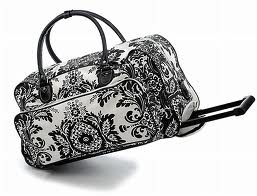
Article from Conde Nast Traveler, 10/2010. Photo of the wheeled duffle  from stylehive.com, and I just added the photo for fun – Wendy Perrin didn’t recommend this type of bag. Read item #1 for her preferred wheelie.

Posted in Beef, on October 18th, 2010.

Do you know what a la mode means? It’s French, and originally meant in the current style, or fashion. I believe it may have pertained more to clothing than food. But here, and in French cooking, a la mode does still mean in vogue, in style. Restaurants here in the U.S. use the phrase a la mode to describe a dessert when it’s served with ice cream. Like apple pie a la mode.

This pot roast – well, it’s just that this has been in style for at least a century, and it’s just so infinitely good. Delicious. Succulent. Comfort food. Melt in your mouth scrumptious.

Picnik collageThis is a recipe I’ve been using for about 40 years. Gee, that makes me feel ancient. 40 years. It appeared in the San Diego Union Tribune in October of 1973. I have an aging yellowed newspaper clipping that I scotch taped to the page in my ring binder and had written in the date. The short article was written by a food writer named  Zolita Vincent. I have adapted it (more wine, seasonings, different side veggies, and I make it with a smaller piece of meat).

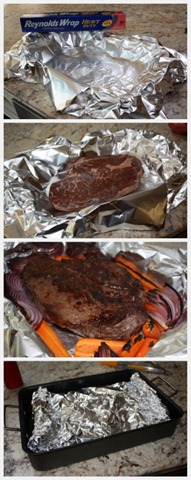
PICTURED LEFT: (1) that’s the 9×13 pan I started with, lined it with two pieces of heavy-duty foil – I patched two together with a seam in the middle; (2) the chuck roast nestled in the middle; (3) the roast was broiled/browned on one side with the red onions and carrots nestled alongside – they got broiled too – for about 5 minutes; and (4) once browned on both sides and the red wine and other stuff was added, I sealed it up tight as a drum and it went into the oven for 3+ hours.

In the traditional French method (I looked at one of my Julia Child cookbooks for this) the roast is marinated in red wine and herbs for 2-3 days before it’s baked. I didn’t plan that far ahead, and never seem to.

This recipe is a short-cut method of making the plan-ahead recipe. Part of the great flavor comes, though, from the red wine you pour all over the roast. Since it’s baked at a low heat (300°), it just barely simmers, which makes the meat so tender and succulent. The onions, carrots and celery also provide a lot of flavor (you toss those out after the roast is done – they’ve expended all their flavor to the roast and the sauce). So you make other veggies to serve with this, or you can open up the foil packet about 1 1/2 hours before it’s done and add new onions, carrots and some potatoes, if you choose.

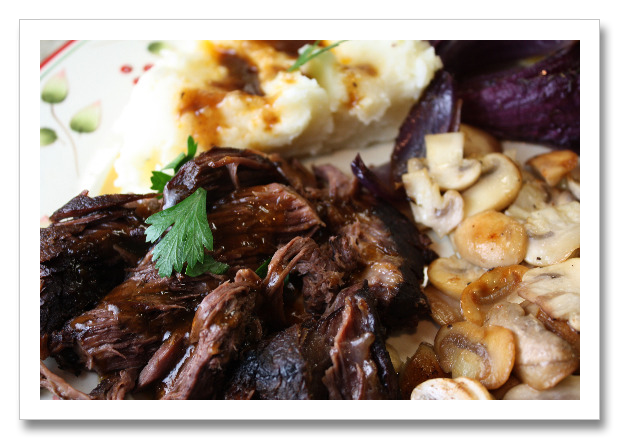
Personally, I prefer mashed potatoes with a pot roast any day. And that’s what I did this time. I also quick-sautéed some thinly sliced mushrooms in some olive oil and butter to serve along side. I’d also baked a couple of red onions too, for the last hour (not sealed in foil, though).

Once the roast was done, I poured out all the liquid in that foil packet into a saucepan (leaving the roast inside, and resealed it to keep it warm), and added some thickening. Actually I tried using something new . . . I read about this stuff in the King Arthur Flour catalog – it’s called Signature Secrets Culinary Thickener. Like using flour or cornstarch (which is what my original recipe called for), this new-fangled stuff will dissolve and thicken without mixing with water, doesn’t clump, and will thicken even COLD liquid. Imagine that? I’m a new believer in this stuff. It’s not cheap, but you only use a tablespoon or so at a time. Great product.

Anyway, I thickened the sauce/gravy, added just a bit of water because it was a tad too salty for me, and spooned it over the slices (well, you can hardly slice the meat as it falls apart with the touch of a fork) and over the mashed potatoes. I think you could make the pot roast in a crock pot too, although I’ve not tried adapting this recipe to that method.

Yum is all I can say. And if you’re a regular reader of my blog, and I tell you this one is a keeper, trust me. You can do all the prep work ahead of time (don’t broil/brown the meat, though until you’re ready to roast it).

printer-friendly PDF

French Pot Roast a la Mode

Recipe By: Adapted from an ancient newspaper clipping, circa 1970.
Serving Size: 6
NOTES: If you’d prefer to have roasted potatoes too, remove the foil sealed pouch and pan about 1 hour before it’s done and add potatoes to the mixture. Seal back up and continue roasting. I prefer this with mashed potatoes.

3 pounds beef chuck roast — trimmed of exterior fat
2 medium red onions — peeled, wedged
3 whole carrots — peeled, cut in big chunks
1 stalk celery — cut in 2-3 pieces
3 whole garlic cloves — peeled, smashed
2 teaspoons dried thyme — crushed in between your palms
2 whole bay leaves
1 teaspoon salt
2 cups red wine
1 teaspoon beef soup base — or bouillon cubes
1/4 cup brandy
Salt and freshly ground black pepper
1 1/2 tablespoons tomato paste
2 tablespoons cornstarch — or other thickening agent
3 tablespoons Italian parsley — minced
5 large baking potatoes — made into mashed potatoes
2 cups mushrooms — sliced, sauteed in olive oil and butter

1. Preheat oven to broil. Place two layers of heavy-duty foil in a 9×13 roasting pan. Leave long ends (or seal two long pieces together to make one larger piece). Make an interior nest with the foil.
2. Place the chunk of beef in the middle of the foil. Prepare onions, carrots and celery and nestle them around the outside of the meat.
3. Broil the meat on one side, until it’s golden to dark brown, watching so the vegetables don’t burn. Turn roast over, and the vegetables too, and broil the other side until it’s brown. Remove from oven and add all other ingredients to the roast. Seal carefully, rolling ends in to completely seal up the meat. Turn oven temp to 300°.
4. Place meat, in the roasting pan, in oven and bake for about 3 hours.
5. Open the pouch and using a strainer, pour out the juices into a small saucepan. Seal up the meat and veggies and place them back in the oven (turn off the oven).
6. Taste the sauce and check seasoning. Mix the cornstarch with a little bit of water and add to the sauce as it’s heating up over medium heat. Cook until it’s a thin-gravy consistency, then pour into a small pitcher.
7. During the last 30 minutes of baking, separately prepare the potatoes and mushrooms.
7. Discard the vegetables in the packet (they’re tasteless from such a long roasting time). Garnish with Italian parsley and serve.
Per Serving: 734 Calories; 36g Fat (49.1% calories from fat); 41g Protein; 43g Carbohydrate; 5g Dietary Fiber; 131mg Cholesterol; 585mg Sodium.

A year ago: Italian Sausage and Tomato Soup (a real favorite)
Two years ago: Wednesday Breakfast Scones (from a Portland, Oregon bakery)
Three years ago: Heavenly Cream Cheese Brownies

Posted in Uncategorized, on October 17th, 2010.

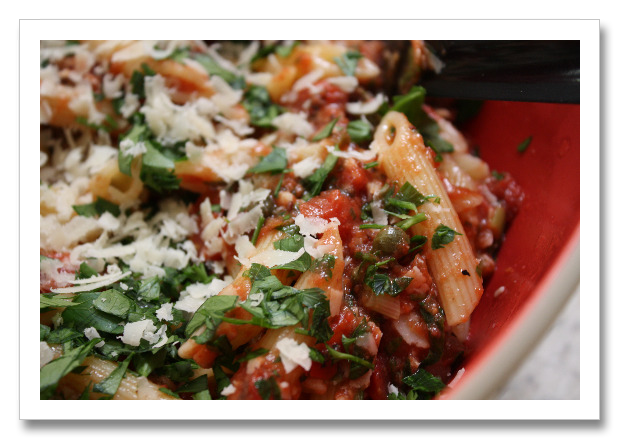
This is a repeat . . . of one of my favorite recipes. Since I made this for a big family birthday party recently, I took some new photos of it. This particular batch I used fire roasted tomatoes that were in tomato sauce. Usually it’s just tomatoes, drained. So this time using all of the sauce, it stuck to the pasta, which maybe is a good thing. And although this is a cold or room temp dish, you could serve it anytime of the year, really. But somehow I associate it with summer. I’m sure in Italy they probably used fresh tomatoes, but this recipe calls for canned. Sometimes I add in some halved cherry tomatoes. Here’s another shot:

Read the rest of this entry »

Posted in Appetizers, easy, on October 16th, 2010.

green_pea_hummus1

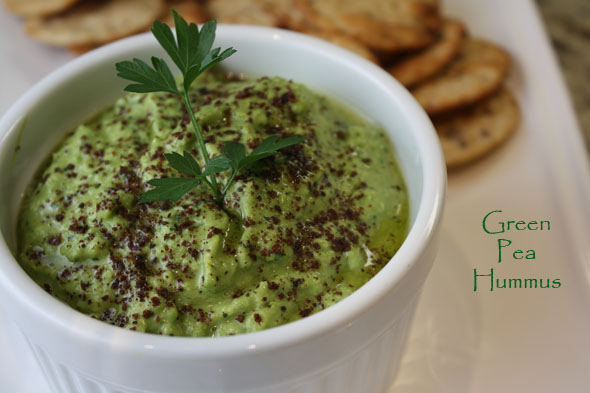
Oh my goodness, is this stuff ever good. It made my taste buds sing! And isn’t the color just beautiful?

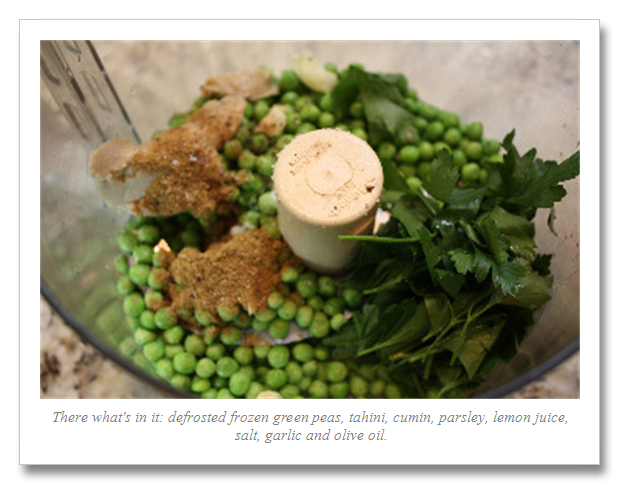
If you’re not a hummus fan, this may change your mind since it contains no garbanzo beans. If you are a hummus fan, making it with green peas will just enhance your experience. To my mind, the tahini (sesame seed paste) is what makes this dish. It gives it oodles of flavor. The lemon juice also helps, and I love cumin, so I added a bit more than this Cooking Light recipe suggested. The original is available online.

The recipe indicated cooking the peas. Why, I said? Not necessary since it would be pureed. So I used them straight out of the bag (but defrosted). There’s some garlic in it, some Italian parsley and some olive oil. I added more oil than the original recipe because once it was whizzed up in the food processor it was a bit too dry – it threw a good part of it up on the sides and it didn’t puree well enough. A little more oil (about a tablespoon) in the bowl fixed that problem. Let it mellow for an hour or two (or it can be served immediately). Serve with some kind of soft Middle Eastern bread. We had sangak bread to serve alongside (you can see a few torn pieces on the right of the bowl in the photo up at the top).

One other thing – this appetizer is a CINCH to make. Talk about easy. It took about 6 or 7 minutes to make. Really. Once whizzed up, I scraped it out into a serving bowl, sprinkled it with zahtar (I didn’t have any sumac on hand), covered it with plastic wrap and zipped it out when guests arrived. I really liked this – the flavors just burst in your mouth. Do try it.
printer-friendly PDF

Green Pea Hummus

Recipe By: Adapted from a Cooking Light recipe
Serving Size: 6
NOTES: Not every kitchen has sumac (it is available by mail order). You can substitute zahtar (a combination of sesame seeds, sumac and other spices) if that’s available. In a pinch you could substitute smoky paprika, although it wouldn’t be the same.

2 cups frozen green peas
1/2 cup Italian parsley — chopped
3 tablespoons tahini — (sesame-seed paste)
3 tablespoons fresh lemon juice
1 teaspoon ground cumin
1/2 teaspoon salt
1 whole garlic clove — chopped
1 tablespoon extra virgin olive oil — or lemon flavored oil if you have it
1/4 teaspoon sumac — or zahtar

1. Cook peas in boiling water 3 minutes; drain and rinse with cold water. Drain.
2, Place peas and next 6 ingredients (through garlic) in a food processor, and process until smooth. Spoon pea mixture into a small serving bowl; chill. Drizzle with oil, and sprinkle with sumac just before serving.
Per Serving: 107 Calories; 7g Fat (52.3% calories from fat); 4g Protein; 9g Carbohydrate; 3g Dietary Fiber; 0mg Cholesterol; 244mg Sodium.


Posted in Breads, Brunch, on October 14th, 2010.

You ever get hungry for breakfast food at dinner time? Since we don’t eat eggs and bacon except on rare occasions, I decided one night that breakfast food appealed to me. I was going to make yeast waffles, but that takes an overnight sit in the refrigerator for the batter. No time for that. In my stack of to-try recipes I had this one for oatmeal pancakes, that I’d read over at Smitten Kitchen blog. She got the recipe from Good to the Grain: Baking with Whole-Grain Flours (a cookbook that makes grains and other healthy foods much more appealing). I’d read something about the book at another blog too.
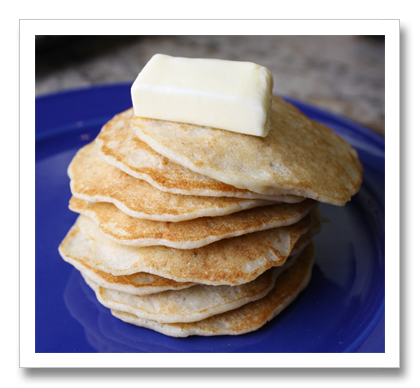
The pancakes were easy to make, although I did have to make oatmeal as part of the recipe. If you happen to have leftover oatmeal on hand you’ll save an extra 10 minutes or so, and dirtying up another pot! First, though, you have to make some oat flour in the food processor (just whiz up enough dry oatmeal until it’s flying all around in the workbowl). That gets mixed with the other dry ingredients (flour, sugar, salt, baking powder).

Then you mix up the wet stuff: the cooked oatmeal, milk, eggs, melted butter. That gets poured into the dry mixture and you very gently fold and whisk lightly (use a heavy hand with it and the pancakes will be heavy and tough).

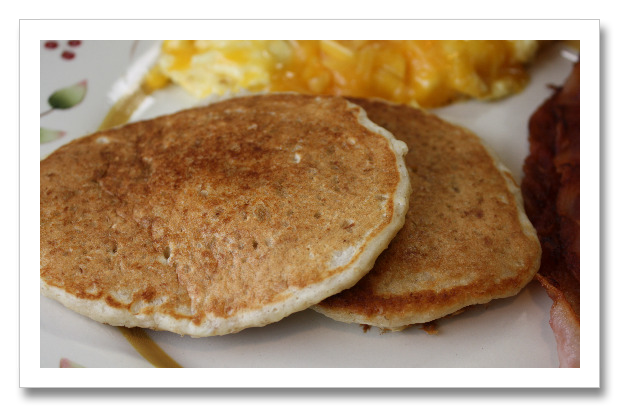
Confession time: I didn’t re-read the directions as I was doing it and I added in ALL the cooked oatmeal – the recipe indicated making two cups worth and you only needed to use one. So I had to thin down the batter some. The recipe you see below is my convoluted version, which made those lovely thin double-sized dollar pancakes in the photo above. The recipe made way too many for the two of us, so I placed the extras in between pieces of waxed paper and put several  stacks into bags in the freezer. They microwave (to reheat) just fine. Be careful and don’t overdo the time, though. They were fine with just a bit of butter, but sublime with some real maple syrup. The bigger ones (top photo) were thicker, more chewy, with more of an oatmeal texture. The thinner ones I liked better, actually. But either way, they’re very tasty. Very oatmeal-y, if you will.

printer-friendly PDF

Oatmeal Pancakes

Recipe By: Adapted from Smitten Kitchen blog, via cookbook Good to the Grain
Serving Size: 9
NOTES: Adapted from Smitten Kitchen’s blog; she tweaked it some from the cookbook version. To make oat flour – pulse rolled oats in a food processor or spice grinder until finely ground (3/4 cup of oats yields about 1/2 cup oat flour). To make oatmeal bring 2 cups of water, 1 cup of rolled oats and a pinch of salt to a boil and simmer on low for 5 minutes. Let cool. Add milk (more) if needed to get a perfect batter. Sample one to see what you get, then adjust.

1/2 cup oat flour — (see notes)
1 cup all-purpose flour
2 tablespoons sugar
2 teaspoon baking powder
3/4 teaspoon Kosher salt
3 tablespoons unsalted butter — melted and cooled slightly (plus extra for the pan)
1 1/3 cups whole milk
2 cups cooked oatmeal — (see notes) cooled to room temp
1 tablespoon molasses — or 1 tablespoon honey
2 large eggs

1. Whisk the dry ingredients (oat flour, flour, sugar, baking powder and salt) together in a large bowl. In a smaller bowl, whisk the melted butter, milk, cooked oatmeal, honey and eggs together until thoroughly combined. Gently fold the wet ingredients into the dry ingredients. Using a light hand is important for tender pancakes; the batter should be slightly thick with a holey surface.
2. Heat a 10-inch cast-iron pan or griddle (or electric skillet to 350) over medium heat until water sizzles when splashed onto the pan. Lower to medium-low. Rub the pan generously with butter; the author says this is the key to crisp, buttery edges. Working quickly, dollop mounds of batter onto the pan, 2 or 3 at a time. Once bubbles have begun to form on the top side of the pancake, flip the pancake and cook until the bottom is dark golden-brown, about 3-5 minutes total, depending on the thickness of the batter. Wipe the pan with a cloth before griddling the next pancake. Continue with the rest of the batter.
3. Serve the pancakes hot, straight from the skillet or keep them warm in a low oven. They will reheat, again in a low oven or a few at a time in the microwave for just 10 seconds or so.
4. Do ahead: Although the batter is best if used immediately, it can sit for up to 1 hour on the counter or overnight in the refrigerator. When you return to the batter, it will be very thick and should be thinned, one tablespoon at a time, with milk. Take care not to over mix.
Per Serving: 224 Calories; 8g Fat (32.0% calories from fat); 7g Protein; 31g Carbohydrate; 2g Dietary Fiber; 62mg Cholesterol; 386mg Sodium.

A year ago: Pork Tenderloin with Maple Mustard Vinegar Sauce
Three years ago: Whole Wheat Pizza Dough

Posted in easy, Fish, on October 12th, 2010.

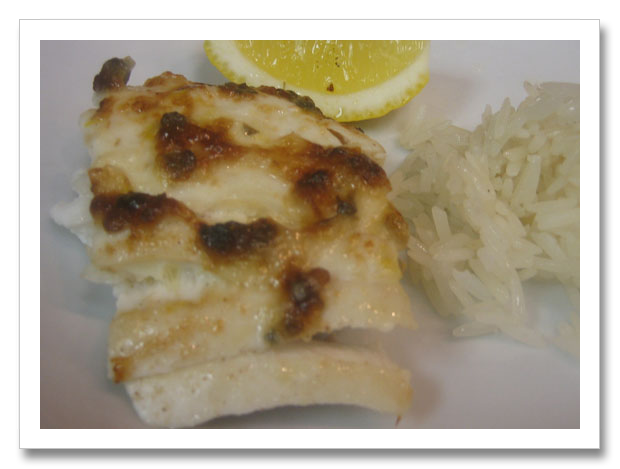
Reaching my fork right into the screen here and grabbing a bit of that nice, crispy browned topping sounds so good right now. This fish dish was so easy. And so delicious. Of course, you do need to like halibut (although I’m sure it would work well with other kinds of firm-fleshed fish).

The fish is broiled (remember when that’s about all we DID with fish?). Down low in the oven. Actually at least 10 inches from the element – gives it time to cook through and slowly brown and get crispy on top. That’s about the only way you could broil this – low and slow.

First you prepare the pan (a broiler pan – rack – over a pan), oil it so the fish won’t stick too badly. Put a piece of foil underneath too to catch the drips (easier cleanup). Then you mix up some oil, fresh garlic, mayo and some rinsed and chopped capers. And a bit of lemon zest. Slather that on top of the fish and broil for 9-12 minutes, depending on the thickness of the fish and the distance from the heat (remember, 10 inches). Serve with rice and lemon wedges. Easy. If you don’t like capers, you can substitute Dijon mustard.

printer-friendly PDF

Halibut with Lemon Aioli and Capers

Recipe By: From a cooking class with Phillis Carey, 2010
Serving Size: 4
NOTES: Moving the oven rack to the right position is vital to this recipe. Use a ruler!

24 ounces halibut fillets — (about 6 ounces each, 1-inch thick)
Salt and white pepper to taste
3 cloves garlic — minced
2 tablespoons extra virgin olive oil
1/3 cup mayonnaise — Best Foods (Hellman’s) or home made
1 tablespoon capers — rinsed, chopped
1 teaspoon lemon zest
Lemon wedges for each serving

1. Preheat broiler (on high). Place the oven rack low enough that the fish will be 10 inches from the broiler element. Oil the broiler pan (rack) and place foil underneath the rack to catch drips. Sprinkle fish with salt and pepper and place fish on rack.
2. In a small bowl whisk garlic and oil together in a small bowl. Whisk in the mayonnaise, capers and lemon zest. Spread it over the fish, covering all the top as best you can. Broil the fish until it’s just cooked through and browned nicely on top, about 9-12 minutes. Watch carefully. Serve with lemon wedges to squeeze over the fish.
Per Serving: 382 Calories; 26g Fat (61.7% calories from fat); 36g Protein; 1g Carbohydrate; trace Dietary Fiber; 61mg Cholesterol; 216mg Sodium.

A year ago: Butternut Squash Risotto with Pancetta
Two years ago: Chorizo and Eggs
Three years ago: Pizza with Chicken, Red Onion and Olives

Posted in Breads, on October 10th, 2010.

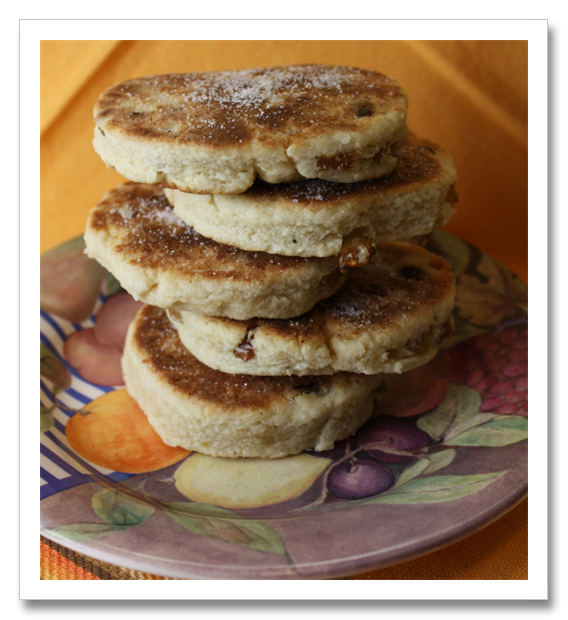
There’s a long, meandering story to tell about this recipe. When we were in Britain in August we stayed in Wales for several days. And after a really interesting (and different) Welsh dinner at a pub one night, the chef served us a few Welsh cakes. Having never had them before (or ever heard of them) I was intrigued. He brought us four. We ate two and took the other two with us, which we enjoyed the next day. I almost always keep a small plastic bag in my purse. You just never know when you might need one. It was perfect for my little stash of Welsh Cakes. (And say, speaking of what kind of stuff women keep in their handbags – did any of you watch Nate Berkus on his new TV show, where he wanted to know what women keep in their purses – why we feel naked without one – and one audience member he interviewed actually pulled out a black bra from hers? THAT was weird!)

Traditionally, I’d guess a Welshman would not eat a Welsh Cake after dinner. And why the chef did for us, I’m not sure, except that he made us a typical Welsh meal. They’re more like a little treat to have with a cup of tea or coffee. Probably eaten mid-morning or mid-afternoon. The dessert I ordered, banofee pie – oh so good – was delicious, but it’s not Welsh particularly. So I guess he wanted us to end our meal on a Welsh high note.

We tasted them, and I fell in love with them. Being a scone aficionado, I quizzed our waitress about them. How were they made, I asked? In a dry skillet – cast iron preferred, she said. They were just lightly sweet, with a little sprinkling of sugar on the top of each one. They were warm, light and scrumptious. Right then and there I determined I’d learn how to make them once I got home. As we left the pub that evening the chef scribbled out his recipe and handed it to me. Comparing it in my mind with scones, I didn’t see any liquid on the list. I asked him about milk or cream, and he said no, the butter was sufficient. His instructions were so succinct as to be non-existent, so I figured I’d best figure it out later. I didn’t think any more about it then.

Within 24 hours of our arrival home I was searching my cookbooks (first I went to my EYB site – and yes, EYB told me I owned one cookbook with a recipe – and if you don’t know EYB, you can read my post about it). I went online and found several recipes too – many of them  identical. I made a kind of Welsh Cake spreadsheet, so to speak, of the different ingredients from all the recipes I found. Some had more butter (in proportion to flour) than others. Some had spices (like mace, nutmeg, cinnamon, or “mixed spice,” which is a combination jar sold in Britain). Some called for cream or milk. But every recipe called for an egg. Except the chef’s. Here’s the chef’s entire recipe: 5 ounces butter, 10 ounces self-raising flour, 3 ounces caster sugar, 1 pinch mixed spice, 4 ounces currants or raisins. 1/2 hour fridge, griddle no oil. Isn’t that a kick? That was it. He was doing it from memory as he scribbled onto a tiny piece of paper, and I think he must have forgotten the EGG.

SO, the next day I decided to try one of the recipes (not the chef’s) that included an egg and I’d see where it led me. I was pleased with the taste, but I followed a method that said to pat out the rounds by hand. I knew the chef’s had been much more structured, more precise than that. I didn’t know what temperature to cook them, either, although I quickly determined that using my nonstick electric skillet would be the best choice. I have an cast iron skillet, but the electric skillet would be more heat-consistent. I watched a precious video online of a dear, little Welsh grandmother named Betty making Welsh Cakes for her grandchildren. I didn’t try her recipe, but I watched the technique carefully. So next I tried the chef’s recipe – and decided with the quantity of flour  – that I should add two eggs. Mistake. Probably one would have been sufficient. But I didn’t think they were quite right, either, although I did use my rolling pin and got perfect rounds. And incidentally, my friend Marie, who writes A Year From Oak Cottage has a recipe on her other blog, about Welsh Cakes. Hers calls for lard, though. Take a look if you’re interested.

Now we fast-forward a couple or three weeks. I wasn’t sure which recipe I’d try next. Coincidentally, I’d had a couple of email exchanges with one of my readers, Toni-Anne, who lives in England (we’ve been emailing occasionally for the last couple of years). Just on chance I asked her whether she knew Welsh Cakes. Well, yes, indeed she did. She was raised in Wales, and recalled her mother making them often. Sadly, Toni-Anne’s mother died when she was 10, and she doesn’t have her mum’s recipe. Toni-Anne said she’d see what she could do, though.

A few days went by and then I got another message from Toni-Anne. She’d remembered that in the early 80’s she’d spent a few weeks in North Carolina and she’d made Welsh Cakes while she was there. North Carolina, I thought? From a magazine recipe, she said. And would you believe it? She still had the recipe. And the magazine! From the December, 1981 Redbook. The Welsh Cakes were credited to a woman named Blodwyn Lewis. Blodwyn? Yup. Blodwyn, a very Welsh name, I’ve learned.

Promptly, I made this recipe, and am so happy to say that this will be my go-to recipe for Welsh Cakes, thank you very much! I did make one change – I used cream instead of milk, but either will work. And I used my food processor to cut in the butter. They taste very similar to my buttermilk scones, but these have no buttermilk in them. I’ll have to make an ingredient by ingredient comparison of the two. Or maybe I’ll have to try my scone recipe cooked on a griddle. Maybe later. For now I’m sticking with this recipe. So here, my friends, is the Redbook magazine Welsh Cake recipe, from 1981, thanks to Toni-Anne and her amazing archives! Thank you, cyber-friend!

printer-friendly PDF

Welsh Cakes

Recipe By: Adapted from Redbook Magazine, December, 1981 (a recipe from Blodwyn Lewis) via one of my readers, Toni-Anne, who lives in Buckinghamshire
Serving Size: 13
NOTES: If you only get 10-11 Welsh cakes, you may have made them thicker than mine, so they’ll take another minute or so per side. You’ll get the hang of it after you’ve done one batch of these. You can also add in a pinch of mixed spices (mace, cinnamon and nutmeg) if you’d like.

2 cups all-purpose flour
1/2 cup sugar
1/2 teaspoon salt
2 teaspoons baking powder
1/2 cup butter — cold, diced
1/2 cup golden raisins — or currants
1 large egg
1/3 cup heavy cream — or more if needed (or milk)
About 1/4 cup flour to sprinkle on the work surface
About 2 T. granulated sugar for sprinkling on top

1. In the bowl of a food processor combine the flour, sugar, baking powder and salt. Pulse a few times to mix and lighten the mixture.
2. Add the cold, cubed butter and pulse until the mixture is coarse crumbs, with some small pieces of butter still visible.
3. Pour this mixture out into a medium-sized bowl. Add raisins and mix gently.
3. Whisk the egg, stir in the heavy cream and add to the flour mixture. Using a wooden spoon, stir to combine and if needed, add more liquid (a teaspoon at a time) until the mixture will come together into a ball.
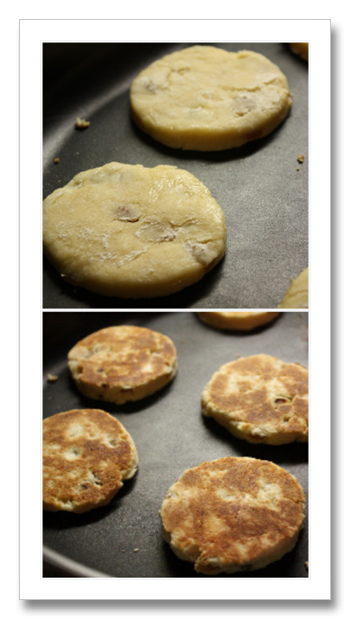
4. Gently pat the dough into a large oval, then use a rolling pin to roll it out flat, using as few strokes as possible. The less you handle the dough the more light the cakes will be. Roll the dough until it’s about 1/4 to 3/8 inch thick and use a 3-inch cookie or biscuit cutter to make uniform pieces.
5. Meanwhile, preheat an electric skillet (or a flat griddle on your stove) to 350°. Place the cakes on the hot pan and leave them alone for about 3-4 minutes, depending on the temperature, until one side is golden brown. Gently turn them over and continue cooking on the second side for another 3-4 minutes. Break one in half to make sure they’re done in the middle.
6. Remove to a cooling rack and sprinkle a little pinch of granulated sugar on the top of each Welsh cake. Serve immediately, or cool and freeze. Ideally, serve them just barely warm. I make them ahead and when I’m ready to serve I slip them back into the electric skillet for about one minute, lid on, just to barely heat them through. They require no adornment (no butter or jam needed).
Per Serving: 209 Calories; 10g Fat (42.2% calories from fat); 3g Protein; 28g Carbohydrate; 1g Dietary Fiber; 44mg Cholesterol; 238mg Sodium.

A year ago: Olive Oil Orange Madeleines
Three years ago: Anise Pound Cake

Posted in easy, Soups, on October 8th, 2010.

Really, I thought I’d posted this recipe ages ago. I’ve had it for years. Have made it a few times. It’s incredibly easy. You can make it in less than 30 minutes. Which is probably why it was one of Rachel Ray’s recipes, although I got it at a cooking class some years ago. It was credited to Rachel, but I could not find this recipe anywhere online, so perhaps the cooking instructor had changed it a bit. Or perhaps it’s in one of Rachel’s cookbooks and not available online.

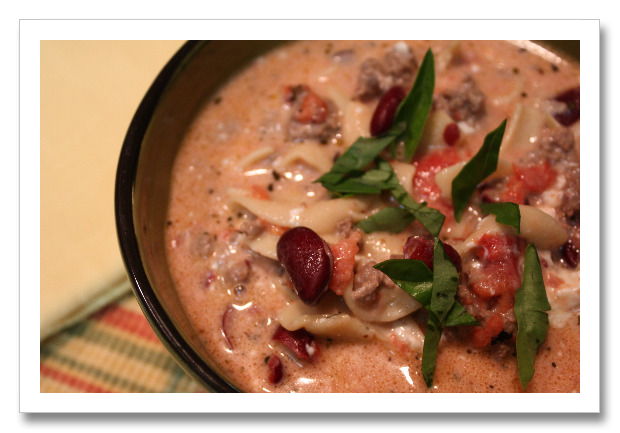
What’s a stoup, you ask? Something in between stew and soup. A thicker soup than a traditional soup. But not quite as thick as a stew. And I think Rachel Ray coined the word stoup. What makes this one thicker is the addition of 8 ounces of cream cheese. It could be made with ground turkey, I suppose (I use ground beef). And you can use any kind of pasta, really. I used egg noodles this time just because they were the handiest to reach in my pantry. You could use elbow macaroni, or penne, or bowtie pasta. It would be best to use some kind of short pasta – not long noodle type. Just keep that in mind.

First you cook up the ground meat, add garlic, then stock, Italian seasonings, then you add canned kidney beans (or any kind of beans would do – it’s just that the dark kidneys look good against the creamy backdrop of the soup) and canned, chopped tomatoes. Lastly you add in the pasta and cook just until al dente and add the cream cheese. It melts quickly enough if you stir it gently. Serve and sprinkle with fresh basil. Done. Now, wasn’t that easy? It’s all made in one pot. Great for a fall cool evening, I think. It’s almost soup weather around here.

printer-friendly PDF

Beef with Cheesy Macaroni Stoup

Serving Size: 8

12 ounces extra lean ground beef
2 whole garlic clove — minced
2 1/2 cups beef stock
1 1/2 teaspoons Italian seasoning
1/4 teaspoon onion powder
1 cup macaroni — like penne, bowtie, short egg noodles or elbow
16 ounces tomatoes, low sodium — canned, chopped
16 ounces kidney beans — canned, drained
8 ounces cream cheese
2 tablespoons fresh basil — for garnish

1. In a large saucepan cook the ground beef over medium heat until it loses all of its pink color. Add minced garlic toward the end. Drain the beef in a strainer or colander, then transfer to a large plate lined with 3 layers of paper towels. Blot the beef with additional paper towels. Return beef to the saucepan.
2. Add broth and all the seasonings (except basil). Cover and bring to a boil, then stir in the pasta. Return to a boil and reduce heat. Cover and simmer until the macaroni is al dente – just barely done, about 8 minutes (depending on the type of pasta, of course). Stir in the tomatoes and kidney beans, and return to a boil. Add the cream cheese, cut up into chunks and allow to melt. Serve immediately with a garnish of thin slices of basil.
Per Serving: 456 Calories; 18g Fat (35.4% calories from fat); 26g Protein; 48g Carbohydrate; 15g Dietary Fiber; 60mg Cholesterol; 796mg Sodium.

A year ago: Gingerbread Cupcakes with Lemon Frosting
Three years ago: Drop Biscuits

Posted in Chicken, on October 6th, 2010.

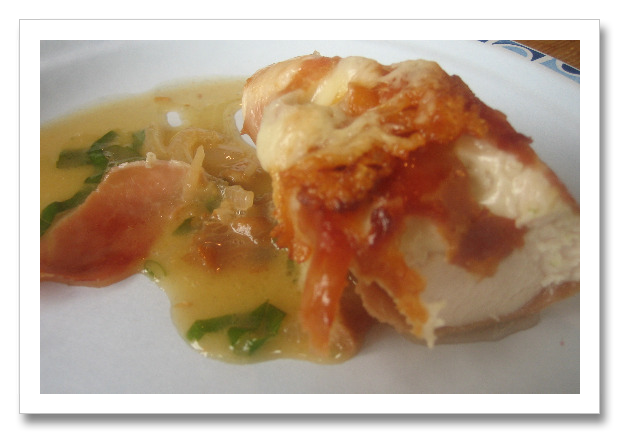
The photo is a little blurry – sorry – when I use my point and shoot camera, I tend to place the camera a little too close to the food. What you see there is a tender, juicy chicken breast that’s stuffed with some provolone cheese, then rolled up in 2 ultra-thin slices of prosciutto. It’s briefly browned, then baked for a few minutes while you make the pan sauce (butter, shallots, white wine, chicken stock, lemon juice and fresh basil). Once you gather up the ingredients, the entire dish can come together in a matter of minutes.

Read the rest of this entry »

Posted in Salads, on October 4th, 2010.

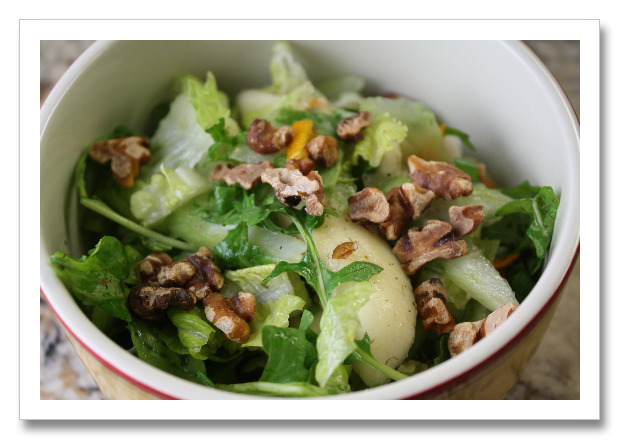
Don’t you get tired, sometimes, of a regular green salad? My normal dinner side salad contains lettuce of course (or combination of greens of some kind), but usually radishes, celery, maybe carrots, some bell pepper, Feta cheese, tomatoes and parsley or cilantro. I make numerous kinds of salad dressings from scratch. But there are times when none of the veggies appeal to me.

Read the rest of this entry »

Related Posts Plugin for WordPress, Blogger...