

Get new posts by email:

Archives

Currently Reading

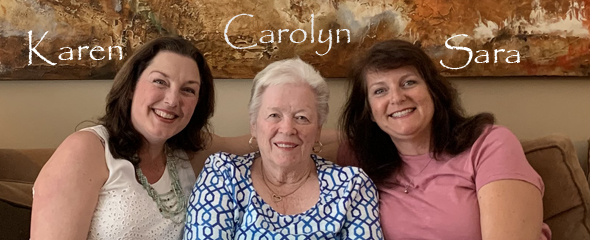
Here are the tastingspoons players. I’m in the middle (Carolyn). Daughter Sara on the right, and daughter-in-law Karen on the left. I started the blog in 2007, as a way to share recipes with my family. I’m still doing 99% of the blogging and holding out hope that these two lovely and excellent cooks will participate. They both lead very busy lives, so we’ll see.

– – – – – – – – – – – – – – – – – – – – – –

BOOK READING (from Carolyn):

Music of Bees, Eileen Garvin. Absolutely charming book about a woman in midlife, lonely, who raises bees, also makes unlikely friends. Heart-warming and very interesting about beekeeping.

A Postcard from Paris, Alex Brown. Really cute story. Dual time line, 1940s and present day about renovating an old apartment in Paris, things discovered.

Time of the Child, Niall Williams. Oh such a good book. Very small village in Ireland, 1960s. A baby is left on the doorstep. The town all whispers and helps. I listened to an interview of the author, which made me like him and his books even more.

Sipsworth, Simon Van Booy. If you like animals you’ll swoon. An old woman who really wants to die finds a tiny mouse in her house and befriends it and finds a reason to live. Utterly charming book.

The Forger’s Spell, Edward Dolnick. True story. For seven years a no-account painter named Han van Meegeren managed to pass off his paintings as those of Johannes Vermeer.

If You Lived Here, You’d be Home by Now, Christopher Ingraham. Could hardly put it down – about a journalist who takes on a challenge to move to small town in Minnesota and write about it. He expects to hate it and the people and place, but he doesn’t. Absolutely wonderful true story.

The River We Remember, William Kent Kreuger. 1950s, Minnesota. A murder and the aftermath. Could hardly put it down. Kreuger has such a vivid imagination and writing style.

How the Lights Gets In, Joyce Maynard. An older woman returns to New Hampshire to help care for her brain-injured son. Siblings and family, lots of angst and resentments.

The Filling Station, Vanessa Miller. Every American should read this book. A novelized retelling of the Tulsa massacre in 1921. Absolutely riveting.

The Story She Left Behind, Patti Callahan Henry. Love this author. Based on a true story. A famous author simply vanishes, leaving her husband and daughter behind. She had invented a mystical language no one could translate. Present day, someone thinks he’s solved the riddle, contacts the family. Really interesting read.

The Girl from Berlin, Ronald Balson. Love anything about Tuscany. An elderly woman is being evicted from a villa there, with odd deed provenance. Two young folks go there to help unravel the mystery. Loved it.

The Island of the Colorblind, Oliver Sacks, M.D. Nonfiction. The dr is intrigued by a remote Pacific island where most of the inhabitants are colorblind. He also unravels a mystery on Guam of people born with a strange neurological problem. Medical mysteries unveiled. Very interesting.

The Bookbinder, Pip Williams. Post 1914 London. Two sisters work at a bookbindery. They’re told to not read the books. One does and one doesn’t. One has visions beyond her narrow world; the other does not. Eventually the one gets into Oxford. Lovely story.

The Paris Express, Emma Donoghue. 1895 on a train to Paris, a disaster happens. You’ll delve into the lives of many people who survived and died in the crash.

A Race to the Bottom of Crazy, Richard Grant. This is about Arizona. Author, wife and child move back to Arizona where they once lived. Part memoir, research, and reporting in a quest to understand what makes Arizona such a confounding and irresistible place.

The Scarlet Thread, Francine Rivers. A woman’s life turned upside down when she discovers the handcrafted quilt and journal of her ancestor Mary Kathryn McMurray, a young woman who was uprooted from her home only to endure harsh frontier conditions on the Oregon Trail.

A Place to Hide, Ronald Balson. 1939 Amsterdam, an ambassador has the ability to save the lives of many Jewish children. Heartwarming.

Homeseeking, Karissa Chen. Two young Chinese teens are deeply in love, but in China. Then their families are separated. Jump to current day and the two meet again in Los Angeles.

North River, Pete Hammill. He always writes such a good story. A doctor works diligently healing people from all walks of life. His wife and daughter left him years before. One day his 3-yr old grandson arrives on his doorstep.

A Very Typical Family, Sierra Godfrey. A very messed-up family. Three adult children are given a home in Santa Cruz, Calif, but only if the siblings meet up and live in the house together. A very untypical scenario but makes for lots of messes.

Three Days in June, Anne Tyler. The usual Anne Tyler grit. Family angst. This wasn’t one of my favorites, but it was entertaining and very short.

Saved, Benjamin Hall. Author is a veteran war reporter. Ukraine, 2022, he nearly loses his life to a Russian strike. Riveting story – he survives, barely.

Grey Wolf, Louise Penny. Another Inspector Gamache mystery in Quebec. She is such an incredible mystery writer.

All the Colors of the Dark, Chris Whitaker. A missing person mystery, a serial killer thriller, a love story, a unique twist on each. Could hardly put it down.

Orbital, Samantha Harvey. Winner of 2024 Booker Prize. I don’t usually like those, but I heard the author interviewed and she hooked me. This is not a normal book with a beginning, a story and an end. It’s several chapters of the day in the life of various astronauts at the ISS (Int’l Space Station). All fictional. She’s been praised by several real astronauts for “getting it” about space station everyday life.

The Blue Hour, Paula Hawkins. An island off Scotland. Inaccessible except when the tide is out. Weird goings on. An artist. A present day mystery too.

Iron Lake, William Kent Krueger. A judge is murdered and a boy is missing. Riveting mystery.

Tell the Wolves I’m Home, Carol Ricks Brunt. 1980s. A 14-yr old girl loses her beloved uncle. Yet a new friendship arises, someone she never knew about.

Four Treasures of the Sky, Jenny Zhang. 1880s, a young girl is kidnapped in China and brought to the United States. She survives with many hurdles in the path.

The Boy Who Fell out of the Sky, Ken Dornstein. Memoir, 1988. The author’s brother died in the PanAm flight that went down in Lockerbie, Scotland. A decade later he tries to solve “the riddle of his older brother’s life.”

Worse Care Scenario, T.J. Newman. Oh my. Interesting analysis of what could/might happen if a jet crashed into a nuclear plant. Un-put-downable.

Song of the Lark, Willa Cather. Complicated weave of a story about a young woman in about 1900, who has a gifted voice (singing) and about her journey to success, not without its ups and downs.

Crow Talk, Eileen Garvin. Charming story which takes place at a remote lake in Washington State, about a few people who inhabit it, the friendships made, but also revolving around the rescue of a baby crow.

The Story Collector, Evie Woods. Sweet story about some dark secrets from an area in Ireland, a bit magical, faerie life, but solving a mystery too.

A Sea of Unspoken Things, Adrienne Young. A woman investigates her twin brother’s mysterious death. She goes to a small town in California to figure it out, to figure HIM out.

The King’s Messenger, Susanna Kearsley. 1600s England, King James. About one of his trusted “messengers,” and his relationship with a young woman also of “the court.” Lots of intrigue.

In the Shadow of the Greenbrier, Emily Matchar. Interesting mystery in/around the area of the famous resort in White Sulphur Springs, West Virginia.

Isola, Allegra Goodman. Hard to describe, survival story on an island in the 1600s.

Save the Date, Allison Raskin. Rom-com, witty, LOL funny. Clever.

The Sirens, Emilia Hart. Numerous time-lines, Australia. Mysteries abound, nightmares, abandoned baby, weird allergies.

Red Clay, Charles Fancher. LOVED this book. Mostly post-Civil War story about the lives of slaves in Alabama during Reconstruction.

Stars in an Italian Sky, Jill Santopolo. Dual time line, 1946 and recent time. Love stories and a mystery.

Battle Mountain, C.J. Box. Another one of Box’s riveting mysteries. Love his descriptions of the land.

Something Beautiful Happened, Yvette Corporon. A memoir of sorts in Greece, tiny island of Erikousa, where the locals hid Jews during WWII. All elusive stories told by the author’s grandmother.

The Jackal’s Mistress, Chris Bohjalian. 1860s Virginia, about a woman who saves the life of a Union soldier. Really good story.

Song of the Magpie, Louise Mayberry. Really interesting story about Australia back in the days when it was mostly a penal colony. Gritty strength of a woman trying to thrive with her farm.

The Boomerang, Robert Bailey. A thriller that will have you gripping the book. About a lot of secrets surrounding the president (fictional novel, remember) and his chief of staff and about cancer. A cure. Such a good story.

Care and Feeding, Laurie Woolever. Really interesting memoir of a woman driven to succeed in the restaurant business. She worked for Mario Batali and then Anthony Bourdain. Gritty stories.

Everything is Tuberculosis, John Green. Maybe not a book for everyone. A real deep dive into the deadly tuberculosis infection, its history. I heard the author interviewed and found the book very interesting.

The Book Lovers Library, Madeline Martin. Fascinating read about Boots’ drug stores’ lending library. And the people who worked in them.

The Arrivals, Meg Mitchell Moore. LOL funny, about a middle-aged couple whose children (and their various family members) return to the family home and the chaos that ensues.

My Life as a Silent Movie, Jesse Lee Kercheval. About grief. A big move to Paris, finding herself a new life with a new set of real blood family.

Escape, Carolyn Jessop. Another memoir about a woman really in bondage in Utah, Mormon plural marriage.


Tasting Spoons

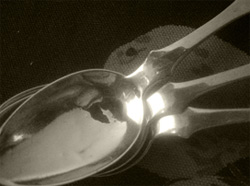
My blog's namesake - small, old and some very dented engraved silver plated tea spoons that belonged to my mother-in-law, and I use them to taste my food as I'm cooking.

Scroll down to the bottom to view my Blogroll

Posted in Desserts, on June 17th, 2007.

When I was in Berkeley 2 weeks ago Cherrie and I went on a tour of the Scharffen Berger chocolate factory. It was just a few blocks from our hotel near the waterfront and my GPS drove us right to the door in the industrial section of town. The factory itself was a big surprise – it’s quite small. Having once visited the Nestle plant in Pennsylvania, I was expecting something dramatic, especially with the panache garnered by the Scharffen Berger line.

As I think I explained before, John Scharffenberger (spelling intentional) came to some reknown as a winemaker. After a couple of decades producing some very fine sparkling wine (a favorite of mine, his to be specific), he sold the business. Then he was approached by Robert Steinberg, a friend, and now his partner in Scharffen Berger, and they decided to start a chocolate manufacturing company, but only producing a high quality – European style – product. They purchased European, i.e. old, equipment. They wanted to capitalize on the known Scharffenberger name, but John had sold the rights to it with the winery. So, they merely added a space between the n and the b and made it into Scharffen Berger. It wasn’t quite building a business in a garage, but close to it.

They don’t make chocolate every day. Although likely some pieces of equipment are running most days. The roaster (the red thing right) was in a separate room (warm and if running, very noisy). The building probably isn’t 300 feet long and about 200 feet wide, and not only housed the factory floor, but offices, a restaurant and a store. Did I spend money in there? Well, to be sure. Did we taste chocolate? Oh yes, indeed. Probably the most important thing I learned there was about how to eat a piece of chocolate: put it into your mouth, hold it on the middle of your tongue, up against the roof of your mouth, and allow it to completely melt on your tongue. Don’t chew. Don’t move it around. You’ll savor the flavors far better, and it’ll last longer besides. Kind of like how you taste wine.

To the left is the photo of the cocoa bean crusher. A huge cauldron – I mean huge – of swirling, melting chocolate and the crusher rolling around in the middle. So, it was on a blog a few months ago that I read about a recipe in the new cookbook published by the Scharffen Berger partners, The Essence of Chocolate. Liking chocolate as I do, I made it and oh – my – goodness.
What flavor. Not all that difficult. I like bundt cakes, and this one doesn’t require anything but the cake itself. It does have a caramel sauce that is poured over the hot-out-of-the-oven cake, but otherwise, nothing else. No garnishes, although you could serve with a bit of vanilla ice cream. It’s rich enough, however, as it is. I will include the nutritional information about the cake, but for heaven’s sake, whatever you do, don’t read it. I’m going to put it in the smallest type available on this blog.
Printer friendly PDF

Banana Caramel (Chocolate) Cake with Caramel Sauce

Recipe: Essence of Chocolate by Robert Steinberg and John Scharffenberger.
Serving: 12 – I think it will serve at least 16
Note from Carolyn: I think the caramel is too thick – it doesn’t drip down into the cake like I think it should, so I’ve been adding more milk to the sauce so it’s thinner.

CAKE:
2 cups all-purpose flour
1 tsp. cinnamon
1/2 tsp. nutmeg
1/4 tsp. cloves
1 tsp. salt
1 tsp. baking soda
3 large eggs
1 1/4 cups vegetable oil
1 3/4 cups sugar
1 tbsp. vanilla extract
3/4 cup chopped pecans
3 ounces chocolate — broken into small pieces (size of chips)
3 whole bananas — diced
CARAMEL:
1/2 cup firmly packed brown sugar
2 tbsp. whole milk
4 tbsp. unsalted butter — cut into pieces

1. Butter and flour a tube pan or a bundt pan that can hold 12 cups. Preheat the oven to 350°.
2. Sift together the dry ingredients (flour, cinnamon, nutmeg, cloves, salt and baking soda).
3. In the bowl of a stand mixer, combine the eggs, oil and sugar. With the paddle attachment, mix on medium speed for 2 to 3 minutes. Scrape down the sides of the bowl to ensure that the sugar has been incorporated. Add the vanilla extract and mix for another 30 seconds. With the mixer on low speed, add the dry ingredients a bit at a time. Scrape down the sides of the bowl every now and then to ensure everything is incorporated. Once the dry ingredients have been added, remove the bowl from the stand mixer and add the pecans, chocolate and bananas. Gently fold them in with a spatula or a wooden spoon. Don’t over mix.
4. Spoon the batter into the prepared pan. Bake for 50 minutes and then test the cake to see if it’s done by poking a toothpick or cake tester into the center of the cake. If it comes out clean, it’s done. If not, bake the cake for another 5 to 10 minutes. In my oven, this cake took 55 minutes.
5. About 5 to 10 minutes before the cake is done, make the caramel by combining all the ingredients in a small pan. Bring to the boil and stir occasionally to ensure that it doesn’t burn. Let it boil for about 5 minutes and then turn off the heat. The caramel needs to be thin, so add more milk if needed. Once the cake is out of the oven, poke holes all over the cake with a skewer. Immediately pour the caramel over the cake, stopping every now and then to let the caramel sink in. If the caramel pools in spots, poke more holes to allow it to sink in. Gently push cake away from sides to add more caramel.
6. Let the cake cool in the pan on a wire rack. Once it’s cool, loosen the cake from the sides of the pan and then unmold it onto a plate. If most of the caramel pooled on the top (in the pan) you may want to turn the cake back over so the wide side is on top.
Per Serving: 595 Calories; 36g Fat (52.7% calories from fat); 5g Protein; 67g Carbohydrate; 2g Dietary Fiber; 64mg Cholesterol; 308mg Sodium.

Posted in Cookies, Desserts, on June 13th, 2007.


I’m an avid reader of Cooks Illustrated. The magazine, founded and edited by Chris Kimball, is about recipes, of course, but the interesting difference is the fine tuning the developers do with each and every subject. Now you can buy special book editions of Cooks Illustrated recipes.

I’ve been a magazine subscriber, though, for probably 20 years. They take no advertising whatsoever, and each issue is about 24+ pages long. Each contains maybe 10 articles altogether, so it’s not overwhelming. They take a subject — like cabbage, let’s say, or brownies in this case — and they not only develop the recipe or a group of recipes, but the writer explains the process in great length and detail. I like that – I enjoy reading about the trials and errors. That may not be for everybody, however. So they talk about the ingredients process, sometimes the chemistry behind food combinations, and explain why using something in the recipe didn’t work and how she/he/they finally found the “right” recipe. Of course, it’s just their opinion, but I’ve rarely been disappointed by any of C.I. recipes. They also do taste tests of canned or bottled items – like tomatoes, (Muir Glen won the last time they tested them) or paring knives, or pie crust shells. That kind of thing.

So, back to brownies. This recipe was printed in April, 2004. The recipe developers and authors, Erika Bruce and Adam Ried, worked on this recipe for awhile to come up with their combination. After reading the article I just had try it. I was doing a dinner party that weekend for a fairly sizable crowd, and wanted something like finger food for dessert. The brownies were prepared, baked, and about an hour before the guests arrived I carefully cut them up and delicately balanced rows of them on an elevated cake stand and covered them with plastic wrap so they wouldn’t dry out before people got around to eating them. People began to arrive and someone oohed and aahed over the large stand full of brownies. She reached in and grabbed one and ate it right then. She was in ecstasy, she said. So, someone else had to have one. Then someone else. About a third of the brownies were gone before I’d even served appetizers (*$%!+$). But the consensus was that these were the best brownies. Do I agree?Absolutely. I’ve made them several times since then, just not recently.

So when I was telling my younger daughter, Sara, about the creation of my blog a couple of months ago, she immediately piped up and said,”Mom, the Best Ever Brownies have to go on your blog.” Now she’s an affirmed chocoholic from wa-a-ay back. But, this being 2007, I’d almost forgotten about them, lo these many years ago (3). Since I had a hankering for some chocolate today, and I’m meeting my friends Joan, Janet and Darlene later this afternoon for coffee, I thought I’d surprise them with a little treat. We have a new Peet’s that’s opened up about 4-5 miles away (we have another one closer, but it’s small). The new one is large and has lots of outdoor seating. And it’s not that crowded yet. I do love Peet’s coffee – they have a corner on the foam market in my book. I know, some people don’t like or want foam, but I love it. Theirs is dense and flavorful. Always. We buy our regular drinking coffee from Peet’s and have for years. I make espresso mostly, but Dave drinks Peet’s Decaf Sumatra nearly every day.

These brownies aren’t all that unusual, really. If you put the ingredients side by side with other brownie recipes you might not find much difference. It probably has more eggs – 4 – and not a lot of flour (although it is cake flour) which gives them a bit of a chiffon texture, so they’re not as cakey as some. There is a punch of chocolate in these, but they make 24, so really 6 ounces isn’t all that unusual. The color of the finished brownie is more like cocoa, or milk chocolate, but there isn’t any of either in the brownies. The chocolate flavor is certainly there, but it’s not like these are dense or chewy.
I’ve used Ghiradelli chocolate and Lindt too. And now I really like using Scharffen Berger. But in’04 people hadn’t gotten into designer chocolate like they have now. When I entered the recipe into my recipe program I noted back then that I didn’t have any unsweetened chocolate (which is what it calls for), so I’d used Valrhona dark instead and cut down on the sugar. Funny thing. I didn’t have any unsweetened chocolate today, either, so I used Trader Joe’s Bittersweet (it’s a Belgian chocolate) and reduced the sugar by about 1/3. The pan preparation is a bit unusual – you line the pan in both directions with foil (leaving the edges hanging over the sides, which you use to grab ahold of when you’re removing them), then spray the foiled pan with baking spray (the kind that has both oil and flour in it). I forgot to sprinkle the pecans on the top of these, as directed, but mixed them into the batter instead. Whatever you do, don’t overbake these, and it’s easy to do. I rely on my handy-dandy cake tester whenever I bake. My oven runs a few degrees hot, so I always cut down the temp by at least 5 degrees, sometimes 10, and reduce the baking time. These took 27 minutes today at 315 degrees.

You could make a half of a recipe, which might be less dangerous to have around. These freeze nicely, however. See how long these last in YOUR house! And Sara, these are for you.
Printer friendly PDF

Classic Brownies (the best brownies ever)

Recipe: Erika Bruce & Adam Ried
Source: Cooks Illustrated, 4/2004
Servings: 24
NOTES: The first time I made them I didn’t have the unsweetened chocolate, so I used Valrhona dark, which doesn’t have as much sugar in it as some chocolate. In the same article the writers did a taste test of chocolates and the tasting team preferred Ghiradelli Bittersweet best. In 2nd place was Lindt Dark Chocolate. However, both of those contain sugar, so reduce sugar in the recipe if you use them.

4 ounces pecans — chopped
1 1/4 cups cake flour
1/2 teaspoon salt
3/4 teaspoon baking powder
6 ounces unsweetened baking chocolate — chopped fine
1 1/2 sticks unsalted butter
2 1/4 cups sugar
4 large eggs
1 tablespoon vanilla extract

1. Adjust oven rack to middle position; heat oven to 325°. Cut 18-inch length foil and fold lengthwise to 8 inch width. Fit foil into length of 13 x 9 inch baking dish (preferably glass), pushing it into corners and up sides of pan; allow excess to overhang pan edge. Cut 14-inch length foil and, if using extra-wide foil, fold lengthwise to 12-inch width; fit into width of baking pan in same manner, perpendicular to first sheet. Spray foil-lined pan with nonstick baking cooking spray. If using nuts, spread nuts evenly on rimmed baking sheet and toast in oven until fragrant, about 4-8 minutes. Set aside to cool. Whisk to combine flour, salt and baking powder in medium bowl. Set aside.
2. Melt chocolate and butter in large heatproof bowl set over saucepan of almost simmering water, stirring occasionally, until smooth. (Alternatively, in microwave, heat butter and chocolate in large microwave safe bowl on high for 45 seconds, then stir and heat for 30 seconds more. Stir again, and if necessary, repeat in 15-second increments; do not let chocolate burn. When chocolate mixture is completely smooth, remove bowl from saucepan and gradually whisk in sugar. Add eggs one at a time, whisking after each addition until thoroughly combined. Whisk in vanilla. Add flour mixture in 3 additions, folding with rubber spatula until batter is completely smooth and homogenous.
3.Transfer batter to prepared pan; using spatula, spread batter into corners of pan and smooth surface. Sprinkle toasted nuts (if using them) evenly over batter and bake until toothpick or wooden skewer inserted into center of brownies comes out with few moist crumbs attached, 30-35 minutes. Cool pan on wire rack at room temperature about 2 hours, then remove brownies from pan by lifting foil overhang. Cut brownies into 2-inch squares and serve. Store leftovers in airtight container at room temperature up to 3 days (they won’t last that long!).
Per Serving : 226 Calories; 14g Fat (51.6% calories from fat); 3g Protein; 26g Carbohydrate; 1g Dietary Fiber; 51mg Cholesterol; 73mg Sodium.

Posted in Desserts, on June 6th, 2007.

This isn’t my recipe. It’s from a new book on the horizon called The Perfect Scoop, by David Lebovitz. So, how’d I find out about it? From reading food blogs, of course (The Traveler’s Lunchbox, to be exact)! Early in my blog reading, I heard about David Lebovitz and soon subscribed to his very entertaining blog.

David is an American in Paris (can you hear Gershwin’s music trilling?), although he worked for 13 years at Chez Panisse in Berkeley. I talked a bit about the dinner we had last week at that restaurant, and I recall one of the waiters mentioning the favorite dessert there is whatever cobbler is on the menu. Interestingly, David Lebovitz just wrote up a blog posting about a new rendition of cobbler using polenta, click here, and he talks about his stint at Chez Panisse. And totally off the subject of food – I sent out (to a bunch of my friends) a link to his blog after reading his “take” on Europeans, the French, the Italians, and the Americans on the subject of B.O. It’s also about the very American expression we hear everywhere, “Oh my God.” His write up is LOL (that’s cyberspeak for laugh out loud) funny. If you’re interested, click here. If you read it, read the comments at the bottom – they’re almost as funny as his blog posting.

How do you segue from body odor to ice cream. With difficulty, I think. But trudge on, I say. I tried this recipe from reading the blog, and once the book came out I ordered it for myself on Amazon for $16.47 (hardback). The book is chock full of very unusual combinations. Here’s a sampling of ice creams, sorbets or granitas in the book: Sweet Potato Ice Cream with Maple-Glazed Pecans, Roquefort-Honey Ice Cream, Oatmeal Raisin Ice Cream, Malted Milk Ice Cream (one of his favorites, he says), Chocolate-Coconut Sorbet or Black Currant Tea Ice Cream. He also includes some cookie or bar recipes that he calls “vessels” for serving ice cream. And he adds in a few toppings like glazed or candied nuts or fruits.

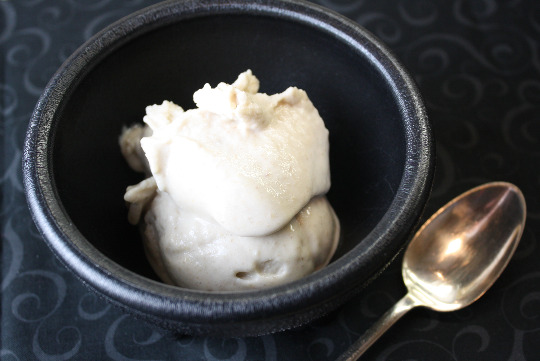
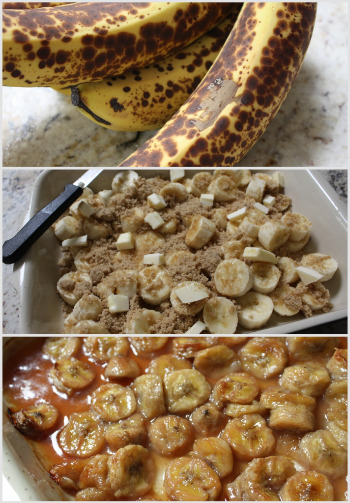
After falling in love with Banana Gelato at Gelato Vero in San Diego (see previous post about this) I was certain I’d like this rendition. You roast the ripe bananas in the oven with brown sugar and butter, then scrape out every last bit from the pan, and mix with the milk base, chill, and freeze. The brown sugar comes through, and it has a very full, rounded flavor of the bananas and caramel. It disappeared in no time, although I did serve it to guests, so there wasn’t much left after that. The best part is it’s low in calories and fat – yes, really, just 4 g of fat per serving – see nutrition info just below the recipe.
Printer friendly PDF

Roasted Banana Ice Cream

Recipe By: David Lebovitz, The Perfect Scoop
Servings: 6
NOTES: This doesn’t have a custard base, which means putting it together is a snap. The other benefit is that it doesn’t actually contain any cream. Just that little bit of butter and some milk – that’s all. But you’d never know it since it tastes as rich and creamy as any super-premium ice cream out there. But don’t take my word for it – go make some yourself!

3 medium bananas — ripe, peeled
1/3 cup brown sugar — 70 grams
1 tablespoon butter — cut into small pieces
1 1/2 cups whole milk — (375ml)
2 tablespoons granulated sugar
1/2 teaspoon vanilla extract
1 1/2 teaspoons lemon juice — freshly-squeezed
1/4 teaspoon salt

1. Preheat the oven to 400°. Slice the bananas into 1/2-inch pieces and toss them with the brown sugar and butter in a 2-quart baking dish. Bake for 40 minutes, stirring just once during baking, until the bananas are browned and cooked through. Scrape the bananas and the thick syrup in the dish into a blender or food processor (or a large bowl, if you’re using an immersion blender). Add the milk, granulated sugar, vanilla, lemon juice and salt, and puree until smooth. Chill the mixture thoroughly in the refrigerator, then freeze it in your ice cream machine according to the manufacturer’s instructions (or freeze in a covered container, blending every couple of hours with an immersion blender until it becomes solid).
2. If the chilled mixture is too thick to pour into your machine, whisking will thin it out.
Per Serving: 156 Calories; 4g Fat (23.2% calories from fat); 3g Protein; 29g Carbohydrate; 1g Dietary Fiber; 13mg Cholesterol; 142mg Sodium.

Posted in Desserts, on May 4th, 2007.

Chapter 1 of the gelato story: After having made several trips to Italy in the last 10 years, I’ve come to be a real aficionado of gelato. And although I’ve had it here at home, it never seems to taste as good as it does there. Is it the air? Is it the fact that I’m on vacation? Is it just the romance of Italy? Or, more likely, I believe, milk in Italy is just different than ours, with a higher butterfat content, and the milk tastes different because of what the cows eat. I just picture all those Italian cows munching away on REAL grass and stuff, rather than the manufactured crap and exaggerated hormones American dairies feed their milkers in order to produce the highest possible amount of milk output. I’d love to be able to bring a half gallon of Italian milk home with me from some trip to Italy and see if there was a difference. Not likely with the TSA vigilant at the screening stations and us with 5-ounce limits of anything.

Chapter 2 of the gelato story: A few years ago when our friends Yvette & Joe were coming up to visit from San Diego, Yvette said she’d bring dessert. And, oh my goodness, was it wonderful. She frequents a little gelato store on India Street (Little Italy) near downtown San Diego. Called Caffe Vera, it’s run by a ubiquitous Italian man from the old country. His shop is small, his business brisk, and his gelato par excellence. Yvette brought her favorite, banana gelato, which we enjoyed after our wonderful dinner. We’ve been back several times to bring home a batch, although the banana flavor must be ordered in advance because he ripens the bananas for several days. I also made roasted banana ice cream a few days ago, but right now we’re talking about Lemon Velvet since it was my first, successful ice cream conquest.

One of the reasons gelato is different is that it’s made mostly with milk (whole milk), not cream as our traditional ice cream contains. So, theoretically, it’s a little healthier for us than ice cream. But any nutritionist would probably question my logic there. But anyway, I love making ice cream that doesn’t require making a custard (it’s traditional here in the U.S. – a sauce made with egg yolks and cream simmered until thickened, then cooled and chilled before freezing). So when this Lemon Velvet recipe appeared in the Los Angeles Times some years ago, I clipped it out in a flash because it contains more milk than anything else. The Velvet Turtle restaurant chain was widely known in Southern California for many years, and this recipe was a regular on their dessert menu. The original recipe is printed below. Normally I substitute the evaporated milk and the regular milk with Trader Joe’s fat-free half and half. And I usually add some heavy cream instead of the half and half called for.

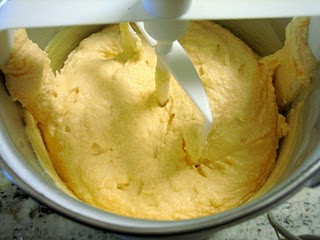
So, now, we finally get the segue for what the photo is all about. Are you getting really bored wondering when I’m ever going to get to the recipe? Just a little more explanation. About 3 years ago when Dave asked me what I’d like for Christmas I said “a Cuisinart ICE-50BC Supreme Ice Cream Maker.” Now these dream machines aren’t cheap (photo from Amazon.com). At the time they were only available at Williams-Sonoma. So, with great anticipation I began making some different kinds of ice cream and gelato every few weeks. This is one of our favorites. Okay, now you get the recipe:
Printer friendly PDF

Lemon Velvet Ice Cream

Recipe: Adapted from the Velvet Turtle, and
printed in the Los Angeles Times
Servings: 10
NOTES: This is a really smooth ice cream, and with our home-grown Meyer lemons, the perfect complement to their sweetness. This may be the best ice cream I’ve ever made in my machine. Because I like to enjoy this all year around, I freeze the lemon juice (with zest included) in 1-cup containers. Then in December when I want a little lemon pucker, it’s no trouble to prepare this. If you use other varieties of lemons the mixture may need additional sugar, so taste it and adjust as needed.

1 3/4 cups sugar
lemon zest from 2-3 lemons
1 cup fresh lemon juice
2 cups half & half
1-12 1/2-ounce can evaporated milk (I use fat-free half and half)
1 1/2 cups full-fat milk (I use fat-free half and half)
1 dash salt

1. Remove the zest from some of the lemons with a microplane grater, if possible. Combine with the fresh squeezed juice in a blender. Blend well. If you don’t have a microplane for the zest, blend this for awhile so none of the zest appears in big chunks. Pour into a large bowl with the other ingredients. Stir well to dissolve sugar. Taste for sweetness or tartness and adjust. If time permits, refrigerate.
2. Follow ice cream freezer directions and freeze in one or two batches, as needed. Scoop into a freezer container and freeze for at least one hour before serving.
Per Serving: 338 Calories; 18g Fat (47.2% calories from fat); 1g Protein; 43g Carbohydrate; trace Dietary Fiber; 65mg Cholesterol; 93mg Sodium.

Related Posts Plugin for WordPress, Blogger...