
Greek Marinated Grilled Chicken
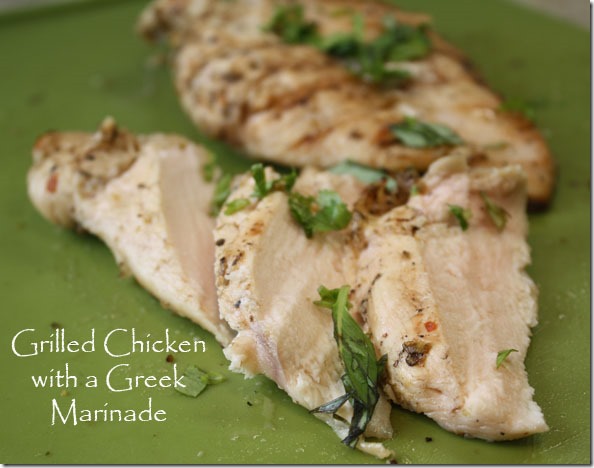
What do you think of when you hear “Greek marinade?” Lemon juice? Olive oil? Garlic? Yes, all of the above plus oregano. This recipe is more lemon juice than oil and enhanced with some red pepper flakes.
Recently I had a houseguest, Jennifer, who is vegan, but also doesn’t eat a lot of other things as well. I can’t say that it was exactly hard to cook for her, but it was a bit foreign to cook for her. My cousin was along too, and he must eat GF. So one night I made the pasta recipe I made not too long ago, Pasta alla Trapenese with Eggplant. But we had to eat it with lentil (GF) linguine. And because Jennifer was very interested in having more veggies in the dish, I added a bunch of other things, which totally diluted the flavor from the eggplant, which, to me, was the star of the dish. I couldn’t even taste the eggplant. And I’ll just tell you, I didn’t much like the lentil linguine. It was mushy and I cooked it less time than the box suggested. I count myself lucky that I’m not allergic to wheat.
So the next evening I made an old favorite created by Paul Prudhomme, The BEST Bean Salad, one that’s been on my blog for years. I didn’t fiddle with the recipe at all (it’s extremely low in fat). It was all Jennifer had for dinner except for an English muffin she microwaved with some fake shredded cheese (non-dairy and not soy based, either) on top. But Gary was craving some meat, I think, so I defrosted boneless, skinless chicken breasts and had wanted to try this Greek marinade anyway. The bean salad has very similar seasonings (lots of oregano), so the two dishes were a complement to one another.
The marinade was simple enough to make – I found the recipe over at Julie’s Lifestyle blog. I tinkered with her recipe just a tiny bit – all the main ingredients are there, I just slightly adjusted the amounts. It’s a wonderful combination – the lemon juice is the star of the show, and it shines through in the grilled result – I thought it was wonderful. I’m extremely careful when grilling chicken breasts (boneless) because they can go from moist and juicy, to dry and inedible in a matter of a minute or two. Use an instant read thermometer and take chicken breasts off at 150°F. If you use chicken thighs, they need to cook until they reach 165°F. If you’re combining both types, put the thighs on first, then the breasts during the last 6-8 minutes as they cook in no time at all.
What’s GOOD: the lemon flavor for sure. Cooked perfectly, to 150°F, they were SO juicy and tender. Easy.
What’s NOT: for some it would be cooking/grilling to that exact temperature – an instant read thermometer is a must here. If you don’t have one in your gadget arsenal, you need one!
printer-friendly PDF and MasterCook 15/16 file (click link to open recipe)
* Exported from MasterCook *
Greek Marinade for Chicken
Recipe By: Recipe adpated from Julie’s Lifestyle (blog) 2016
Serving Size: 4
5 tablespoons extra virgin olive oil
2/3 cup fresh lemon juice
3 garlic cloves — minced
3 tablespoons oregano — reduce by 2/3 if using dried herbs
3 tablespoons minced fresh parsley — reduce by 2/3 if using dried herbs
1/2 teaspoon red pepper flakes
Chicken: use boneless, skinless chicken breasts and/or thighs
1. Combine all the ingredients in a sealing plastic bag and mush around to combine.
2. Add chicken pieces [ I used boneless, skinless chicken breasts] to the bag and mush it around so all the chicken surfaces are covered in the marinade. Refrigerate for 2-4 hours.
3. Remove chicken and blot dry on paper towels. Discard marinade.
4. Heat an outdoor grill to high, then reduce temperature to medium. Using a oil-soaked paper towel, rub the grill so the chicken will be less likely to stick.
5. Place chicken pieces on the grill and cook until one side is golden brown. If the chicken sticks to the grate, leave it a bit longer – once the chicken has cooked sufficiently it should be loosened so you can lift it. Turn the chicken over and continue grilling, with cover closed, until the internal temperature of chicken breasts has reached 150° or if using chicken thighs, cook it to 165°F. Remove to a platter and allow to rest for about a minute, then serve. If you are vigilant about not overcooking the chicken (past 150°F or 165°F), you’ll be rewarded with very tender and moist chicken.
Per Serving (marinade only): 174 Calories; 17g Fat (84.1% calories from fat); 1g Protein; 7g Carbohydrate; 2g Dietary Fiber; 0mg Cholesterol; 3mg Sodium.