
A Stradivarius
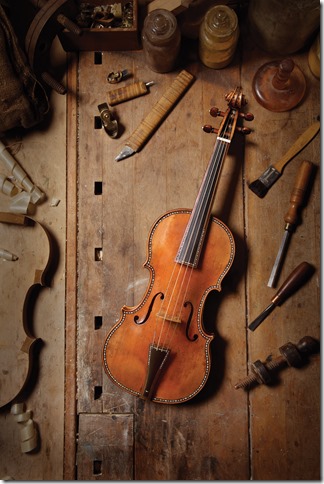
A real Stradivarius violin; photo from broadconversation.com
Until a couple of nights ago I’d only read about the famous violins, the Stradivarius. Then we went to a concert at our local outdoor amphitheater 2 nights ago and listened to a gifted young 21 year old woman, Caroline Goulding, play a real, honest-to-goodness Strad. During the concert I didn’t know she was playing one, but I noticed what a true sound came from it – it was unbelievable. I was awed. She played Mozart’s Magic Flute, for about 20 minutes, nearly nonstop, and all from memory. Amazing.
I don’t play the violin. Never have, but I wondered as I sat there soaking in the sound at the spirited playing by this young woman, that she must be playing a really good instrument. At the end someone read it in the fine print of the program – she had played a Stradivarius! Wow. I wished I’d known all through it. Not that I didn’t pay attention to it, but I’d have paid MORE attention!
For those of you who aren’t musically inclined, a Stradivarius, commonly called a “Strad” is a superb violin made by Antonio Stradivari (from the town of Cremona in Italy) back in the late 1600’s and early 1700s. The one Caroline Goulding played is called the General Kyd Stradivarius and is believed to have been made in 1720, which is on loan to her. At the rare times Strads come up for sale, they go for millions and millions of dollars. Stradivari also made harps, guitars, violas, and cellos–more than 1,100 instruments in all, by current estimate. About 650 of these instruments survive today. Experts, to this day, don’t truly understand why a Strad plays such a special tone and resonance. From Wikipedia: it is known for certain that the wood used included spruce for the top, willow for the internal blocks and linings, and maple for the back, ribs, and neck. There has been conjecture that this wood was treated with several types of minerals, including potassium borate (borax), sodium and potassium silicate, and vernice bianca, a varnish composed of gum arabic, honey, and egg white.
If I had a bucket list, that would have been on it, to have listened to a Stradivarius. So there’s your music lesson for today!