
A mini-education about beef
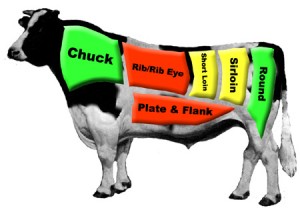
I was reading through a rather lengthy article in the January/February issue of Cooking Light, and was quite fascinated by some of the info. No matter how much I think I know, there’s always more to be learned about the different cuts, the methods of cooking, and how lean or fatty any cut is . . .
The article was titled “How to buy the best beef,” and was written by Aliza Green, the author of a new book titled Field Guide to Meat. Photo at left is from the article itself.
How about these factlets: (1) we Americans consume 63 pounds of beef a year (wow, no kidding?);(2) In 1976 we ate 89 pounds per person per year (yikes); (3) 90% of the beef we eat is grown right here in the U.S., with most of the balance coming from Canada; (4) cattle weigh about 1000 pounds at slaughter, and are 18-24 months old.
The article went on to explain about what info you can get from the new labeling laws. I knew most of that part. But it also gave a more detailed explanation of grain-finished– cattle fattened on grain, usually corn, during the 3-6 months before slaughter. Problem is that cattle don’t instinctively eat corn, so when they do they experience “stress” and other ailments, therefore they’re routinely fed antibiotics. And they also receive growth hormones (remember DES?) to increase their size (larger cattle = higher weight = more profits into pockets of producers). Grain-finished, however, means more value for our consumer dollar. Then there are the grass-finished. These cattle forage on grasses and legumes and the meat is leaner, lower in saturated fat, cholesterol and calories. This meat generally has a more gamy flavor. Problem: it’s more time consuming to raise, which therefore increases the expense. Most of such beef is imported from Canada, Australia, New Zealand, Argentina and Brazil. Many people believe that grass-fed cattle are a more sustainable choice. Lastly, there is dry-aging. It’s a traditional process preferred by many steak lovers. It concentrates, or intensifies flavors, as it hangs in temp- and humidity-conrolled rooms for 10 days to 2 weeks (longer the better). Most dry-aged meat is sold in large vacuum-packed packs. The time in-bag is called “wet aging.”
The article also stressed budget-friendly, lean and flavorful cuts. In addition to the usual that we probably know about already (tenderloin, flank and sirloin) it recommended the Bottom Round (best if marinated); Hanger Steak (rich and beefy, for searing, grilling or broiling); Tri-Tip (rich flavor, affordable, for roasting or grilling whole, then sliced); Shoulder Tender (like pork loin, to be sliced into medallions for grilling); and Shoulder Center Steak(moderately tender, to be served whole or sliced). Since I go for ribeyes, I generally don’t even look further, but perhaps I should.
Lastly, I was intrigued with the list of the top-selling cuts of beef. I think they did not include ground beef (60% of our beef dollars go to ground beef), since the list below is about “cuts” of beef:
(1) top round steak, boneless
(2) ribeye steak, lip on, bone in (yes!)
(3) ribeye steak, boneless
(4) loin top sirloin steak, boneless
(5) bottom round roast, boneless
(6) chuck under blade pot roast, boneless