
Reading Dead Wake by Erik Larson
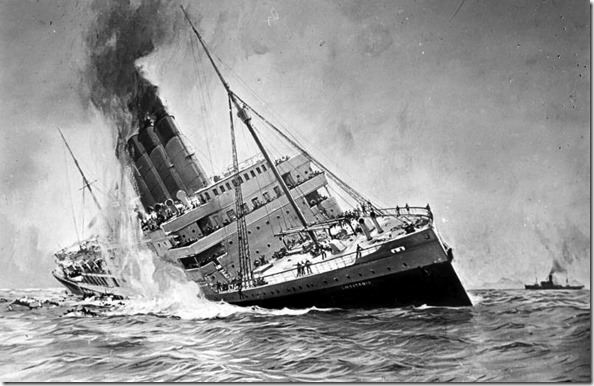
The sinking of the Lusitania in 1915 has held a traumatic place in history. It was a relatively newly built passenger liner and despite direct threats from the Germans that they could/would sink any military or merchant vessel, the Cunard line felt that cruise ships would be left alone and not bothered by the warring nations. Pipe dream, that.
Probably I’d never have read this book if it hadn’t been chosen by one of my book clubs. But that’s one of the joys of belonging to a book club with people of varied interests – you’re asked to read books that you might not ordinarily choose.
Erik Larson is the very well-respected author of several books, most notably The Devil in the White City: Murder, Magic, and Madness at the Fair That Changed America and In the Garden of Beasts: Love, Terror, and an American Family in Hitler’s Berlin
 . What Larson does is collect the facts, copious amounts of them, and cull them down to write a very engaging story – the truth – about what really happened. Many information archives (both British and German) are now available for public perusal, and that in itself makes for very interesting reading,
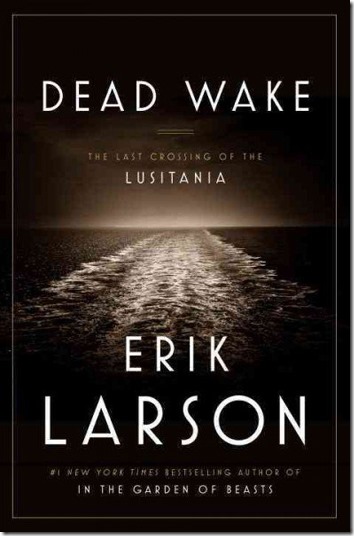 telling the true minute by minute action that occurred that fateful day off the Ireland coast when 1,198 people were drowned in the very rapid sinking of this flagship of the Cunard line. And the weeks leading up to the sinking. Many people survived, and its from them that even more information is known about exactly what happened on different decks or sides of the ship. About who acted well, and who didn’t. The Captain of the ship was presumed drowned, as he stayed with the ship until the ship sunk below the surface. He never expected to live, and only came to hours later. His career was marred because no one stood up for him, to share that he had no knowledge. It wasn’t his fault. Cunard had instructed the ship to reduce speed to save fuel (when speed could have saved them, yet the Captain did as he was instructed). No one told him to go north to avoid detection. A big snafu from everyone around.
Reading such a book now, with the kind of technology we have from radar and sonar, and satellite, makes this book and the lack of knowledge for both the ship and the U-Boat amazing reading. I was riveted to the chronology, the messages (or lack thereof) between the Admiralty, the Cunard line to its Captain and the secret department in the British military who were deciphering coded messages from the U-Boats. Yet the information was never shared with the merchant ship for fear of disclosing the fact that the Brits knew of their intent. It could have changed the course of the war had they known. The woman who reviewed the book for us made a really interesting comparison about the sinking of the Titanic vs. the sinking of the Lusitania. So different in every aspect. Made for very interesting contemplation.
The book is on the best seller list, and rightly so. It’s a really good read, though the part detailing the passengers who drowned, fell overboard or had any variety of accidents in trying to save themselves was heartbreaking to read. If you buy this, be sure to scan through the last 40-50 pages of footnotes – they make fascinating reading all by themselves. It tells you, again, how thorough Larson was in researching the material.