
Tomatoes – Everything You’ve Always Wanted to Know
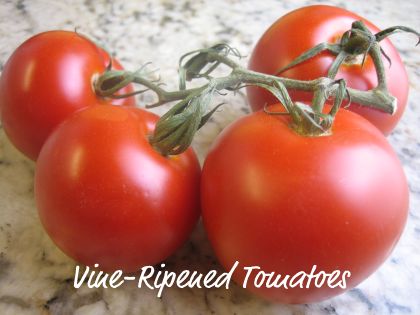
I’ll be doing some cookin’ in the kitchen later today, but no new recipes this morning. I still have plenty of recipes to post from my own collection, but I don’t have photos of them – – yet. Therefore, since it’s high season here for tomatoes, I’ll give you the low-down on them, with all the info coming from the book How to Pick a Peach, by Russ Parsons. This particular chapter has more chemistry-related content than most others I’ve shared with you. It may be a bit more scientific, but I found it very interesting.
What I Learned About Tomatoes
- Tomato flavor or lack thereof, is one of the biggest complaints in the produce world.
- Scientists who study flavor chemistry have identified more than 400 compounds that go into the taste of a ripe tomato. And more than 30 of those are regarded as essential (as low as one part per million). The human nose can detect some odors/flavors in parts per trillion. [Now that’s a statistic we foodies need to remember. Really.]
- Here are the four compounds found in greatest concentration in tomatoes: Z-3 hexenal – a fresh green fragrance (like cut grass); Beta-damascenone – generally described as fruity and sweet; Beta-ionone – fruity and woody; 3-methylbutanal – nutty-cocoa facets (it’s happens to be in Parmesan cheese)
- Flavor compounds present in a whole tomato change when the tomato is altered (cut).
- When a tomato turns from green to red, it’s caused by the development of coloring chemicals called carotenoids, which have flavor-causing chemicals attached to them.
- As a tomato ripens, the amount of sugars build
- As a tomato ripens, the acids change, from malic to citric
- As a tomato ripens, a whole host of aromatic chemical compounds are formed: hexanal (winey), alanine and leucine (meaty), and valine (fruity. Furaneol (pineapple aroma) is also created.
- Tomatoes can be picked green and will continue to ripen, especially if exposed to ethylene gas (that’s what nearly all tomato producers do).
- Even vine-ripened tomatoes (that we consumers pay a premium to buy) are picked at a stage that most of us would consider green, when only the very first traces of a tan, yellow or pink blush appear on the tomato’s base.
- The biggest challenge with tomatoes is to produce a fragile, temperamental product on an industrial scale. The same problem exists for nearly every agricultural producer.
- Unfortunately, taste has been the least of anyone’s concern in the industrial side of the business, and as a result, breeders have developed tomato strains that resist all manner of cankers and wilts and very little on flavor.
- Temperatures below 60 degrees F reduce the aroma-creating volatiles in the fruit.
- If you ever go to a grocery store and see tomatoes are being refrigerated, don’t buy them. (Industry experts are still trying to educate grocery stores in proper storage, and it’s not in the cooler.)
- Eighteen states grow tomatoes here in the U.S., with California and Florida leading the parade. But, a third of all sold here come from overseas (Mexico, Canada and the Netherlands primarily).
How to Choose and Store Tomatoes:
- Avoid tomatoes with any flaws – nicks, dents or cuts.
- Choose tomatoes that are heavy for their size.
- Other than looking at the color (more red than green) disregard color unless you’re going to eat it immediately.
- Over-ripeness can be just as much trouble as under-ripe. Over-ripe tomatoes are mealy with off flavors.
- Trust your nose.
- Do not EVER put a tomato in the refrigerator – it’ll kill flavor faster than anything.
- Do not store tomatoes in direct light.
Russ Parsons’ Favorite Simple Dish: Dice seeded (cut a tomato in half and squeeze gently to remove most seeds), unpeeled tomatoes as finely as you can. Dress them with a little olive oil, salt and freshly ground black pepper. Taste them, and if they need a little red wine vinegar, add that. Place a log of fresh goat cheese on a plate and spoon the tomatoes around it. Parsons says “you may never go back to tomatoes and fresh mozzarella.”
The book also included recipes for an Heirloom Tomato Tart, Golden Tomato Soup with Fennel, and Seared Scallops with Tomato Butter.
When I did a search within my own recipe collection posted here at TastingSpoons, my list was huge. But tomatoes may have played a very minor part of most of those recipes. Here are the ones where they played a starring role, or contribute some significant flavor: sorry to harp on the combination of watermelon and tomatoes, but here are the two I’ve posted about that, watermelon and tomato salad, and watermelon and Feta salad. Then there’s my favorite BLT Salad, Strawberry Gazpacho, Pasta ala Puttanesca, Bacon & Tomato Dunk (an appetizer), Creamy Tomato Soup (from canned tomatoes), Siciliana Sauce, and Pasta with Tomato Cream Sauce.