
Peaches & Nectarines (Everything You Always Wanted to Know)
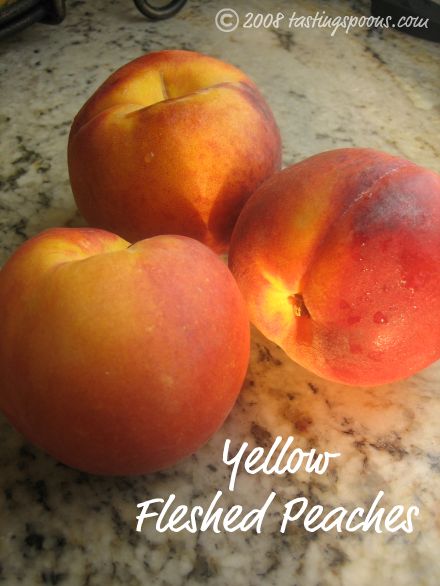
This is another installment in my so-called series on fruits and veggies, all based on the book “How to Pick a Peach,” by Russ Parsons. Here in California, peaches and nectarines are in high season. And they are delicious this year, I must say.
What I Learned:
- Peaches and nectarines are nearly interchangeable (other than the obvious: the nectarine has no fuzz) from the consumer’s point of view.
- White-fleshed fruit is better and sweeter than the golden fleshed (yes, really).
- As consumers we seem to prefer red-toned skin of the fruit, but really the best P’s and N’s are those with a golden tone to the skin. The red is a breeding technique (a genetic variation actually) and doesn’t indicate anything; in fact, it hides whether the fruit is ripe or not.
- Parsons tells an interesting tale about a marketing experiment: A tasting panel was given two nectarines: one a fairly tasteless red variety, the other a great-tasting gold. Sitting around, tasting and talking about the fruit, the consumers unanimously agreed that the gold was a much better nectarine and that was the one they would buy. Then, on the way out the door, the panelists were offered boxes of nectarines as a thank you. One held the preferred golden fruit, the other the red. To a person, the consumers picked the red fruit to take home. Red sells.
- Growers have bred out peaches with the tiny beak at the bottom – it tends to break during packing and shipping, which can cause the entire case to rot.
- All nectarines are grown in California; peaches come from 28 states, but more than half from California.
- The greatest demand for white-fleshed fruit is from Asia – used to be that more than 80% of the fruit went to Taiwan. Not true any longer as we’re tending to recognize the value in the white-fleshed fruit.
- The difference between a nectarine and a peach is simply one gene. They’re so closely related, though, that sometimes peach seeds will sprout a nectarine tree. [Isn’t that amazing?]
- Nectarines are a slight bit more acidic with a lemony top note. Peaches tend to be muskier and richer in flavor.
How to Choose & Store:
- Remember, red doesn’t mean better. Choose from the background color – golden, not green. If it’s hung on the tree to near maturity, it should have a distinctive orange cast.
- If they are still firm, leave out on your counter until fully ripened, then refrigerate. Do not chill under-ripe fruit – it will turn mealy and dry.
- Don’t peel nectarines, but peaches should be peeled. Cut a shallow X in the blossom end, then blanch quickly in boiling water, then place in a bowl of ice water to stop the cooking. The skins should peel right off.
Parsons gives recipes for Peach Gelato, Nectarine-Cardamom Ice Cream plus Nectarines and Blackberries in Rose Geranium Syrup. But he mentions his favorite (no recipe), which is merely fresh peaches and shortbread.
– – – – – –
Or how about a peach shortcake? I had some buttermilk golden raisin scones in the freezer – I baked those, smeared on some Devon Cream (both of these items left over from the luncheon tea about a month ago) and sliced the peaches on top. And then I drizzled about a teaspoon of heavy cream over the top. My market doesn’t have any white-fleshed peaches (yet), but these yellows were just fabulous. I searched for the ones that had less red on the skin – they all were quite red, but I spotted a few with less red than others.

Here are the recipes I’ve posted so far for peaches or nectarines:
In case you’re interested, the photo at the top was taken in my kitchen, but the nearly setting sun happened to be narrowly slotted right into my photo area. I re-arranged the peaches with that lovely warm highlight on the center of the bunch. Makes it almost look like they are luminous, doesn’t it?