Get new posts by email:

Archives

Currently Reading

Here are the tastingspoons players. I’m in the middle (Carolyn). Daughter Sara on the right, and daughter-in-law Karen on the left. I started the blog in 2007, as a way to share recipes with my family. I’m still doing 99% of the blogging and holding out hope that these two lovely and excellent cooks will participate. They both lead very busy lives, so we’ll see.

– – – – – – – – – – – – – – – – – – – – – –

BOOK READING (from Carolyn):

Music of Bees, Eileen Garvin. Absolutely charming book about a woman in midlife, lonely, who raises bees, also makes unlikely friends. Heart-warming and very interesting about beekeeping.

A Postcard from Paris, Alex Brown. Really cute story. Dual time line, 1940s and present day about renovating an old apartment in Paris, things discovered.

Time of the Child, Niall Williams. Oh such a good book. Very small village in Ireland, 1960s. A baby is left on the doorstep. The town all whispers and helps. I listened to an interview of the author, which made me like him and his books even more.

Sipsworth, Simon Van Booy. If you like animals you’ll swoon. An old woman who really wants to die finds a tiny mouse in her house and befriends it and finds a reason to live. Utterly charming book.

The Forger’s Spell, Edward Dolnick. True story. For seven years a no-account painter named Han van Meegeren managed to pass off his paintings as those of Johannes Vermeer.

If You Lived Here, You’d be Home by Now, Christopher Ingraham. Could hardly put it down – about a journalist who takes on a challenge to move to small town in Minnesota and write about it. He expects to hate it and the people and place, but he doesn’t. Absolutely wonderful true story.

The River We Remember, William Kent Kreuger. 1950s, Minnesota. A murder and the aftermath. Could hardly put it down. Kreuger has such a vivid imagination and writing style.

How the Lights Gets In, Joyce Maynard. An older woman returns to New Hampshire to help care for her brain-injured son. Siblings and family, lots of angst and resentments.

The Filling Station, Vanessa Miller. Every American should read this book. A novelized retelling of the Tulsa massacre in 1921. Absolutely riveting.

The Story She Left Behind, Patti Callahan Henry. Love this author. Based on a true story. A famous author simply vanishes, leaving her husband and daughter behind. She had invented a mystical language no one could translate. Present day, someone thinks he’s solved the riddle, contacts the family. Really interesting read.

The Girl from Berlin, Ronald Balson. Love anything about Tuscany. An elderly woman is being evicted from a villa there, with odd deed provenance. Two young folks go there to help unravel the mystery. Loved it.

The Island of the Colorblind, Oliver Sacks, M.D. Nonfiction. The dr is intrigued by a remote Pacific island where most of the inhabitants are colorblind. He also unravels a mystery on Guam of people born with a strange neurological problem. Medical mysteries unveiled. Very interesting.

The Bookbinder, Pip Williams. Post 1914 London. Two sisters work at a bookbindery. They’re told to not read the books. One does and one doesn’t. One has visions beyond her narrow world; the other does not. Eventually the one gets into Oxford. Lovely story.

The Paris Express, Emma Donoghue. 1895 on a train to Paris, a disaster happens. You’ll delve into the lives of many people who survived and died in the crash.

A Race to the Bottom of Crazy, Richard Grant. This is about Arizona. Author, wife and child move back to Arizona where they once lived. Part memoir, research, and reporting in a quest to understand what makes Arizona such a confounding and irresistible place.

The Scarlet Thread, Francine Rivers. A woman’s life turned upside down when she discovers the handcrafted quilt and journal of her ancestor Mary Kathryn McMurray, a young woman who was uprooted from her home only to endure harsh frontier conditions on the Oregon Trail.

A Place to Hide, Ronald Balson. 1939 Amsterdam, an ambassador has the ability to save the lives of many Jewish children. Heartwarming.

Homeseeking, Karissa Chen. Two young Chinese teens are deeply in love, but in China. Then their families are separated. Jump to current day and the two meet again in Los Angeles.

North River, Pete Hammill. He always writes such a good story. A doctor works diligently healing people from all walks of life. His wife and daughter left him years before. One day his 3-yr old grandson arrives on his doorstep.

A Very Typical Family, Sierra Godfrey. A very messed-up family. Three adult children are given a home in Santa Cruz, Calif, but only if the siblings meet up and live in the house together. A very untypical scenario but makes for lots of messes.

Three Days in June, Anne Tyler. The usual Anne Tyler grit. Family angst. This wasn’t one of my favorites, but it was entertaining and very short.

Saved, Benjamin Hall. Author is a veteran war reporter. Ukraine, 2022, he nearly loses his life to a Russian strike. Riveting story – he survives, barely.

Grey Wolf, Louise Penny. Another Inspector Gamache mystery in Quebec. She is such an incredible mystery writer.

All the Colors of the Dark, Chris Whitaker. A missing person mystery, a serial killer thriller, a love story, a unique twist on each. Could hardly put it down.

Orbital, Samantha Harvey. Winner of 2024 Booker Prize. I don’t usually like those, but I heard the author interviewed and she hooked me. This is not a normal book with a beginning, a story and an end. It’s several chapters of the day in the life of various astronauts at the ISS (Int’l Space Station). All fictional. She’s been praised by several real astronauts for “getting it” about space station everyday life.

The Blue Hour, Paula Hawkins. An island off Scotland. Inaccessible except when the tide is out. Weird goings on. An artist. A present day mystery too.

Iron Lake, William Kent Krueger. A judge is murdered and a boy is missing. Riveting mystery.

Tell the Wolves I’m Home, Carol Ricks Brunt. 1980s. A 14-yr old girl loses her beloved uncle. Yet a new friendship arises, someone she never knew about.

Four Treasures of the Sky, Jenny Zhang. 1880s, a young girl is kidnapped in China and brought to the United States. She survives with many hurdles in the path.

The Boy Who Fell out of the Sky, Ken Dornstein. Memoir, 1988. The author’s brother died in the PanAm flight that went down in Lockerbie, Scotland. A decade later he tries to solve “the riddle of his older brother’s life.”

Worse Care Scenario, T.J. Newman. Oh my. Interesting analysis of what could/might happen if a jet crashed into a nuclear plant. Un-put-downable.

Song of the Lark, Willa Cather. Complicated weave of a story about a young woman in about 1900, who has a gifted voice (singing) and about her journey to success, not without its ups and downs.

Crow Talk, Eileen Garvin. Charming story which takes place at a remote lake in Washington State, about a few people who inhabit it, the friendships made, but also revolving around the rescue of a baby crow.

The Story Collector, Evie Woods. Sweet story about some dark secrets from an area in Ireland, a bit magical, faerie life, but solving a mystery too.

A Sea of Unspoken Things, Adrienne Young. A woman investigates her twin brother’s mysterious death. She goes to a small town in California to figure it out, to figure HIM out.

The King’s Messenger, Susanna Kearsley. 1600s England, King James. About one of his trusted “messengers,” and his relationship with a young woman also of “the court.” Lots of intrigue.

In the Shadow of the Greenbrier, Emily Matchar. Interesting mystery in/around the area of the famous resort in White Sulphur Springs, West Virginia.

Isola, Allegra Goodman. Hard to describe, survival story on an island in the 1600s.

Save the Date, Allison Raskin. Rom-com, witty, LOL funny. Clever.

The Sirens, Emilia Hart. Numerous time-lines, Australia. Mysteries abound, nightmares, abandoned baby, weird allergies.

Red Clay, Charles Fancher. LOVED this book. Mostly post-Civil War story about the lives of slaves in Alabama during Reconstruction.

Stars in an Italian Sky, Jill Santopolo. Dual time line, 1946 and recent time. Love stories and a mystery.

Battle Mountain, C.J. Box. Another one of Box’s riveting mysteries. Love his descriptions of the land.

Something Beautiful Happened, Yvette Corporon. A memoir of sorts in Greece, tiny island of Erikousa, where the locals hid Jews during WWII. All elusive stories told by the author’s grandmother.

The Jackal’s Mistress, Chris Bohjalian. 1860s Virginia, about a woman who saves the life of a Union soldier. Really good story.

Song of the Magpie, Louise Mayberry. Really interesting story about Australia back in the days when it was mostly a penal colony. Gritty strength of a woman trying to thrive with her farm.

The Boomerang, Robert Bailey. A thriller that will have you gripping the book. About a lot of secrets surrounding the president (fictional novel, remember) and his chief of staff and about cancer. A cure. Such a good story.

Care and Feeding, Laurie Woolever. Really interesting memoir of a woman driven to succeed in the restaurant business. She worked for Mario Batali and then Anthony Bourdain. Gritty stories.

Everything is Tuberculosis, John Green. Maybe not a book for everyone. A real deep dive into the deadly tuberculosis infection, its history. I heard the author interviewed and found the book very interesting.

The Book Lovers Library, Madeline Martin. Fascinating read about Boots’ drug stores’ lending library. And the people who worked in them.

The Arrivals, Meg Mitchell Moore. LOL funny, about a middle-aged couple whose children (and their various family members) return to the family home and the chaos that ensues.

My Life as a Silent Movie, Jesse Lee Kercheval. About grief. A big move to Paris, finding herself a new life with a new set of real blood family.

Escape, Carolyn Jessop. Another memoir about a woman really in bondage in Utah, Mormon plural marriage.

 

Tasting Spoons

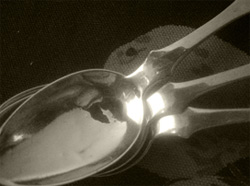
My blog's namesake - small, old and some very dented engraved silver plated tea spoons that belonged to my mother-in-law, and I use them to taste my food as I'm cooking.

Scroll down to the bottom to view my Blogroll

Posted in Pasta, on February 9th, 2008.

I’m on a roll. Trying some of the recipes amongst the hundreds of clippings I sorted through a few days ago. This one was only about 7 months old – after I broke my foot last summer I watched a heck of a lot of television, and this was one of Giada’s Italian recipes that sounded so good, and I knew I’d enjoy it. It’s easy to make, too. Can’t beat that combination. I really can’t say that I make all that many recipes from Food Network shows. I enjoy watching some of them (as theater, I suppose) but only occasionally do I go to the Network’s site and print out a recipe.

Here is Giada De Laurentis’ stuffed jumbo shells, placed in a baking dish. Photo from the Food Network.

I almost always have pancetta on hand, but I didn’t have the 3/4 inch cubes Giada mentions in the recipe – I had the tiny cubed pancetta that I get from Trader Joe’s in 4-ounce packages. DH offered to go grocery shopping for me, so I wrote down “large pasta shells.” I should have known that “jumbo” was what I wanted. Soooo, I had to improvise a bit. The large shells are way too small to stuff, so I just made a casserole of them instead. Am sure they tasted the same, but most definitely didn’t look as attractive as Giada’s. The Asiago cheese is part of what “makes” this dish, since it has a kind of sharp taste. Good, though. And the dash of nutmeg in the mixture was really delish. The dish is rich, so it’s filling. Maybe a bit too rich for me. DH liked this a LOT. Said I could make this anytime. Any day. Night. Whenever.
printer-friendly PDF

Shells with Crispy Pancetta and Spinach

Recipe: Giada de Laurentis, Everyday Italian, Food Network
Serving Size : 8 [Giada says this feeds 4-6. No way – more like 8-10 in my estimation.]

SHELLS:
1 package jumbo pasta shells — (12-ounce)
2 tablespoons olive oil
1/2 pound pancetta — cut into 3/4-inch cubes
2 pounds frozen spinach — thawed and drained
15 ounces ricotta cheese — whole milk
1 cup asiago cheese — grated
1/2 teaspoon freshly ground black pepper
1/4 teaspoon grated nutmeg
SAUCE:
1 tablespoon butter
1 garlic clove — minced
1 cup cream
2 cups asiago cheese — grated, set aside 1/4 cup
1/4 cup chopped fresh parsley
1/4 teaspoon freshly ground black pepper

1. Preheat the oven to 375 degrees F.
2. For the shells: Bring a large pot of salted water to a boil over high heat. Add the pasta and cook until tender but still firm to the bite, stirring occasionally, about 8 to 10 minutes. Drain pasta.
3. Warm the olive oil in a large, heavy skillet over medium heat. Add the pancetta and cook until lightly golden, about 5 minutes. Remove the pancetta from the pan with a slotted spoon and transfer to a large bowl. Add the spinach, ricotta cheese, asiago cheese, pepper, and nutmeg. Stir to combine. Stuff the shells with about 2 tablespoons of the spinach mixture each and place the stuffed shells in a large, buttered baking dish.
4. For the sauce: Melt the butter in a medium saucepan. Add the garlic and cook for 1 minute. Add the cream and bring to a simmer. Turn the heat to very low and add the 2 cups asiago cheese, parsley, and pepper. Stir until the cheese is dissolved. Pour the sauce over the shells. Top with the remaining 1/4 cup asiago cheese.
5. Bake until golden on top, about 25 minutes. Remove from the oven and serve immediately.
Per Serving: 410 Calories; 31g Fat (66.9% calories from fat); 26g Protein; 9g Carbohydrate; 4g Dietary Fiber; 103mg Cholesterol; 1419mg Sodium.

Posted in Soups, on February 8th, 2008.

Some years ago we were at the home of friends, and many others had been invited to participate in a Russian dinner. Each couple brought something. I made a pie, I think. With a crust that should never be repeated. I’d followed a recipe that was supposed to be a Russian type, made with an egg yolk. Well, anyway, we’ll gloss over that disaster. One of the other couples brought a very authentic borscht. It was what she called a winter borscht, made with beef. It was deliciously deep in flavor, but she wouldn’t share the recipe, was almost offended that I’d ask, as it was a family one. I’ve never forgotten that borscht, and have pined away, wishing I knew how hers was made. So, ever since, I’ve collected borscht recipes, thinking I’d make it sometime.

Wikipedia has a very comprehensive page of information about borscht. About its origin (Russian, Ukrainian, Lithuanian, even Polish), and its two major variations (hot-winter, and cold-summer). The common thread is beets (except for one summer version using sorrel), but what a bunch of variations it suggests. Makes my mind reel even thinking of all the combinations. About as varied as curry powders are to the East Indians, or a green salad to anyone in the world. It’s all in the interpretation, and what is in your larder.

Set before me I had four recipes, all slightly different. Naturally, the common thread was beets. Yet they all included onions, tomatoes, tomato paste, and cabbage. Two had beef in it. Another was vegetarian. And one had andouille sausage (also likely not authentic).

Sidestep with me a bit. We have friends, Mike & Norma. Mike does most of the cooking in their house, and as a Louisiana boy, he loves his rice, red beans. And Andouille (pronounced ahn-doo-wee) sausage. A year ago Mike made a dinner of red beans, rice and sausage for us, which was fabulous. And he kindly bequested to me a package of Andouille. I tucked it into the freezer until I was ready to make something with it. It’s been a year, for goodness’ sake. But Sunday was the day to use it.

I took what I thought was the best of all four recipes and made it my own. Even adding one little thing that probably isn’t true to the genre of borscht, that being thyme.

I baked the beets in the oven (easier to get the skins off), sauteed the vegetables, added almost all the ingrients and simmered for a couple of hours. At the very end you add the Andouille. I’m sure I’ve mentioned before, if you simmer a sausage (a delicious, flavorful sausage of any kind) in a soup, it gives up all of its flavor to the soup, so when you chow down and expect that Kielbasa or Hungarian sausage to have some flavor, you’ll find that it’s absolutely blah. Nothing but soft texture with no flavor whatsoever. Test the soup for seasonings – mine needed just a tad more sugar (note there is 2/3 of a cup of red wine vinegar in it). So, the Andouille, a treasure for sure unless you happen to live anywhere near New Orleans, needs to be added in at the very end, so it still has that spark of heat and chewiness. The resulting chunky soup is just the richest red/orange color, and when serving garnish the soup with a moderate dollop of sour cream.

So, interpret away. Make borscht yours too, with additions of your own. And, THANKS MIKE, for the Andouille. I took two quarts of borscht to them on Sunday afternoon – that was Mike’s request – whatever I made with the gifted Andouille, I needed to share it with him. Gladly!
printer-friendly PDF

Borscht with Andouille

Recipe: Carolyn T’s original
Servings: 8
NOTES: If you add the Andouille at the beginning, it will lose all its flavor to the soup. Therefore, add it at the very end, just before serving.

2 tablespoons olive oil
1 large yellow onion — peeled, chopped
2 cloves garlic — minced
2 large carrots — chopped
3 stalks celery — chopped
2 whole bay leaves
1/2 teaspoon thyme
1 quart chicken broth
2 pounds beets
1 whole potato — peeled, cubed
28 ounces whole tomatoes — crushed by hand, including juice
1/4 cup tomato paste
1 head red cabbage — sliced thin
2/3 cup red wine vinegar
3 tablespoons brown sugar
3 tablespoons sugar — or Splenda [may need a touch more]
1 tablespoon Hungarian paprika
3 cups water
12 ounces Andouille sausage — skinned, chopped into cubes
1 cup sour cream

1. Preheat oven to 350. Cut off beet tops only, then place on foil lined baking sheet. Bake for 60 minutes, or until beets are just tender. Remove from oven and allow to sit for 15 minutes until they can be handled. Cut off tops and ends, then slip skins off beets and chop into cubes.
2. Meanwhile, heat a large soup pot over medium flame and add olive oil. Add onions and saute for 3-5 minutes until just beginning to brown around the edges, then add garlic, carrots, celery, bay leaves and thyme. Stir and cook for 1-2 minutes, then add the chicken broth. Add tomato paste, tomatoes, red wine vinegar and sugars and water. Bring to a simmer, then add cabbage and the paprika. Simmer for 2 hours at a minimum.
3. Taste for seasoning (add salt or pepper or both, as needed). Add more sugar if the mixture is too acidic. Add the Andouille sausage at the very end, just long enough to heat through.
4. Ideally, make this a day ahead and allow flavors to meld overnight. Heat to a simmer, scoop into large bowls and add a dollop of sour cream to each bowl.
Per Serving: 377 Calories; 22g Fat (51.3% calories from fat); 14g Protein; 33g Carbohydrate; 5g Dietary Fiber; 36mg Cholesterol; 579mg Sodium.

Posted in Breads, on February 7th, 2008.


Added note (later): Since I baked this bread back in early 2008, I’ve made another Irish Soda Bread with Orange Zest that I think is better than this one. Even if you don’t like orange zest, just eliminate it from the recipe – but do go to that recipe first. I like the texture of the other bread better too.

The recipe came from Gourmet, a reader’s recipe, Stephanie Foley of Massapequa, Long Island, from March, 2002. It’s a bit different than many Irish Soda Bread recipes, which is why I decided to try it, back then. With the exception of the butter brushed on the loaves prior to baking, the only fat in it comes from the buttermilk, which isn’t much. I’ve made it several times since then, always getting rave reviews for it. Truly it comes together in about 7 minutes, including time to gather the ingredients. Then it bakes about 35-40 minutes. Ideally you’ll want to let it rest a bit before cutting it, but sometimes I’ve not had that luxury. But you must let it rest about 5 minutes, otherwise it’s too hot to handle. It’s heaven-on-a-bun [pun intended] with some unsalted butter spread on it, accompanying a soup.

Ready for the oven: here are the dough loaves, cut with 1/2 inch deep furrows, spread with butter.

Cook’s Notes: my flour must be drier here in Southern California, than some, because I always have to add a drizzle more buttermilk to the bowl to give the dough enough liquid to pull it together. I added walnuts to this one, but that’s optional. I’m sure it’s not traditional. Some people don’t like caraway, so eliminate it. I didn’t melt the butter to spread on top of the loaves – I just used a spreader knife and brushed it with very soft butter instead. I’ve never tried substituting some whole wheat flour, but am sure you could. Would be better for us, obviously. This recipe says it serves up to 12 people. Maybe so, if you ate only one small slice. Not in our house. Each loaf probably serves 4, but that’s max unless you have very small eaters. And, I think this bread is best eaten when it’s warm and fresh. It gets dried out if frozen.
printer-friendly PDF

Irish Soda Bread

Recipe: Gourmet, March, 2002
Servings: 12 [more like 8]
4 cups all-purpose flour
1 1/2 teaspoons baking soda
1 teaspoon salt
1 tablespoon sugar
1 1/2 tablespoons caraway seeds [optional]
1 cup raisins, golden raisins or currants [also optional]
1/2 cup walnuts, chopped [my addition]
1 3/4 cups well-shaken buttermilk
2 tablespoons unsalted butter, melted

1. Preheat oven to 375°F.
2. Butter and flour a large baking sheet, knocking off excess flour.
3. Sift together 4 cups flour, baking soda, and salt into a large bowl and stir in sugar, caraway, and raisins. Add buttermilk and stir just until dough is evenly moistened but still lumpy.
4. Transfer dough to a well-floured surface and gently knead with floured hands about 8 times to form a soft but slightly less sticky dough.
5. Halve dough and form into 2 balls. Pat out each ball into a domed 6-inch round on baking sheet. Cut a 1/2-inch-deep X on top of each loaf with a sharp knife, then brush loaves with butter.
6. Bake in middle of oven until golden brown and bottoms sound hollow when tapped, 35 to 40 minutes. Transfer loaves to racks to cool completely.
Per Serving: 226 Calories; 3g Fat (11.1% calories from fat); 6g Protein; 45g Carbohydrate; 2g Dietary Fiber; 6mg Cholesterol; 394mg Sodium.

Posted in Chicken, on February 6th, 2008.


Here’s the mustard and herb chicken as it was served on the plate, on a bed of red onions, with cauliflower on the side.


Here’s the chicken after baking. Note bread crumb crust.

Those of you who regularly read my blog will remember that a few days ago I felt so proud of myself after spending many hours clipping and filing recipes. It needed doing. Then yesterday I went into our laundry room, which has two tall shelves that are completely full of kitchen equipment that won’t fit in my kitchen. And I went to a 8-inch stack of handouts from cooking classes I’ve been to, and was hunting for a specific recipe that was lacking a topping. Out came the stack and I set it on the washing machine and began looking for the Joanne Weir class where she served that particular dish. And what did I find in this stack? Oh my. More recipes that had been torn out of magazines and newspapers. From about 2004 and 2005.


And yet again, one recipe floated its way to the top and said “fix me.” I’ve only begun sorting and piecing together recipes in this new stack.

Sometimes the simplest of recipes are just over-the-top good. That’s the story about this recipe. It came together in less than 30 minutes, and while the chicken was baking I was able to throw together some pan-sauteed cauliflower to serve with it. And to saute the onions that served as the bed under the chicken. The recipe came from Food & Wine, February 2006. According to F&W’s website, this was a “staff favorite.” I understand why.

You make a crumb crust from fresh bread. The recipe calls for 2 slices of country bread. Well, we don’t have country bread on hand in our house – I buy good multi-grain bread at the Corner Bakery every week or so and slices are individually wrapped and frozen. So I used one slice of that bread plus some panko crumbs to make the topping, which also contains Parmesan cheese, garlic, fresh rosemary (I dashed outside, in the dark, mind you) and a bit of olive oil to hold it together. The chicken thighs (I only had skinless, boneless, not what’s called for in the recipe) are seasoned, then browned briefly in a large saute pan that can go in the oven. Once you flip them over you slather them with some Dijon mustard, then carefully mound the crumb mixture on top before popping the pan in the oven at a high temp to bake for about 15 minutes.

Meanwhile I started the cauliflower, and about 7-8 minutes before the chicken was done I sauteed the onion, sugar and lemon juice mixture that goes underneath the chicken. DH and I both just l-o-v-e-d it. Really l-o-v-e-d it. I’ll make this again and again. The thighs were perfectly cooked. And the onions were still just slightly crunchy, which we both liked. The best part is that it came together in 30 minutes.

Cook’s Notes: The recipe says it served two (two thighs each) but for us, one thigh, with the onion bed, and another veg on the side was plenty. So for me, I’d say it served 4 if the thighs are moderate sized. I used a red onion. Any kind would likely work.
printer-friendly PDF

Mustard-and-Herb Chicken

Recipe: Stuart Brioza and Nicole Krasinski, Food & Wine, 2/06
Servings: 4
NOTES: This recipe makes a strong argument for using fresh bread crumbs. Unlike store-bought ones, which can be powdery, fresh bread crumbs get toasty and crispy in the oven, making them especially delicious as a coating for these mustard-smeared chicken thighs.

1 slice country bread — crusts removed, bread torn
1/4 cup panko [my addition in lieu of a 2nd piece of bread]
2 whole garlic cloves — minced
1 teaspoon fresh rosemary — finely chopped
1/4 cup Parmesan cheese — finely grated
Salt and freshly ground pepper
1/4 cup extra-virgin olive oil
4 whole chicken thighs
2 tablespoons Dijon mustard
2 tablespoons unsalted butter
1 small onion — thinly sliced [I used a red onion]
1 Pinch sugar
1 tablespoon fresh lemon juice

1. Preheat the oven to 400°. In a food processor, pulse the bread until finely shredded. Add the garlic, [panko], rosemary and Parmesan, season with salt and pepper and pulse until combined. Add 2 tablespoons of the oil olive and pulse just until the crumbs are evenly moistened. Transfer to a small bowl.
2. In a medium, ovenproof skillet, heat the remaining 2 tablespoons of olive oil until shimmering. Season the chicken thighs with salt and pepper and add them to the skillet, skin side down. Cook over moderately high heat until golden, about 6 minutes. Turn the chicken and spread the skin with the mustard. Carefully spoon the bread crumbs onto the chicken, patting them on with the back of the spoon. Transfer the skillet to the oven and roast the chicken for about 15 minutes, until the crumbs are golden and crisp and the chicken is cooked through.
3. Meanwhile, in a medium saucepan, melt the butter. Add the onion and sugar, season with salt and pepper and cook over moderate heat until softened, 6 to 7 minutes. Add the lemon juice and cook until the liquid has evaporated, 2 minutes longer. Spoon the onion mixture onto 2 plates, top with the chicken and serve.
Per Serving: 425 Calories; 36g Fat (75.3% calories from fat); 20g Protein; 7g Carbohydrate; 1g Dietary Fiber; 98mg Cholesterol; 271mg Sodium.

Posted in Uncategorized, on February 5th, 2008.


The flagpole is just one of the symptoms of a bigger problem.

This post today isn’t about food, so if you’re looking for a neat new recipe, today isn’t it. Maybe panic soup? Distressing stew?

We’re experiencing one of those moments when you regret owning a home. When you wish you had thought twice about buying a home on a hill, with a slope. Even with a glorious view. When you wish you had a large apartment and somebody else had to deal with issues of maintenance.

Photos of different areas around our patio and pool area. These are relatively new cracks. Top right is the core hole where we can see standing water.

My DH has not been sleeping well at night for about two weeks now. We’re at our wit’s end trying to figure out what’s happening under and around our home. There were cracks around our pool when we bought the house 6 years ago, but the pool is about 28 or 29 years old, so we assumed it was normal. Anybody living in Southern California experiences some earth movement. And yes, we do have earthquakes too. Cracks appear here and there. It’s considered standard behavior. We had a geologist come look at things about 2 years ago and his assessment was: your house is built on a bedrock of sandstone. It’s not going anywhere. It’s solid. Don’t worry about it.

But, in the last 6-9 months or so, more cracks have appeared. A French door is hard to open. A small crack has appeared in our living room (the windows that look out to our lovely view), separating a vertical beam from the floor. A crack opened wider around our jacuzzi. New cracks and fissures have appeared all around the entertaining side of our patio (all covered in cement and brickwork). The flagpole is leaning, more than it ever has. A flower bed, lined with a block wall is tilting. Down. So we hired another geologist who brought in some high-tech seizmic do-dad, which sat here for 6 weeks or so measuring earth movement. None. (That was a huge relief, but didn’t solve the problem.) Then they went all around our property digging 6-10 foot deep core samples. Initially they found nothing. Finally at about core sample 6 or so, they found water. Lots of water. Uh-oh. We’d had neglible rain up to that point, so there shouldn’t be any water underground.

Our water company came out last week and again yesterday, to confirm that we have no leak from our meter. None of the neighbors seem to have any water leaks either. We don’t have much info on our 1978 house (no blueprints left with the house, and none on record at the county building dept. either) other than what we’ve learned over the years with plumbing and building issues. Normal, sewer drain backup kind of issues. And what we learned when the kitchen addition was built. Nothing really of any importance. Nothing to add to this water problem.

We have no water source in the area where the water is pooling. As you look down into this core hole (the top right one in the collage above) you can see water about a foot below ground. The hole is about 3-4 feet from our living room windows. The water company mentioned we might have an aquifer, one of those natural occurring water sources. Seems unlikely since most of Southern California is desert. Sandy soil. But, some of our drinking water comes from natural aquifers deep underground. So, who knows. Anything’s possible. If we have an aquifer, let’s tap it and use it for watering our property. We’d just have to figure out where to put a storage tank. Uhm. Hmmm. But, I’m getting ahead of myself.

The geologist thinks it’s just water that’s accumulated over a period of time (that was also a relief to hear since we were having concerns our house was sinking or sliding – he says no). He also assured us again, yesterday, that the house is built on solid sandstone, and it’s not moving. The plumber says there is a backup in one of our area drains, near where the water is, likely from tree roots. So today the geology firm is going to start digging. With all the rain we’ve had, it’s going to be pretty messy, but at least the soil is very, VERY soft. Part of our patio will have to come up. Maybe a brick walkway too. The geologist is going to open up an 18-inch wide hole, about 3 feet deep, so he can install a semi-permanent pump. If and when water reaches a certain level, the pump will turn on. And we’ll cover it with some kind of cap and leave it there.

The area by the flagpole is probably another problem – they will likely drill a hole horizontally from the side of our hill to try to find a water pool. That’s the thinking at the moment. Once they find it, they’ll install a more permanent drain. Then we’ll likely install some kind of new patio floor. Maybe interlocking paving stones so the water will dissipate more evenly all over the property, rather than just through the relatively few, but wide cracks, which allows water to pool. More will be revealed. Meanwhile, my DH Dave, is going to take a nap.

Posted in Breads, Desserts, on February 4th, 2008.

This is another of the recipes that worked its way up to the top of the pile, as I was sorting and filing clippings the other day. And since I had some bananas that were way beyond eating out of hand, they seemed perfect for this recipe. I did find the recipe on myrecipes.com, (myrecipes is a compendium of the recipes offered in Southern Living, Cooking Light, Sunset, Coastal & Cottage Living) and it said that when it was published last year it was a repeat – this bread became a real favorite at Cooking Light and won for Best Quick Bread in their 2007 issue all about their best tried and true recipes. It originally appeared on the cover of the September 2003 issue and remains one of their best banana breads. With that kind of praise, how could I not try it?

I’m not always thrilled with Cooking Light’s recipes – better for me, I know, but sometimes there’s too light on flavor. But their baked goods, whether it be breads, or cakes particularly, they’ve worked on extensively, have usually been adapted so they’re pretty darned good. This one was no exception. And, since this is a better-for-you recipe, I’d be inclined to try it again.

Cook’s Notes: The batter went together easily, and the dark rum called for certainly added a depth of flavor that was barely discernible in the finished bread if I really thought about it. I used lemon instead of lime in the glaze. And you’ll note below, I used half sugar and half Splenda in the batter.
printer-friendly PDF

Coconut Banana Bread with Lime Glaze

Recipe: Jean Patterson, Cooking Light, September, 2007
Servings: 16

2 cups all-purpose flour — (about 9 ounces)
3/4 teaspoon baking soda
1/2 teaspoon salt
1 cup granulated sugar [I used half sugar, half Splenda]
1/4 cup butter — softened
2 large eggs
1 1/2 cups banana — ripe mashed (about 3 bananas)
1/4 cup plain low-fat yogurt
3 tablespoons dark rum
1/2 teaspoon vanilla extract
1/2 cup sweetened coconut flakes
Cooking spray
1 tablespoon sweetened coconut flakes
1/2 cup powdered sugar
1 1/2 tablespoons fresh lime juice — or lemon juice

1. Preheat oven to 350°.
2. Lightly spoon flour into dry measuring cups; level with a knife. Combine flour, baking soda, and salt, stirring with a whisk.
3. Place granulated sugar and butter in a large bowl; beat with a mixer at medium speed until well blended. Add eggs, 1 at a time, beating well after each addition. Add banana, yogurt, rum, and vanilla; beat until blended. Add flour mixture; beat at low speed just until moist. Stir in 1/2 cup coconut.
4. Spoon batter into a 9 x 5-inch loaf pan coated with cooking spray; sprinkle with 1 tablespoon coconut.
5. Bake at 350° for 1 hour or until a wooden pick inserted in center comes out clean. Cool in pan 10 minutes on a wire rack; remove from pan.
6. Combine powdered sugar and juice, stirring with a whisk; drizzle over warm bread. Cool completely on wire rack.
Per Serving: 196 Calories; 5g Fat (21.6% calories from fat); 3g Protein; 35g Carbohydrate; 1g Dietary Fiber; 34mg Cholesterol; 174mg Sodium.

Posted in Chicken, on February 3rd, 2008.

Sorting through recipes the other day I came across about 10 recipes (out of the 3-inch high stack) that I would like to fix real soon. I set those aside (this recipe among them). The rest got filed into my recipe binders. Filing is one of my least favorite activities, along with ironing and gardening. Back when I was a new college grad and went to work in a job that required me to file now and then, the filing piled up for months on end. The same thing happens here at home now, 40+ years later. I mean, I’m retired, for goodness’ sake, and still the filing doesn’t get done. As bills are paid I save the statements. I used to file all of them regularly, every month, then when tax time came around I’d pull them all out for the next year. But a couple of years ago I had a busy year and the entire YEAR of statements ended up in one single pile. Uh, do you want to know how high it was? Nah, you don’t really, do you? Well, it was about 18 inches.

Since we own two homes and two rental homes, we have a sizable amount of paper that traverses our household from mailbox to a sorting area in our garage, to piles for him and her (90% goes into mine), then they get dispersed to the pile, or other places for saving. I’m the one who pays the bills, saves important paperwork, does the tax prep work too. I’ve had to buy two 4-drawer file cabinets for our garage just to store old records. But ever since that year when I didn’t file, I don’t file bills at all anymore. They just accumulate into an 18-inch stack. Then I sort and toss a good part of them.Recipes are another to-file item. And no, they’re not even in the same room as the bill-paying department. I read a lot of magazines, and clip a lot of recipes. I try really hard to only clip recipes I truly think I’m going to prepare. But still, every month I have many new recipes I think I’m going to make. At what age I wonder will I stop doing this? At what point in my life will I decide I have enough recipes, that I don’t need more? At what age will I decide I don’t need more cookbooks? Same problem. One part of me says I’ll probably continue to clip recipes as long as I’m still able to cook and have a kitchen to cook in. And I’ll likely be interested in cookbooks for the same reason. When I’m gone, probably my kids will look at my files of untried recipes (of which there are multitudes) and toss every one of them in the trash. What appeals to one person doesn’t always appeal to another. Well, philosophical things to ponder.

Well, so here we are at this recipe. It had been hanging out in a stack of recipe clippings for oh, let’s say it’s been 9 years. (I have filed in that interim, but I don’t know why this particular recipe hadn’t been. A quandry.) It’s from a 1996 Gourmet Magazine. And the other day I decided I really, REALLY had to do something about the pile. So, I sorted all the recipes into category piles (appetizers, salads, sides, pork, breads, etc.), then filed them away.

The project took hours. And hours. My back was a-killin’ me when I was done. But, at least it’s DONE. And this recipe came popping up to the top. I had all the ingredients (particularly important are the shiitake mushrooms), and it didn’t take too long to make. It was good. Very good. I probably will make this again.

Here are my breading/dipping pans. Available from Williams-Sonoma, they have been a great addition to my kitchen equipment. They come as a set of three, and one edge hooks onto the next one, so the grouping stays in place as you work. In this case I dipped the chicken breasts in flour, then in egg, then in the shiitake mushroom and panko mixture before browning them very briefly, then baking for a short time in the oven. While the chicken bakes (about 10 minutes), you can whip up the mushroom sauce.

Cook’s Notes: Next time, I’ll make more sauce – it’s amazing how little sauce you end up with once mushrooms cook down. If you don’t have white wine (like vermouth), use sherry instead. This recipe had been posted to Epicurious, and a comment by several people included a suggestion to chop up the shiitake mushrooms more than you think – the recipe says coarsely. I probably diced them and they were fine. They need to adhere to the chicken, and if they’re too big they simply won’t stay attached to the chicken when you brown the chicken in the skillet. I also added a bit of water to the sauce (to make more), then ended up sprinkling a smidge of flour into the sauce (from the breading pan) to help it thicken up. Don’t overcook the sauce – it’s better if the mushrooms still have some definition.
printer-friendly PDF

Shiitake-Crusted Chicken with Creamed Mushrooms

Recipe: Gourmet Magazine, April, 1996
Servings: 4

FOR COATING:
2 teaspoons olive oil
6 ounces shiitake mushrooms — stems discarded and caps chopped coarse (about 1/2 cup)
1/3 cup dry bread crumbs — fine grind [I used panko]
1/3 cup all-purpose flour — seasoned with salt and pepper
1 large egg — beaten lightly
2 whole skinless boneless chicken breasts — (about 1 1/2 pounds) halved
2 tablespoons olive oil
FOR CREAMED MUSHROOMS:
1 large shallot — minced (about 1/4 cup)
1 tablespoon unsalted butter
1/2 pound shiitake mushrooms — stems discarded and caps chopped coarse
1/2 cup dry white wine [or sherry]
1 tablespoon white wine vinegar
1 teaspoon fresh rosemary — chopped, or a rounded 1/4 teaspoon dried rosemary, crumbled [I used thyme instead]
1/2 cup heavy cream

1. Preheat oven to 450°F.
2. Prepare coating: In a shallow baking pan drizzle oil over shiitakes and toss to coat. Roast mushrooms, stirring once or twice, 12 to 15 minutes, or until golden. Keep oven at 450°F. Mince roasted shiitake and in a shallow bowl stir together with bread crumbs and salt and pepper to taste. Have ready in separate shallow bowls seasoned flour and egg. Working with one chicken breast at a time, dredge in flour, shaking off excess, and dip in egg, letting excess drip off. Coat chicken with mushroom mixture, gently knocking off excess, and transfer to a plate. Chicken may be prepared up to this point 2 hours ahead and chilled, uncovered, on a rack.
3. In a 12-inch non-stick skillet heat oil over moderately high heat until hot but not smoking and sauté chicken until golden, about 1 minute on each side. Transfer chicken with tongs to baking pan and roast in middle of oven 10 minutes, or until just cooked through. [If you use thick chicken breasts, it may take longer to bake.]
4. For Creamed Mushrooms: Make creamed mushrooms while chicken is roasting. Wipe out skillet and cook shallot in butter over moderately low heat, stirring, until softened. Add shiitake and salt and pepper to taste and sauté over moderately high heat, stirring, until mushrooms are softened and browned lightly. Stir in wine, vinegar, and rosemary and boil until all liquid is evaporated. Add cream and simmer, stirring, until thickened slightly, about 1 minute. Season mixture with salt and pepper. Serve chicken with creamed mushrooms.
Per Serving (assuming you consume all the dredging flour, dredging egg, which you don’t): 746 Calories; 27g Fat (31.5% calories from fat); 41g Protein; 91g Carbohydrate; 12g Dietary Fiber; 170mg Cholesterol; 198mg Sodium.

Posted in Salads, Veggies/sides, on February 2nd, 2008.

2019: As I look at this recipe below, I think it can’t  possibly be correct. 1 cup of honey in a dressing is insane. If anyone decides to try this recipe, try it with 1 tablespoon of honey. Taste it and then see if it needs oil – surely it does. I’m no longer in touch with the friend who gave me this recipe, so I can’t ask her to look it up.

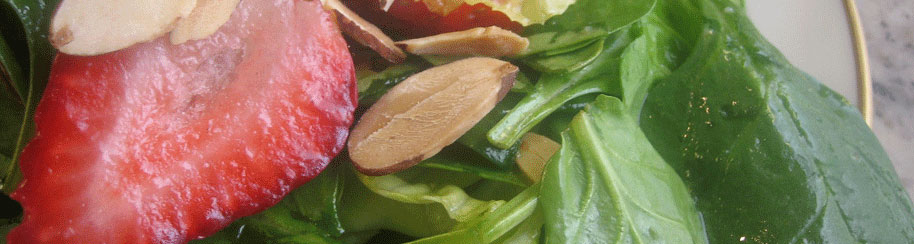
My salivary glands are in overdrive. In the window in which I type my posts, this picture looms large. More than life size. But that little nubbin of walnut sitting there on the side looks so real I could reach through the screen to tuck it in my mouth.

I met my friend Joan W. at the Long Beach Yacht Club the other day. Long Beach is about 30 miles west of where we live. Joan’s a member of the Yacht Club, so we occasionally meet there. She and I met in about 1995 at an NAIC (National Association of Investor’s Corp.) seminar – we’re both in investment clubs, and sat next to one another for the day while we learned all about how to use a specific software package called Toolkit, made for investment clubs, and for individual investors too. We’ve been friends ever since!

The salad bar and carving station are available every weekday at the Yacht Club, and it was wonderful. Joan told me I needed to try the broccoli salad, that it’s a favorite of hers. Sounded good to me. Oh my. Was this ever delicious. It’s the honey that is the wild card in this recipe. It’s a sweet salad, but somehow broccoli seems to be able to handle some sweet. Fortunately for me – and for you, my dear readers – Joan has the recipe, that was devised by the Yacht Club’s chef, Scott, a real winner of a recipe.

Cook’s Notes: Understand, please, that I haven’t made this, but I think I’d try this without candying the walnuts – it’s plenty sweet already. But I don’t want to detract a thing from Scott’s recipe. It’s a stunning one, and if you like the combo with the honey and sweet walnuts, go for it!
printer-friendly PDF

Scott’s Broccoli Salad

1 bunch broccoli, raw, chopped
1/2 small red onion, julienned
2 T. dried cranberries
1/2 cup candied walnuts
1/2 cup Stilton cheese, or Blue, crumbled
3/4 cup honey mustard dressing (see below)

Combine everything except dressing, then add dressing, just so the vegetables are covered to your satisfaction, and serve.

Honey Mustard Dressing
1 cup honey (this can’t be correct – it must be 1 tablespoon of honey, not a CUP!)
1 tablespoon Dijon mustard
1 dash red wine vinegar
Pepper to taste

Combine ingredients and stir to mix thoroughly.

Per Serving (recipe assumes you use all the dressing, which you will not): 207 Calories; trace Fat (1.9% calories from fat); 3g Protein; 53g Carbohydrate; 3g Dietary Fiber; 0mg Cholesterol; 61mg Sodium.

Posted in Breads, Brunch, on February 1st, 2008.


As a card-carrying chocoholic, I will attest, these little numbers are too darned good. I ate a whole one plus a little piece of another just after baking. And it took all my will power to stay out of them. My advice: either don’t make them at all, or put the leftovers – immediately – into the freezer.

I was putting away recipe clippings the other day, and needed something to fix for DH’s Bible study group, and this recipe went into the “try immediately” stack. They came together easily, although I did dirty-up many a bowl getting them ready. I mixed up the dry ingredients the night before. I watched a demo on TV just the other day of a chef mixing in cold butter to flour. You do it by hand, just smashing the little pieces of butter and making those pieces smaller and smaller by sifting the mixture through your hands and pressing. It was fun, actually. Made a bit of a mess of my hands, but so what? Then you add the liquid ingredients (heavy cream and egg yolk), before kneading slightly into a big blob and pressing it out for cutting. I brushed the tops with heavy cream instead of milk, and I sprinkled the tops with just a tad of white sugar too. Were these good? Oh my yes. The recipe is from an issue of Bon Appetit in 2006, I believe, and is credited to The Balmoral Hotel near Edinburgh, Scotland, The Bollinger Bar at Palm Court.

Here are the scones before baking, brushed with cream and sprinkled with granulated sugar.
printer-friendly PDF

Chocolate Scones

Recipe: The Bollinger Bar at Palm Court, Balmoral Hotel, Scotland
Servings: 18
Serving Ideas: Serve with raspberry jam and clotted cream.

2 1/2 cups all-purpose flour
1/2 cup unsweetened cocoa powder
1/2 cup sugar
2 teaspoons baking powder
1/2 teaspoon salt
1/2 cup unsalted butter — chilled, cut up into 1/2 inch cubes
1 1/4 cups heavy cream — chilled [I had to add about 1 T. more]
1 egg yolk
Milk — to brush tops, as needed

1. Preheat oven to 425°F.
2. Combine flour, baking powder, salt, sugar, cocoa powder in a large mixing bowl. Using a pastry blender, cut in butter until a coarse meal is formed. Or, use your hands to press the butter pieces smaller and smaller until it’s a coarse meal.
3. Whisk together the egg yolk and cream in a small bowl, then stir into the flour mixture just enough to blend (do not overmix). Dump dough onto a lightly floured surface, dust your hands lightly with flour and knead dough gently 5 times, just to bring the dough together. Gently press dough into a thick round, then use a 2 1/2″ round biscuit cutter to cut out scones. Gather scraps, reform your dough circle and cut remaining scones out.
4. Bake on large baking sheet lined with parchment and brush lightly with a bit of milk. Bake until puffy and dry around the edges, about 18 minutes.
5. Cool on racks slightly.
Per Serving: 196 Calories; 12g Fat (53.5% calories from fat); 3g Protein; 21g Carbohydrate; 1g Dietary Fiber; 48mg Cholesterol; 122mg Sodium.

Related Posts Plugin for WordPress, Blogger...