


Archive for the ‘Desserts’ Category
Brown Sugar Cake
CAKE BATTER:
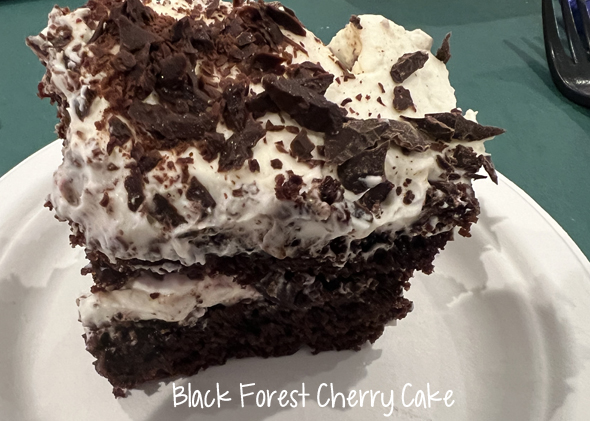
I’ve wanted to make this recipe so I could share it with you, but it never seemed to be the right menu for it. But I took dessert to friends the other night, and thought it would be perfect. This is an EASY recipe. You buy a store-bought angel food cake (or make your own if you’d prefer), mix up the filling/frosting, grate a bit of chocolate, toast some almonds and put it together. It probably took about 30 minutes to assemble, including toasting the nuts. The picture above doesn’t exactly show the layers - the lighting wasn’t good enough, I guess.
This is a Phillis Carey recipe, from a cooking class I took with her several years ago. The filling (which also is the frosting on the outside) has mascarpone cheese in it, with a whole lot of whipped cream, some cocoa and espresso powder, a bit of powdered sugar and Amaretto. You slice the cake into 3 layers, drizzle a little Amaretto on each layer, then put a cup of frosting between each with some grated chocolate, then slather the remaining around the top and outside. Then the toasted almonds are lightly pressed on the frosting. That’s it. Done. Be sure to refrigerate it for at least four hours before serving.
I’ve never made it with Cool-Whip, but am sure you could – and it might be just fine. This particular time I ended up buying mascarpone that had tiramisu flavoring in it (my mistake), so I added a small tub of Crème Fraiche to the mixture too. The recipe calls for 2/3 cup of powdered sugar – I think it’s way too much, but use your own judgment. If you made a from-scratch angel food cake, it would be larger than the store-bought ones, so you might want to spread the filling a little thinner (or make just a bit more of it). If you really wanted to be decadent, make a little chocolate sauce to drizzle on top. My DH doesn’t eat many desserts and his verdict was: “this is the best dessert you’ve ever made!” I disagree - there are some other desserts I’ve made that are perhaps better, but HE thought this was the best. He did his best to get as much of the leftovers as he possibly could!
Tiramisu Angel Cake Torte
Recipe: Phillis Carey cooking class.
Servings: 8
8 ounces mascarpone cheese
2 cups heavy cream — well chilled
2/3 cup powdered sugar (I used about 3 T.)
6 tablespoons amaretto – divided use
3 tablespoons cocoa powder — unsweetened
1 tablespoon espresso powder — or instant coffee crystals
1 whole angel food cake
3 ounces semisweet chocolate — coarsely grated
1 cup sliced almonds – toasted (400 for about 7 minutes)
1. Using electric mixer, beat mascarpone to lighten. Add one cup heavy cream, powdered sugar, 2 T. amaretto, cocoa and espresso powder. Beat until fluffy and smooth. Using same beaters, beat remaining heavy cream until firm peaks form. Fold whipped cream into cheese mixture for frosting.
2. Cut cake horizontally into 3 layers. Place bottom layer on platter. Sprinkle with 4 tsp. amaretto. Spread with 1 cup frosting. Sprinkle with half the grated chocolate. Repeat layering with cake, amaretto, frosting and grated chocolate. Top with third cake layer. Sprinkle with 4 tsp amaretto, Spread remaining frosting over cake. Press almonds onto sides. Chill at least 4 hours. Use serrated knife to cut into wedges.
printer-friendly pdf
Here it is, toward the end of summer, and after the nice Asian-influenced dinner the other night, I wanted to serve something with a slight Asian flavor. Ginger ice cream came to mind. Immediately I went to my favorite ice cream cookbook – The Perfect Scoop, by David Liebovitz. If you’re interested in other food blogs and want to read a very entertaining one, you might check out David’s blog. He’s an American, worked for some years at Chez Panisse, Alice Waters’ famous restaurant in Berkeley , California . Then he moved to Paris , and it’s from his small apartment there that he wrote this most recent ice cream cookbook.
This ice cream has more cooking steps than many – certainly more than my very favorite lemon velvet ice cream that I make now and then. And it took longer to make everything than I’d hoped. But in the big picture, it was worth the effort, to get that very smooth and subtle ginger flavor without adding the straight stuff into the custard.
After performing all the steps (blanching the ginger, steeping it in milk, thickening it up with the egg yolks to make a custard, chilling it in an ice bath, then freezing it in the ice cream machine) I thought it needed just another little boost of ginger flavor. It was not in Liebovitz’ recipe, but I added crystallized ginger to the finished product. Providing the crystallized ginger is minced into itty, bitty pieces, it freezes nicely, providing a little ginger burst. I also substituted some of Trader Joe’s fat-free half and half for the milk and cream. Not only does it lower the richness, but it makes the scooping of the hard-frozen ice cream easier. There must be something in that product that makes a softer finished product. I don’t know what it is, but every time I do that, it’s easier to scoop. Home made ice cream has that fault – if you will – that with using the pure, unadulterated cream and milk, when it’s frozen, it’s f-r-o-z-e-n. Hard. Normally I have to leave the container out for 10 minutes or so to even begin to scoop a serving.
When you serve this, don’t overwhelm it with other prominent flavors (like a chocolate chip cookie) as the ginger flavor really is very subtle. You want to savor it. Enjoy.
Ginger Ice Cream with Crystallized Ginger
Recipe: Adapted slightly from the book, The Perfect Scoop, by David Liebovitz
Servings: 10
3 ounces fresh ginger — unpeeled
1 cup whole milk
2 cups heavy cream
3/4 cup sugar
1 pinch salt
5 large egg yolks
3 tablespoons crystallized ginger — very finely minced
1. Cut the ginger knob in half lengthwise (makes it more stable for slicing) and then cut into very thin slices. Place the ginger in a medium, nonreactive saucepan. Add enough water to cover the ginger by about 1/2 inch and bring to a boil. Boil for 2 minutes, then drain, discarding the liquid.
2. Return the blanched ginger slices to the saucepan, then add the milk, 1 cup of the cream, sugar and salt. Warm the mixture, cover and remove from the heat. Let steep at room temperature for one hour.
3. Rewarm the milk mixture. Remove the ginger slices with a slotted spoon and discard. Pour the remaining cream into a large bowl and set a mesh strainer on top.
4. In a separate medium bowl, whisk together the egg yolks. Slowly pour the warm mixture into the yolks, whisking constantly, then scrape the warmed egg yolks back into the saucepan.
5. Stir the mixture constantly over medium heat with a heatproof spatula, scraping the bottom as you stir, until the mixture thickens and coats the spatula. Pour the custard through the strainer and stir it into the cream. Stir until cool over an ice bath.
6. Chill the mixture thoroughly in the refrigerator, then freeze it in your ice cream maker according to the manufacturer’s instructions. When completed stir in the crystallized ginger and transfer ice cream to a freezer container. Freeze thoroughly before serving.
NOTES: I substitute some fat-free half and half for both the cream and milk. About half the real stuff, half the fat-free.
Per Serving (assuming you use all cream and whole milk): 284 Calories; 21g Fat (65.5% calories from fat); 3g Protein; 22g Carbohydrate; trace Dietary Fiber; 175mg Cholesterol; 50mg Sodium.
printer-friendly pdf
What’s that, you ask? A galette? Pronounced gal-LET. It’s a French term with more than one meaning (it could contain a savory filling, or be a buckwheat crepe, actually), but in this case it’s just a rustic piecrust, not necessarily housed in a pie tin, but merely placed on a sheet and the filling placed in the center with the crust pulled up loosely around the edges.
Now, it’s confession time here. I’ve never been very good at pie crusts. I’m still not. Even by my mother’s side, I couldn’t seem to wield the right kind of pressure on the rolling pin to make the perfectly flaky crusts my mother would turn out with Crisco and ice water. And this time, I forgot to read the instructions at a critical point. Read on. Part of the crust was torn and a good part of the juice seeped out before I’d even put it in the oven). At the point when the crust cracked and the juice began to ooze, I had a choice. I could have started over, but the fruit was already IN the crust, for goodness’ sake. How could I? So, I just kept moving it on over to the paella pan I used (good thing there were edges, since that sugary ooze oozed some more as it baked).
The verdict? OMGosh. It was scrumptious. Absolutely scrumptious. Even with the ooze in the pan. Even with the filling having leaked out all of its juice (the fruit seemed to give up some more, since it was certainly moist). Even with the mess it left in the pan.
So, let me tell you all about this galette. What got me started was reading Rose Levy Beranbaum’s blog last week about her peach galette. I saw the photo of it (and all the lovely stages she went through to get it perfect – she is a far better crust-maker than I am) and since I had four gorgeously ripe peaches awaiting something, I decided to make this. Now Rose is a paramount baker. She’s written several cookbooks, so I’ve learned to trust her.
You could use any old pie crust for this, I suppose, but Rose used her cream cheese one. Rose’s Perfect Flaky & Tender Cream Cheese Pie Crust. Go there and you can see all the lovely photos, and the recipe appearing in strict columns by ounces and grams. With a very long bit of instruction.
First you freeze the dry ingredients (yes, really). And you freeze the butter in small cubes (yes, really). When they combine in the food processor it comes together nicely, but in crumbles. At least I was doing well up to that point. You put the dough into a plastic bag, seal it, then kind of mash it together into a disc. That gets refrigerated for awhile. Okay so far. Now came my test of skill. Ideally you have a large round pastry cloth you use to roll out such pastry. I don’t. So I used the granite countertop instead, dusted with ample flour. I rolled, and turned, sprinkled more flour, etc. You know, the usual drill. I thought I was doing fine. Was quite pleased with myself. (Reminder to self: don’t get cocky!)
Meanwhile you’ve peeled and sliced the peaches and allowed them to drain (juice saved) in a colander with the sugar and lemon juice. All that juice gets reduced by half. I didn’t have as much juice as Rose indicated I would, but I carefully simmered it until it was reduced and poured it into the peaches and poured it onto the nearly completed piecrust. Quick-like you bring the edges up around the fruit and try to sort-of pleat them into nice looking folds if you can. My problem was I was supposed to put the crust into the tin BEFORE I added the filling. My usual difficulty – I didn’t read the recipe at that point. As I mentioned, I’d decided to use my big paella pan (she calls for a pizza pan with sides), knowing that I might have a peach-leak. I used flour-sprinkled spatulas to try to lift. Next time I’ll do it right. Rose recommends chilling the completed pastry for half an hour before baking, but since I already had an oozy mess, I decided to go ahead and bake it then and there. It took exactly 40 minutes, as her recipe indicated. I let it cool for about 30 minutes and served us a slice, with some vanilla ice cream. There was nothing but quiet as we both savored the bites. Absolutely stupendous. The cream cheese pie crust is flakier. more tender. More tasty. And it was not soggy one bit, either, despite my peach-leaks. Even the next DAY, and the day after that, the bottom crust was still flaky and tender. No sogginess. So, I’d highly recommend this recipe. I will say, I made a regular recipe of the dough (she recommends a 1 ½ times recipe for 3 pounds of peaches. I had 2 ¼ pounds of peaches, so thought the single recipe would work. It did, and I didn’t roll the pastry as thin as Rose did, I don’t believe. Have peaches? Make galette! And yes, I’ll be making this again, but carefully read the instructions first!
Peach Galette
Recipe: Rose Levy Beranbaum, author, blogger
Serving: 8
ROSE’S CREAM CHEESE PASTRY
8 tablespoons unsalted butter
1 1/3 cups all-purpose flour
1/8 teaspoon salt
1/8 teaspoon baking powder
3 ounces cream cheese — chilled
1 1/2 tablespoons ice water
1/2 tablespoon cider vinegar
PEACH FILLING:
2 pounds peaches — ripe, peeled, pitted, thinly sliced
2 teaspoons fresh lemon juice
1/2 cup sugar
1 pinch salt
1 tablespoon cornstarch
1/4 teaspoon almond extract — optional
1 1/2 tablespoons unsalted butter
1. CREAM CHEESE PASTRY: Cut the butter into small (about 3/4-inch) cubes. Wrap it in plastic wrap and freeze it until frozen solid, at least 30 minutes.
2. Place the flour, salt and baking powder in a reclosable gallon-size freezer bag and freeze it for at least 30 minutes. Place the flour mixture in a food processor with metal blades and process for a few seconds to combine. Set the bag aside. Cut the cream cheese into 3 or 4 pieces and add it to the flour. Process for about 20 seconds or until the mixture resembles coarse meal. Add the frozen butter cubes and pulse until none of the butter is larger than the size of peas. (Toss with a fork to see it better.) Remove the cover and add the water and vinegar. Pulse until most of the butter is reduced to the size of small peas. The mixture will be in particles and will not hold together. Spoon it into the plastic bag. Holding either side of the bag opening, alternate using the heel of your hand and your knuckles to knead and press the mixture, from the outside of the bag, until it holds together in one piece and feels slightly stretchy when pulled. Wrap the dough, flatten it into a disc, and refrigerate it for at least 45 minutes.
3. PEACH FILLING: Place the sliced peaches in a large bowl and sprinkle them with the lemon juice. Sprinkle on the sugar and pinch of salt and toss them gently to mix evenly. Allow them to macerate for a minimum of 30 minutes and a maximum of 1 1/2 hours. Transfer the peaches to a colander suspended over a bowl to capture the liquid. The mixture will release about 1 cup cup of juice.
4. In a small saucepan (preferably lined with a nonstick surface) over medium high heat, boil down this liquid together with the butter to about 2/3 cup or until syrupy and lightly caramelized. The exact amount will depend on how much juice the peaches release which you will be reducing by about half. Swirl but do not stir it. (Alternatively, spray a 4-cup heatproof measure with nonstick vegetable spray, add the liquid and butter and boil it in the microwave, about 12 to 18 minutes on high—watch carefully as microwaves vary). Transfer the peaches to a bowl, pour the syrup over them, and toss gently. (Do not be concerned if the liquid hardens on contact with the peaches; it will dissolve during baking.) Add the cornstarch and almond extract and toss gently until all traces of it have disappeared.
5. GALETTE: Remove the dough from the refrigerator. If necessary, allow it to sit for about 10 minutes until it is soft enough to roll. On a well-floured pastry cloth roll the crust into an 18-20-inch diameter circle. Fold it in quarters and transfer it to a 14 to 16 inch pizza pan, allowing the border to overlap the pan. Scrape the peach mixture into the pastry and carefully drape the border over the fruit, allowing it to pleat as evenly as possible. It will leave a small area in the center exposed. Cover the galette loosely with plastic wrap and refrigerate it for one hour before baking. This will maintain flakiness.
6. Preheat the oven to 400°/200°C. at least 20 minutes before baking time. Set the oven rack at lowest level and place a baking stone or baking sheet on it before preheating. Place a large piece of greased foil on top of the stone to catch any juices.
7. For a delightfully crunchy crust, spritz or brush the pastry all over with water and sprinkle with superfine sugar. Set the pan directly on the foil topped baking stone and bake 40-45 minutes until the juices bubble thickly in the center opening and the peaches feel tender but not mushy when a cake tester or small sharp knife is inserted. Rotate the pan half way through the baking time. If it starts to over-brown, cover loosely with foil. Cool the galette on a rack for about 3 hours until warm or room temperature before cutting. Serve with ice cream or heavy cream.
Per Serving: 324 Calories; 18g Fat (48.0% calories from fat); 4g Protein; 39g Carbohydrate; 2g Dietary Fiber; 49mg Cholesterol; 92mg Sodium.
printer-friendly pdf
My Tivo is my best friend. I absolutely adore the thing. I actually have two, one of which is connected to a TV with a cable box (for shows on the premium channels), and the other resides in my office – my main TV viewing room. I know, you’re wondering why I’m talking about Tivo when the title is about cupcakes. I’ll get there . . . I watch very little network TV (The Closer, Oprah, Grey’s Anatomy and CBS’s Sunday Morning being exceptions) Most of my Tivo-watching comes from a variety of other cable channels. I simply can’t get enough of Meerkat Manor. I’m still mourning the loss of Flower. I love Miami Animal Police too. Antiques Roadshow. House Hunters. Little People, Big World. Dog Whisperer (and we don’t even have a dog anymore, but I love Caesar Milan.) And it was smokin’ during the Olympics. I couldn’t quite keep up with the Olympics and ran out of space on my 40-hour Tivo. I also record a variety of art and painting programs, plus a few esoteric cooking shows. I do like the Barefoot Contessa, and Rick Bayless too. And Michael Chiarello. Then there’s Ellen, and Oprah (she’s on hiatus at the moment). Fortunately, not all of these programs are running at the same time or I’d not be able to keep up with my regular programs. I just recently started watching Martha. Sometimes her subjects don’t interest me, so I just delete. But the subject last week (of re-runs, actually) was cupcakes. Okay, see, I told you I’d get there.
I can count on one hand the number of times I’ve made cupcakes since my daughter Dana was a little tyke. But, as I’m sure you’ve seen, they’re all the rage now, with really unusual cake flavors, frosting and decorating. So Martha had a guest on from a bakery in Santa Monica the other day. And one other day she entertained a group of three women who have the blog called Cupcakes Take the Cake. All three ladies post about cupcakes. That’s it. Cupcakes. Martha asked each one about her favorite cupcake. I don’t even remember two of them, but Allison Bojarski said it was her Chocolate Spice cupcakes with a Chocolate Spice Glaze.
Being about 8 feet away from my computer, I hopped over to Google them. Bingo. Got it. Since we were having guests for dinner a few nights later I decided to try them. I’m usually game for trying new recipes for guests (I know, call me crazy). Not having made any cupcakes for years, it was fun to do, and these are very unusual. They have a warm-mouth and warm-belly feel to them because of the addition of ancho chile powder in both the cake and the glaze. And there are a bunch of other Fallish kinds of spices in there too (like cloves, nutmeg, cinnamon, and ginger).
I don’t dislike Red Hots, but I wasn’t going to buy them just for these cupcakes, so I used some chocolate nonpareils I had in my chocolate stash (the chocolate-eating bugs hadn’t infiltrated the hard plastic box they were in). I bought them for a cookie I made last Christmas, the Chocolate Kiss Treasures that I will be making again this year – they have a nonpareil nestled on the top of each cookie.
The only things I’ll tell you about these are: (1) the glaze is gooey and needs some finesse putting it on to avoid letting it drip down the sides; (2) the measuring of all the spices takes an extra few minutes; (3) if you don’t have ancho chile powder, order some from Penzey’s. Ancho chile powder is very mild – you could add a lot of it to a pot of soup and barely know it’s there. Anchos are not hot, just barely warm; (4) because the cupcakes are made with cocoa, they’re not as wicked as some. The good stuff (chocolate) is in the glaze, which is applied while it’s meltingly hot.
A cupcake stand is not in my repertoire (and no, I don’t really want one) but I do have a double-decker plate/stand thing that perfectly fit 9 cupcakes, exactly the number of guests at our table. That’s one end of it you see in the photo above. We were dining outside, so I just walked the plate around and served each person. (Next time I’ll serve each on a plate with a paper napkin.)
My DH didn’t love these – but he’s not particularly a chocolate fan, either. Would I make them again? Yes - maybe for the right meal. They were good. At least I thought they were. Different. But, maybe not to everyone’s palate. My guests all said they were good, but I don’t know if they were just being nice. Maybe some of them, if they read my blog, will leave a comment here and let me know what they thought. That way you can get another opinion or two.
Chocolate Spice Cupcakes with Chocolate Glaze
Recipe: Cupcakes Take the Cake (blog), created by Allison Bojarski, August, 2008, via Martha Stewart’s TV program
Servings: 12
CUPCAKES:
1 1/2 cups unbleached flour
1/3 cup cocoa powder — unsweetened
1 teaspoon baking soda
1/2 teaspoon salt
1/2 cup vegetable oil
1 cup coffee — or water, cold
2 teaspoons vanilla extract
1 1/2 teaspoons ground cinnamon
1 1/2 teaspoons ground ancho chile powder
1/2 teaspoon freshly ground nutmeg
1/4 teaspoon ground ginger
1 pinch ground cloves
1 pinch freshly ground black pepper
2 tablespoons white vinegar
GLAZE:
7 ounces bittersweet chocolate — chopped
1/2 cup milk — or cream, or hot water
1 1/2 teaspoons ground cinnamon
1 1/2 teaspoons ground ancho chile powder
1/2 teaspoon freshly ground nutmeg
1/4 teaspoon ground ginger
1 pinch ground cloves
1 pinch freshly ground black pepper
12 small candies: Red Hots, chocolate nonpareils, or your choice
Before starting, measure all the dry spices in two separate small containers.
CUPCAKES:
1. Preheat oven to 375.
2. Sift together the flour, cocoa, soda, salt and sugar in a medium sized bowl.
3. In a 2-cup measuring cup, measure and mix together the oil, water, vanilla and all the spices. Pour the liquid ingredients into the bowl with the flour mixture and stir batter with a fork or a small whisk. When the batter is smooth, add the vinegar and stir quickly.
4. There will be pale swirls in the batter where the baking soda and vinegar are reacting. Stir just until the vinegar is evenly distributed throughout the batter. Pour the batter into 12 paper-lined muffin tins.
5. Bake for 18-20 minutes, or until an inserted toothpick comes out clean. Remove from oven and set on a cooling rack until they are at room temperature.
CHOCOLATE SPICE GLAZE:
6. Carefully melt the chocolate, either in the microwave or on the stove with a double boiler. Stir the hot liquid, the spices and the vanilla into the melted chocolate until smooth.
7. Spoon the glaze over the cupcakes immediately, while the glaze is still hot. Go back and add more to the center only. Try not to allow the glaze to drip down the sides, as it’s a sticky, gooey glaze you really don’t want to get all over your hands.
8. Place a red hot, or nonpareil in the center of each cupcake. Refrigerate the cupcakes for at least 30 minutes to set the glaze, then allow to sit at room temperature. Will keep in a covered container for 3 days.
Per Serving: 236 Calories; 19g Fat (65.1% calories from fat); 4g Protein; 19g Carbohydrate; 4g Dietary Fiber; 1mg Cholesterol; 208mg Sodium.
printer-friendly pdf
It intrigues me, always, when I read a recipe and find some new or different technique. Such was the case with this recipe. It’s not exactly an innovative instruction, but normally you don’t cover a cobbler or cake while it’s baking. In this case, you cover it with oiled foil for half the baking and uncover for the second half. And this fruit pudding cake requires about 80-90 minutes of baking. That’s a heck of a long time.
Before we get to the recipe itself, I want to talk about peaches and nectarines for a minute . . . I know (because Carolyn knows all, tee, hee) that some of you, my good readers, who subscribe or use a reader, chose not to read my instructional pieces about how to buy great fruit and vegetables (I’ve done two so far – peaches/nectarines, and cucumbers). I suppose in the big scheme of things, I shouldn’t care, but I’m merely telling you, it’s worth the reading. Really it is. (If you want to read it now, just click on the links above to go to each of those posts.) I’ve learned things from the book this info has come from. In this case, when I was shopping for peaches, I remembered what Russ Parsons had told me - and I’m doing this from memory – firstly that peaches and nectarines are interchangeable, for all intents and purposes, (okay, good so far, so I chose nectarines) – then he said choose the white-fleshed fruit if it’s available (check), and choose fruit that has less rosy tinges to them – in other words, choose the more yellow skinned rather than the red skinned (I did my best, check). Once home, I placed them on the kitchen counter (check) for about 4 days, actually, until they were perfectly ripe. That day wasn’t one when I could use them, so I popped them in a plastic bag and into the refrigerator (check). It’s been 3 or 4 more days since I did that, and amazingly, they were perfectly okay once I removed them from cold storage. I’m a happy camper.
I haven’t done much cooking of late. No particular reason, other than I’ve been busy doing other things (like painting, for instance, going to my weekly art class, shopping, going out to lunch with friends, movie-going to see Mama Mia). And, we had lots of leftovers in the refrigerator. I don’t mind leftovers at all, and my DH is wonderful about eating them. In fact he rags on me something fierce whenever we have to throw out something. Alas, we do now and then. But our refrigerator, finally, is more or less bare. Well, that’s not exactly a truthful statement. If you opened my frig you’d find nearly all shelves half full – of bottles and jars of things that have to be refrigerated all the time (pickles, dressings, marinades, mustards, some liqueurs, crème fraiche, still some Devon cream leftover from the tea about 6 weeks ago, oils, jams, condiments, hot peppers, and on and on it goes). The vegetable drawer is crammed full too, as well as the shallow cheese/salami drawer. Of course, there’s also some milk, fat-free half and half, some cream, sour cream, fresh salsa, and lots of Greek yogurt too.
So, now we get to talk about the recipe. Sorry for the diversion . . . I went to my recipe trove and searched for something to do with the nectarines. Out popped this recipe. I adore pudding cakes – you’ll find that I posted a lemon sponge cake and a gingerbread pudding cake in months past, both really tasty. I’d never made a peach (well, nectarine) one. First I peeled and sliced (and measured) the nectarines. I took two little slices to taste – oh my goodness were they fabulous. Now, a slight confession: the original recipe called for 4 cups of sliced fruit. I had 4 rather smallish nectarines, and I thought I’d be lucky to have 3 cups. Actually, it was a bit over 2 cups. So, I halved the recipe. The list of ingredients, when halved, was difficult (I hate it when you have to measure 7/8 of a cup or 3/8 of a cup). So, the recipe you’ll see below is the full 9×13 size, since I didn’t think you guys would want to have to do all the odd-estimating measurements, either. I baked mine in an 8-inch round cakepan. I don’t own an 8-inch square pan (just a 9-er), so figured the 8-inch round cakepan would be a better use of the volume/space.
The recipe appeared in Bon Appetit, in August of 2007. It was in the column where people write in to ask for restaurant recipes. When I searched online for it, it wasn’t AT the epicurious website (odd), but I did find it at somebody else’s food blog. Before I made it I wanted to read what others thought of it. Several people who have eaten at the restaurant, and had moved away from Austin , were thrilled to find the recipe online (per the comments to the blog). Apparently the pastry chef at this restaurant is Asian, as the recipe on the menu is called Wom Kim’s Peach Pudding.
Remember, pudding cake is a unique chemistry – the batter separates into a pudding layer, and also has a second layer more resembling a cake. When this pudding cake was sliced and served, it didn’t have much ooze left (probably because I baked it too long). In this particular recipe you spread the batter into the baking dish, then spoon the freshly sliced peaches/nectarines on top. Once baked, the fruit has settled (mostly) to the bottom and the cake is on top. In my instance, since I was using a smaller vessel, I cut down the baking time. Next time I’ll bake it less time. You can see from the collage of pictures, the one with the shiny center is halfway through the baking – from then I probably needed to bake it about 30 minutes and check it with my tester in 5-minute increments. And next time I’ll know to make the full 9×13 glass pan full, and to have at least 8 peaches or nectarines on hand to make it!
The results? It was delicious (is that my most favorite word on this blog? sorry . . .). Ahem. It was very good, but I think the cake overpowered the delicate flavor of the nectarines, though. If you want straight, unadulterated peach or nectarine flavor, cut them up and serve with cream or eat out of hand. If you don’t mind the mingling of flavors (the cake part was a bit crunchy on top - which was a great texture . . . I liked it, it was perfectly baked, a bit darkened around the outside edges from sugar caramelization, just as the recipe recommended). I served it with a small globe of vanilla ice cream rather than whipped cream – I wanted the cold contrast.
Peach Pudding Cake
Recipe: Wom Kim at Hyde Park Bar & Grill, Austin , TX
Servings: 12
4 cups sliced peaches — peeled, or nectarines
CAKE BATTER:
1 3/4 cups all-purpose flour
2 tablespoons all-purpose flour
2 1/4 teaspoons baking powder
3/4 teaspoon kosher salt
1/2 teaspoon baking soda
1 1/2 sticks unsalted butter
1 3/4 cups sugar — or less
2 tablespoons vanilla extract
2 large eggs
3/4 cup buttermilk
Sweetened whipped cream for garnish
1. Preheat oven to 350. Spray an 9×13-inch glass dish with vegetable oil spray and set aside.
2. In a bowl whisk the flour (both quantities), baking powder, salt and soda.
3. In an electric mixer beat butter until smooth. Gradually beat in sugar. Add vanilla, then eggs one at a time, incorporating both well. Using low speed, add flour mixture, alternating with the buttermilk in three additions each, beating well between each addition.
4. Transfer batter to baking pan/dish, spreading evenly. Arrange peach or nectarine slices over batter, overlapping slightly as needed. Spray a sheet of aluminum foil with vegetable oil spray; cover cake with foil, spray side down and seal edges.
5. Bake for 45 minutes, then remove foil covering. Return to oven and continue baking until top is golden brown, edges are crusty, AND a cake tester inserted into the center comes out clean, about 40 more minutes. Cool for one hour, then serve with whipped cream.
Per Serving: 335 Calories; 13g Fat (33.8% calories from fat); 4g Protein; 52g Carbohydrate; 2g Dietary Fiber; 67mg Cholesterol; 291mg Sodium.
printer-friendly pdf
If you’re a regular reader of my blog, you already know that I rarely buy a box mix of anything. That started a long time ago when I learned a lot about food additives. So I prefer to use fresh products whenever possible. But I’ve been known to be lured into trying a few boxed things. My friend Cherrie (who doesn’t bake) started buying some of Ina Garten’s Barefoot Contessa mixes and gave them superlative accolades.
So I chose a chocolate cupcake mix with a peanut butter frosting, thinking that our granddaughter Taylor would be particularly interested (she takes after her grandpa, since they both love all things peanut butter), and would like to make them. Uh, no. She was more interested in playing and taking care of her baby cousin Vaughan, so I whipped them up myself. It wasn’t much different than a regular cake mix. But oh, the taste. Oh my goodness. How in the heck can she/they make a box mix taste so darned wonderful? Will I buy one of these again? Oh yea!
We had the family over for another outdoor barbecue dinner for 9. We ate leftovers of our 4th of July meal, and added about 2 pounds of some wonderful grilled Italian sausage to the menu. And rounded out the dinner with these fabulous cupcakes. So if you ever have a time when there simply isn’t time, or you’d rather spend it creating something else, these cupcakes are highly recommended.
Well, no, Martha wasn’t there. But one of her big fans was the hostess, who prepared a dinner using four of Martha’s highlighted recipes from the Martha Stewart’s Living July ’08 issue. Kathleen invited us to her home for dinner, and we had such a fun evening. We had wine (of course) and I helped just a little bit in the kitchen with the aioli sauce. Other than that, Kathleen had done all the work ahead.
Each magazine always includes a four-recipe perforated card in the issue; color pictures on one side, recipes on the back. The recipes are designed to go together to make a full meal. Here’s the delicious menu. Click on each title to link to Martha’s website for the recipes:
Grilled Lamb Shoulder Chops with Herb Aioli
The lamb shoulder chops were grilled briefly (perfectly) and served with the cold herb aioli on the side which took but a couple of minutes to whiz up in the food processor. It was delicious – the hot meat and the cold sauce were great together since it was a warm evening.
Couscous Salad with Cherry Tomatoes
Israeli couscous is different than ordinary (fine-grained) couscous. The Israeli version is more like the size of the large round tapioca grains. Traditional couscous is kind of irregularly shaped, but the Israeli are perfectly honed little globes. They make for a very pretty bowl. This is prepared just before serving (it can sit at room temp for awhile, so the recipe says). And this is an extremely low fat dish – only one tablespoon of oil for the entire salad for four people.
In Martha’s version, you use ricotta salata cheese. Kathleen couldn’t find it, so she used feta instead, which was wonderful. I’d never have thought to pair watermelon with feta. It was delicious, especially with the fresh mint too. I’d probably use more mint, but then I like the stuff in lots of things.
Raspberry and Lemon Sorbet Floats
Kathleen couldn’t find sorbet, so she used sherbet instead. These were just delicious with Vernors ginger ale poured over the sherbet. I mean it – so easy – and so refreshing on a hot summer’s night. She served them in brightly colored glasses, and we just sipped away. I looked up some info about Vernors – they claim to be the first American soft drink. The story is interesting – James Vernor went off to fight in the Civil War, leaving behind an oak cask in the pharmacy where he worked. It was filled with ginger, vanilla and spices. When he returned 4 years later, the cask was still there and ginger ale was born. And even more interesting to me, was that from 1866 to 1991 Vernors ginger ale was sweetened with stevia, but when stevia was banned by the FDA in 1991, they began using corn syrup. An even more obscure factlet, being the English nut that I am, is that in 1950 the company decided to drop the apostrophe from Vernor’s.
Thanks, Kathleen, for a very tasty Martha dinner and an altogether lovely evening.
I’m a regular reader of the Brilynn from Jumbo Empanadas. And I’ve tried several of her recipes over the year I’ve been monitoring her blog. So when this recipe popped up the other day my taste buds went into zing mode.
Probably about 20 years ago my DH and I and our good friends Bud & Cherrie used to go to San Diego on an occasional Saturday and have a wonderful wine tasting lunch at the Wine Sellar and Brasserie. You can go for just the wine tasting, but for a nominal fee, you can have their pre-set light lunch (very gourmet, I might add) to accompany it.
Anyway, at one of those tastings, the dessert was home made vanilla ice cream with strawberries, balsamic vinegar and cracked black pepper. Yes, you read that right. Since then I’ve seen it served at other places, but at the time my taste buds just went into overdrive. It was about the cracked pepper, but the combination of strawberries and balsamic vinegar is simply a match made in heaven.
You can see why, then, the Jumbo Empanadas’ recipe title put me into strawberry-balsamic nirvana. Just had to try it. And since strawberries are definitely on the wane here, I needed to do it right NOW if I was going to do it this season! My kitchen freezer is nearly chock-a-block full, but I just had to find room somehow. Even if I had to defrost something else to make room. I’m embarrassed to tell you how big this freezer is and it’s absolutely full to the brim.
The idea of roasting the strawberries with the balsamic seems like such a novel idea, and makes this luscious juicy mash of fruit and juice. And you can get yourself a little spoon to slick up the very last little droplets around the pan. It’s that good.
And don’t forget to reserve a bit of the fruit to drizzle on the top of the ice cream when it’s served. That’s a really nice touch. The taste: oh my goodness. Rich. Sweet. Delicious. Over the top. Fabulous. Wanna have it again SOON!
Balsamic Roasted Strawberry Ice Cream
Recipe By: Jumbo Empanadas & from Zoe Cakes 6/10/08
Servings: 8
STRAWBERRIES:
2 pounds strawberries — about 2 baskets
1/3 cup sugar
3 tablespoons balsamic vinegar
CUSTARD:
3 large egg yolks
1 cup heavy cream
1 cup milk [or fat-free half and half]
2/3 cup sugar
1 tsp vanilla extract
1. Preheat oven to 350F. Line a baking sheet with foil including up on all sides so that the wonderful juice that’s going to be created can’t escape. Wash and hull the strawberries and pat dry. Toss with the sugar and let stand for 30 minutes. Add the balsamic, toss again and then spread out onto your baking tray. Bake for approximately 40 minutes, until strawberries are jammy and there’s lots of juice. Pour the berries into a bowl, cool and chill.
2. In a heavy bottomed saucepan bring the milk and cream to a boil. In a medium bowl, whisk together the egg yolks and sugar until pale. Continue to whisk while slowing pouring in the hot milk mixture until it is completely incorporated. Pour it all back into the pan and stir until the mixture thickens enough to coat the back of a spoon. Pour into a bowl, stir in the vanilla extract and then cover and refrigerate until completely chilled,
3. Once both the strawberries and the custard are completely cool, remove a couple scoops of strawberries with juice out of the bowl and set aside (to use as a topping on the ice cream when it’s finished). Strain the rest of the strawberries and combine the juice with the custard and pour into your ice cream machine and process according to your manufacturer’s instructions. When the ice cream is almost finished, add in the strained berries until they’re just incorporated, (if you add them in at the beginning, the machine has a hard time processing them). If you like your ice cream soft, you can eat it right away, topped with the reserved strawberries and juice, otherwise stick it in the freezer to firm up a little more.
COOK’S NOTES: Chop up the strawberries that go into the ice cream at the very end, as they may freeze as whole pieces, and you want them to break up just a bit.
Per Serving: 275 Calories; 14g Fat (45.5% calories from fat); 3g Protein; 35g Carbohydrate; 2g Dietary Fiber; 125mg Cholesterol; 30mg Sodium.
printer-friendly pdf
My problem is: I love “afternoon tea.” It’s just so fun. And I love the food that is typical of such a tea. So it was that my friend, Cherrie, and I joined hostess forces and invited 10 of our friends to tea at my house last week. We started planning it a couple of months ago, and within about 5 minutes we’d decided on the menu and who would be invited. The date was set, invitations were mailed, and we both did an ample amount of cooking. Anyone who says doing an “afternoon tea” is easy is crazy. Even with both of us cooking and preparing the food, and with one of the guests helping an hour ahead and at hour after (thanks again, Joan), it was a tremendous amount of work. We made everything (except the fruit tarts) ourselves. I got to dig out all of my grandmother’s fancy frilly china plates and teacups and saucers. And used some beautiful pink hydrangeas from our garden as a centerpiece.
We had decided to do it at lunchtime, so we called it a “Luncheon Tea.” But the menu was typically English tea. We had:
Pink Champagne with Strawberry Puree Ice Cubes
(I didn’t take a photo of that – oh darn – but it was VERY pretty and
everybody loved it – no recipe for this one)
Watermelon Blueberry Soup
(delicious – just delicious – most people liked it, although not all)
Chicken Salad Sandwiches
(different, with chopped smoked almonds on the outside edges)
Ham Mousse Sandwiches
(very different – with whipped cream in the filling)
Smoked Salmon Sandwiches with Dill
(just buttered bread, smoked salmon and fresh dill peeking out of the edges –
no recipe for this one as it’s so easy)
Mini Fruit Tarts
(the only thing we purchased)
Sarah’s Ginger Scones
(uses candied ginger pieces in the batter)
Golden Raisin Scones
(my tried and true favorite, posted long ago)
Chocolate Scones
(posted recently, also well liked)
(All of the scones were served with lemon curd, clotted cream and black currant jam)
Chocolate Ribbon Dessert
(like a chocolate pie but in a 9×13 pan, cut into small squares)
Earl Grey Tea
Lemon Rose Tea (herbal, from Peet’s)
Marco Polo Tea (a blend from Mariage Freres in Paris)
(from when I was there 2 years ago, and this was the hands-down favorite)
In the next week I’ll likely post most of these recipes. The only one I’m missing is the ham mousse (from a cooking class Cherrie and I attended), but Cherrie has it and I’ll get it from her.
The ginger scones are Sarah’s recipe – from a cooking class in San Juan Capistrano. Sarah is from Scotland, and over the years we enjoyed several of her family favorites on the cooking school menu. These are easy to make, and I decided to do something totally different – I made the scones and froze them all raw the day before the tea. Gosh, why didn’t I do this years ago? All you have to do is take them out of the freezer about 20 minutes ahead of baking (when you turn on the oven) and increase the baking time by a few minutes (maybe 5 or so). I may never, ever, make them fresh again – just pop one or two out of the freezer when I want them for breakfast. Or a bunch when I need to serve something for my DH’s Bible Study Group. Of course, they won’t keep indefinitely in the freezer, but will likely be fine for a couple of months!
Sarah’s Ginger Scones
Recipe By: Sarah at Our House South County cooking school
Serving Size: 12 (maybe 14)
4 cups all-purpose flour
1/4 cup sugar
1 teaspoon salt
2 tablespoons baking powder
1/2 cup unsalted butter — cold, cut in tiny bits
1 3/4 cups buttermilk
1/4 cup candied ginger — chopped, or more if desired (also called crystallized ginger)
1 whole egg
1 teaspoon sugar — for top glaze
1. Preheat oven to 375 F.
2. Prepare silpat (or parchment) lined baking sheet (one large or two smaller ones). In a large mixing bowl, sift together the flour, sugar, baking powder and salt. Add butter and blend with a pastry cutter, or work the butter into the dry ingredients with your fingertips. Do this until it forms fine crumbs. (Alternately, use a pastry blender and cut and mix until the mixture is like fine crumbs.) Add the candied ginger and combine uniformly. Add the buttermilk and stir with a fork just until it comes together and forms a dough.
3. Turn the dough out onto a lightly floured work surface and knead for about one minute. Roll out to thickness desired (about 3/4 inch is best). Use biscuit cutter to cut rounds. Pat together the scraps and reroll to cut more. Place scones on the baking sheet and brush tops with egg mixed with the sugar. Bake for 20-25 minutes until puffed and golden on top. Serve immediately. These may also be frozen raw. Defrost at room temp for 20 minutes and bake about an additional 5 minutes.
Serving Ideas: Be SURE to serve with clotted cream (Devon cream) and ginger preserves.
Per Serving: 271 Calories; 9g Fat (29.3% calories from fat); 6g Protein; 42g Carbohydrate; 1g Dietary Fiber; 40mg Cholesterol; 467mg Sodium.