


Every time I open Russ Parsons’ book, ‘>How to Pick a Peach: The Search for Flavor from Farm to Table, I learn something. His book is so informative without being pedantic (too wordy, drivel type or preachy). He gives you the facts in a couple of different forms, as well as a few recipes, his favorites for that particular fruit or veggie. So it was that I learned we Americans are quite proprietary about our apples. Parsons thinks it’s because of our pioneer heritage – we hold hardiness and plain goodness as really important. We used to dominate the apple market worldwide, but no more. Bet you’d never guess who’s moved into first and second place, would you? (1) China; and (2) Chile. Those were surprises to me.
China barely knew apples 30 years ago, but they now harvest a third of all the apples grown in the world. But, there’s a bit of trouble in river city . . . the Chinese haven’t worked out storage very well, nor have they excelled with apple quality either, so they haven’t totally controlled the market. Yet.
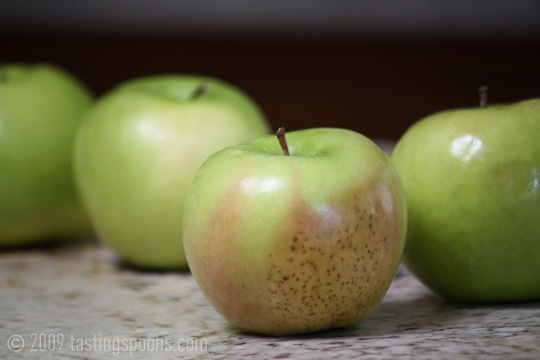
It used to be that Golden & Red Delicious were the “IT” apples here in the U.S. But they’ve slid way down the desirable scale (more on that story below). So varieties like Gala, Fuji, Honey Crisp and Pink Lady have slid up into top types. Apparently Golden Delicious apples used to be a really superior apple – but only when it was allowed to mature on the tree to a golden hue. But the farmers and producers were lured into harvesting and shipping early, when they were still green, and the apples suffered. That’s still the case, unfortunately.
Then there’s the Red Delicious. I can recall that being one of the few eating apples I ever bought from about 1965 to 1995. But something happened to the red variety farming. Because we consumers wanted redder varieties, the farmers began pushing the producers of tree seedlings to bring out redder skinned apples. Guess what? The taste suffered because when skin darkens it becomes more bitter. Now we see red delicious that are almost black in color. Not good. We continued to buy them, because we trusted the variety. I stopped buying them some years ago when I couldn’t seem to find a really crisp one anymore. Every Red Delicious I bought was soft and mealy. We consumers buy fruit too much on color and may not realize the blacker the skin the more bitter the finish.
Finally, apple eaters began complaining, but the farmers didn’t want to hear it. They thought they had a lion by the tail and weren’t about to change their ongoing success. Eventually we did stop buying this old favorite. So the farmers began selling their product abroad. No, they weren’t going to change the breeding. They found exporters, instead. Then, as Parsons puts it, the sleeping giant (China) woke up and began producing big time, so American farmers suddenly lost business. Big time. During the last 15-20 years thousands of apple farmers went out of business. Trees and orchards were upended and farms sold. Some apple farmers had begun growing Pacific varieties (Fuji from Japan and Gala from New Zealand) and when they couldn’t sell them abroad they began selling them here. Voila! We started seeing them in our markets. Now they’re fairly standard issue.
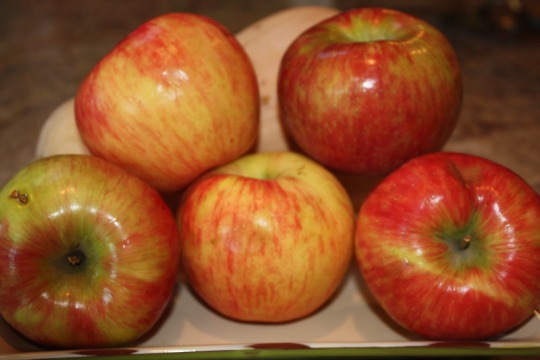
So here are the different varieties he discusses (when I mention below about storage, it’s mostly the cold storage at harvest, not our home refrigerator chilling):
FUJI: a Japanese-bred cross between Red Delicious and Ralls Janet. Holds its shape during cooking, good sauce apple, buttery flavor. Stores well, but don’t buy them past mid-summer.
GALA: Cross between Cox’s Orange Pippin and Golden Delicious. A tart apple, golden with pinkish orange strips. Good for cooking, sauce, buttery flavor with a hint of spice. One of the earliest harvests. Does NOT keep well once purchased, so eat them up right away and stop buying in early Spring.
BRAEBURN: one of the first Southern Hemisphere apples to become popular. Probably a chance seedling from cross-pollination between Lady Hamilton and a Granny Smith. Spicy, tart bite, juicy crisp texture. Good for cooking, stores well and okay to buy into early summer.
JONAGOLD: New York apple, an offspring of Golden Delicious and Jonathan. Tangy, slightly soft, though, when eating out of hand. Not good for storing and don’t buy them after Spring.
EMPIRE: Also a New York apple, mostly available on the East Coast [I’ve never seen an Empire apple here in California]. A cross between McIntosh and Red Delicious. Good flavor, holds its shape in cooking, but buy before the end of Spring.
PINK LADY: From Australia. Crisp and honeyed, pinkish cast, a champagne tartness, and one of the last apples harvested, usually starting in late September. Stores well.
CAMEO: A chance mutation in Washington State from a Red Delicious. Bright red-striped with unique white spots. Good flavor, sweet and mildly tart. Lots of crispness and staying power. Because of its dense flesh, Cameos take longer to cook than most apples.
HONEYCRISP: Crisp and sweet, holds its shape during cooking, red with a golden background [our Costco has them right now in a 12-pack]. Developed at the University of Minnesota, mostly grown in northern Midwest. Remarkable storage characteristics, i.e. does well in long storage. Interesting to me is that scientists have done DNA testing on apples (yes, really) and have discovered the Honeycrisp is not a cross between a Macoun and Honeygold, and they still don’t know its heritage.
– – – – –
Grown: Washington State, New York, Michigan, California and Pennsylvania
Choosing: look for smooth skins, deep color; yellow apples should be golden, striped apples have a background that’s golden. Look for heavy apples that are firm.
Storing: In the refrigerator, as close to 32 degrees as possible; lots of humidity – best in a perforated plastic bag that will retain water, but not collect it. Your crisper drawer is best. Red Delicious apples are the first ones that turn brown once they’re cut – but all apples will keep for awhile if you put them in acidulated water – lots of water plus fresh lemon juice.
Recipes: Parsons included his favorite baked apple recipe (brown sugar and butter only); also an applesauce made with bourbon, sour cherries and hazelnuts; and a gratin of apples and dried cranberries.
Here on my blog you’ll find apple recipes for the following:
Escarole, Belgian Endive & Apple Salad
Bombay Cheese Ball (best served with apple slices)
Cinnamon & Apple Bread Pudding
Baked Brie & Apples
Caramelized Apple Gingerbread
Grandgirl’s Fresh Apple Cake
Crisp Apple Pudding (my all-time favorite apple dessert)
Apple Buttermilk Scone Round
Applesauce Spice Cake with Caramel Glaze (a real favorite)
Apple Pear Upside Down Cake
Apple & Parsnip Soup
Cranberry Relish with a Zip (I make this, without fail, every Thanksgiving)
Roasted Butternut Squash Soup (includes roasted apples and onions)
Apple, Dried Cherry & Walnut Green Salad
Crostini with Apples, Watercress & Blue Cheese (one of my very favorite appetizers)


Leave a Comment!